
To find door leaks in just five minutes, start with a quick visual check for gaps, tears, or loose hardware, then use a flashlight or laser pointer along the edges to spot shifting air currents. Feel around the frame for drafts or use a tissue to see if it moves. For more accurate detection, try lighting a candle or incense near the door’s seals—if the flame flickers or smoke swirls, you’ve found the leak. Keep going to learn even easier ways to keep your home cozy.
Key Takeaways
- Conduct a visual inspection along door edges, frames, and hardware for gaps, cracks, or damage.
- Use a candle or incense stick near door seams to detect flickering or smoke movement indicating leaks.
- Feel around door edges and hardware for air drafts using your hand or tissue for quick detection.
- Perform a cold air test during colder months to identify areas where cold air enters.
- Seal identified leaks with weatherstripping, draft stoppers, or caulk to improve energy efficiency swiftly.

Holikme Door Draft Stopper Door Sweep Weather Stripping Noise Blocker Window Breeze Blocker Adjustable Draft Door Closers, Grey
Easy to install: adjustable size for most homes; Please measure the gap and width of the door before…
As an affiliate, we earn on qualifying purchases.
As an affiliate, we earn on qualifying purchases.
Why Detecting Door Drafts Saves You Money and Increases Comfort

Detecting door drafts can considerably cut your energy bills while making your home more comfortable. When you identify leaks, you can apply simple cost saving tips, such as sealing gaps with weatherstripping or door sweeps, which improve home insulation. Properly sealed doors prevent warm air from escaping and cold air from entering, reducing the workload on your heating and cooling systems. This proactive approach enhances home energy efficiency and can lead to significant savings over time. Additionally, understanding insulation techniques helps you focus on draft detection, enabling smarter choices about sealing and insulation, which pays off in lower utility bills and a more comfortable living space. Learning to identify draft sources quickly can help you take immediate action to improve your home’s energy efficiency. Being aware of airflow patterns around doors can further enhance your ability to detect leaks effectively.

Ninsula 33Ft Door Weather Stripping, (1/2in x 1/4in), Strong Adhesive, Sound Proof, Door Insulation, Weatherproof Foam Tape for Doors, Weatherstripping for Doors Frames, Windows
Extra Long Size: You'll get a 33FT door weather stripping (1/2in x 1/4in). Easy to install, no tools…
As an affiliate, we earn on qualifying purchases.
As an affiliate, we earn on qualifying purchases.
How to Quickly Check for Drafts in Your Doors (5-Minute Test)
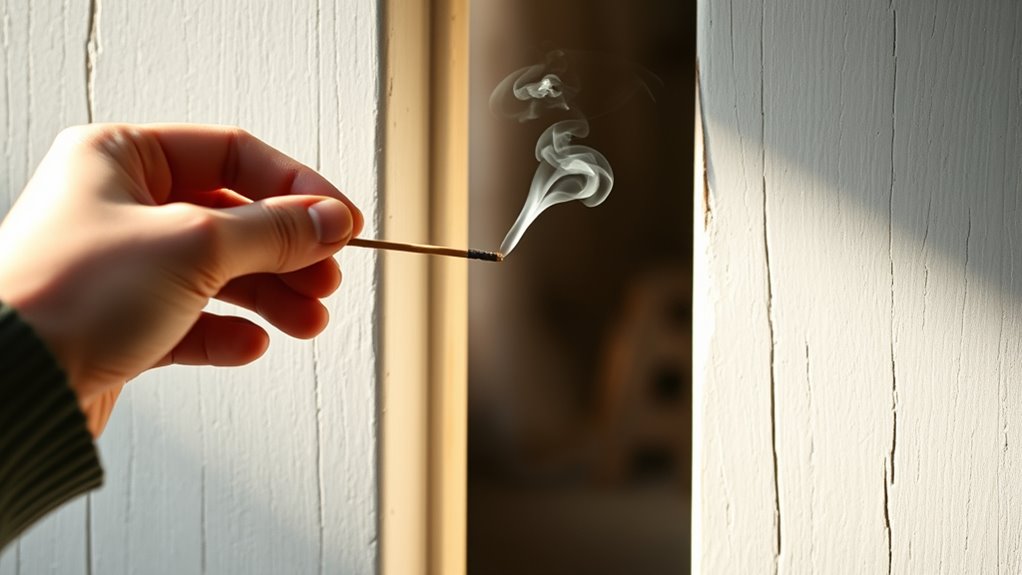
To quickly check for drafts, start with a visual inspection around your door frame for gaps or cracks. You can also use a simple candle—if the flame flickers or moves, there’s likely a draft. These easy tips help you identify problem spots in just a few minutes. Additionally, sealing air leaks with weatherstripping or draft stoppers can improve your home’s soundproofing and energy efficiency. Using a door draft detector or thermal camera can further help pinpoint hidden leaks that are not visible to the naked eye. Implementing natural insulation techniques, such as adding curtains or draft snakes, can also be an effective way to reduce drafts. Being aware of common leak areas around doors can help you target your sealing efforts more effectively.
Visual Inspection Tips
Ever wonder how to quickly identify drafts around your doors? Start with a visual inspection. Look for gaps or cracks along the door edges, especially near hinges and the latch. Check the weatherstripping for signs of wear, tears, or missing sections. Pay attention to decorative hardware—loose or misaligned hardware can indicate shifting that causes leaks. Observe your door’s color schemes; if the paint or stain shows uneven wear or peeling near the edges, it might suggest drafts. Also, examine the door frame for gaps or irregularities. Doing this simple check takes only a few minutes, but it can reveal hidden leaks. Proper draft detection is essential for maintaining energy efficiency and comfort in your home. By carefully inspecting these areas, you’ll quickly spot potential draft points and know where to focus your sealing efforts.
Using a Simple Candle
A simple candle can be an effective tool for quickly checking your doors for drafts in just a few minutes. To guarantee candle safety, hold the flame steady and keep it away from curtains or other flammable materials. Light the candle and slowly move it around the door edges, focusing on seams and thresholds. Watch for flickering or movement of the flame, which indicates air leaks. For added sensitivity, try incense variations; the smoke’s movement can reveal even small drafts. Always keep a safe distance from the flame and never leave it unattended. This quick test is a safe, affordable way to identify drafts without complicated equipment. Understanding air leaks can help you identify common sources of drafts and improve your testing technique. Recognizing regional building styles can also influence where leaks are most likely to occur, as construction methods may affect typical leak points. Additionally, being aware of home insulation quality can guide you in addressing larger energy efficiency issues. Conducting regular draft checks ensures your home remains comfortable and energy-efficient. With this simple candle method, you’ll find leaks fast and improve your home’s energy efficiency.
Holikme Door Draft Stopper Door Sweep Weather Stripping Noise Blocker Window Breeze Blocker Adjustable Draft Door Closers, Grey
Easy to install: adjustable size for most homes; Please measure the gap and width of the door before…
As an affiliate, we earn on qualifying purchases.
As an affiliate, we earn on qualifying purchases.
Signs Your Door Might Be Drafty

If you notice chilly drafts near your door, it’s a clear sign that it might be letting in more air than it should. Poor door insulation or an unsuitable door material can cause leaks, making your home less energy-efficient. Feel for cold spots around the edges or listen for whistling sounds when the wind blows. You might also see gaps or cracks in the door frame, especially if the door isn’t fitting snugly. Over time, warped or damaged door materials can compromise the seal, leading to drafts. Understanding how energy efficiency works can help you recognize that sealing drafts not only improves comfort but also reduces energy costs. Additionally, incorporating indigenous wellness practices such as natural sealing methods can provide eco-friendly solutions to draft issues. Implementing proper insulation techniques can further enhance your efforts in preventing air leaks. Being aware of building envelope integrity can help you identify other potential sources of drafts beyond the door. If these signs are present, it’s time to assess your door’s insulation and consider upgrading or sealing gaps to improve energy efficiency and comfort.
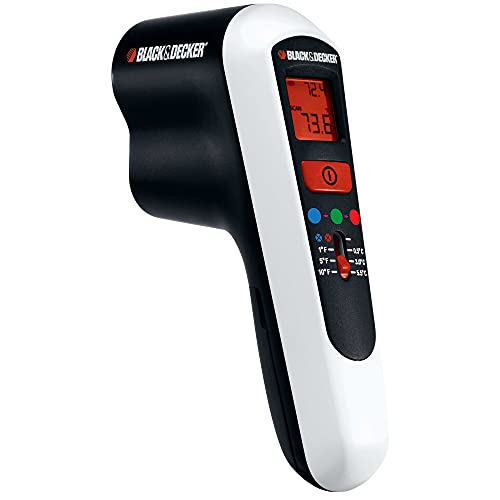
BLACK+DECKER Thermal Leak Detector (TLD100)
SAVE ON ENERGY COSTS – Track down power-draining drafts around the house to help reduce your heating and…
As an affiliate, we earn on qualifying purchases.
As an affiliate, we earn on qualifying purchases.
Essential Tools for Detecting Door Leaks
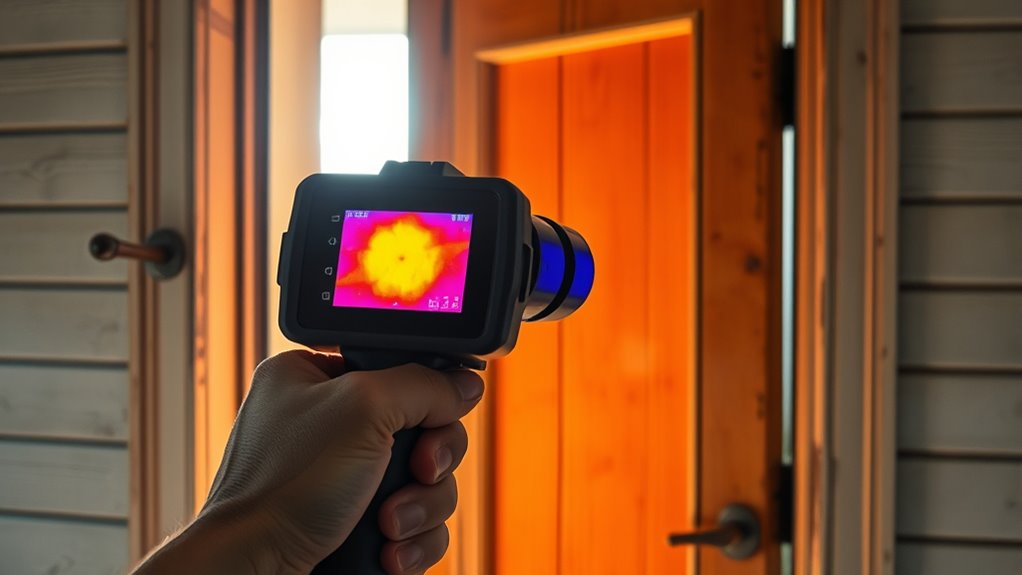
To accurately identify door leaks, you’ll need the right tools. Smart thermometers and thermocouples help spot temperature differences, while flashlights and laser pointers make visible drafts. Smoke and incense sticks can reveal leaks by showing airflow, making detection quick and straightforward. Additionally, understanding firewood handling techniques can help prevent drafts caused by improper sealing or gaps around doors. Being aware of pinball machine weights can also assist if you need to move heavy doors or equipment during sealing projects. Proper airflow management is essential for maintaining energy efficiency and comfort in your space, especially when addressing borderline personality disorder factors that influence emotional regulation and environmental stability.
Smart Thermometers and Thermocouples
Smart thermometers and thermocouples are essential tools for detecting door leaks because they provide accurate temperature readings that reveal hidden drafts. With these devices, you can quickly identify cold spots indicating air leaks around your door frame. Here’s how they help:
- Smart thermometers display real-time temperature changes, pinpointing areas with inconsistent heat flow.
- Thermocouples measure temperature differences at specific points, revealing even minor drafts.
- Using these tools, you can scan along door edges to spot cold air entry points.
- They’re portable, allowing you to test different spots efficiently without guesswork.
Flashlights and Laser Pointers
Have you ever wondered how a simple flashlight or laser pointer can efficiently detect door leaks? These tools create a focused light beam that makes leaks easier to spot. A flashlight illuminates gaps by highlighting shifting air currents, while a laser pointer’s precise beam helps you see tiny drafts. The laser beam’s sharpness allows you to trace around edges and corners, revealing even the smallest leaks. Use the flashlight to scan around the door’s perimeter and observe where the light escapes. Meanwhile, a laser pointer can be directed along the door frame, spotting gaps with ease. Here’s a quick comparison:
| Tool | Best Use | Key Feature |
|---|---|---|
| Flashlight | Broad area inspection | Bright, wide light beam |
| Laser Pointer | Precise leak detection | Sharp, focused laser beam |
| Both | Detecting drafts quickly | Easy to maneuver |
| Ideal for | Quick home assessments | Cost-effective tools |
Additionally, understanding draft detection techniques can help you improve your home’s energy efficiency and comfort. Using these tools effectively can also help identify electric power generation opportunities through small-scale energy audits.
Smoke and Incense Sticks
Ever wondered how smoke or incense sticks can help you find door leaks? Smoke testing with incense sticks is simple and effective. As you light the incense, watch for any flickering or movement of the smoke, which indicates airflow and leaks. Here’s how to get started:
- Hold the incense near the door edges to observe air movement.
- Watch for smoke flickering, swirling, or being drawn toward gaps.
- Use incense analysis to identify tiny leaks that are hard to see.
- Move the incense along the door frame to pinpoint the exact leak locations.
This method provides a visual cue for draft detection, making it easier to seal leaks. Smoke testing is quick, inexpensive, and highly effective for identifying hidden drafts in seconds.
How to Prepare Your Doors for Accurate Draft Detection

Preparing your doors properly is essential for accurate draft detection. Start by inspecting the door’s surface for gaps or cracks, which can undermine the process. Ensure your door is well-insulated; adding door insulation or weatherproofing materials like foam strips or draft stoppers can improve accuracy. Clean the door and frame thoroughly to remove dust and debris that may hide leaks. Remove any obstructions around the door area to allow for a clear assessment. Seal minor gaps temporarily with painter’s tape if needed. Proper preparation guarantees that any detected drafts are genuine leaks rather than false signals caused by poor insulation or unsealed gaps. Taking these steps creates a controlled environment, leading to more precise and reliable draft detection results.
How to Use a Candle or Incense Stick to Find Draft Leaks

Using a candle or incense stick is an effective way to detect drafts once your door is properly prepared. Light a scented candle or incense stick and hold it near the edges of the door. As you move along the perimeter, watch for flickering or movement in the flame or smoke, indicating a draft. Here are the key steps:
- Light your scented candle or incense stick and keep it steady.
- Slowly run it along the door’s edges and corners.
- Observe any flickering or smoke movement.
- Mark areas where the flame flickers or smoke wavers, revealing leaks.
This simple method helps you locate drafts quickly and accurately, making it easy to identify where to seal gaps. Using scented candles or incense sticks adds a pleasant aroma while you work.
How to Check Your Door Seals and Weatherstripping for Gaps
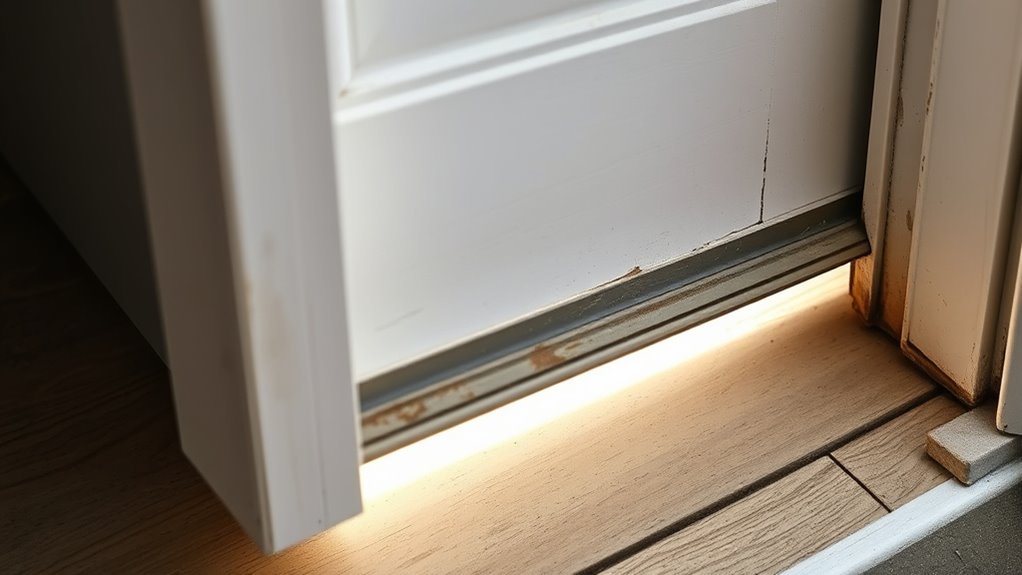
Start by visually inspecting your door seals and weatherstripping for cracks or gaps. Then, run your hand along the edges to feel for drafts that might be escaping. If you find any issues, replacing the seals can make a big difference in keeping the cold out.
Visual Inspection Techniques
To effectively check your door seals and weatherstripping for gaps, begin by inspecting the entire perimeter of the door in good lighting. Use your eyes to look for obvious tears, cracks, or deterioration. Conduct a material inspection by gently feeling along the weatherstripping for brittleness or looseness. For a more precise assessment, consider thermal imaging to detect cold spots indicating leaks. As you examine, keep these points in mind:
- Check for cracks or tears in the weatherstripping.
- Look for gaps between the door frame and weatherstripping.
- Feel for loose or uneven seals.
- Use thermal imaging to spot hidden drafts.
This thorough visual inspection helps identify potential leak points before moving to other detection methods.
Feel for Drafts
After visually inspecting your door seals and weatherstripping, the next step is to physically feel for drafts. Use your hand to detect airflow patterns around the edges of the door. Move slowly along the seal, paying attention to areas where you notice a breeze or cooler spots. Your touch sensitivity helps identify gaps that might not be obvious visually. Keep in mind that even small openings can let in significant drafts, so be thorough. Focus on areas where the seal feels loose, cracked, or uneven. If you sense airflow, that indicates a potential leak. This tactile approach allows you to pinpoint the exact spots where insulation is compromised, making it easier to address leaks effectively.
Seal Replacement Tips
Checking your door seals and weatherstripping for gaps is a straightforward process that helps guarantee your home stays energy-efficient. First, close the door and examine the seal closely for visible tears, cracks, or looseness. Next, run your hand along the door seal to feel for cold air or drafts that might indicate leaks. If you spot damage or gaps, it’s time for weatherstrip replacement. Here are some tips for effective seal replacement:
- Remove old weatherstripping carefully to avoid damage.
- Clean the surface thoroughly before installing a new door seal.
- Measure the length needed to ensure a snug fit.
- Press the new weatherstrip firmly into place, ensuring no gaps remain.
Properly replacing your door seal keeps drafts out and improves energy efficiency.
How to Seal Drafty Doors and Keep Warm Air Inside

Drafty doors can considerably reduce your home’s energy efficiency by allowing warm air to escape and cold air to seep in. To seal drafty doors effectively, start with draft prevention techniques like installing weatherstripping around door frames. Check for gaps and add door sweeps at the bottom to block drafts completely. Consider insulation upgrades if your door or frame feels thin or uninsulated, as better insulation helps retain warm air inside. Use draft stoppers or draft snakes at the door’s base for an immediate fix. Regularly inspect and maintain these seals to ensure they stay effective over time. By sealing leaks and upgrading insulation, you’ll keep warm air inside, reduce energy costs, and enjoy a more comfortable home throughout the winter.
Tips for Maintaining a Draft-Free Home Year-Round

Maintaining a home that stays comfortable and energy-efficient throughout the year requires ongoing attention to drafts and leaks. To keep your space draft-free, focus on simple, effective strategies.
Keeping your home cozy and energy-efficient year-round starts with addressing drafts and leaks proactively.
- Regularly inspect and update your interior design elements, like curtains and furniture placement, to block drafts without sacrificing style.
- Seal gaps around windows and doors with weatherstripping or caulk to improve energy efficiency.
- Use draft stoppers on door bottoms and window sills to prevent air leaks.
- Consider adding insulating window films or thermal curtains during colder months to enhance comfort and reduce heating costs.
Staying proactive helps you maintain a cozy environment, enhance your interior design, and save on energy bills year-round.
When to Call a Professional for Door Draft Problems

While minor drafts can often be handled with DIY fixes, there are times when calling in a professional becomes necessary to ensure your home stays comfortable and energy-efficient. If drafts persist after sealing gaps or installing weatherstripping, a specialist can assess underlying issues like structural damage or poor door installation. Professionals can also improve door security, preventing forced entry, and help with pest prevention by sealing gaps that pests might use to enter your home. If your door continues to leak air despite your efforts, or if you notice drafts that worsen over time, it’s time to seek expert help. Addressing these issues promptly ensures your home remains secure, energy-efficient, and protected from unwanted pests.
Frequently Asked Questions
Can Door Draft Detection Help Reduce Energy Bills Long-Term?
Yes, door draft detection can help reduce your energy bills long-term. By quickly identifying leaks, you can improve insulation around your doors, preventing heat loss in winter and keeping your home cooler in summer. These energy savings add up over time, lowering your utility costs. Regularly sealing leaks with door draft detection guarantees your home stays energy-efficient, making it easier to maintain a comfortable temperature while saving money on energy bills.
Are There Specific Seasons Best for Testing Door Drafts?
You should test for door drafts during seasonal variations, especially in fall and winter when temperature differences are greatest. Regular testing frequency, like every few months, helps you catch leaks early and guarantees your home stays energy-efficient year-round. By monitoring seasonal changes, you can prioritize repairs and maintain a comfortable, draft-free environment, ultimately saving on energy bills and improving your home’s overall comfort.
How Often Should I Recheck My Doors for Leaks?
You should recheck your doors for leaks at least once every season—preferably during extreme weather changes. After all, even the best weatherproofing tips can falter, revealing gaps in your insulation materials. Don’t forget, regular checks help you catch drafts early, saving energy and money. Keep your doors snug and secure, because a little vigilance now prevents costly repairs later. Stay ahead, stay cozy!
Do Different Door Types Require Different Detection Methods?
Yes, different door types require different detection methods. For example, wooden doors might need a simple visual inspection for gaps, while metal or fiberglass doors may require a smoke test or a candle test to detect leaks. Your approach should consider the door material and installation quality. Properly installed doors with tight seals usually need less frequent checks, but always inspect around the edges and seals for any signs of drafts.
Can DIY Methods Permanently Solve Door Draft Issues?
DIY solutions can temporarily fix door draft issues, but they may not be permanent. You need professional inspection to identify the root cause and guarantee a lasting fix. While sealing cracks and adding weatherstripping are quick, cost-effective methods, they often don’t address underlying problems. For a long-term solution, it’s best to combine DIY efforts with professional advice, ensuring your door stays draft-free for good.
Conclusion
Detecting door drafts is like finding hidden leaks in a ship’s hull—quickly and vital, you can stop the cold air before it slips in. With just five minutes and the right tools, you’ll save money on energy bills and enjoy a more comfortable home. Keep an eye out for signs of drafts and seal them up promptly. Staying proactive keeps your home cozy and efficient, like a warm hug that lasts all year.