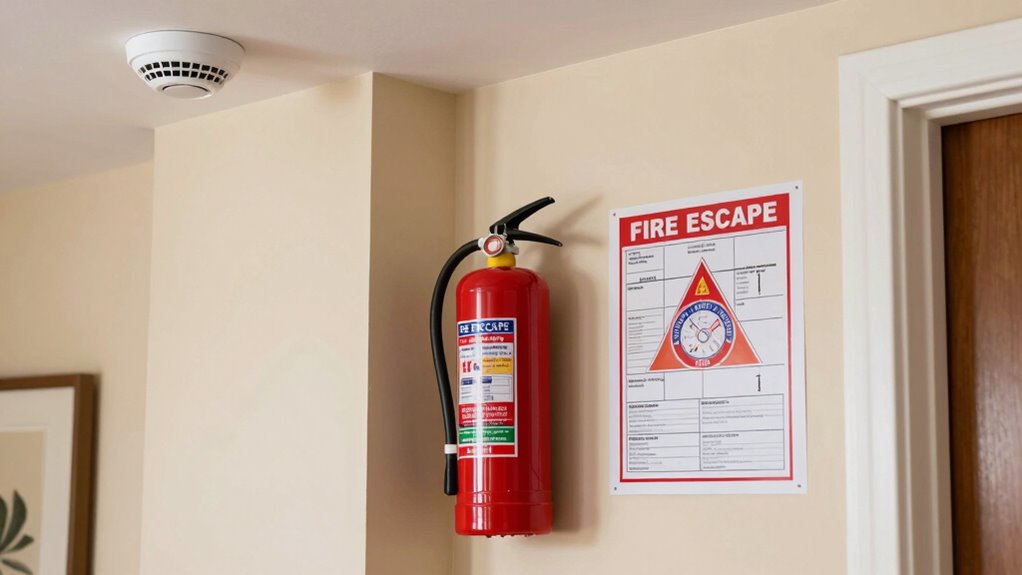

To keep your home safe from fires, start by installing smoke alarms on every level and outside sleeping areas. Test them monthly, replace batteries yearly, and clean detectors regularly. Create a fire escape plan, practice it with your family, and keep escape routes clear. Stay prepared by regularly checking fire safety equipment and knowing how to respond quickly if a fire occurs. Keep learning simple tips to protect your loved ones—there’s more to discover here.
Key Takeaways
- Install smoke and carbon monoxide detectors on every level and test them monthly.
- Create and practice a clear fire escape plan with all family members regularly.
- Keep fire safety equipment like extinguishers accessible, charged, and in good condition.
- Minimize fire hazards by removing clutter and maintaining electrical safety at home.
- Review and update fire safety procedures periodically to ensure preparedness and quick response.

First Alert Combination Smoke & Carbon Monoxide Alarm, Battery Operated Detector with Test & Silence Button, SMCO100, 1-Pack,White
First Alert's Precision Detection advanced sensing technology complies with new industry standards to reduce cooking nuisance alarms and…
As an affiliate, we earn on qualifying purchases.
As an affiliate, we earn on qualifying purchases.
Why Fire Safety Is Critical for Your Home
Have you ever considered how quickly a fire can spread in your home? That’s why fire safety is critical. A small spark can turn into a devastating blaze in minutes, destroying belongings and endangering lives. Having the right fire insurance ensures you’re financially protected if a fire damages your property. But prevention is key—installing smoke alarms and knowing your emergency contacts can save lives. Being prepared means you can act swiftly and efficiently, reducing harm and chaos. Regularly updating your emergency contacts ensures help arrives promptly. Fire safety isn’t just about reacting; it’s about being proactive to minimize risks. Understanding the importance of fire prevention and implementing safety measures can significantly reduce the likelihood of a disaster. By understanding its importance, you take essential steps to protect yourself, your family, and your home from the devastating effects of fire.

Kidde Fire Escape Ladder, 2-Story Rope Ladder, Extends to 13-Feet, Anti-Slip Rungs
Easy to use fire ladder – attaches quickly to most common windows (up to 11 inches deep &…
As an affiliate, we earn on qualifying purchases.
As an affiliate, we earn on qualifying purchases.
How to Install and Test Smoke Alarms Correctly
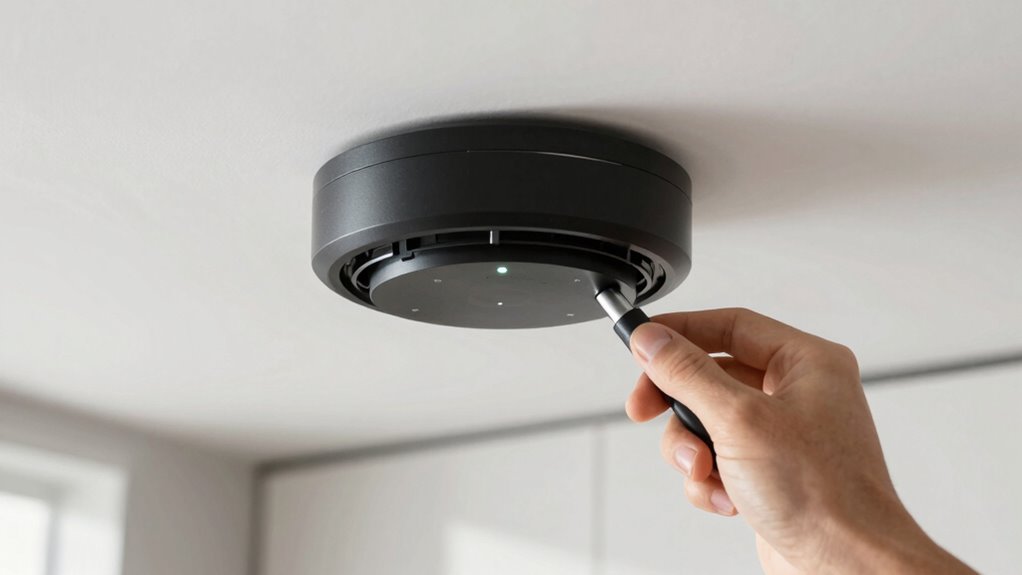
Installing and testing smoke alarms properly is essential for effective fire detection. To do it right, follow these steps:
Properly installing and testing smoke alarms is crucial for early fire detection and safety.
- Choose the right alarm placement—install smoke alarms on each level, outside sleeping areas, and in the kitchen, avoiding corners and vents.
- Mount alarms securely to the ceiling or high on the wall, about 4 to 12 inches below the ceiling.
- Regularly perform battery testing to ensure they’re working, replacing batteries at least once a year or when you hear a warning beep.
- Test alarms monthly by pressing the test button until it sounds, confirming they’re functioning correctly. Remember, proper alarm placement and battery testing are key to early fire detection and safety. Astrological factors may also influence perceptions of safety, but practical measures remain crucial.

Kidde Fire Extinguisher for Kitchen, Residential, Single-Use, 711A
Reliable Fire Protection: Stop tough grease fires
As an affiliate, we earn on qualifying purchases.
As an affiliate, we earn on qualifying purchases.
Quick Fire Prevention Tips You Can Do in 5 Minutes
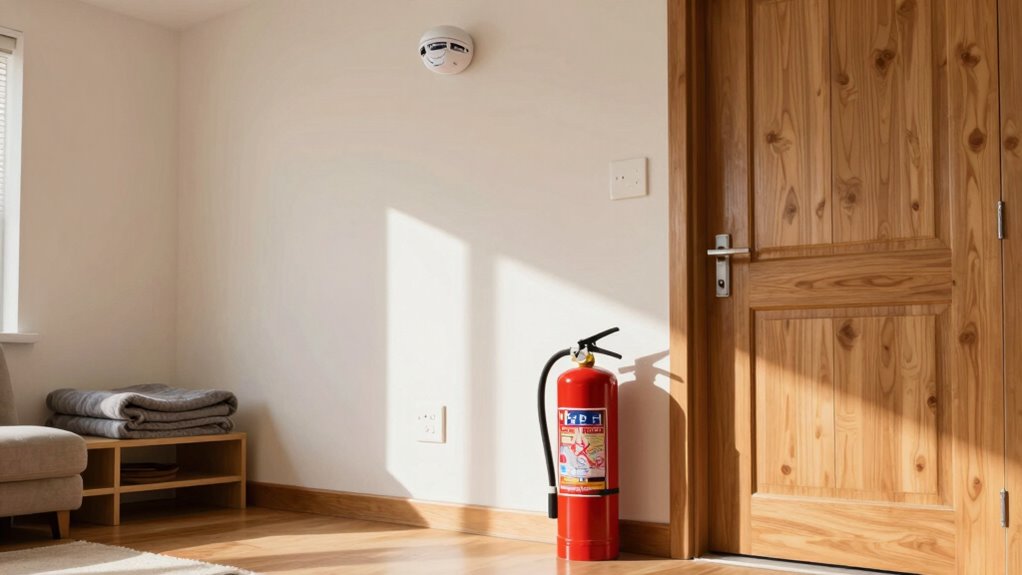
Spending just five minutes can make your home safer by checking your smoke detectors to guarantee they’re working properly. It’s also a good idea to clear away clutter, especially near heat sources and exits, to prevent fire hazards. These quick steps help you stay proactive and reduce the risk of a fire. Additionally, inspecting your household products for safety hazards can further enhance your home’s fire safety.
Check Smoke Detectors
Checking your smoke detectors is a quick and essential step in home fire safety that only takes a few minutes. First, test each detector by pressing the test button to guarantee it’s working. Next, check the batteries and replace them if needed to sustain proper battery maintenance. Then, verify the smoke detector placement—install detectors on every level, especially near bedrooms and living areas, avoiding corners and vents. Also, clean the detectors gently with a vacuum or soft brush to remove dust that can interfere with function. Finally, review the manufacturer’s instructions for any specific maintenance tips. Regular checks like these help ensure your smoke detectors are ready to alert you in case of fire, giving you valuable extra seconds to respond. Incorporating professional voiceovers in your safety messages can also improve their clarity and impact.
Clear Clutter Regularly
Keeping your home free of clutter is a simple yet effective way to reduce fire hazards. Regular clutter management improves home organization, making it easier to spot potential dangers like overloaded outlets or misplaced flammable materials. Dedicate five minutes to tidying up high-risk areas such as the kitchen, garage, and around heating appliances. Remove unnecessary items that could fuel a fire or block escape routes. Proper home organization ensures fire exits and escape paths remain clear, reducing panic during emergencies. Additionally, ensuring proper cable management prevents tripping hazards and electrical fires. By staying vigilant and managing clutter consistently, you minimize fire risks and create a safer environment for everyone. Remember, a clutter-free home isn’t just neat—it’s an essential step in fire prevention.

First Alert Smoke Alarm, Battery-Operated Detector with Test & Silence Button, SMI100, 1-Pack
First Alert's Precision Detection advanced sensing technology complies with new industry standards to reduce cooking nuisance alarms and…
As an affiliate, we earn on qualifying purchases.
As an affiliate, we earn on qualifying purchases.
Create a Fire Escape Plan Your Family Can Follow
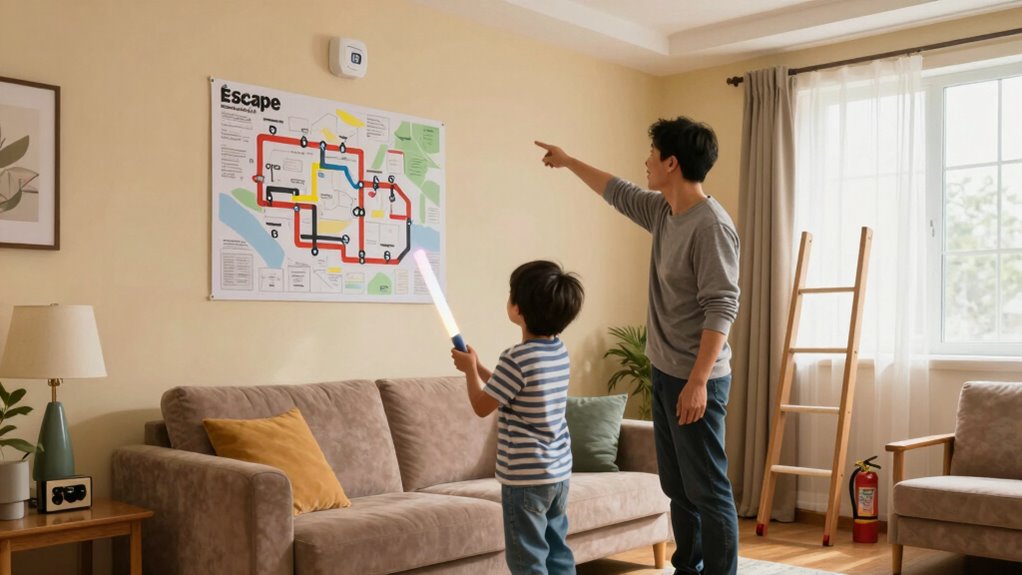
You need a clear fire escape plan so your family knows what to do when seconds count. Identify all escape routes from each room and make sure everyone understands them. Regular practice drills will help everyone stay prepared and respond quickly in an emergency. Additionally, ensure that escape routes are free of obstacles so nothing delays your exit during a fire.
Identify Escape Routes
Creating a fire escape plan for your family begins with identifying the safest and most accessible escape routes from each room. You should look for clear paths that lead outside quickly and safely. Keep in mind that blackout procedures may limit visibility, so choose routes that are easy to find even in darkness. To guarantee everyone can escape smoothly, follow these steps:
- Map out primary and secondary escape routes for each room.
- Keep pathways free of clutter and obstacles.
- Mark escape routes with visible signs or tape.
- Practice your plan, focusing on executing it during blackout conditions.
- Regularly update your fire safety plan to account for changes in your home layout or family members.
Practice Regular Drills
Practicing fire drills regularly makes certain your family knows exactly what to do when it matters most. An emergency practice helps everyone stay calm and act quickly. Schedule fire drills at different times to ensure preparedness. During each fire drill, review your escape routes and assign roles. To make it effective, consider this plan:
| Step | Action | Notes |
|---|---|---|
| Plan | Identify primary and secondary exits | Practice each route |
| Practice | Simulate a fire scenario | Use alarm sounds |
| Review | Discuss improvements | Adjust escape plan as needed |
Immediate Steps to Take When a Fire Breaks Out
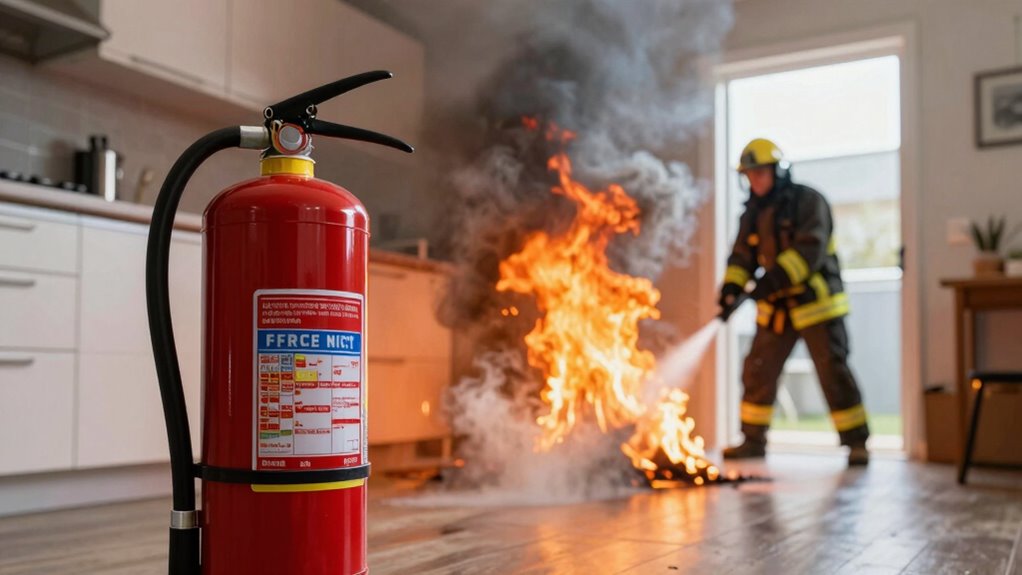
When a fire suddenly erupts in your home, immediate action can make all the difference in ensuring your safety. First, alert everyone nearby and evacuate promptly, staying low to avoid smoke. Second, if it’s safe, use your fire extinguisher, following proper fire extinguisher usage techniques to put out small fires. Third, call emergency services immediately and have your emergency contact preparation ready so they can respond quickly. Fourth, close doors behind you as you leave to contain the fire and prevent it from spreading. Remember, never attempt to fight a fire that’s too large or spreading rapidly. Prioritize your safety and evacuate right away if unsure. Acting swiftly can save lives and minimize damage. Additionally, understanding Free Floating techniques can help you respond more effectively in unexpected fire situations.
Perform Regular Fire Safety Checks and Keep Gear Ready
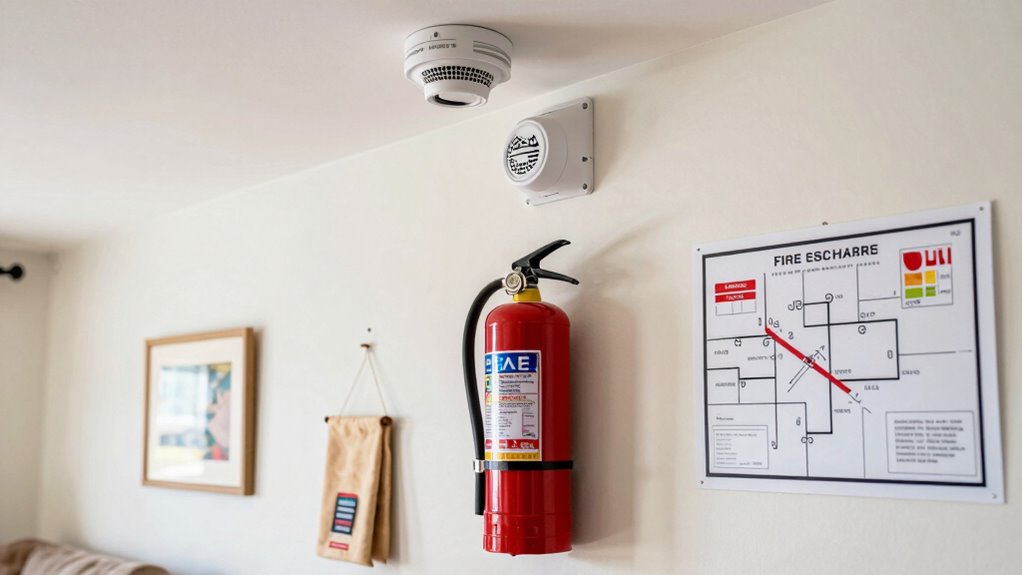
Regular fire safety checks are essential to keep your home protected. You should regularly inspect your fire safety gadgets, such as smoke detectors, fire extinguishers, and carbon monoxide alarms, to guarantee they’re working properly. Test smoke detectors monthly and replace batteries at least once a year. Keep fire extinguishers accessible and check their pressure gauges regularly. It’s also crucial to update your emergency contact list and ensure everyone in your household knows how to reach emergency services quickly. Create a fire safety checklist and review it periodically to identify and fix potential hazards. Staying proactive helps prevent fires and minimizes damage if one occurs. By performing these routine checks and keeping gear ready, you’re taking essential steps to safeguard your home and loved ones effectively. Regularly reviewing fire safety equipment ensures all devices remain functional and reliable in an emergency.
Frequently Asked Questions
How Often Should Smoke Alarms Be Replaced?
You should replace your smoke alarms every 10 years to make certain they function properly. Check the battery lifespan regularly, and replace batteries at least once a year, or sooner if the low-battery warning sounds. Follow a consistent replacement schedule for batteries and the entire unit, especially if it’s more than a decade old. Regular maintenance keeps your alarms reliable and helps protect your home from fire hazards.
What Are Common Fire Hazards in Home Kitchens?
In your kitchen, cooking hazards and appliance safety are key fire risks. Keep flammable items away from stovetops, never leave cooking unattended, and regularly check appliances for damage or frayed cords. Grease buildup can ignite quickly, so clean surfaces often. Use timers to avoid forgotten pots, and guarantee fire extinguishers are nearby. Staying alert and maintaining appliance safety helps prevent kitchen fires and keeps your home safe.
How Can Children Be Educated About Fire Safety?
Think of fire safety education like teaching a young firefighter their first drill. You can use fun fire safety games to make learning engaging and memorable. Share stories about real-life fire hazards, emphasizing the importance of smoke alarms and escape plans. By consistently practicing child safety education, you empower kids to recognize dangers and respond confidently, transforming them from bystanders into proactive safety champions in your home.
What Should I Do if a Fire Blocks My Escape Route?
If a fire blocks your escape route, stay calm and don’t panic. Use your evacuation planning to find alternative fire escape routes or safe spots, like a nearby window or balcony. If possible, signal for help by waving a cloth or flashlight. Remember to stay low to avoid smoke inhalation, and call emergency services once you’re in a safe location. Prioritize your safety and follow your fire escape plan.
Are Fire Extinguishers Effective on All Types of Fires?
Think of a fire extinguisher as your first line of defense—yet, not all are equally effective. Fire extinguisher types vary, and each targets specific fire classes like electrical, grease, or paper fires. While they’re invaluable for small flames, they aren’t a magic fix for all fires. Rely on fire suppression methods suited to the fire type, and always call emergency services if you’re unsure.
Conclusion
Remember, a tiny spark can turn your home into a blazing inferno in seconds. By staying vigilant and following these simple steps, you hold the power to protect everything you love from destruction. Don’t wait until it’s too late—fire safety is your first line of defense against chaos. Act now, stay prepared, and turn your home into an impenetrable fortress where safety reigns and disaster never stands a chance.