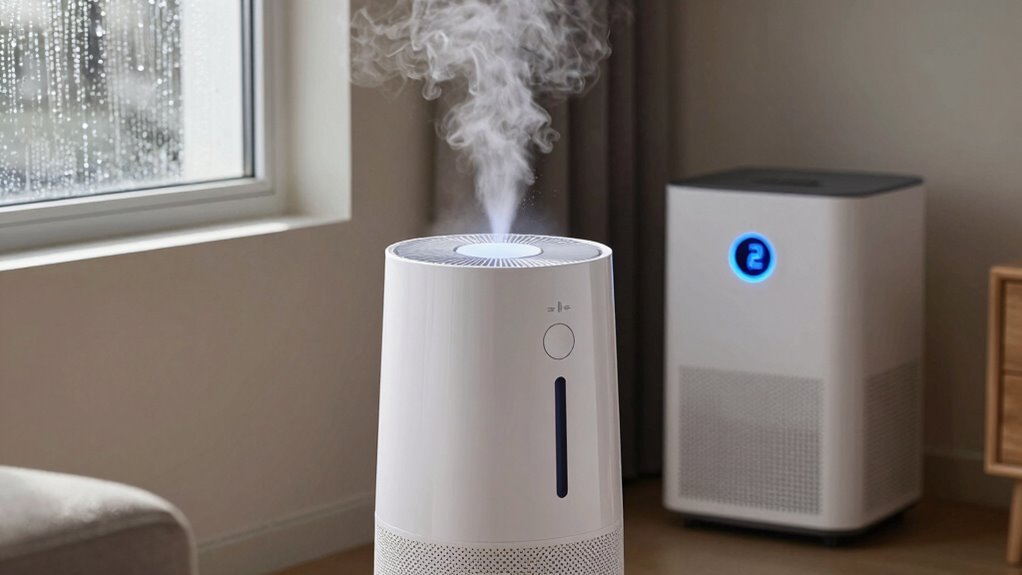
To decide whether you need a humidifier or dehumidifier, consider if your home feels dry or damp. A humidifier adds moisture to prevent dry skin, respiratory issues, and cracked wood, while a dehumidifier removes excess moisture to stop mold, musty odors, and dampness. Monitoring humidity levels helps you choose effectively. If you’re unsure, exploring how these devices work and their ideal use cases will guide you toward the right solution.
Key Takeaways
- Use a humidifier to add moisture in dry environments causing static shocks, chapped skin, or cracked wood.
- Use a dehumidifier to reduce excess moisture leading to mold, musty odors, or condensation issues.
- Monitor humidity levels with a hygrometer to determine if you need to increase or decrease indoor moisture.
- Proper device choice depends on whether your space is too dry or too damp, based on environmental signs.
- Regular maintenance and natural practices ensure effective humidity control and healthier indoor air quality.

Canopy Bedside Humidifier 2.0, Moonstruck, 36 HR Run Time, 2.5L Capacity – Reading Light & White Noise – Alleviate Symptoms of Allergies, Cold, Dry Skin – Humidifier, Filter, Power Cord & Adapter
THE NEW AND IMPROVED BEDSIDE HUMIDIFIER 2.0: The new Canopy Bedside Humidifier has arrived. With an updated proprietary…
As an affiliate, we earn on qualifying purchases.
As an affiliate, we earn on qualifying purchases.
What’s the Difference Between a Humidifier and a Dehumidifier?
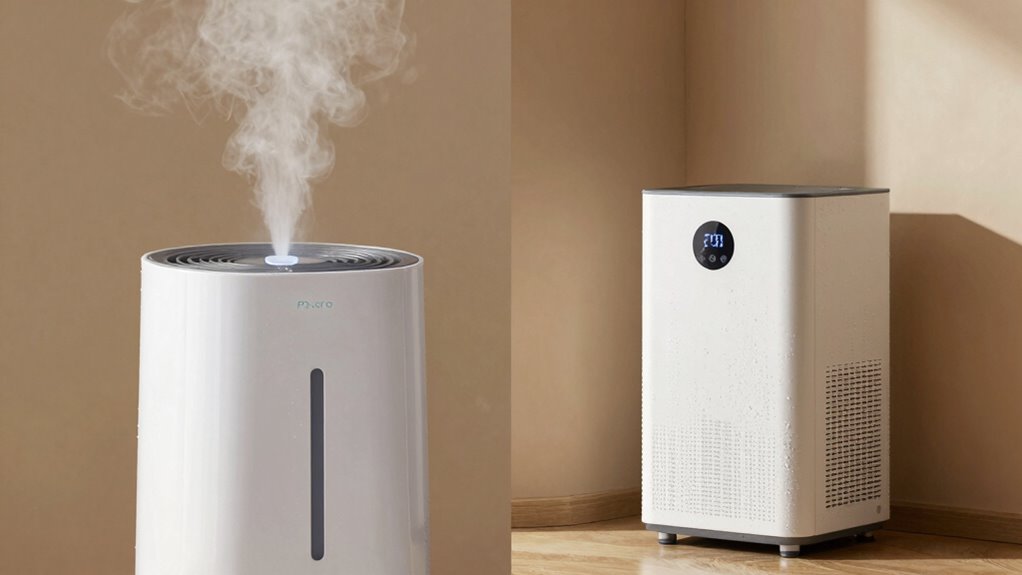
Ever wondered how a humidifier differs from a dehumidifier? Both devices aim to improve your home’s air quality but serve opposite functions. A humidifier adds moisture, which can be helpful in dry environments or winter months, making the air more comfortable and reducing static. A dehumidifier, on the other hand, removes excess moisture, preventing mold, mildew, and musty odors. When choosing between them, consider energy efficiency—dehumidifiers typically use more energy due to their cooling mechanisms, but they can save energy overall by reducing the need for heating or cooling. A humidifier can improve air quality by alleviating respiratory issues caused by dry air. Understanding these differences helps you select the right device for your home’s needs and optimize your comfort and energy use. Proper humidity levels are essential for maintaining a healthy indoor environment.

DampRid Fresh Scent Hanging Moisture Absorber, 16 oz., 3 Pack – Eliminates Musty Odors for Fresher, Cleaner Air, Ideal Moisture Absorbers for Closet, 14% More Moisture Absorbing Power*
DON'T JUST COVER UP ODORS, ELIMINATE THEM: DampRid Fresh Scent Hanging Moisture Absorbers attract and trap excess moisture…
As an affiliate, we earn on qualifying purchases.
As an affiliate, we earn on qualifying purchases.
How Do You Know if Your Home Is Too Dry or Too Humid?
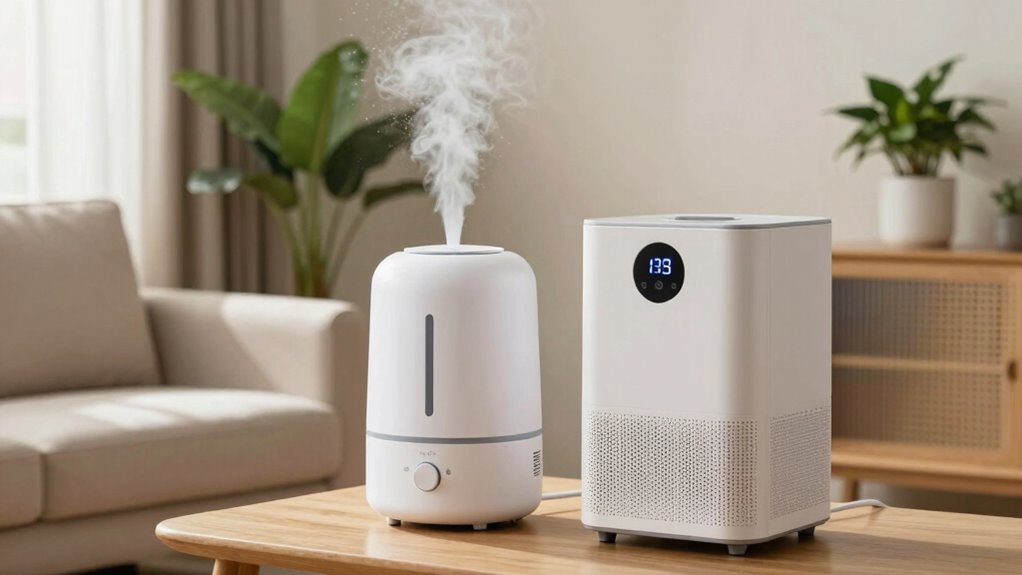
Knowing whether your home is too dry or too humid is essential for maintaining a comfortable and healthy environment. Poor air quality caused by improper humidity levels can lead to discomfort, respiratory issues, and allergy flare-ups. Signs your home is too dry include static shocks, chapped skin, and cracked wood. If your air feels damp, mold growth, musty smells, and condensation on windows are common indicators. Monitoring your environment with a hygrometer can help you determine the humidity level. Proper humidity improves air quality and can provide allergy relief by reducing dust mites and mold. Additionally, understanding puppy-proofing techniques can help create a safer environment for children and pets. If you notice persistent issues, adjusting your humidifier or dehumidifier can help restore balance and create a healthier, more comfortable living space.

Govee Digital Hygrometer Indoor Thermometer Room H5075, Bluetooth Temperature Humidity Meter with 164ft Remote App Control, Notification Alerts, 2 Years Data Storage Export for Bedroom, Wine Cellar
Smart Features: The Govee Wireless Thermometer Hygrometer supports all basic functions as well as smart functions such as…
As an affiliate, we earn on qualifying purchases.
As an affiliate, we earn on qualifying purchases.
What’s the Ideal Indoor Humidity Level?
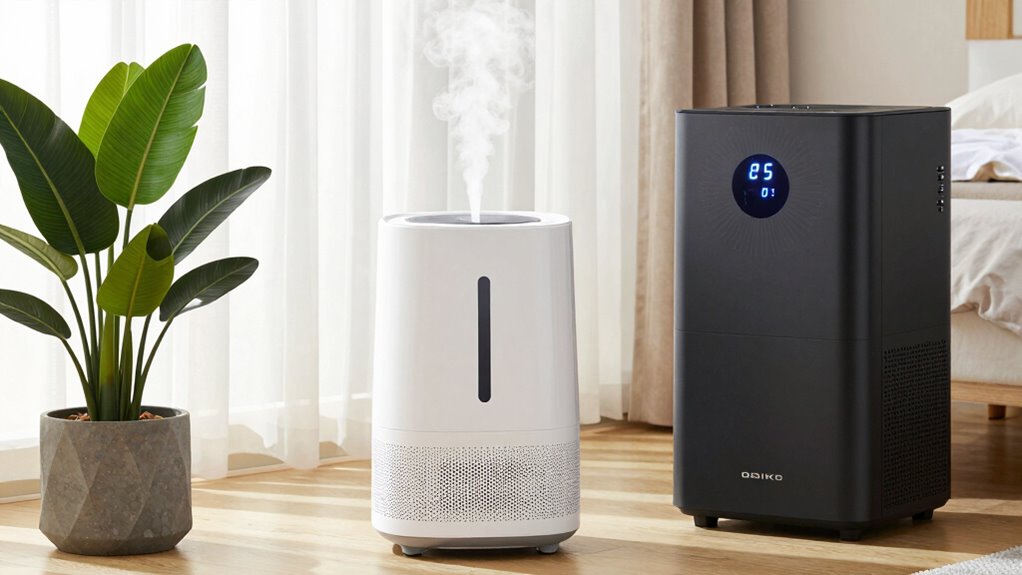
Maintaining the right indoor humidity level is key to creating a comfortable and healthy home environment. Experts recommend keeping indoor humidity between 30% and 50%. This range improves indoor air quality by reducing dust, allergens, and airborne pathogens. It also helps prevent mold growth, which thrives in damp conditions. Proper paint application techniques, such as using airless paint sprayers, can be affected by high humidity levels, leading to uneven finishes. Too low humidity can cause dry skin, irritated eyes, and respiratory issues, while too high can lead to mold, musty odors, and structural damage. To find your ideal level, use a hygrometer to monitor humidity regularly. Adjust your humidifier or dehumidifier accordingly to stay within this range. Maintaining proper humidity not only enhances comfort but also safeguards your home from mold and other indoor air quality problems.

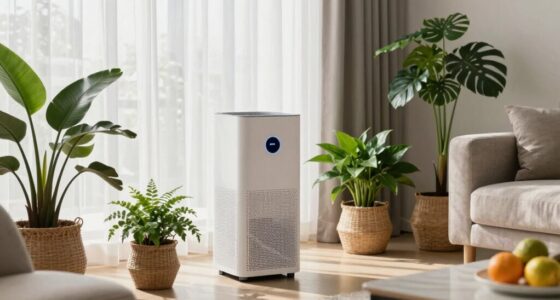
Clorox HEPA Air Purifiers for Home, True HEPA Filter, Medium Rooms Up to 1,000 Sq Ft, Removes 99.9% of Mold, Viruses, Wildfire Smoke, Allergens, Pet Allergies, Dust, AUTO Mode, Whisper Quiet
CAPTURES 99.97% OF ALLERGENS AND PARTICULATES* AND 99.9% OF VIRUSES AND BACTERIA.** With the Clorox Air Purifier, you…
As an affiliate, we earn on qualifying purchases.
As an affiliate, we earn on qualifying purchases.
How to Decide Which Device Is Right for Your Home
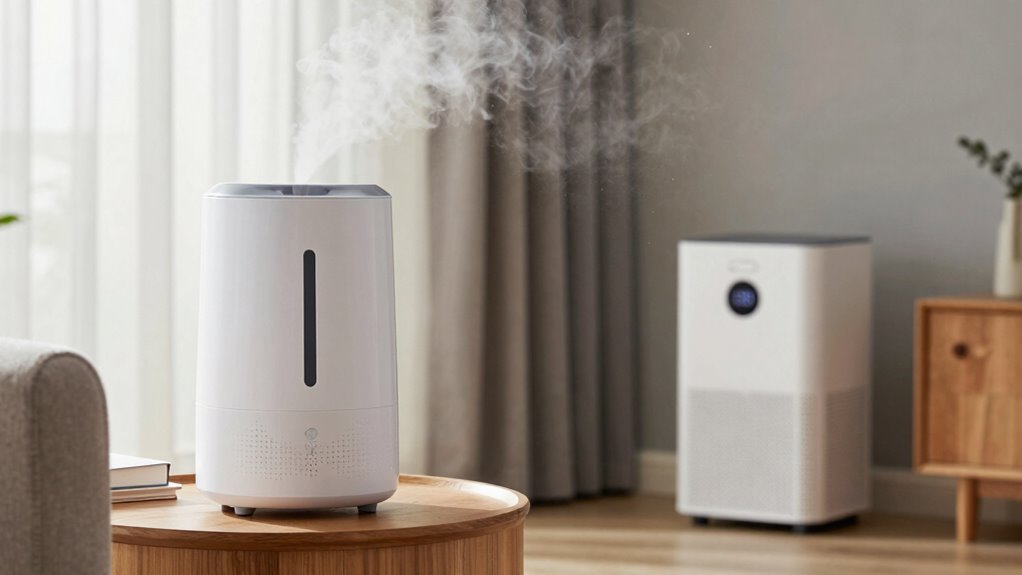
Choosing between a humidifier and a dehumidifier depends on your home’s specific needs and current indoor conditions. Start by evaluating your indoor humidity levels—if it’s too dry, a humidifier can improve comfort, while excess moisture calls for a dehumidifier. Consider energy efficiency when selecting a device, as some models consume less power and save money over time. Proper device placement is essential; position a humidifier away from walls and furniture to prevent mold, and place a dehumidifier in areas prone to dampness for maximum effectiveness. Think about your home’s layout and where moisture issues are concentrated. Understanding humidity levels can help you make a more informed decision about which device to choose. By understanding your environment and these factors, you can choose the right device that effectively maintains ideal humidity levels without wasting energy.
Practical Uses for Humidifiers and Dehumidifiers

Humidifiers and dehumidifiers serve specific purposes to improve your indoor environment. You can use a humidifier to add moisture, which helps with dry skin, respiratory comfort, and even enhances your home decor by maintaining healthy humidity levels that preserve wooden furniture and artwork. On the other hand, a dehumidifier reduces excess moisture, preventing mold growth and musty odors, especially in damp areas. If allergy relief is your goal, a dehumidifier can considerably cut down dust mites and mold spores that trigger symptoms. Meanwhile, a humidifier can ease breathing difficulties caused by dry air. Both devices work to create a more comfortable, healthier space. Knowing their practical uses helps you select the right device based on your specific needs and environment. Understanding indoor humidity is essential for making informed choices about these devices.
Common Mistakes When Using These Devices: And How to Avoid Them
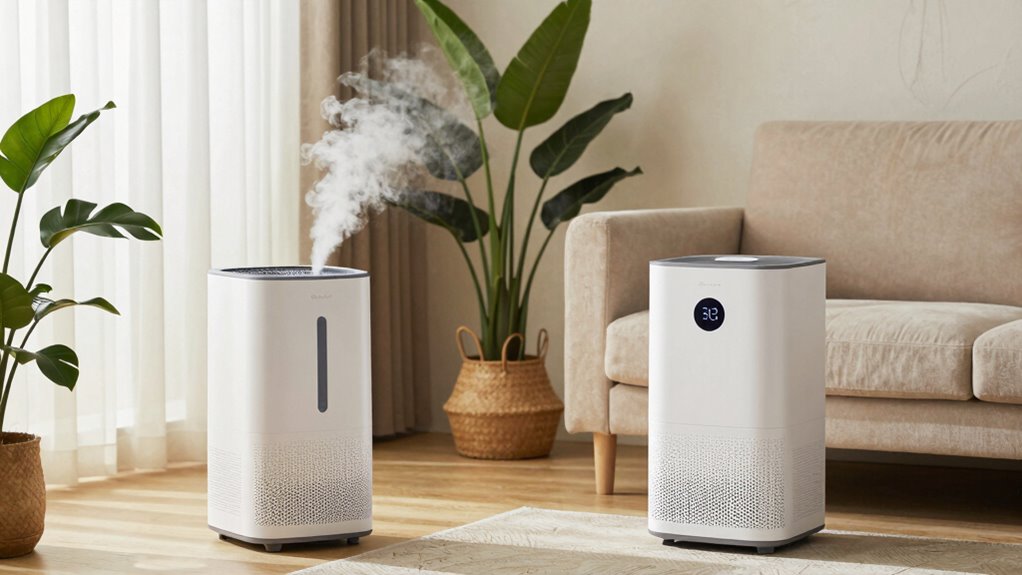
Many people make mistakes when using humidifiers and dehumidifiers that can reduce their effectiveness. Overusing devices, ignoring proper humidity levels, or neglecting maintenance can lead to issues. Understanding these common pitfalls helps you avoid problems and keep your home comfortable and healthy. Additionally, maintaining the correct humidity levels is crucial for optimal device performance and your overall well-being.
Overusing Devices Frequently
Overusing humidifiers or dehumidifiers can lead to unintended problems, such as mold growth or dry skin. Running these devices constantly wastes energy and reduces their efficiency, increasing your electricity bill. To avoid this, you should use them only when necessary and monitor humidity levels regularly. Proper device placement is also essential; placing a dehumidifier in a damp corner or a humidifier near a heat source can make them work harder and less efficiently. Instead, position them in central, well-ventilated areas for ideal performance. Remember, overuse doesn’t just drain your energy; it can create an environment that promotes mold or dryness. Using humidity monitoring tools can help you maintain the optimal indoor environment without overdoing it. Use these devices judiciously to maintain a healthy, balanced indoor climate without wasting power.
Ignoring Humidity Levels
Ignoring humidity levels can cause your humidifier or dehumidifier to work inefficiently, leading to discomfort or potential damage. When you don’t monitor air quality, these devices may overcorrect, making your space too humid or too dry, especially during seasonal changes. Humidity levels naturally fluctuate throughout the year, so failing to adjust your device settings can worsen indoor air quality and create health issues like allergies or respiratory problems. If you overlook humidity levels, you risk trapping excess moisture or removing too much, which can promote mold growth or dry skin. Regularly checking and maintaining proper humidity ensures your device operates effectively, improves air quality, and adapts to seasonal shifts. Understanding humidity regulation is vital for maintaining a healthy indoor environment. This simple practice keeps your environment comfortable and safe year-round.
Poor Maintenance Habits
Neglecting regular maintenance can considerably reduce the effectiveness of your humidifier or dehumidifier. Dust accumulation on filters or coils hampers airflow and performance. Failing to replace filters on time leads to mold growth and decreased air quality. To avoid these mistakes, establish a maintenance routine. Regularly clean filters and components, and replace filters as recommended. Incorporating natural pool maintenance practices can also contribute to better device performance and environmental health.
Maintaining Your Humidity Devices for Long-Term Comfort and Safety
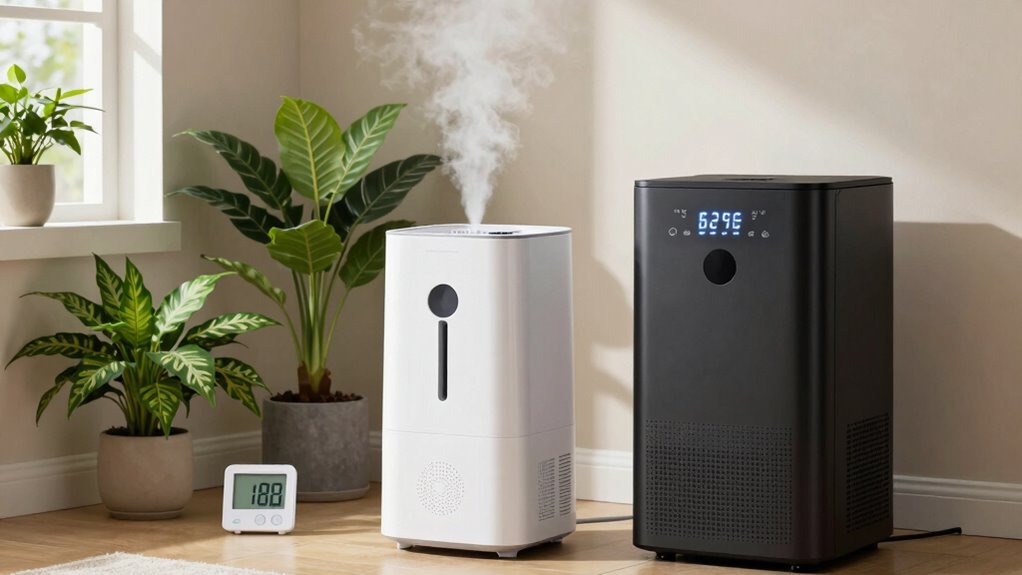
To guarantee your humidity devices continue to operate safely and effectively, regular maintenance is essential. Start by checking device calibration, ensuring your humidifier or dehumidifier provides accurate humidity levels. Proper calibration prevents over- or under-humidifying, which can cause discomfort or damage. Next, prioritize filter replacement—dirty filters reduce efficiency and can introduce mold or bacteria into your home. Depending on usage, replace filters every one to three months. Keep the device clean by wiping down surfaces and emptying water reservoirs regularly. Inspect power cords and switches for damage. Staying proactive with these maintenance tasks helps extend your device’s lifespan, maintains peak performance, and ensures your home remains a safe, comfortable environment.
Frequently Asked Questions
Can a Humidifier or Dehumidifier Help With Allergies?
Yes, a humidifier or dehumidifier can help with allergies by improving air quality and providing allergy symptom relief. A humidifier adds moisture to dry air, easing symptoms like nasal congestion and dry skin. Conversely, a dehumidifier reduces excess humidity, preventing mold and dust mites that trigger allergies. Using the right device, you create a healthier environment, reducing allergy symptoms and enhancing overall comfort in your home.
Are There Health Risks Associated With Improper Device Use?
Like Pandora’s box, improper device use can release health risks. You might compromise air quality or face device safety issues if you don’t follow instructions. Overusing a humidifier can promote mold growth, while a dehumidifier used improperly might cause electrical hazards. Always maintain your devices, clean filters regularly, and monitor humidity levels to protect your health and guarantee your device remains safe and effective.
How Energy-Efficient Are Humidifiers Compared to Dehumidifiers?
Humidifiers generally consume less energy than dehumidifiers, making them more cost-efficient for daily use. Dehumidifiers tend to have higher energy consumption because they work harder to remove moisture from the air, especially in damp environments. If you’re aiming to save on energy costs, a humidifier is more efficient. However, your choice depends on your specific needs and the level of humidity control required in your space.
Can These Devices Reduce Mold Growth in the Home?
Picture mold spores lurking in damp corners, thriving in poor air quality and high humidity. Dehumidifiers help reduce mold growth by pulling excess moisture from the air, improving temperature control and creating an environment less hospitable for mold. Humidifiers, on the other hand, can worsen mold issues if used in already damp spaces. So, to fight mold effectively, choose a dehumidifier to maintain best air quality and humidity levels.
What Are the Maintenance Costs for Each Device Type?
You’ll find maintenance costs vary for each device. For humidifiers, expect to replace filters regularly, which adds to your expenses, and they can consume a fair amount of power, especially if running constantly. Dehumidifiers also require filter replacements, but their power consumption is generally higher due to larger motors. Keep in mind, regular maintenance helps prolong their lifespan and keeps them running efficiently, saving you money long-term.
Conclusion
So, whether you’re battling the Sahara inside or feeling like a rainforest, remember: choosing the right device is about solving your indoor climate dilemma, not turning your home into a weather disaster. Don’t let your humidifier turn your living room into a swamp, or your dehumidifier steal the moisture like a desert thief. Master these tools wisely, and your home will be the perfect climate—without needing a passport.