Indoor plants can help improve air quality, but their impact is modest and depends on proper care, plant type, and environmental factors. They absorb some pollutants through leaves and roots, working slowly and best when combined with good ventilation and air purifiers. Overcrowding and neglect reduce their effectiveness. To get the most benefits, position plants correctly and maintain healthy conditions. Keep exploring for practical tips and realistic expectations to make indoor plants work best for you.

Get the little things that make your day delivered free — and shop member deals
- Fast, free delivery on millions of items
- Access to Prime Big Deal Days deals on October 6–7
- Prime Video, Amazon Music and more included
Key Takeaways
- Indoor plants can slightly improve air quality but are not a substitute for ventilation or air purifiers.
- Their pollutant removal efficiency depends on plant species, soil health, placement, and maintenance.
- Large plants have limited air-cleaning power; benefits increase with proper distribution and healthy growth.
- Regular care, correct placement, and good airflow optimize plants’ ability to filter airborne toxins.
- Expect modest improvements; combine plants with other strategies for a healthier indoor environment.
As an affiliate, we earn on qualifying purchases.
Do Indoor Plants Really Improve Indoor Air Quality?

Many people believe that having indoor plants can substantially improve air quality, but the scientific evidence is more nuanced. While plants do contribute to a healthier environment, their impact depends on factors like plant watering and soil nutrients. Proper plant watering ensures healthy growth, which in turn supports the plant’s ability to absorb pollutants. Healthy soil nutrients promote robust root systems, allowing plants to thrive and carry out their natural functions effectively. Additionally, microplastics in dust can be reduced slightly through the natural filtering process of certain plants, but this effect is generally minimal without proper maintenance. Furthermore, plant maintenance practices such as regular pruning and cleaning can enhance their air-purifying capabilities. It is also worth noting that the technology and design of home air filtration systems often outperform plants in removing specific airborne contaminants. However, the air purification capabilities of plants are often overstated, and relying solely on them may not significantly improve indoor air quality. They may improve your mood and humidity levels, but their role in considerably reducing indoor pollutants is limited without proper maintenance. To maximize benefits, focusing on air purifier maintenance — such as regular filter checks and proper placement — is more effective in improving indoor air quality than relying solely on plants.
As an affiliate, we earn on qualifying purchases.
How Do Indoor Plants Filter and Clean Air?
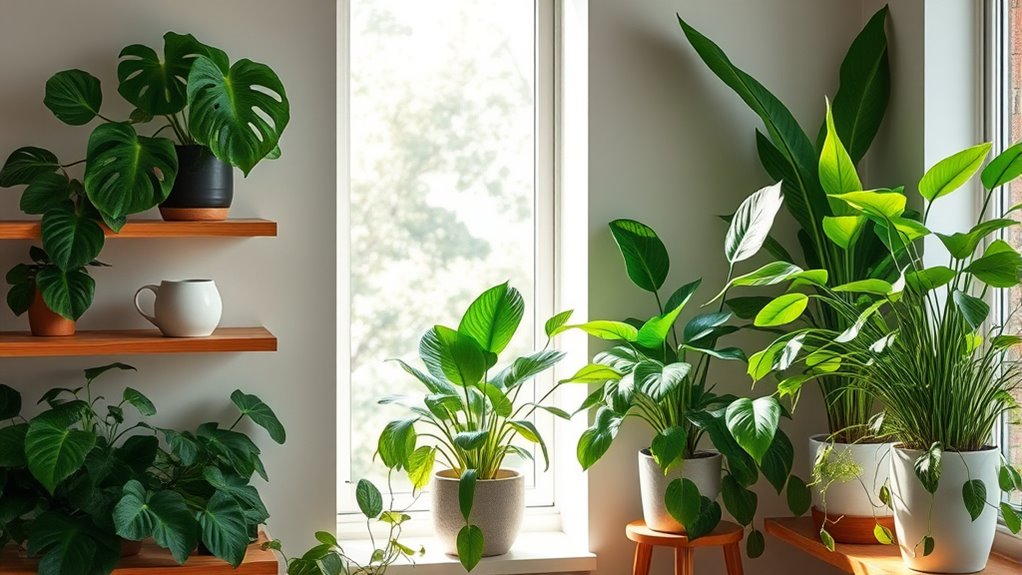
Indoor plants can help improve air quality by actively absorbing certain pollutants through their leaves and roots. This process involves plant morphology, which determines how effectively a plant captures airborne toxins like formaldehyde and benzene. As pollutants settle on the leaves, they can be broken down or transformed by the plant’s metabolic processes. Meanwhile, soil microbes in the potting medium play a pivotal role by decomposing organic pollutants that reach the soil. These microbes work symbiotically with the plant, enhancing pollutant removal. The structure of the plant, including leaf surface area and root system, influences how much air it can filter. Additionally, the efficiency of pollutant removal depends on the microbial activity present in the soil, which varies among plant types and soil conditions. A diverse microbial community can further boost the pollutant degradation process, making the system more effective overall. This biological system is influenced by factors like soil composition and watering practices, which affect microbial health and activity. Furthermore, choosing plants with large leaf surfaces can improve their air-filtering capacity. Together, plant morphology and soil microbes create a natural, biological system that helps clean the air you breathe indoors.
As an affiliate, we earn on qualifying purchases.
How Much Air Do Indoor Plants Actually Purify?
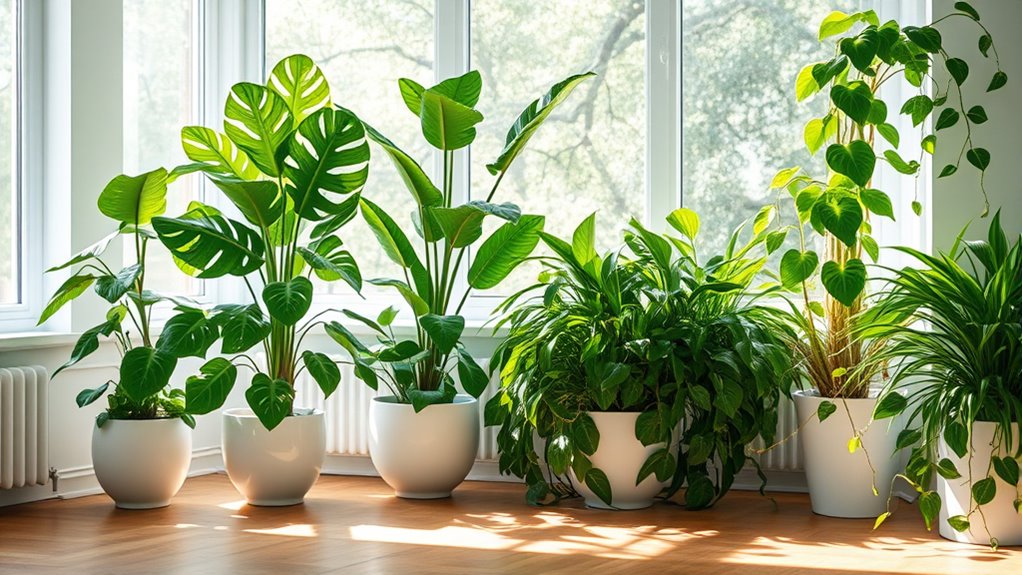
You might wonder how much indoor plants can really improve your air quality. The number of plants you have and how often the air circulates play big roles in their effectiveness. Keep in mind, there’s a limit to how much they can purify, so they work best as part of a broader air-cleaning strategy. Additionally, understanding home safety features like indoor air monitoring can help you better assess and improve your indoor environment. Incorporating growth mindset principles can also encourage children to develop positive attitudes toward environmental health and safety. Proper plant selection can enhance air purification, but it’s important to remember that plants alone cannot replace proper ventilation and air filtration systems. Recognizing the air circulation patterns within your space can help optimize the placement and number of plants for maximum benefit. Moreover, considering plant care practices ensures your indoor greenery remains healthy and effective in their air-purifying role.
Plant Density Matters
While plants are often praised for their air-purifying abilities, their effectiveness depends heavily on how densely they are arranged. Higher plant density increases the overall foliage thickness, which can improve the removal of airborne pollutants. Furthermore, proper plant health is essential for maximizing their air-cleaning potential. However, simply adding more plants isn’t always better if they’re too spaced out; ideal plant density ensures maximum surface area for air contact. This is especially true when considering indoor air quality principles, which emphasize the importance of balanced airflow and plant arrangement. To illustrate, consider this:
| Plant Density | Foliage Thickness | Air Purification Potential |
|---|---|---|
| Low | Sparse | Limited |
| Moderate | Balanced | Enhanced |
| High | Thick | Most effective |
| Overcrowded | Crowded | Reduced airflow |
Proper plant density ensures you get the most air-purifying benefit without hindering airflow. Additionally, maintaining appropriate air circulation helps maximize the benefits of your indoor plants. Recognizing the importance of plant placement can further optimize air quality improvements in your space. Understanding how plant density directly influences air purification efficiency is key to designing an effective indoor garden.
Air Change Rate Influence
Although indoor plants can improve air quality, their actual impact depends on how much air they exchange with the surrounding environment. The air change rate influences how effectively plants can filter pollutants, but it’s limited by factors like humidity levels and light exposure. Higher humidity can support plant health and optimize their natural processes, potentially enhancing their purification ability. Conversely, insufficient light exposure reduces photosynthesis, limiting the plants’ capacity to process airborne contaminants. If the air isn’t circulating enough, even healthy, well-lit plants won’t substantially improve air quality. Therefore, to maximize their benefits, you need to guarantee proper light exposure and maintain balanced humidity levels, allowing the plants to actively engage in air purification within the existing air change rate of your space.
Purification Limits Realistic
Indoor plants do contribute to cleaner air, but their overall impact is often less dramatic than people expect. You shouldn’t rely on them alone to purify your space. Here’s what you need to know:
- Large plant size makes a difference, but even big plants have limited air-cleansing power. Plant efficacy varies depending on species and conditions, and understanding the specific air purification capabilities of each plant helps set realistic expectations.
- Soil quality impacts how well a plant can absorb toxins; poor soil reduces effectiveness.
- Most plants remove only a small percentage of airborne pollutants, not enough to replace air filters.
- To truly improve air quality, combine plants with proper ventilation and air purification methods.
- The specific plant species and their natural abilities also influence how much they can purify indoor air.
While plants are a lovely addition, managing expectations is key—realistic benefits depend on plant size and soil quality, not on miracle air cleaning.
As an affiliate, we earn on qualifying purchases.
Which Indoor Plants Are Best for Air Purification?
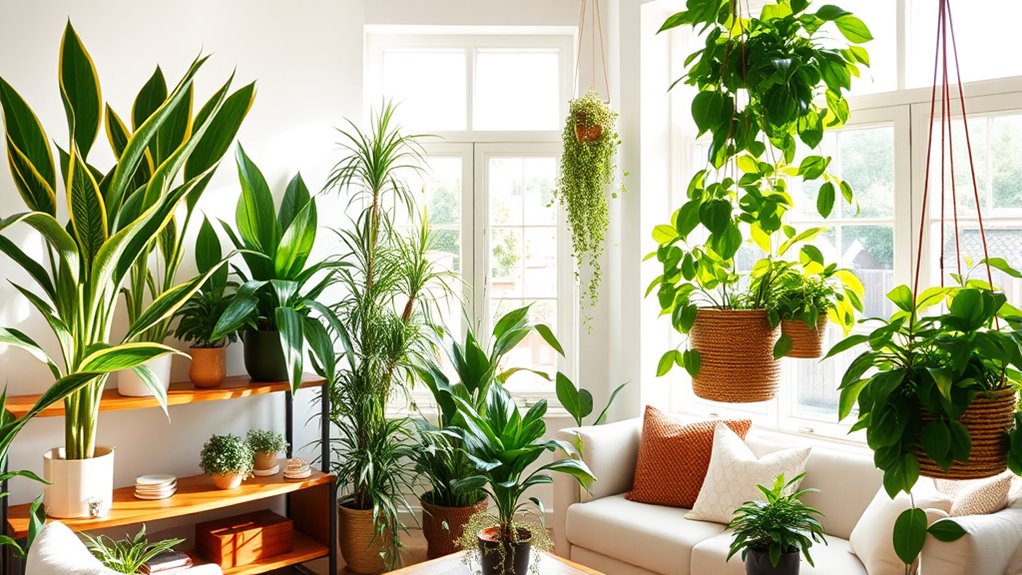
Are you wondering which indoor plants can help improve your home’s air quality? The best choices often include snake plants, pothos, and peace lilies, known for their ability to filter common indoor pollutants. When selecting these plants, consider plant maintenance—regular watering and pruning keep them healthy and effective. Proper pest management is also essential; inspect plants regularly to prevent infestations that could harm your air quality. Low-maintenance plants like snake plants are especially good if you’re new to indoor gardening. Remember, healthy plants are more efficient at purifying air, so consistent care is key. While no plant will completely purify your home, choosing the right varieties and maintaining them properly can make a noticeable difference.
What Are the Limitations of Indoor Plants for Cleaning Air?
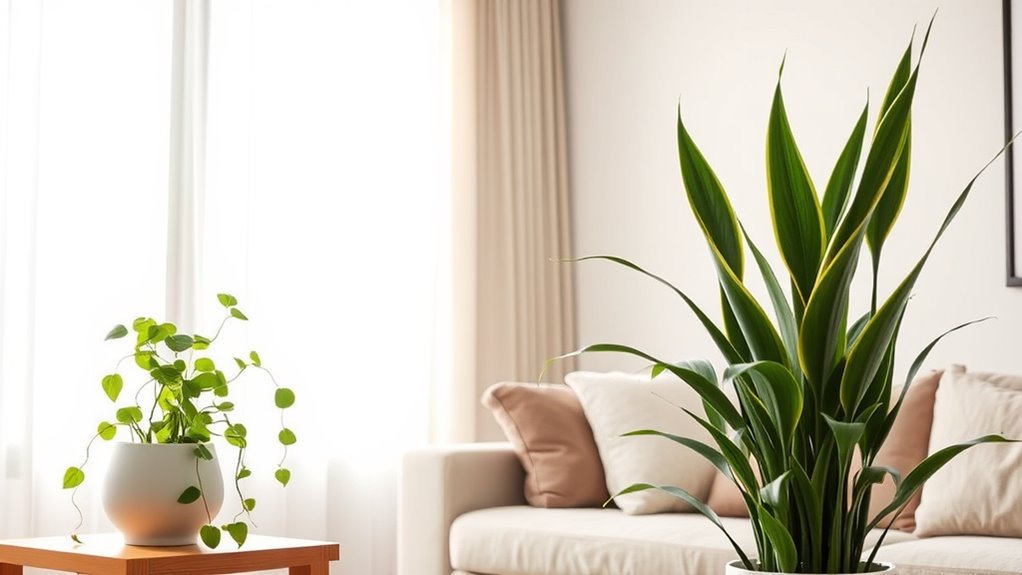
While indoor plants can improve air quality, they do have limitations that you should be aware of. First, plant size matters: small plants may not filter enough air, making their impact minimal. Second, soil health is vital; poor soil can limit a plant’s ability to absorb toxins effectively. Third, plants work slowly—don’t expect instant results or significant purification in a short time. Fourth, they can’t replace proper ventilation or air purifiers, especially in heavily polluted spaces. Additionally, overwatering or neglecting soil health can stunt growth, reducing their air-cleaning ability. Moreover, filter sizing and flow are crucial for ensuring that plants can contribute effectively to air purification. Proper plant placement also impacts their effectiveness; placing them in low-traffic or poorly ventilated areas reduces their potential benefits. Remember, indoor plants are a supplement, not a complete solution. Managing expectations helps you appreciate their benefits without relying solely on them for air quality improvements.
What Factors Affect How Well Indoor Plants Purify Air?

Several factors determine how effectively indoor plants can clean the air around you. One key aspect is soil nutrients, which influence plant health and their ability to absorb toxins. Healthy plants with well-nourished soil perform better in filtering airborne pollutants. Additionally, watering frequency impacts plant vitality; overwatering can cause root rot, while underwatering stresses the plant, reducing its air-purifying ability. Proper watering ensures plants stay healthy and active in their cleaning role. Light exposure and plant species also matter, but soil nutrients and watering routines are directly manageable factors. By maintaining ideal soil conditions and watering habits, you can support your indoor plants in their effort to improve air quality more effectively. Smart Strategies for Effective Personal Finance Planning
How Can You Support Indoor Plants With Other Air Quality Strategies?
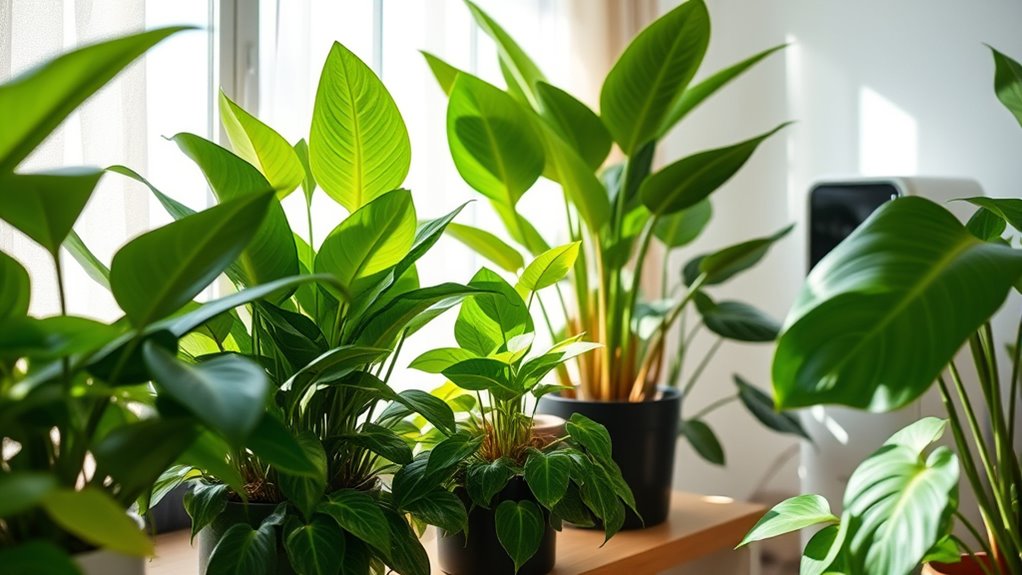
Maintaining healthy indoor plants is just one part of improving air quality; combining their efforts with other strategies can make a significant difference. To support your plants and enhance air quality, focus on optimizing environmental factors and proper plant care.
Consider these strategies:
- Regulate humidity—keep levels comfortable for plants and your lungs.
- Ensure proper ventilation—fresh air dilutes pollutants and reduces buildup.
- Limit indoor pollutants—avoid smoking or using harsh chemicals inside.
- Use air purifiers—supplement plant filtration with devices designed for airborne toxins.
What Are Realistic Expectations for Indoor Plants and Air Quality?

Indoor plants can improve air quality, but it’s important to have realistic expectations about their impact. While they do absorb some toxins and add humidity, they won’t completely eliminate pollutants. Proper plant placement is key—place plants in well-ventilated areas where they can effectively filter the air without being overcrowded. Soil quality also matters; healthy, nutrient-rich soil supports vibrant growth and improves a plant’s ability to purify the air. Keep in mind that plants work best as part of a broader air quality strategy, not as a sole solution. Don’t expect instant results or dramatic changes—think of indoor plants as a helpful supplement that can contribute to a healthier environment when combined with other measures.
Tips for Maximizing Your Indoor Plants’ Air-Purifying Benefits
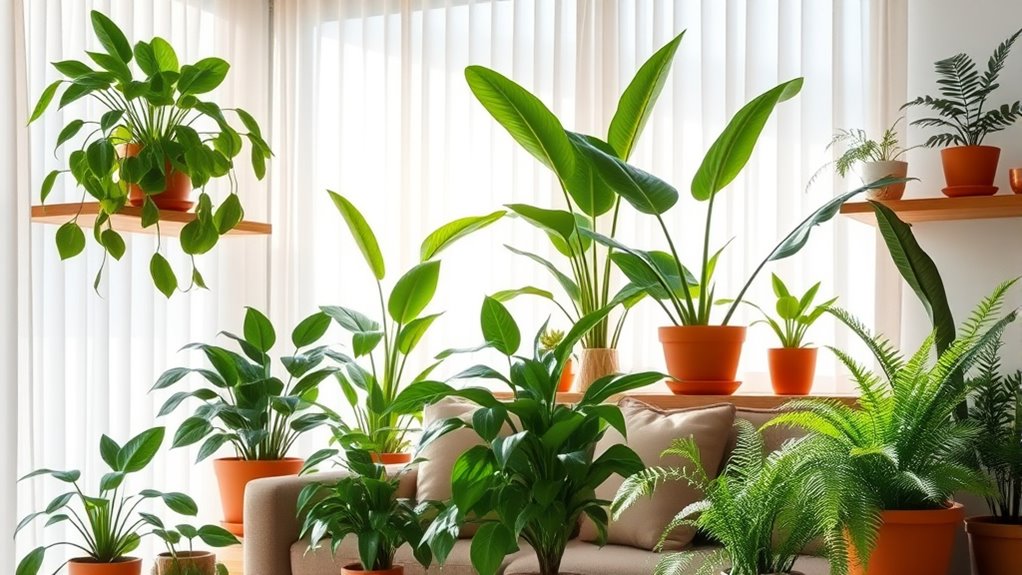
To maximize your indoor plants’ air-purifying benefits, guarantee they receive adequate light, proper watering, and good airflow. Proper plant placement is vital; position your plants where they can soak up indirect sunlight. Adjust your watering frequency based on the plant’s needs—overwatering can harm them, while underwatering reduces their effectiveness. Here are four tips to boost their air-cleaning power:
- Place plants strategically in high-traffic areas for better air circulation.
- Maintain consistent watering to keep plants healthy and active.
- Ensure good airflow around your plants to prevent mold and promote gas exchange.
- Rotate your plants regularly to evenly expose all sides to light, maximizing absorption.
Frequently Asked Questions
Can Indoor Plants Eliminate All Indoor Air Pollutants?
Indoor plants can’t eliminate all indoor air pollutants, but they can help reduce some levels. Keep in mind, plant toxicity varies, so choose non-toxic varieties if you have pets or children. You’ll also face maintenance challenges, like watering and cleaning to keep your plants healthy. While they improve air quality modestly, don’t rely solely on plants; use proper ventilation and air purifiers for the best results.
How Quickly Do Indoor Plants Improve Air Quality?
Think of indoor plants as gentle healers slowly restoring balance. You’ll notice air quality improves gradually, typically over weeks, depending on their growth rate and pollutant absorption capacity. As plants grow and mature, their ability to filter pollutants enhances, but don’t expect instant results. Your plants are working silently, steadily absorbing toxins and improving air, symbolizing patience and nurturing in your space. Trust the process, and you’ll see subtle, ongoing benefits.
Are Certain Room Sizes Better Suited for Air-Purifying Plants?
Yes, certain room sizes are better suited for air-purifying plants. Larger rooms with more space allow you to accommodate bigger plant sizes and multiple plants, which enhance air purification. Small rooms benefit from compact plant sizes to prevent overcrowding and maintain airflow. When choosing plants, consider your room dimensions and plant size to make sure they fit well, thrive, and effectively improve air quality without overwhelming the space.
Do Plant Types Affect the Level of Air Purification?
Absolutely, plant species dramatically impact air purification! Some plants, like snake plants and pothos, banish toxins so effectively you’d think they have superpowers. But remember, environmental factors like humidity, light, and air flow tweak their efficiency. So, choosing the right plant species tailored to your space makes all the difference—it’s like giving your indoor air a superhero upgrade!
Can Indoor Plants Replace Traditional Air Filtration Systems?
Indoor plants can’t replace traditional air filtration systems, but they can complement them. While they improve air quality through plant care and add aesthetic appeal, they aren’t designed to filter out pollutants as effectively as mechanical filters. Use plants to boost your space’s vibe and support overall well-being, but rely on certified systems for serious air purification needs. Combining both offers the best of both worlds for healthier indoor air.
Conclusion
While indoor plants can brighten your space and help improve air quality, they’re like gentle helpers, not miracle workers. Think of them as a invigorating breeze rather than a storm that clears all the air pollutants. To truly breathe easier, combine your green friends with proper ventilation and regular cleaning. Together, these strategies create a harmonious environment where fresh air flows freely, turning your home into a lush oasis of health and comfort.
Halloween Picks
halloween
As an affiliate, we earn on qualifying purchases.