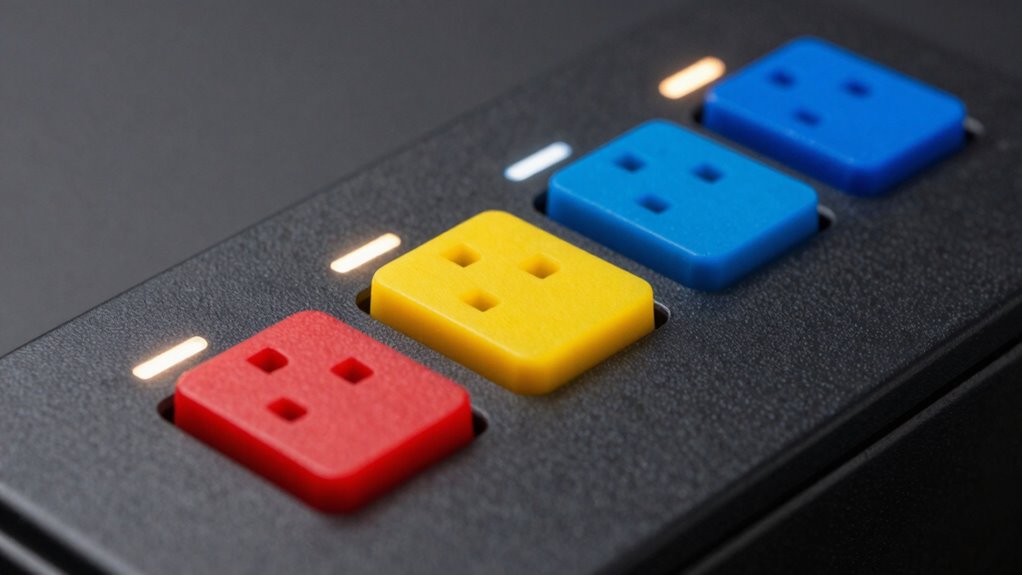

Electrical outlets use color codes and buttons to indicate their safety and functionality. For example, green or indicator lights often show the outlet is working properly, while red signals issues or faults. Buttons, like test and reset ones, help verify safety features or restore power after a fault. Child-proof outlets may have special covers or buttons to prevent shocks. If you want to understand what each feature truly means, keep exploring to become more confident in maintaining safe electrical systems.

Get the little things that make your day delivered free with Prime
- Fast, free delivery on millions of items
- Prime Video, Amazon Music and more included
- Member-only deals all year
Key Takeaways
- Outlet indicator lights (green/red) signal operational status or safety issues, aiding quick assessment.
- Built-in test and reset buttons verify safety features and restore power after faults.
- Color-coded wires (black/red for hot, white for neutral, green/bare for ground) ensure correct, safe connections.
- Child-proof outlets often have special buttons or covers to prevent accidental shocks.
- Proper installation and regular safety testing confirm outlet functionality and protect against electrical hazards.
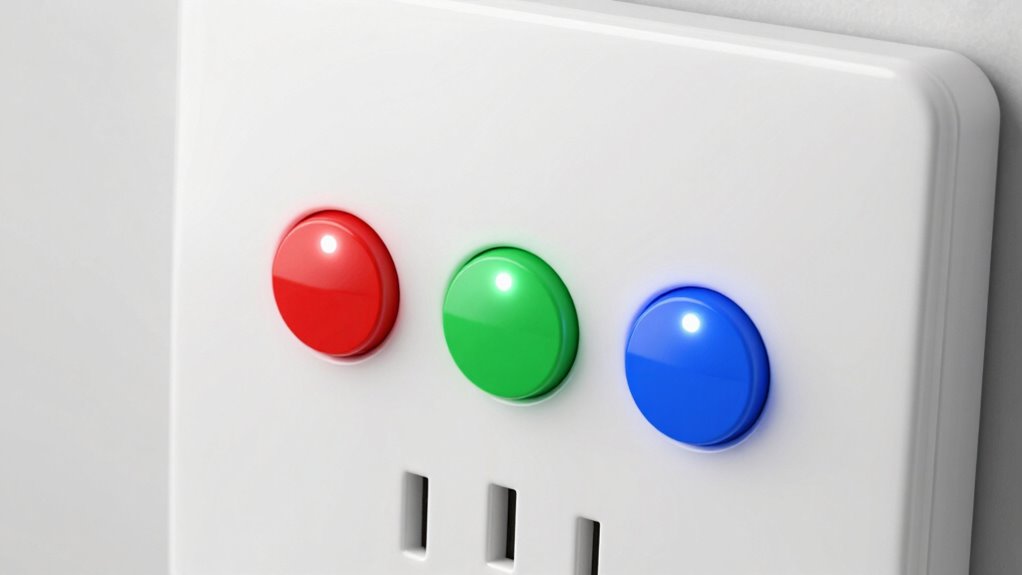
Electrical outlets often feature different colors and buttons, but understanding their meanings can seem confusing at first. You might notice some outlets have colored indicators or extra buttons, and it’s natural to wonder what they signify. Knowing the wire color standards is essential because they tell you which wire is which, ensuring you connect everything safely and correctly. Typically, in North American wiring, the black or red wire is the hot wire, the white wire is neutral, and the green or bare copper wire is ground. These color standards help you identify the purpose of each wire when installing or troubleshooting an outlet, reducing the risk of electrical shock or fire.
Many outlets are designed with safety features that are highlighted by their colors or buttons. For example, some outlets include a small, built-in test and reset button, often seen on GFCI (Ground Fault Circuit Interrupter) outlets. These buttons are usually colored red or black, making them stand out. The reset button restores power after a ground fault, while the test button simulates a fault to ensure the outlet’s safety mechanism works properly. Pressing these buttons regularly helps you confirm that your outlet provides protection against electrical shocks, especially in areas prone to moisture like kitchens or bathrooms. Outlets with these safety features are crucial for preventing accidents, and their buttons serve as both a test and a reset function.
In addition to GFCI outlets, some outlets feature color-coded indicators that signal their status or safety features. For instance, a small LED light might glow green when the outlet is functioning correctly, or red if there’s a problem. These visual cues help you quickly assess whether the outlet is safe to use without needing additional testing tools. Some outlets also incorporate child-proof features, which might involve a different color or a special button to unlock or activate the outlet. These enhancements aim to prevent accidental shocks or injuries, especially in homes with children. Understanding electrical safety features can help you make informed decisions when choosing and maintaining outlets. Moreover, being aware of outlet indicator lights can provide quick safety checks at a glance. Recognizing the importance of proper installation ensures that safety mechanisms perform as intended and reduces potential hazards. Additionally, familiarizing yourself with safety testing procedures can further enhance your confidence in maintaining safe electrical systems. It’s also helpful to regularly check outlet color codes to ensure all safety features are functioning as intended.
As an affiliate, we earn on qualifying purchases.
Frequently Asked Questions
Are Outlet Colors Standardized Across All Countries?
Outlet colors aren’t standardized across all countries, so you might encounter different colors and variations depending on where you are. Many believe in color coding myths, thinking specific colors mean certain functions, but outlet color variations often serve aesthetic or manufacturing purposes, not safety or functionality. Always check local electrical standards, because relying on outlet colors alone can be misleading or unsafe. Stay cautious and verify what each outlet truly signifies.
Do Different Button Colors Indicate Safety or Functionality?
Different button colors do indicate safety or functionality through color coding and button functions. For instance, red buttons often signal emergency shutdowns or safety features, while green buttons typically activate functions or power on devices. You should always pay attention to these color cues, as they help you quickly identify each button’s purpose and guarantee safe operation. Understanding the color coding enhances safety and helps prevent accidental activation or misinterpretation.
Can Outlet Colors Change Over Time or With Wear?
Yes, outlet colors can change over time due to wear and discoloration. As outlets age, their colors may fade or develop stains from exposure to dust, dirt, or moisture. You might notice the original color fading over time, making it harder to identify safety features or functionality. Regular inspection helps guarantee that the outlet’s appearance and safety features remain intact, preventing potential electrical hazards caused by unnoticed damage or deterioration.
Are There Any Legal Regulations for Outlet Color Coding?
You might be surprised to learn that there are no strict legal regulations for outlet color coding, which often fuels color coding confusion and outlet labeling myths. While some standards exist for electrical wiring, outlet colors aren’t universally regulated, leading to variations. This coincidence can cause misunderstandings about safety or function, so always check labels or consult a qualified electrician rather than relying solely on color cues, for your safety and peace of mind.
How Do I Identify the Correct Outlet Button for Specific Appliances?
To identify the correct outlet button for specific appliances, check the outlet labeling and match it to your appliance’s power requirements. Some outlets have labeled buttons or switches indicating their function, like “high power” or “ground fault.” Make sure your appliance is compatible with the outlet’s specifications to prevent damage. If unsure, consult your appliance’s manual or a professional electrician to confirm the correct outlet button and ensure proper appliance compatibility.
child-proof electrical outlet covers
As an affiliate, we earn on qualifying purchases.
As an affiliate, we earn on qualifying purchases.
Conclusion
Understanding the colors and buttons on electrical outlets helps you use them safely and effectively. While some claim that specific colors indicate voltage levels or safety features, the truth is that standards vary widely by manufacturer and region. Don’t rely solely on colors or buttons to judge an outlet’s purpose—always check labels or consult a professional. Verifying these details ensures you’re truly safe and not just trusting a popular but potentially misleading theory.
As an affiliate, we earn on qualifying purchases.
As an affiliate, we earn on qualifying purchases.
Halloween Picks
halloween
As an affiliate, we earn on qualifying purchases.