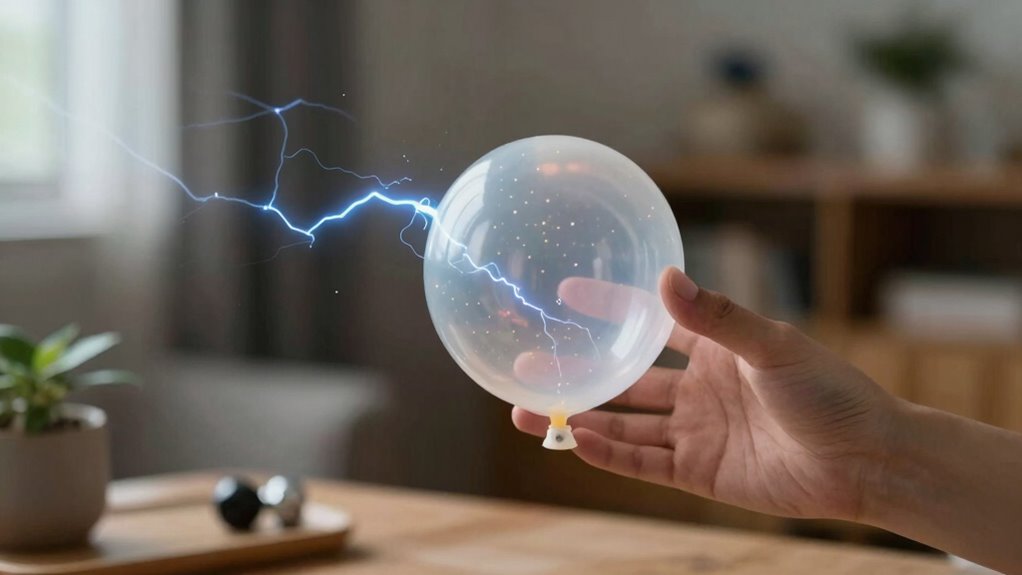

At home, static electricity happens when you transfer electrons through contact, like walking on a carpet or rubbing a balloon on your hair. These movements cause your body to build up a charge, which can trigger shocks or make your hair stand up. Environmental factors, like dry air, make static more noticeable because electrons don’t dissipate easily. Understanding how these charges build up and discharge helps you manage static better—there’s more interesting science behind it as you learn further.

Get the little things that make your day delivered free with Prime
- Fast, free delivery on millions of items
- Prime Video, Amazon Music and more included
- Member-only deals all year
Key Takeaways
- Static electricity results from electrons transferring between objects through contact and friction.
- Dry indoor air enhances static buildup by preventing electrons from dissipating into the atmosphere.
- Rubbing materials like balloons or carpets transfers electrons, creating negative charges and observable effects.
- Sudden discharges occur when accumulated electrons rapidly move to balance charge differences.
- Increasing humidity indoors reduces static electricity by helping charges dissipate more easily.
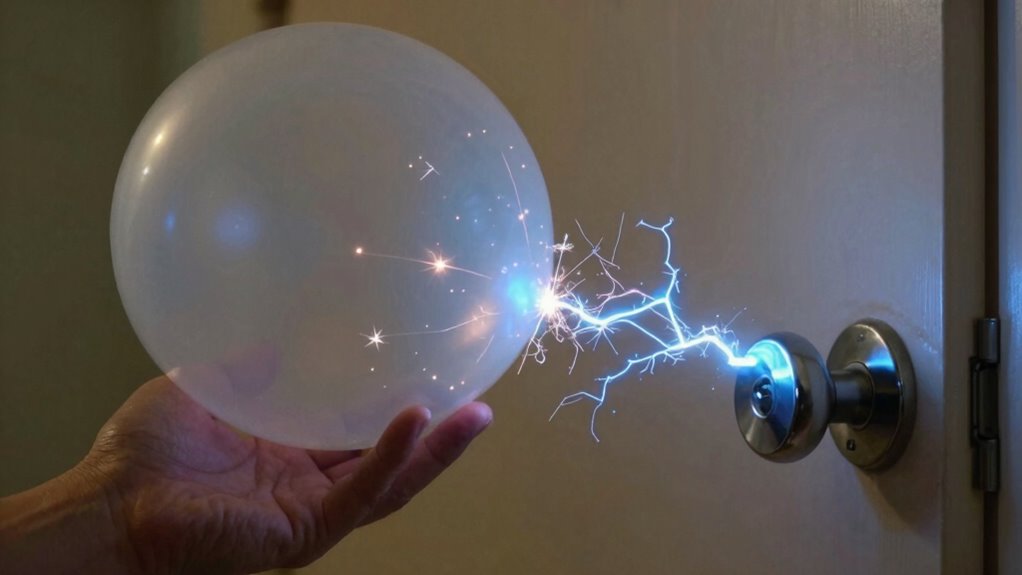
Have you ever wondered what causes that sudden shock when you touch a doorknob or notice your hair standing on end? It all boils down to electrostatic forces, which are invisible but powerful interactions between electric charges. When you move around, your body can pick up or lose electrons, leading to a build-up of electric charge. This process, known as charge transfer, happens when electrons jump from one object to another. For example, walking across a carpet can cause your shoes to gain extra electrons, making you negatively charged. When you then touch a metal doorknob, the excess electrons rapidly transfer from your body to the doorknob, resulting in a shock. That quick discharge of electricity is a direct consequence of electrostatic forces acting to balance out the charge difference.
Your hair standing on end occurs because your body and hair are similarly charged during this process. When your hair is negatively charged, each strand repels the others because like charges repel. As a result, your hair strands push apart and stand upright. The same principle explains why rubbing a balloon on your hair makes it stick and causes your hair to stand out. The balloon and your hair exchange charge through charge transfer, with electrons moving from one surface to the other. When the balloon becomes negatively charged, it can attract neutral objects or cause your hair to repel due to electrostatic forces. This is a simple yet fascinating display of how charge transfer creates observable effects at home.
In everyday life, static electricity is often harmless but can be surprisingly noticeable. The key lies in how charges accumulate and suddenly discharge. The faster electrons move to balance the charge imbalance, the more sudden and noticeable the shock or hair-raising effect. Sometimes, environmental factors like dry air make static electricity more prominent because dry conditions don’t allow electrons to escape easily into the atmosphere. Instead, they stay on surfaces and on your body, increasing the likelihood of charge buildup. Additionally, understanding the role of biodiversity and sustainable living practices can help us appreciate how natural environments influence our exposure to static phenomena, especially in dry, natural settings. Environmental factors like humidity levels can influence how easily static charges are dissipated, reducing the chances of static shocks. Maintaining proper indoor humidity levels can therefore play a crucial role in minimizing static buildup in homes. Furthermore, awareness of natural environmental factors can help us better understand when and why static electricity tends to be more intense.
Furthermore, maintaining healthy humidity levels indoors can significantly reduce static buildup, making everyday interactions more comfortable. Understanding the science behind static electricity helps demystify these common phenomena. It reveals how electrostatic forces and charge transfer are active all around you, constantly influencing interactions between objects. So, next time your hair stands on end or you get a startling shock, you’ll know it’s just electrons moving to restore balance, driven by the unseen but fundamental forces of electricity.
As an affiliate, we earn on qualifying purchases.
Frequently Asked Questions
Can Static Electricity Cause Electrical Fires at Home?
Yes, static electricity can cause electrical fires at home, especially through electrostatic shocks. When you rub certain clothing materials together, like wool or synthetic fabrics, you can build up static charge. If this static discharges near flammable vapors or electrical equipment, it might spark a fire. To prevent this, avoid wearing highly static-prone clothing around open flames or sensitive electronics, and stay grounded to reduce static buildup.
How Does Humidity Affect Static Electricity Buildup?
Humid air can feel like a shield against static electricity, and it really is! When humidity levels rise, moisture in the air helps dissipate static charge accumulation on surfaces and your skin. This reduces the chances of static shocks and sparks. So, if you want to minimize static buildup at home, increasing humidity is a simple, effective way to keep static electricity in check and make your environment more comfortable.
Is Static Electricity Harmful to Electronic Devices?
Static electricity can harm electronic devices through electrostatic discharge, which happens when a buildup of static charge suddenly releases. Conductive materials, like metal, can help prevent this by safely conducting static away. You should handle sensitive electronics carefully, especially in dry environments where static buildup is more likely. Using anti-static wristbands or mats also helps protect your devices from damage caused by electrostatic discharge.
Why Do Some People Generate More Static Than Others?
You generate more static than others mainly because of differences in clothing insulation and skin dryness. When you wear synthetic fabrics, they trap more electrostatic charges, increasing the chance of electrostatic shocks. Dry skin also makes it easier for static to build up, as moisture helps dissipate charges. So, if you notice frequent shocks, consider switching to natural fabrics and moisturizing your skin to reduce static buildup.
Can Static Electricity Be Used for Any Practical Household Purposes?
Yes, static electricity can be useful around your home. For example, static shocks can help remove dust from clothing or upholstery, especially when using specific clothing materials like wool or synthetic fibers. You can also use static electricity to dust electronics or clean delicate surfaces without harsh chemicals. Just be cautious—static shocks can be startling, but with proper handling, you can turn static electricity into a handy cleaning tool.
As an affiliate, we earn on qualifying purchases.
Conclusion
Now that you understand how static electricity works in your daily life, you might wonder if there’s a way to harness or even control it. While static shocks are harmless, they remind us of the fascinating science happening all around us. Isn’t it amazing how tiny electrical charges can create such noticeable effects? Next time you feel that zap, you’ll know it’s just science in action, quietly reminding you of the invisible forces at play in your home.
As an affiliate, we earn on qualifying purchases.
humidifier with adjustable humidity control
As an affiliate, we earn on qualifying purchases.
As an affiliate, we earn on qualifying purchases.
NFL season / tailgating Picks
team gear
As an affiliate, we earn on qualifying purchases.