

To prevent pantry pests, inspect packages carefully before bringing them home and store food in airtight, pest-proof containers. Keep your pantry clean, wipe shelves regularly, and seal cracks and gaps to block entry points. Look out for signs like tiny insects, webbing, or damaged packaging to catch infestations early. Using natural repellents or safe insecticides can help eliminate pests. Implementing these tips now will help you stop tiny invaders before they take over your kitchen.
Key Takeaways
- Inspect packages carefully and discard damaged foods before storing to prevent pest entry.
- Store all dried goods in airtight, pest-proof containers to block pests’ access and hiding spots.
- Maintain cleanliness by regularly wiping shelves, vacuuming, and removing crumbs or spills that attract pests.
- Conduct routine pantry inspections for signs like webbing, holes, or live insects for early detection.
- Seal cracks, gaps, and vulnerabilities around storage areas to prevent pests from entering your pantry.

Airtight Food Storage Containers with Lids, Vtopmart 24 pcs Plastic Kitchen and Pantry Organization Canisters for Cereal, Dry Food, Flour and Sugar, BPA Free, Includes 24 Labels,Black
Help Organize Your Kitchen and Pantry— Imagine every time walking to your kitchen or pantry, found everything is…
As an affiliate, we earn on qualifying purchases.
As an affiliate, we earn on qualifying purchases.
How Do Pantry Pests Get Into Your Food and How Can You Stop Them?

Pantry pests often find their way into your food through packaging cracks, open containers, or by hitching a ride on new grocery items. These pests enter via tiny entry points that may go unnoticed, making it easy for them to access stored food. Accidental contamination happens when pests or their eggs cling to packaging or ingredients during shopping or stocking. To prevent this, inspect packages carefully before bringing them home, and avoid purchasing damaged or open products. Store your food in airtight containers to block entry points and eliminate hiding spots. Regularly clean your pantry to remove crumbs and spills that attract pests. By controlling entry points and avoiding contamination, you considerably reduce the chances of pantry pests invading your food supply. Additionally, understanding the role of entry points in pest infestation can help you identify and seal potential vulnerabilities in your storage areas. Sealing these entry points effectively prevents pests from gaining access and establishing a presence in your pantry. Proper storage techniques also help keep pests at bay by creating an inhospitable environment for them. Implementing preventive measures such as routine inspections and pest-proof containers can further safeguard your food. Remember that proper storage is key to maintaining pest-free food storage areas.
![Gamma2 Vittles Vault Pet Food Storage Containers - Sealed Dog and Cat Food Storage Container, Fits up to 25lbs, Made in the USA - [12"L x 13.75"H]](https://m.media-amazon.com/images/I/41XKsqOw1kL._SL500_.jpg)
Gamma2 Vittles Vault Pet Food Storage Containers – Sealed Dog and Cat Food Storage Container, Fits up to 25lbs, Made in the USA – [12"L x 13.75"H]
PRESERVE FRESHNESS AND FLAVOR: This airtight pet food container helps your pet's dry food to stay tasty with…
As an affiliate, we earn on qualifying purchases.
As an affiliate, we earn on qualifying purchases.
How to Recognize Signs of Pantry Pest Infestation

You might notice tiny insects or webbing in your pantry, which are clear signs of pests. Unusual damage to food packaging or hidden holes can also indicate an infestation. Additionally, strange odors coming from your stored goods often point to pest activity. Proper cabling solutions and secure storage can help prevent pest access and infestation. Regularly inspecting and maintaining your pantry can also detect early signs of an infestation before it becomes severe. Using storage containers made of pest-resistant materials can further safeguard your food from tiny invaders. Ensuring proper food storage practices can significantly reduce the risk of pests entering your pantry. Incorporating regional flavors and scents into your storage areas may also help identify unfamiliar odors that signify pest presence.
Visible Pest Presence
Spotting signs of pantry pest infestation often involves noticing tiny insects or their debris lurking in stored food. You might observe a pest sighting, such as small beetles or larvae crawling near your food items. Pay attention to shelf contamination, where grains or dried goods show visible signs of pest activity. Look for:
- Tiny insects flying or crawling around food packages
- Web-like silk or cocoon remnants in your pantry
- Small holes or tunnels in packaging
- Clusters of eggs or larvae on food surfaces
These signs indicate an active infestation and require prompt action. Recognizing pest presence early helps prevent widespread contamination. Regularly inspect your pantry for these clues to keep your food safe and pest-free. Early detection methods can help you catch problems before they become overwhelming. Additionally, understanding the psychological impact of animal companionship can motivate proactive pest management behaviors, ensuring a healthier environment. Implementing integrated pest management strategies can further reduce the chances of infestation and promote sustainable pest control practices. Being aware of common pest identification features allows for quicker intervention and more effective treatment options. Incorporating preventative measures into your routine can help deter pests from establishing in the first place.
Unusual Food Damage
Unusual damage to your stored foods often signals a pest problem before insects become visible. Look for signs like tiny holes in packaging, shredded food packaging, or powdery residue around containers. These are classic examples of hidden pest signs that indicate an infestation is underway. The presence of moisture buildup can also attract pests and contribute to food spoilage. You might notice that grains, flour, or dried fruit seem to be crumbly or have a strange texture, even if no insects are seen. Sometimes, you’ll find webbing or tunnels inside packages or food items. These signs can appear long before you see actual pests, making them vital indicators of trouble. Recognizing early warning signs helps you act quickly to prevent a full-blown infestation and keeps your pantry safe and pest-free. Understanding proper storage techniques and capacity can further help in reducing pest problems.
Odd Odors in Pantry
Have you noticed a strange, musty odor lingering in your pantry? That’s a common sign of pantry pest activity, often caused by strange odors from infested foods. Pay attention to these clues:
- Scented foods, like spices or grains, develop unusual smells
- A persistent, stale odor that doesn’t go away
- Slight mustiness or chemical-like scents
- Odors that seem to intensify near certain items
These strange odors often originate from pests or their droppings, which can contaminate your food. If you detect these signs, inspect your pantry carefully. Pantry pests thrive in scented foods and hide where you can’t see them easily. Recognizing these odd odors early helps you catch an infestation before it spreads. Staying alert to indoor air quality can help you detect early signs of pest activity. Proper food storage techniques can minimize the risk of infestations and odors. Using airtight containers is an effective way to prevent pests from accessing your food and causing odors. Additionally, maintaining good ventilation can help disperse lingering odors and reduce pest attractants. Stay vigilant and keep your pantry clean to prevent tiny invaders from taking over.

VermExon Peppermint Oil Insect & Pest Control Spray – 16oz Natural Plant-Based Bug Killer for Spiders, Ants, Flies, and Other Insects, Safe for Home & Kitchen Use
[Highly Effective Against Pests]: Scientifically engineered with the natural power of peppermint oil, VermExon 16oz spray is proven…
As an affiliate, we earn on qualifying purchases.
As an affiliate, we earn on qualifying purchases.
Simple Steps to Prevent Pantry Pests From Invading

You can keep pantry pests out by using proper storage techniques, like airtight containers for grains and snacks. Regularly checking your pantry helps catch any signs of infestation early. Taking these simple steps makes it much harder for pests to invade your food supply. Additionally, understanding the lifespan of common pests can help you better plan your prevention efforts. Proper sanitation and eliminating food sources are also critical in preventing pest infestations, ensuring your pantry remains pest-free.
Proper Storage Techniques
To prevent pantry pests from invading, proper storage techniques are essential. Using airtight containers keeps pests out and preserves food freshness. Make sure to transfer grains, cereals, and snacks into these sealed containers instead of leaving them in their original packaging. Pest-proof packaging is also a smart choice for items that can’t be transferred easily, like bags of flour or sugar—just seal them tightly after each use. Store these containers in cool, dry areas away from sunlight, which discourages pest activity. Regularly check for signs of damage or contamination. Keep your pantry organized so you can quickly spot and remove any potential problems. Maintaining these simple storage habits creates an uninviting environment for pantry invaders.
Regular Pantry Checks
Regular pantry checks are one of the most effective ways to catch potential pest problems early. By routinely inspecting your pantry, you can identify signs of pests like tiny holes, webbing, or discarded shells before an infestation worsens. Keep your pantry well-organized to make these checks easier; proper pantry organization helps you spot irregularities quickly. Practice food rotation by using older items first and regularly clearing out expired or unused products. This reduces clutter and minimizes the chances of food becoming a breeding ground for pests. Checking stored items regularly also allows you to catch any signs of contamination early. Staying vigilant and maintaining a clean, organized pantry helps prevent pests from invading and keeps your food safe.

Great Stuff 99108824 Smart Dispenser Gaps & Cracks, Cream, 12 Ounce
THE GAP AND CRACK ATTACKER! Reduce drafts and save energy
As an affiliate, we earn on qualifying purchases.
As an affiliate, we earn on qualifying purchases.
Proper Food Storage Tips to Keep Bugs Out

Proper food storage is essential for preventing pantry pests from making themselves at home. To keep bugs out, use pest proof storage containers that seal tightly. This prevents pests from entering and contaminating your food. Store grains, cereals, and dried fruit in airtight containers to maintain freshness and block pests. Keep pantry shelves clean and dry, as moisture attracts bugs. Regularly check for any signs of infestation, and discard compromised packages immediately. Additionally, avoid leaving food in cardboard boxes or paper bags, which pests can easily chew through. By implementing these simple strategies, you create an uninviting environment for pantry pests. Remember, pest-proof storage is your best defense against tiny invaders sneaking into your food supplies. Stay vigilant and keep your pantry bug-free.
Natural and Chemical Methods to Eliminate Pantry Pests
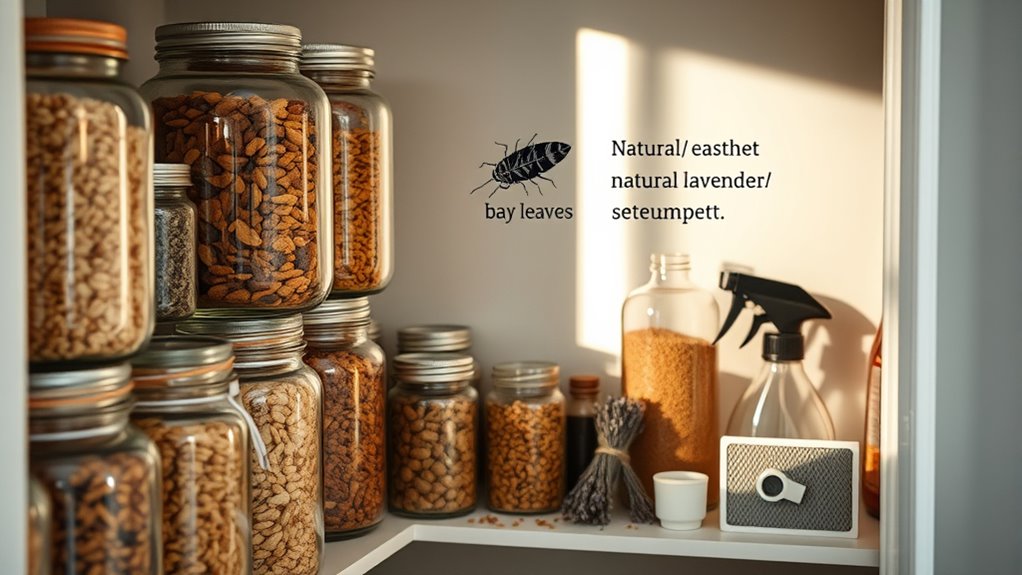
When pantry pests invade, natural and chemical methods offer effective solutions to eliminate them quickly. Eco friendly sprays are a great chemical option; they target pests without harmful residues, making them safe for your family and the environment. Apply these sprays directly to infested areas, following label instructions carefully. For a natural approach, diatomaceous earth is highly effective. Sprinkle it around pantry shelves, cracks, and corners to dehydrate and kill pests on contact. Both methods work fast to reduce infestations and prevent further spread. Remember to wear gloves when handling diatomaceous earth and keep sprays away from food. Combining these approaches gives you a versatile, safe way to eliminate pantry pests and protect your food supply.
Long-Term Strategies to Keep Your Kitchen Pest-Free

To keep your kitchen pest-free in the long run, you need to implement proactive habits that prevent infestations before they start. Start by practicing regular food rotation—use older items first and discard expired products. Store all grains, nuts, and dried goods in pest-proof containers to block entry points. Keep your pantry clean by wiping shelves and vacuuming crumbs weekly. Inspect incoming groceries for signs of pests. Seal cracks and gaps around shelves and cabinets. Limit open food containers to minimize exposure. These habits create a barrier against pests and reduce attractants. Consistency is key; making these practices routine ensures your kitchen stays pest-free over time. With vigilance, you can prevent tiny invaders from taking hold in your food storage areas.
Frequently Asked Questions
Are Pantry Pests Harmful to Health or Only a Nuisance?
Pantry pests can be more than just a nuisance; they pose health concerns too. While they don’t typically cause serious illness, their presence can trigger allergic reactions in sensitive individuals. Additionally, they may contaminate your food with bacteria or mold. You should always address infestations promptly to protect your health and prevent allergic reactions. Keeping your pantry clean and sealed helps stop these tiny invaders from taking over your food supply.
Can Pantry Pests Infest Packaged Foods During Transit?
Imagine your pantry as a fortress—yet, shipping contamination can sneak pests through transit infestation. Yes, pantry pests can infest packaged foods during transit, slipping into boxes or containers before they even reach your shelves. These tiny invaders hide in cracks or packaging, turning your carefully stored food into a battleground. Always inspect packaging carefully upon arrival to prevent unwanted guests from invading your pantry and disrupting your peace of mind.
How Long Does It Take to Eliminate a Pantry Pest Infestation?
It usually takes a few weeks to eliminate a pantry pest infestation, depending on the severity. The infestation timeline varies, but early detection speeds up eradication. You should use effective eradication methods like thorough cleaning, sealing food containers, and applying natural or chemical treatments. Consistently monitor your pantry and repeat treatments if necessary to guarantee complete eradication and prevent future infestations.
Are There Specific Foods More Attractive to Pantry Pests?
You might notice that pantry pests are especially attracted to grains, flour, and dried fruits, which align with their food preferences. Coincidentally, these items often have a strong scent or loose packaging, making them more appealing. Understanding pest attraction helps you identify and eliminate sources of infestation quickly, reducing their likelihood of spreading. Keep these foods sealed tightly and regularly inspect your pantry to prevent tiny invaders from taking over.
Do Pantry Pests Pose Risks to Pets or Children?
Pantry pests can pose risks to your pets and children through food contamination, so you should stay vigilant. If they get into your pantry, pests might leave droppings or shed skins in your food, which can be harmful if ingested. To protect pet safety and avoid accidental poisoning, always inspect stored food carefully, keep pantry areas clean, and promptly dispose of infested items to prevent potential health hazards.
Conclusion
By taking these simple steps, you can turn your pantry into a fortress, shielding your food from tiny invaders. Imagine opening your cabinets to find only your favorite snacks, perfectly preserved and pest-free. With vigilance and proper storage, you create a safe haven for your family’s food, free from the frustration of unwanted pests. Keep your kitchen a peaceful, bug-free zone — because a pest-free pantry means peace of mind and delicious, worry-free meals.