
To remove hard water spots without scratching, start by gently wiping the surface with a soft cloth or sponge soaked in equal parts white vinegar and water. For delicate surfaces like glass or polished stone, avoid abrasive tools and opt for non-abrasive cleaners. Using baking soda paste or commercial water spot removers designed for sensitive surfaces can also help. If you’re curious about more safe and effective methods, exploring further will give you all the details.
Key Takeaways
- Use non-abrasive cleaners like a vinegar-water solution or baking soda paste to dissolve mineral deposits gently.
- Apply soft cloths, sponges, or microfiber towels to wipe surfaces without scratching.
- Test cleaning solutions on small, hidden areas to ensure surface compatibility before full application.
- Avoid harsh chemicals and abrasive tools such as steel wool to prevent surface damage.
- Regularly wipe and dry surfaces with soft cloths or squeegees to prevent mineral buildup and future spots.

CPDI All-Purpose White Vinegar Cleaning Solution, 1 Gallon, Multi-Surface Cleaner for Hard Water Stains, Bathroom and Kitchen Surfaces, and Clothes, Effective Deodorizer
MULTIPURPOSE HOME CLEANER – This is a truly versatile vinegar for cleaning your home, kitchen and bathroom that…
As an affiliate, we earn on qualifying purchases.
As an affiliate, we earn on qualifying purchases.
What Are Hard Water Spots and How Do They Damage Surfaces?

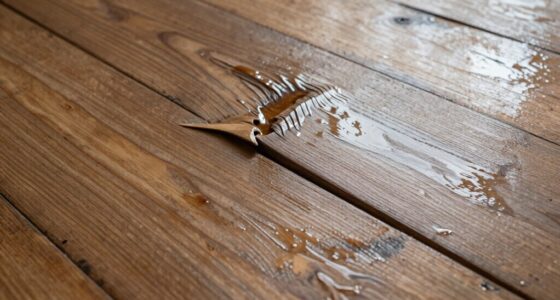
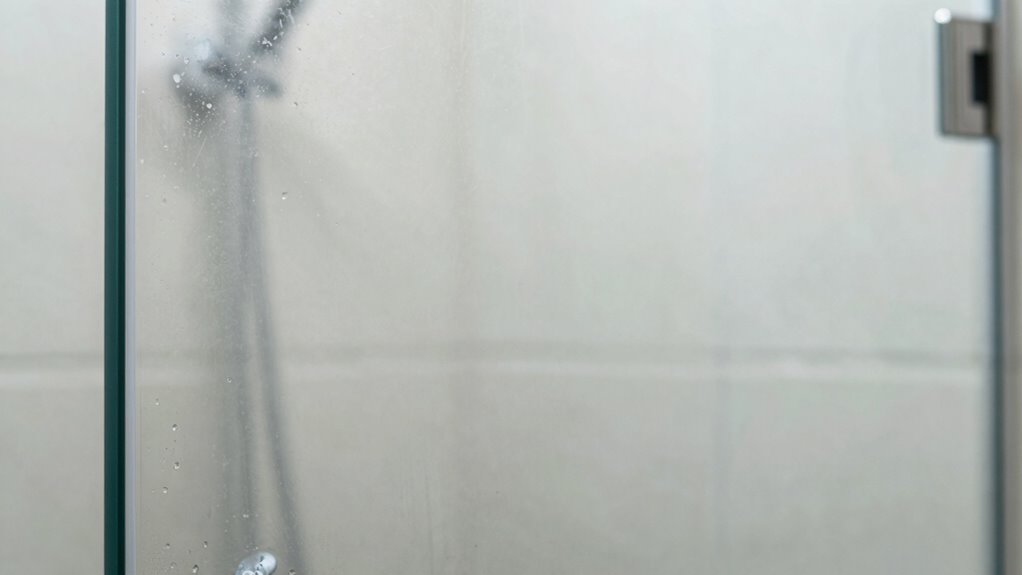
Hard water spots form when minerals like calcium and magnesium in water leave deposits on surfaces after evaporation. This process, driven by water mineralization, causes mineral particles to settle and harden, creating stubborn stains. Over time, these mineral deposits can lead to surface etching, especially on delicate materials like glass or polished stone. Surface etching occurs when minerals chemically interact with the material, wearing away its finish and causing permanent damage. If left untreated, these spots become more difficult to remove and can dull the surface’s appearance. Recognizing the role of essential DIY tools and proper cleaning techniques can help you effectively address hard water spots. Understanding how water mineralization contributes to hard water spots helps you recognize the importance of prompt cleaning, preventing long-term damage and preserving your surfaces’ integrity. Being aware of preventive maintenance strategies can also minimize future mineral buildup and keep surfaces looking their best. Additionally, using specialized cleaning solutions designed for mineral deposits can make removal more efficient and less abrasive.

MRS. MEYER'S CLEAN DAY Mirror & Window Cleaner, Great for Indoor & Outdoor Glass Surfaces, Lemon Verbena, 24 Fl Oz
Ammonia free.
As an affiliate, we earn on qualifying purchases.
As an affiliate, we earn on qualifying purchases.
How to Prepare Your Surfaces for Easy Water Spot Removal

Before tackling water spot removal, it’s important to properly prepare your surfaces to guarantee the process goes smoothly. First, grab some clean, soft cleaning cloths to gently wipe the area and remove loose dirt or debris. Next, consider using water softeners if hard water spots are frequent; they help reduce mineral buildup over time. Third, ensure the surface is dry and free of any soap or residue that could interfere with cleaning. Additionally, understanding the water mineral composition can help determine the most effective cleaning method. This knowledge can also guide you in choosing appropriate hydrotherapy techniques if you’re dealing with water-related skin or muscle issues. Being aware of early warning signs of mineral buildup can help prevent further damage to your surfaces. Also, regular aero guardians maintenance of your cleaning tools and surfaces can prevent stubborn spots from forming. Finally, identify the type of surface you’re working on—porcelain, glass, or metal—so you choose the right cleaning approach. Proper surface preparation minimizes scratching and makes water spot removal easier. Taking these simple steps ensures you get the best results without damaging your surfaces.

Red Seal Baking Soda Toothpaste – Fluoride-Free Herbal & Mineral Formula, Vegan-Friendly, Cruelty-Free, SLS and Paraben-Free, No Artificial Flavors, NATRUE Certified Natural, Dry Mouth Relief (2 Pack)
Mint Freshness: Experience a burst of invigorating freshness with our unique toothpaste formula, crafted from plant and mineral…
As an affiliate, we earn on qualifying purchases.
As an affiliate, we earn on qualifying purchases.
How to Choose Safe, Scratch-Free Cleaning Solutions

Choosing the right cleaning solutions is essential to protect your surfaces from scratches and damage. Opt for eco friendly cleaners that are gentle yet effective, reducing the risk of harm to delicate finishes. Avoid harsh chemicals and abrasive alternatives like steel wool or rough scrub brushes, which can scratch surfaces. Instead, look for products labeled safe for your specific material, such as glass, tile, or porcelain. Natural options like vinegar or baking soda can also work for light cleaning without risking scratches. Always test a small area first to ensure compatibility. To further prevent damage, understanding the different types of cleaning tools and their abrasiveness can help you select the safest options. Using the appropriate cleaning techniques tailored to your surfaces can make a significant difference in maintaining their appearance. Additionally, choosing professional cleaning services that utilize proper methods can help preserve your surfaces over time. Being aware of proper cleaning tools can help prevent accidental scratches and extend the lifespan of your surfaces. Incorporating knowledge about surface material care can further enhance your ability to select effective and safe cleaning methods. By selecting safe, scratch-free solutions, you preserve the integrity of your surfaces while effectively removing hard water spots. This approach keeps your home clean and damage-free without compromising safety or the environment.

HOMERHYME Microfiber Glass Cleaning Cloth – 10 Pack Polishing Cloths, 16" x 14" Window Cleaning Towel, Streak Free, Lint Free, Great for All Delicate Surface, Glasses, Stainless Steel, Windshield.
LINT FREE, NON-SCRATCH & STREAK FREE: Our glass microfiber polishing cleaning cloths are ultra-soft with denser woven texture…
As an affiliate, we earn on qualifying purchases.
As an affiliate, we earn on qualifying purchases.
The Best Methods to Remove Hard Water Spots Safely
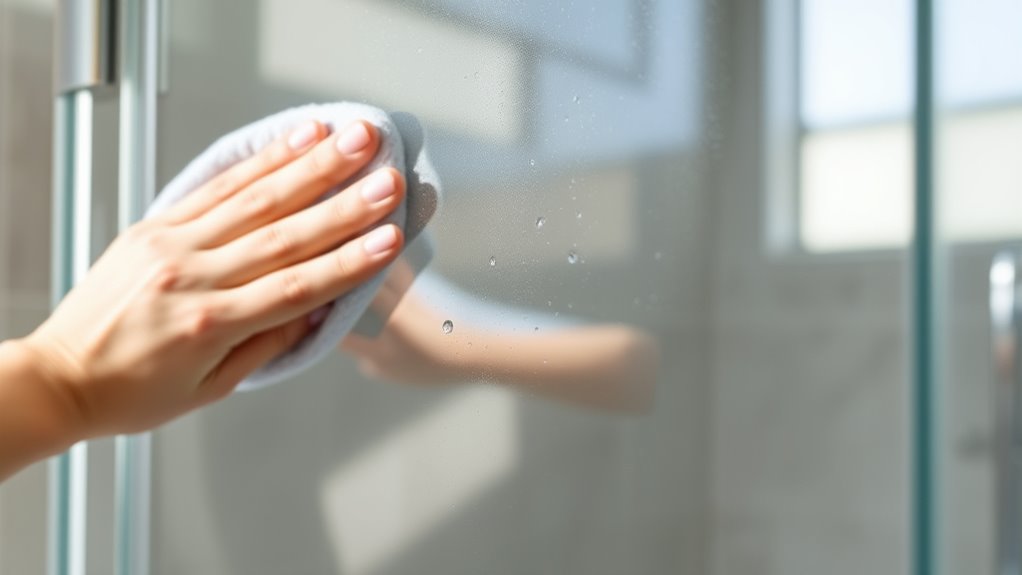
To remove hard water spots safely, start with gentle, proven methods that won’t damage your surfaces. Focus on water softening techniques to reduce mineral deposits that cause spots. Here are four effective methods:
Use gentle, proven techniques like vinegar and water to safely remove hard water spots.
- Use a mixture of equal parts white vinegar and water to break down mineral deposits without scratching. This natural solution is effective and environmentally friendly.
- Apply a commercial water softening product designed for household use to prevent future spots.
- Wipe surfaces with a soft cloth or sponge after cleaning to prevent mineral buildup.
- Regularly clean with non-abrasive tools to maintain surfaces and avoid scratching while removing existing water spots. Incorporating preventive maintenance can extend the lifespan of your surfaces and reduce the need for frequent cleaning. Using safe cleaning practices ensures you protect delicate surfaces from damage during the process. Additionally, understanding the environmental impact of cleaning products can help you choose eco-friendly solutions that align with your values. Proper surface protection techniques can further minimize the risk of scratches during cleaning.
Natural and DIY Remedies for Hard Water Stains
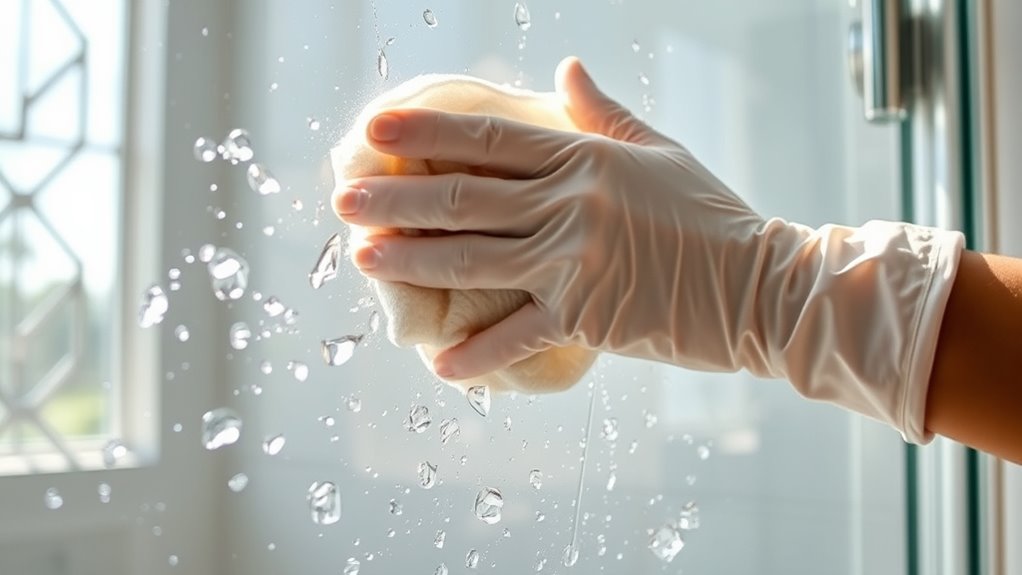
Natural and DIY remedies offer simple, cost-effective ways to tackle hard water stains without harsh chemicals. Vinegar solutions are especially effective because the acidity breaks down mineral deposits. You can soak a cloth in white vinegar and place it on affected areas or spray it directly onto spots, letting it sit for a few minutes before wiping clean. Baking soda scrubs are another great option; mix baking soda with a small amount of water to form a paste, then gently scrub the stains using a soft cloth or sponge. This gentle abrasive helps lift mineral buildup without scratching surfaces. Additionally, ensuring proper filtration with a filter can prevent future mineral deposits from accumulating on fixtures. Regularly maintaining your water filtration system can significantly reduce the occurrence of hard water stains. Incorporating water softening systems can further reduce the formation of hard water stains over time. Using appropriate cleaning tools like soft brushes or microfiber cloths can also prevent surface damage while cleaning. These remedies are safe, affordable, and easy to use, making them ideal for keeping your fixtures and glassware free of hard water spots without risking damage. Proper maintenance of your fixtures can also extend their lifespan and maintain their appearance.
Tips to Prevent Hard Water Spots From Coming Back
Preventing hard water spots from returning requires consistent maintenance and proactive measures. The key is to reduce mineral buildup through water softening and regular upkeep. Here are four effective tips:
- Install a water softener to replace minerals with sodium or potassium, minimizing spot formation. Regularly checking the system ensures it continues to operate efficiently.
- Wipe surfaces dry after use to prevent mineral deposits from settling. Using a squeegee or microfiber cloth can be especially effective.
- Clean fixtures and glassware regularly using non-abrasive cleaners to remove residual spots. This helps maintain a clear, spotless appearance and prolongs the life of your fixtures.
- Schedule routine maintenance of your water softening system to make sure it functions efficiently. Scheduled maintenance helps prevent system failures and ensures continued mineral removal.
- Inspect and replace resin beads periodically to ensure optimal operation of your water softening system. This step is crucial for maintaining the system’s effectiveness over time.
When to Call a Professional for Tough Water Spots
If water spots won’t budge after cleaning, it’s time to think about calling a professional, especially if you notice persistent stains. You should also avoid aggressive chemicals if your surfaces are sensitive or prone to damage. Recognizing these signs helps make sure you don’t cause more harm or fail to remove stubborn spots effectively.
Persistent Stain Indicators
Sometimes, despite your best cleaning efforts, hard water spots stubbornly linger, signaling that it’s time to seek professional help. Persistent stain indicators often follow specific patterns or show severe severity that simple remedies can’t tackle. Pay attention to these signs:
- Stains that reappear quickly after cleaning, indicating strong persistence patterns.
- Deep discoloration that penetrates the surface, suggesting high stain severity.
- Residues that resist multiple treatment attempts, showing stubbornness.
- Changes in surface texture, such as roughness or pitting, hinting at damage beyond surface spots.
If you notice these indicators, it’s best to call in a professional. They have the expertise and tools needed to address tough water spots without causing damage or scratches.
Surface Material Sensitivity
When stubborn water spots persist despite your best efforts, it’s important to contemplate the material of the surface involved. Different surfaces have varying levels of surface compatibility, which affects how they respond to cleaning methods. For example, delicate materials like marble or certain polished surfaces can scratch or etch if exposed to harsh cleaners or abrasive tools. In such cases, attempting aggressive removal risks damage rather than restoration. It’s vital to prioritize cleaning product safety and choose gentle, pH-neutral solutions designed for specific materials. If you’re unsure about the surface’s sensitivity or how it reacts to cleaning agents, it’s wise to call a professional. They can assess the material, recommend safe techniques, and prevent unintentional damage to your surfaces.
Chemical Safety Considerations
Tackling tough water spots can be tricky, especially when chemical cleaners are involved. Some products can cause unexpected chemical reactions or contain toxic ingredients that pose health risks. If you’re unsure about the chemical composition, it’s best to call a professional. Consider these safety tips:
- Know the ingredients—avoid harsh acids or caustic substances unless trained.
- Use proper ventilation to prevent inhaling fumes from toxic ingredients.
- Wear protective gear like gloves and goggles to prevent skin and eye irritation.
- Recognize signs that require professional help, such as persistent spots or chemical reactions that cause discoloration or damage.
When in doubt, consulting a pro guarantees safe, effective removal without risking damage or harm.
Frequently Asked Questions
Can Hard Water Spots Cause Long-Term Damage to Surfaces?
Hard water spots can cause long-term damage to surfaces if left untreated. They may lead to surface deterioration and make stains more permanent over time. You need to act quickly to clean and remove these spots to prevent permanent staining and surface damage. Regular maintenance and gentle cleaning help preserve your surfaces, ensuring they stay looking new and avoiding costly repairs caused by prolonged exposure to mineral deposits.
Are There Eco-Friendly Cleaning Options for Removing Hard Water Spots?
Yes, there are eco-friendly alternatives for removing hard water spots. You can use natural cleaning solutions like white vinegar or lemon juice, which effectively dissolve mineral deposits without harming the environment. These options are safe, non-toxic, and biodegradable, making them ideal for eco-conscious cleaning. Simply apply, let sit, and gently scrub to remove spots without scratching your surfaces, leaving them clean and eco-friendly.
How Often Should I Clean to Prevent Hard Water Spots?
You should clean surfaces prone to hard water spots at least once a week to maintain ideal water softening and prevent buildup. Regular cleaning reduces mineral deposits and keeps your fixtures sparkling. If your water is especially hard, increase cleaning frequency to every few days. Using eco-friendly cleaning options can help maintain your surfaces without scratching, ensuring your home stays spotless and protected from hard water damage.
Do All Hard Water Spots Respond to DIY Remedies?
Not all hard water spots respond to DIY remedies, and sometimes you gotta accept that Mother Nature isn’t always gentle. Natural remedies like vinegar or lemon juice work on lighter spots, but stubborn stains might need commercial solutions. So, don’t get discouraged if your homemade tricks don’t cut it—some spots require the big guns. Remember, patience and the right approach make all the difference in banishing those pesky marks.
Can Hard Water Spots Be Removed From Delicate or Porous Materials?
Yes, hard water spots can be removed from delicate surfaces and porous materials, but you need to be gentle. Use mild solutions like diluted vinegar or specialized cleaners designed for sensitive surfaces. Test first in a small, hidden area to avoid damage. Avoid abrasive scrubbing or harsh chemicals, which can worsen the problem. Patience and a light touch are key to successfully removing spots without causing harm.
Conclusion
By gently tending to your surfaces and choosing the right solutions, you can keep your home gleaming without worry. With a little care and patience, those stubborn water spots will become a thing of the past, leaving your space refreshed and inviting. Remember, sometimes a delicate touch is all it takes to restore beauty and prevent future marks. Trust in these simple steps, and your surfaces will thank you with lasting shine and clarity.