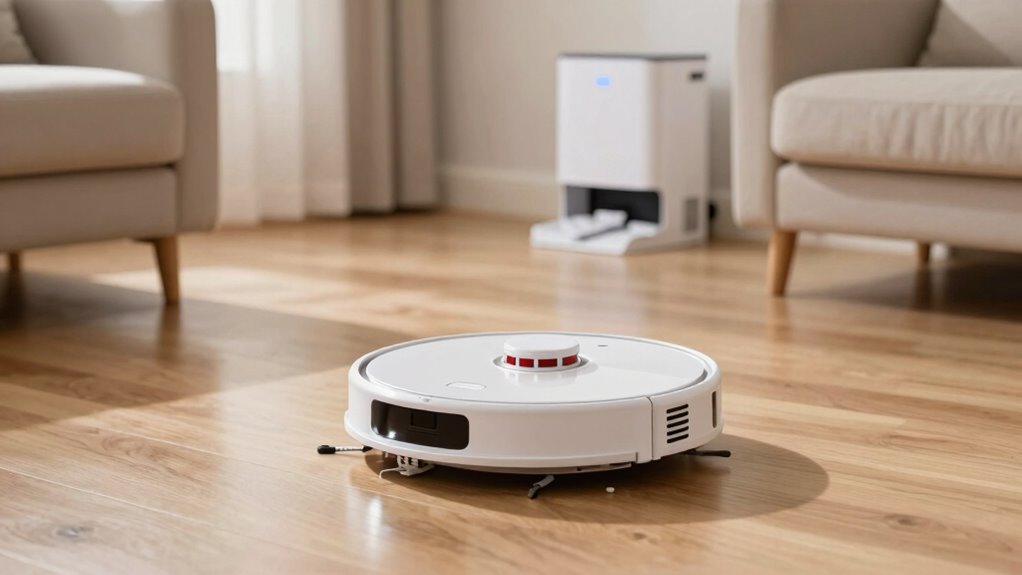
Robot vacuums use advanced navigation systems to clean your home more efficiently. They rely on sensors like infrared, lidar, and cliff sensors to map your space and avoid obstacles. This technology helps them plan the best cleaning routes and recognize different rooms for tailored cleaning. By employing these navigation techniques, robot vacuums prevent collisions and guarantee they don’t fall down stairs. Stick around, and you’ll uncover even more about their impressive capabilities.
Key Takeaways
- Robot vacuums use infrared and lidar sensors to detect and navigate around obstacles efficiently while cleaning floors.
- Visual mapping creates detailed room layouts, helping vacuums plan effective cleaning routes.
- Cliff sensors prevent falls by detecting edges, ensuring safe navigation near stairs.
- Obstacle detection methods like bump sensors prompt direction changes when encountering barriers.
- Regular maintenance, including cleaning sensors and dustbins, enhances navigation accuracy and overall performance.

Tikom Robot Vacuum and Mop, 6000Pa Robotic Vacuum Cleaner with Self-Emptying Base, 90 Days Capacity, LiDAR Navigation, Home Mapping, Ideal for Pet Hair, Hard Floors, Carpet (L8000 Plus)
90-Day Hands-Free Cleaning: The 3L self-emptying dustbag holds weeks of debris, eliminating the need for frequent emptying. Enjoy…
As an affiliate, we earn on qualifying purchases.
As an affiliate, we earn on qualifying purchases.
What Are Robot Vacuums and How Do They Work?
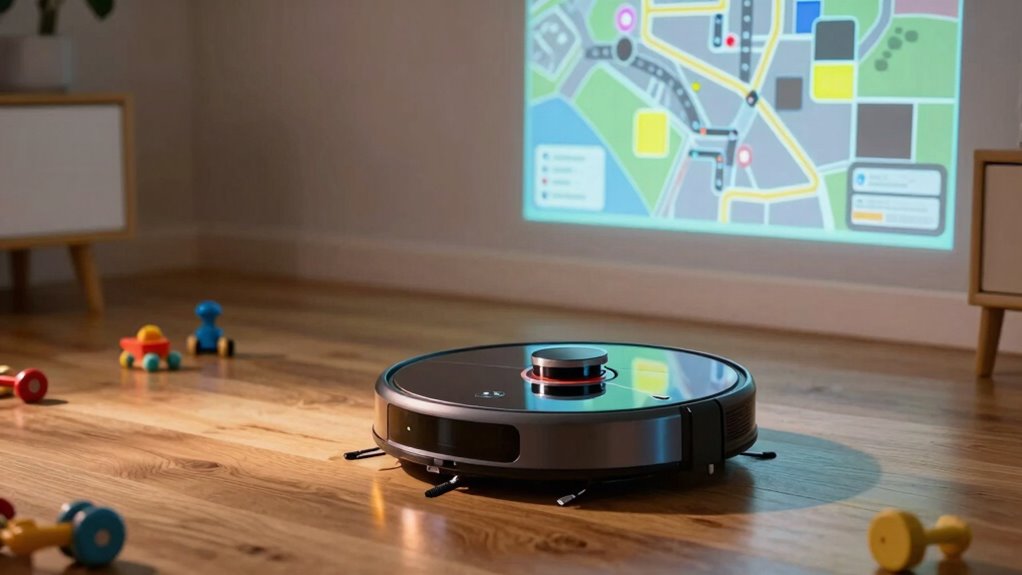
Robot vacuums are innovative cleaning devices that automate the task of floor cleaning. These compact machines come packed with various robot vacuum features designed to enhance your cleaning efficiency. With powerful suction and rotating brushes, they easily pick up dust, pet hair, and debris from various surfaces. You can program them to clean on a schedule, allowing you to focus on other tasks while they work. Most models include smart connectivity, letting you control them via an app or voice commands. Additionally, they often have dustbins that are easy to empty, ensuring maintenance is hassle-free. By investing in a robot vacuum, you’re not just saving time; you’re also ensuring your floors get the attention they need, all while you relax.

Goodsby Replacement Cliff Drop Infrared Side Sensors for Shark IQ Robot Vacuums RV1001AE RV912S RV913S RV1000S QR1000SG AV1002AE AV1010AE AV911S QR1000SB UR1000SR UR1005AE RV1101ARUS UR1105ARUS
✅ !!! CHECK YOUR VACUUM MODEL BEFORE ORDERING !!! ✅
As an affiliate, we earn on qualifying purchases.
As an affiliate, we earn on qualifying purchases.
How Robot Vacuums Use Sensors for Navigation
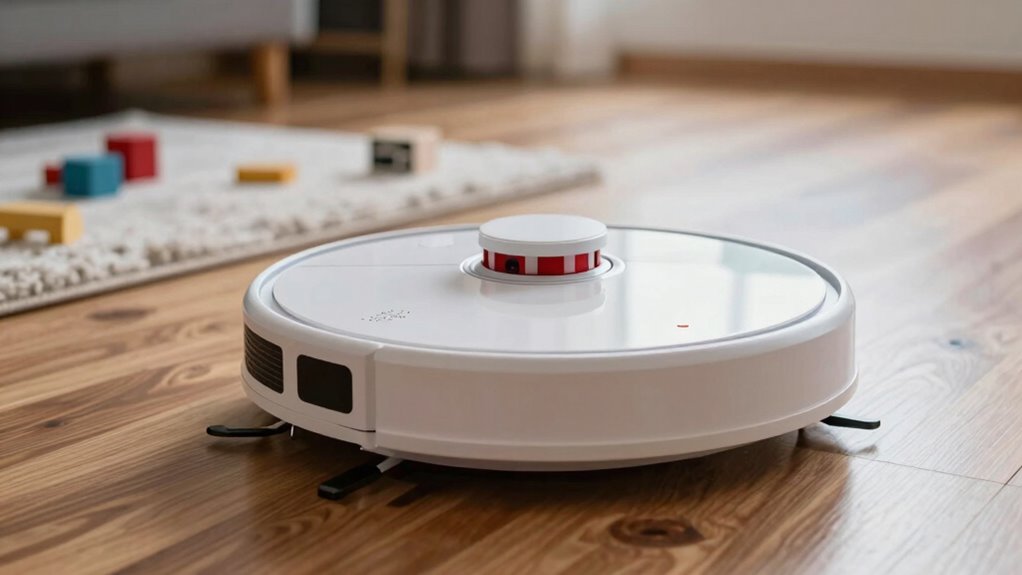
Robot vacuums rely on various sensors to navigate your home efficiently. You’ll find that these sensors help with everything from detecting obstacles to implementing different navigation techniques. Understanding how these sensors work can enhance your experience and optimize your cleaning routine.
Types Of Sensors Used
While maneuvering your home, a vacuum relies on various sensors to understand its surroundings and avoid obstacles. These sensors play an essential role in ensuring efficient cleaning. Here are three key types:
- Infrared Sensors: These detect nearby objects and help your vacuum avoid collisions by sending out signals that bounce back upon encountering an obstacle.
- Lidar Technology: This advanced system uses laser beams to map your rooms, creating a detailed layout while ensuring the vacuum maneuvers efficiently around furniture.
- Cliff Sensors: These prevent your vacuum from falling down stairs by sensing the edge and altering its path.
Together, these sensors enable your robot vacuum to clean effectively while maneuvering your home safely.
Navigation Techniques Explained
Understanding how a vacuum navigates your home can enhance your appreciation for its technology. Robot vacuums use advanced sensors to create a visual mapping of your space and implement effective path planning. This process often involves sensor integration, which combines multiple data sources for a comprehensive understanding. This integration is essential for safe navigation, ensuring the device avoids hazards and navigates efficiently. This allows them to clean efficiently without missing spots or getting stuck. Proper power backup can ensure your smart devices, including robot vacuums, operate smoothly during outages. Additionally, responsible use and privacy considerations are important when deploying these devices to protect your personal information.
Here’s a quick overview of the navigation techniques used:
| Technique | Description | Benefits |
|---|---|---|
| Visual Mapping | Creates a map using cameras and sensors | Offers efficient cleaning paths |
| Path Planning | Determines the best route to cover the area | Reduces cleaning time |
| Sensor Fusion | Combines data from multiple sensors | Improves accuracy |
| Boundary Detection | Identifies walls and obstacles | Prevents falls and collisions |
| Room Recognition | Recognizes different rooms | Customizes cleaning strategy |
Obstacle Detection Methods
Maneuvering your home isn’t just about following a mapped path; it also requires avoiding obstacles that can disrupt the cleaning process. Robot vacuums use various sensors for this purpose, ensuring high sensor accuracy to tackle navigation challenges effectively. Here are three common methods they rely on:
- Infrared Sensors: These detect obstacles by measuring the distance to nearby objects.
- Cliff Sensors: These prevent your vacuum from tumbling down stairs by sensing changes in elevation.
- Bump Sensors: These help the vacuum identify physical barriers, prompting it to change direction.
Goodsby Replacement Cliff Drop Infrared Side Sensors for Shark IQ Robot Vacuums RV1001AE RV912S RV913S RV1000S QR1000SG AV1002AE AV1010AE AV911S QR1000SB UR1000SR UR1005AE RV1101ARUS UR1105ARUS
✅ !!! CHECK YOUR VACUUM MODEL BEFORE ORDERING !!! ✅
As an affiliate, we earn on qualifying purchases.
As an affiliate, we earn on qualifying purchases.
Understanding Obstacle Avoidance Techniques
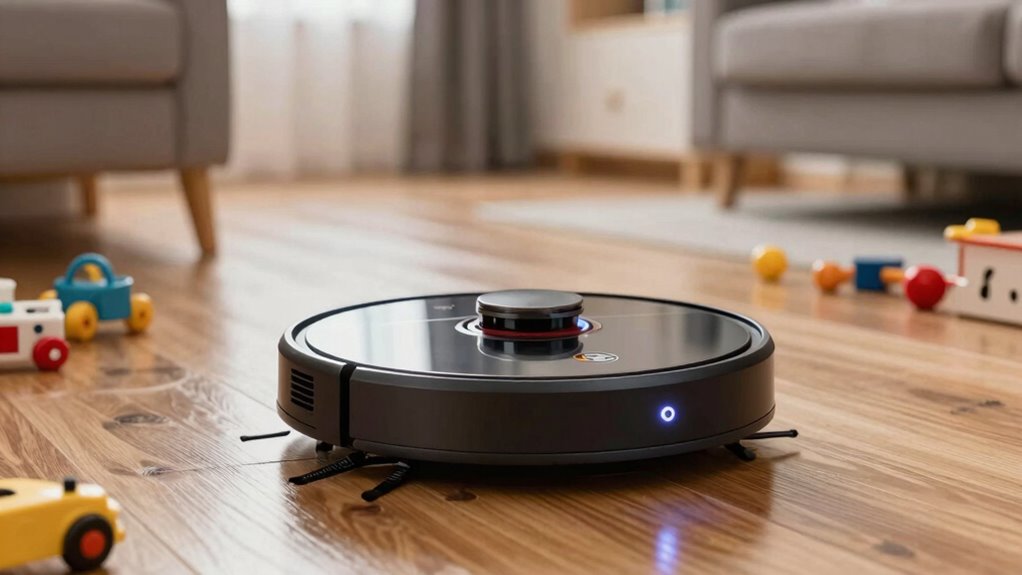
As you navigate through the world of robot vacuums, it is vital to grasp the various obstacle avoidance techniques these machines employ. One key aspect is collision prevention, which helps your vacuum steer clear of furniture and walls. Robot vacuums often use a combination of infrared sensors, cameras, and LIDAR technology to map their surroundings and detect obstacles in real-time. Sensor calibration is essential for ensuring these devices accurately perceive their environment. Regular calibration helps maintain the vacuum’s effectiveness and prevents awkward encounters with obstacles. By understanding these techniques, you can appreciate how robot vacuums efficiently clean your home while minimizing the risk of damage to both the machine and your belongings.
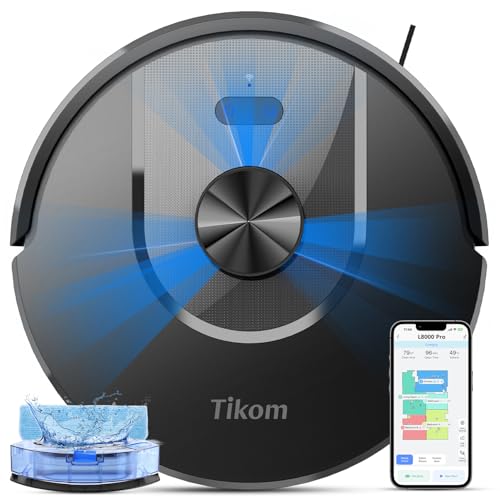
Tikom Robot Vacuum and Mop Combo, 6000Pa Automatic Robotic Vacuum Cleaner, Smart Mapping, 150 Min Max, Ideal for Pet Hair, Hardfloors, Carpets, Home(L8000 Pro)
6000Pa Powerful Suction: The vacuum cleaner boasts a 6000PA suction capability, effortlessly removing pet hair and dust from…
As an affiliate, we earn on qualifying purchases.
As an affiliate, we earn on qualifying purchases.
How Effective Are Obstacle Avoidance Techniques?
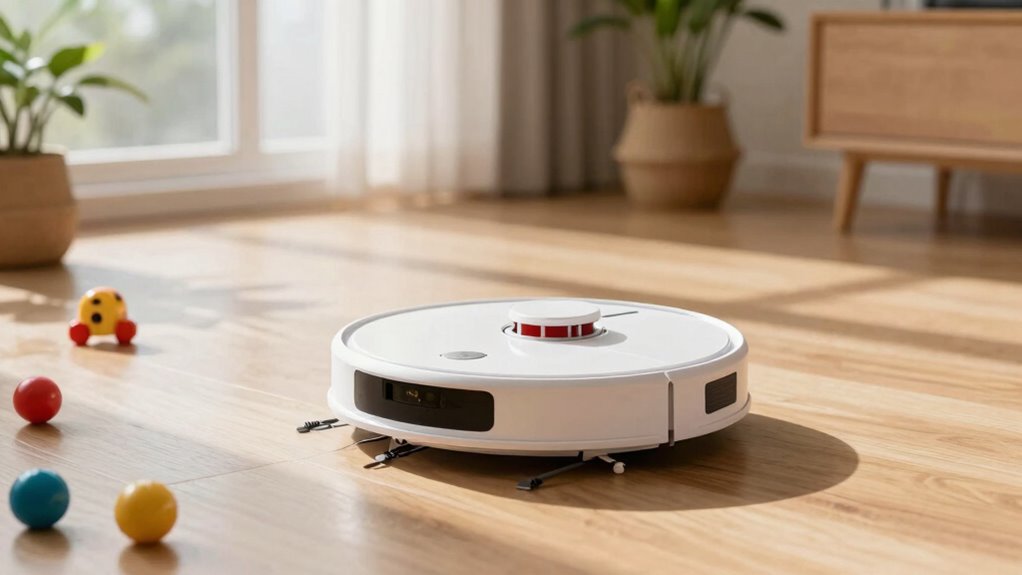
How effective are the obstacle avoidance techniques in robot vacuums? These techniques play a vital role in ensuring your vacuum navigates efficiently around your home. Here are three key points to evaluate:
- Sensor Accuracy: High-quality sensors detect obstacles and measure distances accurately, reducing the chances of collisions.
- Navigation Efficiency: Advanced algorithms process sensor data in real-time, allowing the vacuum to chart ideal cleaning paths without getting stuck.
- Adaptability: Many models learn from their environment over time, improving their obstacle avoidance capabilities as they encounter new furniture or layouts.
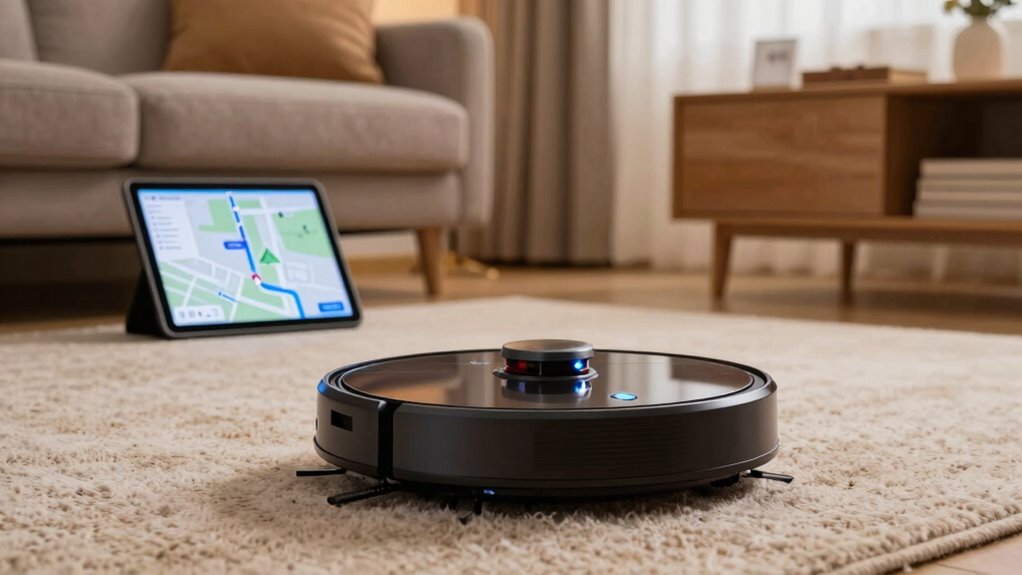
Understanding the effectiveness of obstacle avoidance techniques sets the stage for evaluating the broader navigation systems of robot vacuums. When inspecting these systems, you’ll want to reflect on navigation accuracy, which directly impacts how efficiently your vacuum cleans your space. High navigation accuracy means fewer missed spots and less backtracking, enhancing your user experience. Additionally, security zone info can influence how a robot vacuum navigates around sensitive or restricted areas. Features like mapping capabilities and multi-surface navigation add value, but they come with limitations. For instance, advanced systems may be pricier and require more maintenance. Additionally, while some vacuums excel in open areas, they might struggle in cluttered rooms. Balancing these features, benefits, and limitations will help you choose a robot vacuum that best fits your cleaning needs and lifestyle.
Tips for Optimizing Your Robot Vacuum’s Performance
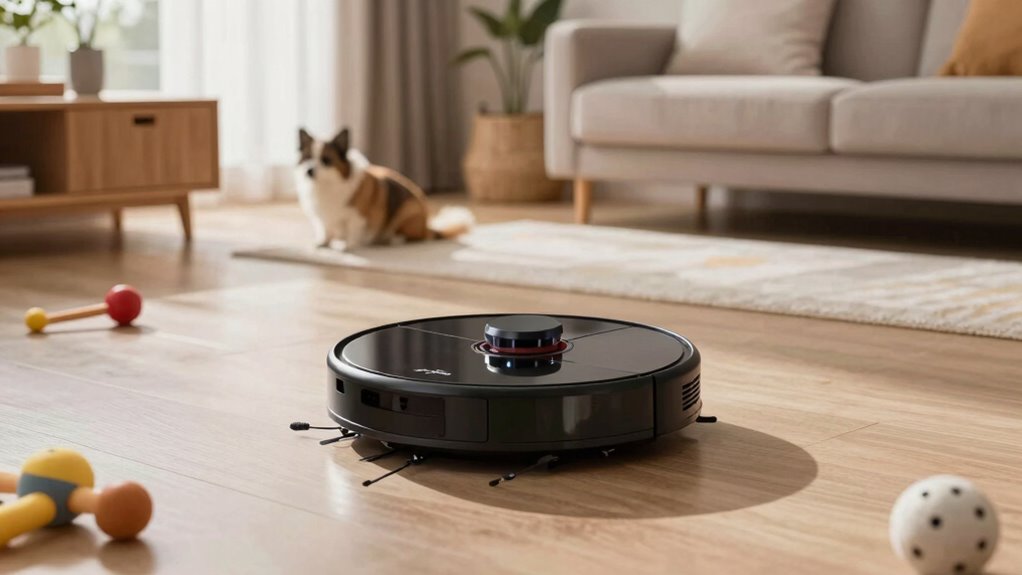
To get the most out of your robot vacuum, it is essential to implement a few practical strategies that enhance its performance. Here are three tips to maximize your cleaning experience:
- Battery Maintenance: Regularly check and clean the battery contacts to guarantee efficient charging. Replace the battery as needed to maintain peak performance.
- Floor Mapping: Make sure your vacuum’s mapping feature is properly set up. A well-defined floor plan helps your robot navigate effectively, covering all areas without missing spots.
- Regular Maintenance: Empty the dustbin, clean the brushes, and check for blockages frequently. This ensures your robot vacuum operates at top efficiency, avoiding unnecessary strain on the motor.
Frequently Asked Questions
Can Robot Vacuums Clean Multiple Floor Types Effectively?
Yes, robot vacuums can clean multiple floor types effectively. Their performance often depends on floor type compatibility, as many models are designed to shift seamlessly from hardwood to carpet. You’ll find that features like powerful suction and adaptive cleaning modes help tackle different surfaces. Just make sure to choose a model known for versatility, so you can enjoy a thorough clean throughout your home, no matter the flooring.
How Long Do Robot Vacuums Typically Last?
Robot vacuums often dance between durability and battery lifespan, typically lasting three to five years. Just like a trusty steed, their longevity depends on how well you care for them. Regular maintenance and mindful usage can stretch their lifespan, allowing them to sweep away your worries longer. However, as technology evolves, newer models may outshine the old, urging you to contemplate replacements for the best cleaning experience. Keep that in mind when investing!
Are Robot Vacuums Noisy During Operation?
Robot vacuums can be a bit noisy during operation, but their noise levels usually fall within a similar range to a standard vacuum cleaner. When you compare the sound levels, you’ll find many robot models operate quietly enough not to disturb your daily activities. Some even feature “quiet modes” to minimize noise. So, if you’re concerned about noise, choosing a quieter model can make a difference in your home environment.
Do Robot Vacuums Require Special Maintenance?
Yes, robot vacuums do require special maintenance. You should regularly check and replace the filter to guarantee peak performance. It’s also important to care for the battery; keep it charged and avoid letting it completely discharge. Cleaning the brushes and sensors monthly can prevent clogs and improve navigation. By staying on top of these tasks, you’ll keep your robot vacuum running efficiently and extend its lifespan.
Can I Control My Robot Vacuum Remotely?
You can control your robot vacuum remotely with remote access through a mobile app. Imagine the convenience of commanding your cleaner from anywhere! With just a few taps on your phone, you’ll schedule cleaning sessions, start or stop the vacuum, and even monitor its progress. This flexibility not only saves time but also guarantees your home stays spotless, even when you’re away. Embrace the ease of modern cleaning technology!
Conclusion
In the end, you might find it amusing that while you’ve invested in a robot vacuum to save time, it still requires your occasional intervention. With its advanced sensors and navigation techniques, you’d think it could navigate your home like a pro. Yet, it still gets stuck on that pesky rug or under the couch. But hey, at least you get to enjoy the irony of a high-tech gadget needing your human touch every now and then!