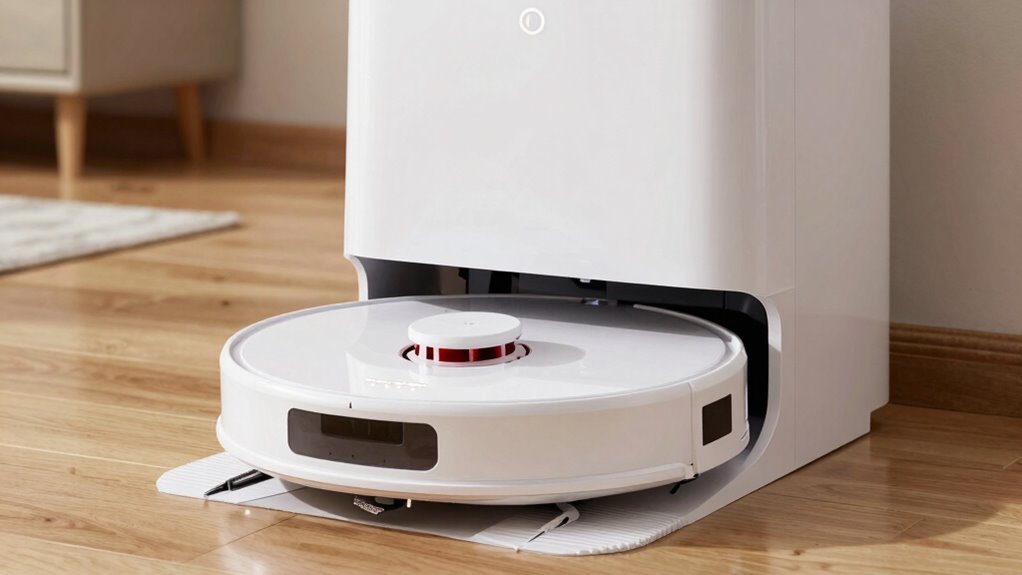

The base station of a self-empty robot vacuum does much more than just dispose of dust. It manages the charging cycle, recharging quickly and preventing overcharging. It also offers noise reduction during emptying and supports smart home integration. Plus, it provides maintenance alerts to keep your vacuum running smoothly and has a larger dustbin for less frequent emptying. To discover all the features and how they benefit you, keep exploring how this smart hub keeps your home cleaning effortless.

Get the little things that make your day delivered free with Prime
- Fast, free delivery on millions of items
- Prime Video, Amazon Music and more included
- Member-only deals all year
Key Takeaways
- Manages automatic charging, docking, and long-duration cleaning cycles for continuous operation.
- Handles dustbin emptying with noise reduction and minimal mess through advanced disposal technology.
- Supports smart home integration and offers self-maintenance alerts for optimal performance.
- Ensures battery health and efficiency with smart recharging and overcharge prevention.
- Monitors and maintains vacuum components, providing timely notifications for cleaning or replacement.
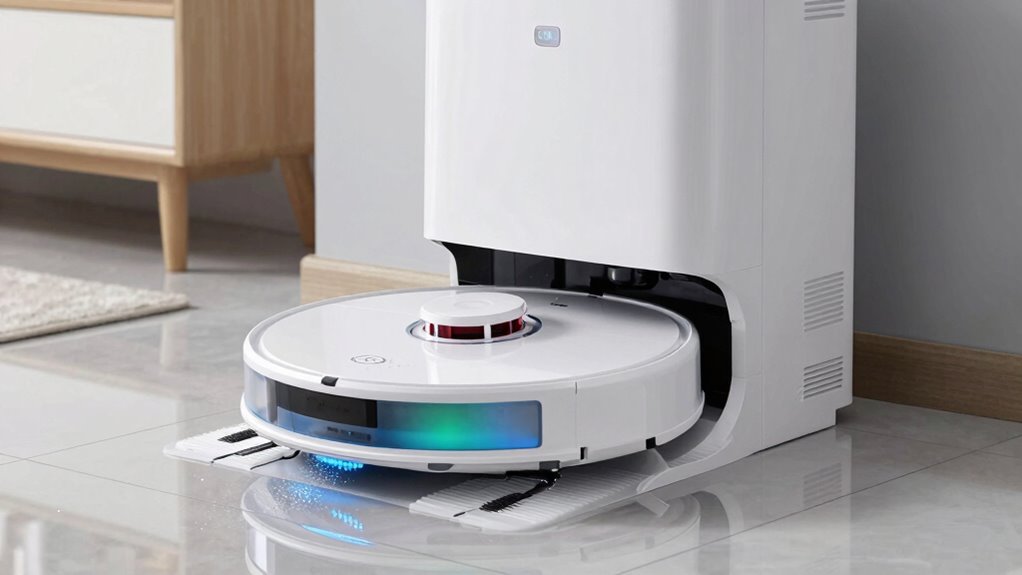
Self-empty robot vacuums are revolutionizing home cleaning by reducing the hassle of regular maintenance. The key component that makes this possible is the base station, which handles more than just emptying the vacuum’s dustbin. When you understand what the base station does, you’ll see how it simplifies your routine and enhances your vacuum’s performance. One of the main benefits is improved battery maintenance. Instead of your robot constantly stopping for manual emptying, the base station guarantees the vacuum can keep working longer without interruption. It manages the charging cycle efficiently, often automatically docking the robot when the battery drops to a certain level, then quickly recharging it. This prevents overcharging and prolongs the lifespan of the battery, so your vacuum stays effective for years. Plus, some models have smart algorithms that optimize charging times, preserving the battery’s health over time. Additionally, the base station often includes features like home automation compatibility that allow it to integrate seamlessly with your smart home system. Another essential role of the base station is noise reduction. When the robot vacuum empties its dustbin, it can sometimes produce a loud, disruptive noise. However, many modern self-empty stations contain sound-dampening features or are located away from living areas, minimizing disturbance. The emptying process itself is often quieter because it’s designed to operate smoothly and silently compared to manual emptying or older models that relied on loud motors. Incorporating advanced dustbin technology can also improve the efficiency of the emptying process, ensuring minimal mess and easier disposal. This means you can keep your routines, like working from home or relaxing in the evening, without being disturbed by noisy cleaning cycles. Furthermore, some base stations include self-maintenance alerts, which notify you when parts need cleaning or replacement, helping to keep your vacuum in optimal condition. In addition, dustbin capacity plays a significant role in reducing the frequency of emptying, making the whole process even more convenient. Understanding these features highlights how the base station’s functionality is crucial in providing a more convenient and efficient cleaning experience.
self-empty robot vacuum base station
As an affiliate, we earn on qualifying purchases.
As an affiliate, we earn on qualifying purchases.
Frequently Asked Questions
How Often Do Self-Empty Stations Require Maintenance?
You should check your self-empty station every few months for maintenance. Typically, you’ll need to replace the battery every 12 to 18 months, depending on usage. Also, keep the software updated regularly to guarantee peak performance. Clearing out dust or debris from the station helps, and replacing the battery when needed keeps it running smoothly, minimizing interruptions. Regular maintenance ensures your robot vacuum stays efficient and reliable.
Can the Base Station Be Moved to a Different Location?
You can move the base station to a different location, but keep in mind that most models require a clear, unobstructed area for peak functioning. Curiously, about 80% of users find alternative placement improves cleaning efficiency. When considering base station relocation, make sure it remains near a power outlet and within the robot’s Wi-Fi range. Proper placement helps maintain smooth operation and easier access for maintenance.
What Is the Maximum Capacity of the Self-Empty Base?
The maximum capacity of the self-empty base varies by model, typically handling between 30 to 60 days of dust, depending on your dust capacity needs. As for battery life, the base station doesn’t directly impact it, but it guarantees your vacuum can keep working efficiently. Regularly emptying the station helps maintain peak performance, especially if your vacuum’s dust capacity is high or your home generates a lot of debris.
Does the Base Station Need Regular Cleaning?
Yes, you should clean the base station regularly to maintain ideal performance. Dust and debris can accumulate, affecting its noise levels and possibly impacting the battery lifespan of your robot vacuum. Regular cleaning ensures the base station functions smoothly, reduces noise during operation, and extends its longevity. Keep the charging ports and filters clear, so your vacuum continues to empty efficiently and stays in good working order over time.
Are There Any Safety Concerns With Self-Empty Stations?
Yes, there are safety concerns with self-empty stations, so you should always prioritize robot safety. Make certain the station is compatible with your vacuum model to prevent malfunctions. Keep the area clear of obstacles and avoid exposing the station to water or extreme heat. Regularly check for damage or wear, and follow manufacturer instructions to guarantee safe operation. Proper maintenance helps prevent accidents and keeps your robot vacuum working effectively.
robot vacuum with smart charging station
As an affiliate, we earn on qualifying purchases.
As an affiliate, we earn on qualifying purchases.
Conclusion
So, next time your robot vacuum boasts about its “self-emptying” feature, remember the humble base station is secretly the real hero—stacking up dirt like a tiny, tireless warehouse worker. While you relax, it’s busy playing janitor, never taking a break, never complaining, quietly turning your clean floors into a mountain of dust. Ironically, the very device promising ease ends up perpetually working behind the scenes, making the cleanup easier for everyone except itself.
quiet self-empty robot vacuum station
As an affiliate, we earn on qualifying purchases.
As an affiliate, we earn on qualifying purchases.
robot vacuum dustbin with noise reduction
As an affiliate, we earn on qualifying purchases.
As an affiliate, we earn on qualifying purchases.
Halloween Picks
halloween
As an affiliate, we earn on qualifying purchases.