

To properly store seasonal blankets and bedding, start by cleaning them thoroughly according to care labels. Make sure they’re completely dry to prevent mold and pests. Control indoor humidity using dehumidifiers or air conditioners, especially in humid climates, and store your bedding in breathable containers to protect from dust and pests. Keep the storage area cool, dark, and well-ventilated for best results. If you want to learn all the tips for long-term preservation, keep exploring.

Get the little things that make your day delivered free with Prime
- Fast, free delivery on millions of items
- Prime Video, Amazon Music and more included
- Member-only deals all year
Key Takeaways
- Clean and thoroughly dry bedding before storage to prevent mold, odors, and pest attraction.
- Use airtight, breathable containers to protect against pests, dust, and moisture.
- Control indoor humidity with dehumidifiers or air conditioners to prevent dampness and mold growth.
- Store bedding in a cool, dark, and pest-free environment to maintain fabric quality.
- Ensure proper ventilation and good indoor air quality to preserve bedding freshness over time.
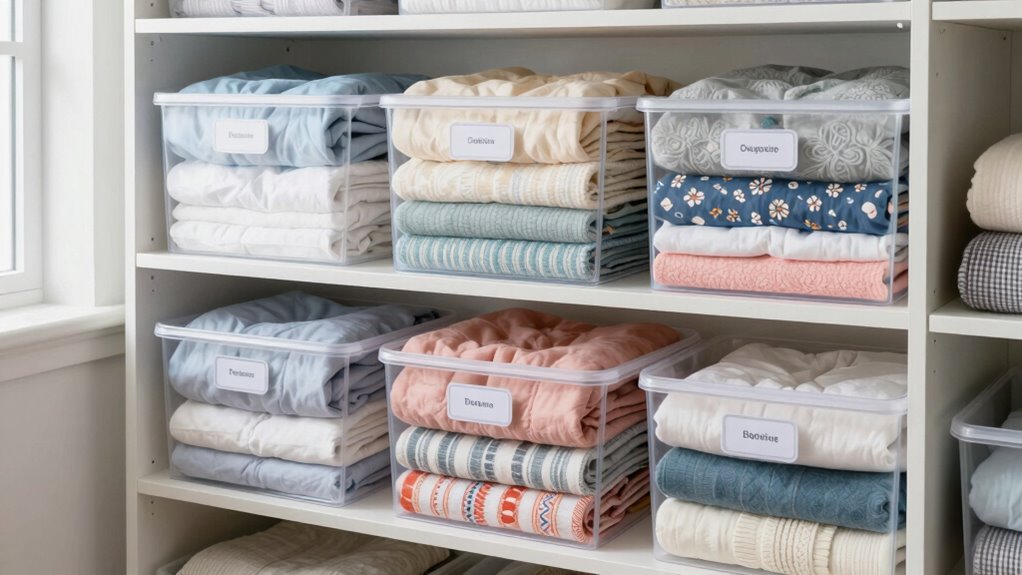
As the seasons change, maintaining your blankets and bedding properly is essential to keep them fresh and in good condition. Proper storage not only preserves their quality but also guarantees they’re ready to use when the weather turns cold or warm. One of the first things to think about is indoor humidity. If your home has high humidity levels, your bedding can become damp or develop mold and mildew during storage. To prevent this, control indoor humidity by using dehumidifiers or air conditioners, especially in humid climates. Before storing, make sure your blankets are thoroughly dry; moisture trapped inside can lead to unpleasant odors and mold growth. If necessary, use a fan or sunlight to speed up the drying process, but avoid direct heat that could damage delicate fabrics.
When it comes to fabric cleaning methods, it’s important to follow the specific care instructions for each type of bedding. Most blankets and comforters can be washed with gentle detergents, but always check the labels to confirm the recommended cleaning method. For delicate fabrics like wool or down-filled items, opt for specialized cleaning processes or professional cleaning services. Proper cleaning removes dust, allergens, and oils that accumulate over the season, which helps keep your bedding fresh and hygienic during storage. After washing, make sure your blankets are completely dry before packing them away. Any residual moisture can encourage mold growth and attract pests, ruining your investment. Ensuring proper storage conditions can significantly extend the lifespan of your bedding. Additionally, understanding the importance of bedding care can help prevent common issues like fabric damage or pest infestations. Maintaining optimal indoor air quality by reducing pollutants and controlling humidity further supports the longevity of your stored bedding. Using proper storage containers is also crucial, as it helps shield your bedding from environmental hazards during long-term storage. Paying attention to climate considerations can further ensure your blankets remain in excellent condition regardless of the season.
seasonal blanket storage containers
As an affiliate, we earn on qualifying purchases.
As an affiliate, we earn on qualifying purchases.
Frequently Asked Questions
How Often Should I Wash Seasonal Blankets Before Storing?
You should wash seasonal blankets before storing them at least once a season or whenever they become dirty or stained. Avoid using fabric softeners, as they can leave residues that attract dust or pests. Make certain the blankets are completely dry and stored in a cool, dry place with low humidity to prevent mold or mildew. Proper cleaning and storage help keep your blankets fresh, clean, and ready for use when the season returns.
Can I Store Blankets in Plastic Containers Long-Term?
Storing blankets in plastic containers is like locking treasures in a vault, but it’s not always ideal for fabric preservation. Long-term, plastic can trap moisture and cause mold or mildew. Use sturdy storage containers with breathable fabric covers or vacuum-sealed bags for better airflow. Your blankets will thank you, staying fresh and fluffy, rather than becoming a plastic time capsule that traps dust and humidity.
What Is the Best Way to Prevent Moth Damage?
To prevent moth damage, you should regularly inspect your blankets and bedding. Use moth prevention methods like airtight storage containers and consider fabric treatment options such as lavender sachets or cedar blocks, which naturally repel moths. Additionally, washing your blankets before storing and maintaining a clean storage area helps reduce the risk of infestation. Properly treated fabrics and proactive measures keep your seasonal bedding safe and moth-free.
Are Natural Fibers Better for Long-Term Storage?
Yes, natural fibers are better for long-term storage because they’re breathable and less likely to trap moisture, which helps prevent mold and mildew. Materials like cotton, wool, and linen allow air circulation, reducing the risk of damage over time. Just make sure to clean and fully dry your blankets before storing them in a cool, dry place, ideally in breathable storage bags to keep them fresh and protected.
How Do I Remove Musty Odors From Stored Blankets?
Did you know that over 60% of household odors come from mold and mildew? To remove musty odors from stored blankets, start by airings them outside in sunlight, which helps with mold prevention. Then, sprinkle baking soda over the blankets, letting it sit for a few hours to absorb odors. Finally, wash the blankets with a gentle detergent. This process effectively neutralizes musty smells and keeps your blankets fresh.
As an affiliate, we earn on qualifying purchases.
Conclusion
Now that you know how to properly store your seasonal blankets and bedding, imagine the peace of mind you’ll feel when your linens stay fresh and pristine year after year. But here’s the twist—there’s one essential step you might be overlooking that could make all the difference. Are you ready to discover the secret to flawless storage? Stay tuned, because mastering this final detail could transform how you keep your bedding perfect, season after season.
As an affiliate, we earn on qualifying purchases.
airtight storage bins for blankets
As an affiliate, we earn on qualifying purchases.
As an affiliate, we earn on qualifying purchases.
Fall Picks
fall essentials
As an affiliate, we earn on qualifying purchases.