When it comes to drill bits, you’ve got options tailored for specific materials. For wood, choose high-speed steel or carbide-tipped bits to guarantee clean holes without splintering. Metal projects call for cobalt or titanium-coated bits, while masonry tasks need durable carbide-tipped or diamond core bits for tougher materials. Selecting the right bit type improves your efficiency and results. Stick around to explore common issues and maintenance tips that can keep your drill bits performing their best!
Key Takeaways
- Drill bits are categorized by material suitability: wood, metal, and masonry, each requiring specific types for optimal performance.
- High-speed steel (HSS) and brad-point bits are recommended for drilling wood, ensuring clean holes and preventing splintering.
- Cobalt drill bits are ideal for tough metals, offering heat resistance and durability, while HSS bits work well on softer metals.
- Carbide-tipped bits are best for masonry applications, effectively drilling into concrete and brick without excessive wear.
- Proper selection of drill bit size and type enhances drilling accuracy and project efficiency across different materials.
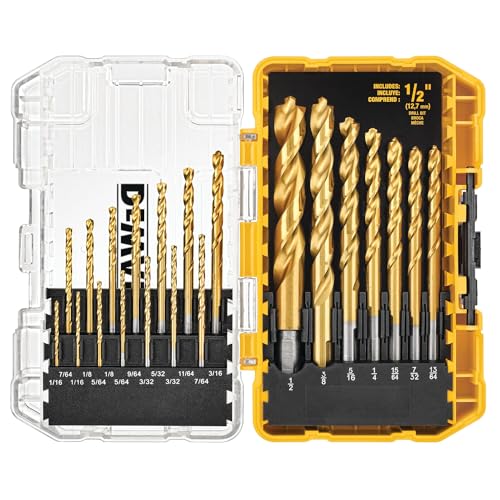
DEWALT Drill Bit Set, 21 Pc. Titanium Nitride Coated Pilot Point DEWALT Bit Set with Case for Wood, Metal and Plastic (DW1361)
Titanium Nitride Coating Pilot Point for Longer Life
As an affiliate, we earn on qualifying purchases.
As an affiliate, we earn on qualifying purchases.
Overview of Drill Bit Types for Wood, Metal, and Masonry

When you’re tackling projects involving wood, metal, or masonry, choosing the right drill bit is vital for achieving the best results. Each material requires specific drill bit materials to guarantee efficiency and effectiveness. For wood, you’ll want bits made of high-speed steel or brad point bits for clean holes. When working with metal, cobalt or titanium-coated bits provide durability and heat resistance. As for masonry, carbide-tipped bits are your best bet for penetrating hard surfaces. Bit size selection also plays an essential role; using the correct diameter not only improves accuracy but also prevents damage to your materials. So, always consider both the material and size when selecting your drill bits for peak performance.

Sinyeenglon Cobalt Drill Bit Set for Hardened Metal and Stainless Steel, 99Pcs M35 High Speed Steel Twist Jobber Metal Drill Bits 1/16"-3/8", with Plastic Index Storage Case
Cobalt M35 Material: High cost, but hardness is up to 67, cut faster and has a long life,…
As an affiliate, we earn on qualifying purchases.
As an affiliate, we earn on qualifying purchases.
How to Choose the Right Drill Bit for Wood Projects
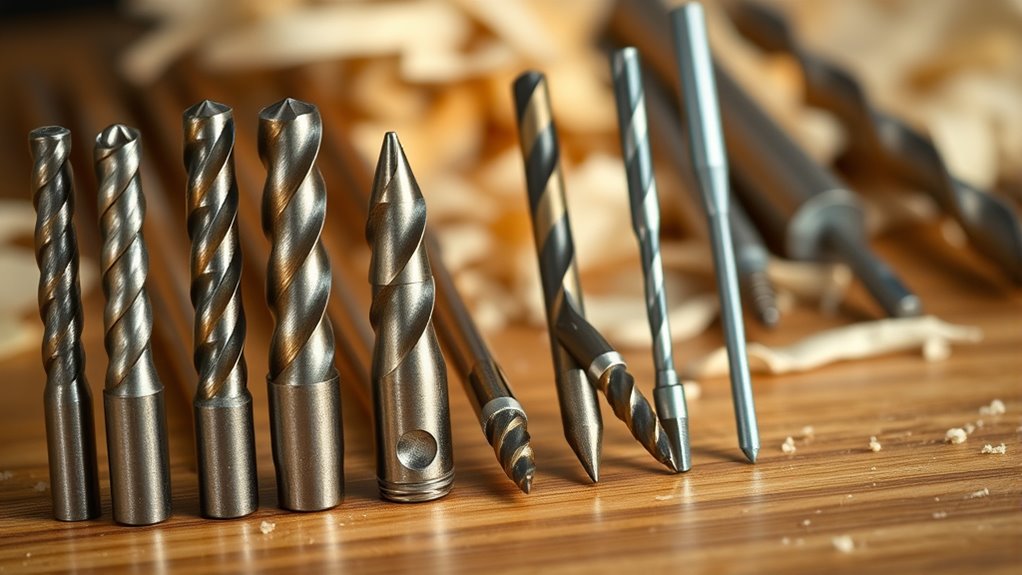
When you’re choosing a drill bit for wood projects, it’s essential to understand the different types available. Each bit is designed for specific tasks, and the material can greatly affect your results. Let’s explore how to select the right bit to guarantee clean, precise drilling in your woodworking endeavors.
Bit Types Overview
Choosing the right drill bit for your wood projects can make all the difference in achieving clean, precise holes. Start by considering the drill bit materials; high-speed steel (HSS) and carbide-tipped bits are great for various wood types. Next, focus on bit size selection—different projects require different diameters. For small pilot holes, a smaller bit works best, while larger bits are suited for bigger screws or dowels. Don’t forget about the bit’s tip design; spade bits and brad-point bits excel in wood, ensuring cleaner entry and exit points. By matching the right bit materials and sizes to your project needs, you’ll enhance both efficiency and results, making your woodworking tasks a breeze.
Material Considerations
Understanding the materials used in drill bits is key to maximizing your woodworking projects. Choosing the right drill bit materials can greatly impact performance factors like durability and precision. Here are some essential considerations:
- High-Speed Steel (HSS): Great for general-purpose drilling, offering good durability.
- Cobalt Steel: Excellent for tougher woods; it resists heat and wear.
- Carbide-Tipped: Ideal for hardwoods, providing sharpness and longevity.
- Wood-Specific Bits: Designed for clean cuts, preventing splintering and tearing.

12-PCS Masonry Drill Bit Set & Concrete Drill Bit Set, 1/8 to 1/2 inch Professional Carbide Drill Bits Tip for Glass, Tile, Brick, Cement Concrete Plastic Wood etc. Masonry Drill Bits Set by DYRECELVE
PROFESSIONAL CARBIDE DRILL BIT SET:This masonry drill bit set includes 12PCS carbide drill bit, suitable for cement, brick,…
As an affiliate, we earn on qualifying purchases.
As an affiliate, we earn on qualifying purchases.
Best Metal Drill Bits for Specific Applications
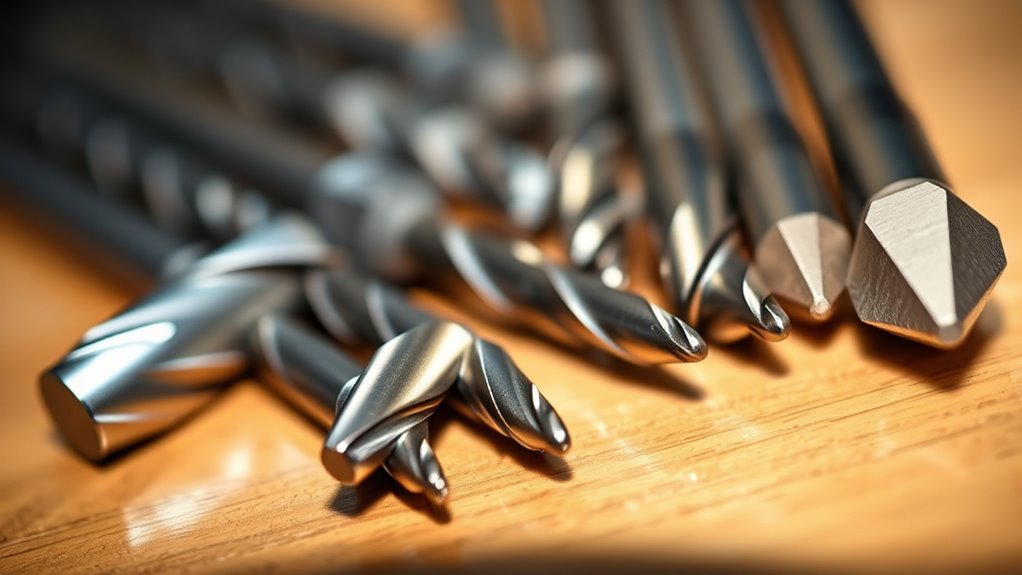
When you’re working with metal, choosing the right drill bit can make all the difference. Cobalt drill bits are excellent for tough materials, while high-speed steel options provide versatility for various metal projects. Let’s explore which bit suits your needs best!
Cobalt Drill Bits
Cobalt drill bits stand out as the go-to choice for tackling tough metals and high-heat applications. Known for their cobalt durability, these bits excel in various cobalt applications, making them ideal for professionals and DIY enthusiasts alike. Here are four reasons to choose cobalt drill bits:
- Heat Resistance: They withstand high temperatures, reducing wear. In demanding drilling tasks, their thermal stability is a key advantage.
- Strength: Their robust construction allows for drilling through hard materials.
- Longevity: Cobalt bits last longer than standard steel bits, saving you money.
- Precision: They provide clean, accurate holes, essential for precise projects.
Additionally, the color retention of cobalt drill bits helps maintain their sharpness and effectiveness over time. When you’re dealing with demanding tasks, cobalt drill bits deliver the performance you need. Don’t settle for less; invest in cobalt for your toughest drilling jobs!
High-Speed Steel Options
While cobalt drill bits are excellent for tough metals, high-speed steel (HSS) options offer versatility and efficiency for a variety of applications. HSS drill bits are known for their high-speed performance, making them ideal for drilling through softer metals like aluminum and brass. They provide impressive cutting efficiency, allowing you to complete tasks quickly without sacrificing precision. You’ll find that HSS bits can handle heat well, reducing wear and extending their lifespan. For general-purpose drilling, opt for standard HSS bits, but if you need something more specialized, consider HSS twist drills or step bits for added functionality. Whatever your project, HSS drill bits will guarantee you achieve the best results while keeping your workflow smooth and efficient.

Weewooday Stainless Steel Drill Gauges for 1/16 Inch to 1/2 Inch Size Bits, 17/64-1/2 0.062-0.250 Bolt and Wire Diameter Index Gauge, 29-Hole Use for Accurate Measurement Equivalents(Silver)
Precise Measurement : achieve accurate sizing with this 29-hole drill gauge, covering sizes from 1/ 16 to 1/…
As an affiliate, we earn on qualifying purchases.
As an affiliate, we earn on qualifying purchases.
Masonry Drill Bits You Should Know About

Masonry drill bits are essential tools if you’re working with concrete, brick, or stone. Knowing the types of masonry bits can make your projects easier and more effective. Here are four key types you should know about:
Masonry drill bits are crucial for working with tough materials like concrete, brick, and stone, enhancing your project efficiency.
- Carbide-Tipped Bits: Ideal for hard materials, these bits provide durability and strength.
- Masonry Auger Bits: Perfect for deeper holes in softer masonry applications, they offer efficient drilling.
- Diamond Core Bits: Best for cutting large holes, especially in reinforced concrete.
- Hammer Drill Bits: Designed for use with hammer drills, they combine rotation and impact for tougher materials.
Common Wood Drill Bits and Their Applications

After understanding the various masonry drill bits, it’s time to explore wood drill bits, which are specifically designed for working with timber and other wood materials. Common types include twist bits, spade bits, and forstner bits. Twist bits are versatile and great for general wood drilling techniques. Spade bits excel in creating larger holes quickly, while forstner bits offer precision for flat-bottomed holes.
To achieve the best results, regular wood bit maintenance is key. Keep your bits sharp to prevent splintering and guarantee clean cuts. Cleaning them after use helps avoid resin buildup, which can affect performance. By mastering these wood drilling techniques and maintaining your bits, you’ll enhance your woodworking projects considerably.
Top Metal Drill Bits for Your Projects

When you’re working with metal, choosing the right drill bit can make all the difference in achieving clean, precise holes. Here are the top metal drill bits you should consider for your projects:
- Cobalt Drill Bits: Excellent for high-speed metal drilling techniques and durability.
- Titanium Coated Bits: Offer reduced friction and longer life, perfect for various metals.
- High-Speed Steel (HSS) Bits: Versatile and ideal for softer metals, providing good performance.
- Carbide-Tipped Bits: Best suited for tougher materials, ensuring clean cuts.
When selecting drill bits, always opt for the best metal brands to guarantee quality and performance. With the right bits at your disposal, you’ll tackle any metal project with confidence!
Choosing the Best Masonry Drill Bits
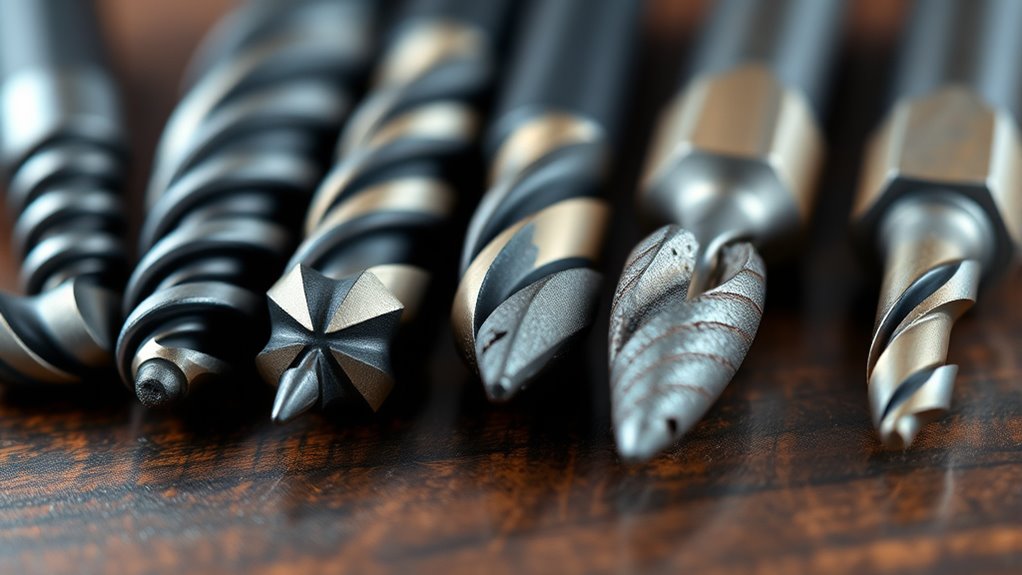
If you’re planning to tackle projects involving concrete, brick, or stone, choosing the right masonry drill bits is essential for achieving strong and precise holes. You’ll want to take into account masonry bit materials like carbide-tipped or diamond-coated bits, which are designed for durability. Additionally, drill bit sizes play a significant role in the success of your project, ensuring you create holes that perfectly fit your anchors or fixtures.
| Material | Best Use | Size Range |
|---|---|---|
| Carbide-Tipped | General masonry | 1/8″ – 1″ |
| Diamond-Coated | Hard materials (concrete) | 3/16″ – 1″ |
| Twist Drill Bits | Light masonry work | 1/4″ – 1/2″ |
Choose wisely, and your masonry projects will go smoothly!
Troubleshooting Common Drill Bit Issues

Have you ever found yourself facing frustrating issues with your drill bits? It happens to the best of us! Here are some common problems and how to troubleshoot them:
- Bit Damage: Inspect your bits regularly for chips or dullness. Replace them if they’re worn out.
- Bit Compatibility: Verify you’re using the right bit for the material. A wood bit won’t work well on metal.
- Overheating: If your bit overheats, it can warp. Use cutting oil or reduce your drilling speed.
- Stalling: If your drill stalls, check if the bit is clogged. Clean it out to maintain performance.
Tips for Keeping Your Drill Bits Sharp and Long-Lasting
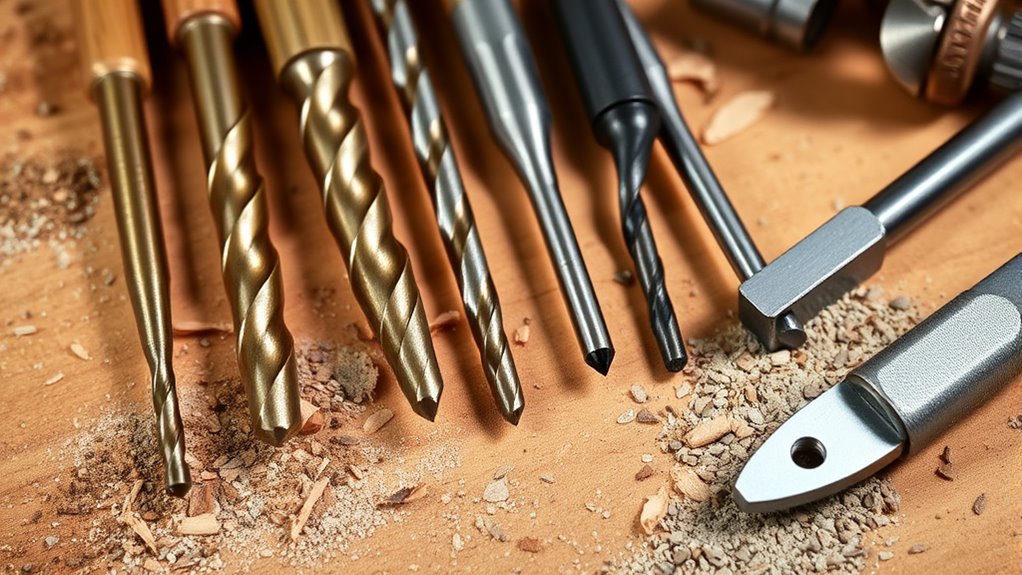
Keeping your drill bits sharp and long-lasting is essential for efficient drilling. To achieve this, follow some simple drill maintenance tips. First, always clean your bits after use to remove any debris and residue. Store them in a protective case to prevent damage. When your bits lose their edge, use sharpening techniques like a sharpening stone or a specialized drill bit sharpener to restore their cutting efficiency. Make sure to follow the manufacturer’s guidelines for the best results. Additionally, avoid excessive pressure while drilling; let the bit do the work. Regularly inspect your bits for wear, and replace them when necessary to maintain ideal performance. By implementing these practices, you’ll extend the life of your drill bits considerably.
Safety Guidelines for Using Drill Bits on Various Materials
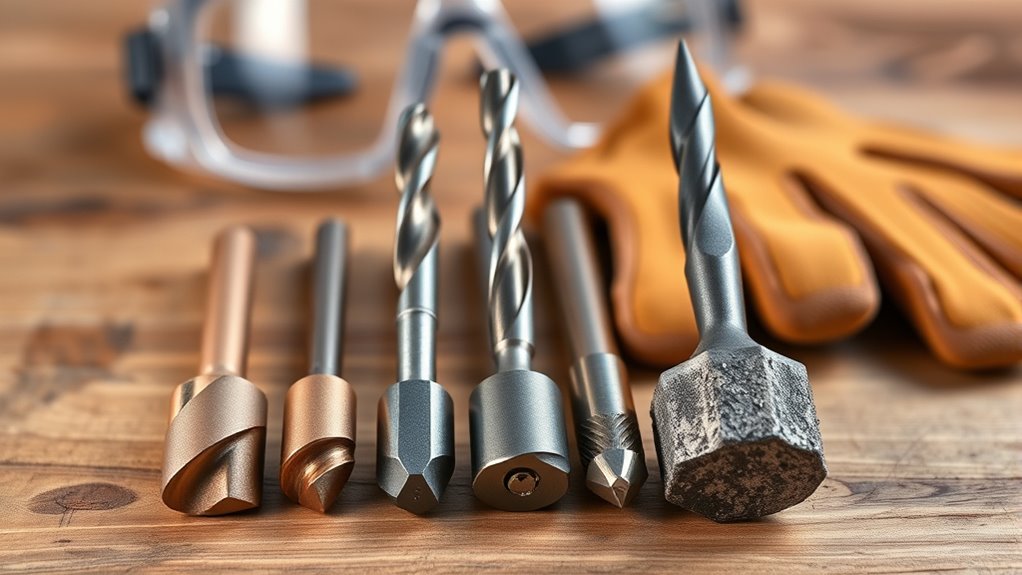
While using drill bits can be straightforward, safety should always be a priority, especially when working with different materials. Here are some essential guidelines to keep in mind:
- Wear Personal Protective Equipment: Always use safety goggles, gloves, and a dust mask to protect yourself from debris and dust.
- Check Drill Bit Maintenance: Regularly inspect your drill bits for damage or wear. Replace any that are dull or broken to guarantee peak performance.
- Secure Your Workpiece: Use clamps to stabilize the material you’re drilling into, preventing it from shifting.
- Use the Right Drill Speed: Adjust the speed based on the material to avoid overheating or damaging the drill bit.
Frequently Asked Questions
Can I Use Wood Drill Bits on Metal Materials?
You can’t use wood drill bits on metal materials effectively. Wood drill bits aren’t designed for metal compatibility; they lack the hardness and cutting edge needed to drill through tougher surfaces. Instead, you should opt for metal drill bits, which are specifically engineered to handle the density and toughness of metal. Using the right bit guarantees cleaner holes and prevents damage to both your materials and tools, saving you time and effort.
What Is the Lifespan of a Typical Drill Bit?
A drill bit’s lifespan can be like a marathon runner; it depends on how well you care for it. Typically, you can expect a bit to last from a few months to several years, depending on the drill bit materials and usage. Regular maintenance, including bit sharpening techniques, can extend its life considerably. If you use it carefully and keep it sharp, you’ll get the most out of your investment.
How Do I Properly Store Drill Bits?
To properly store your drill bits, use effective storage solutions that keep them organized and protected. Consider a dedicated case or a magnetic strip to prevent damage and mix-ups. Label compartments for easy access and maintain a consistent order for your bits. Avoid tossing them in a drawer, as this can dull their edges. By prioritizing bit organization, you’ll extend their lifespan and guarantee you can find the right bit when you need it.
Are There Drill Bits Specifically Designed for Plastics?
Yes, there are plastic drill bits specifically designed for drilling into plastic materials. These bits often feature a sharp point and a unique cutting edge that helps prevent melting and chipping while you work. When using plastic drill bits, you should employ specific drilling techniques, such as using lower speeds and applying light pressure, to achieve clean holes without damaging your material. This guarantees your project turns out just the way you envisioned.
What Are the Signs of a Dull Drill Bit?
You’ll notice a few dull drill signs when your bit’s not performing well. First, if it struggles to penetrate the material or requires excessive pressure, it’s time for a change. Additionally, you might see smoke or burnt surfaces, which indicates overheating. Finally, uneven or ragged holes are clear bit performance indicators that your drill bit is losing its edge. Regularly checking for these signs helps maintain efficiency and prolongs your drilling experience.
Conclusion
In the world of drilling, using the right bit is like picking the perfect key for a lock; it opens your project’s potential. Just like a chef wouldn’t use a butter knife to chop vegetables, you shouldn’t use a wood bit for metal. By choosing wisely and maintaining your tools, you’re not just working smarter but also extending the life of your equipment. So, gear up with the right drill bits and watch your projects come to life effortlessly!