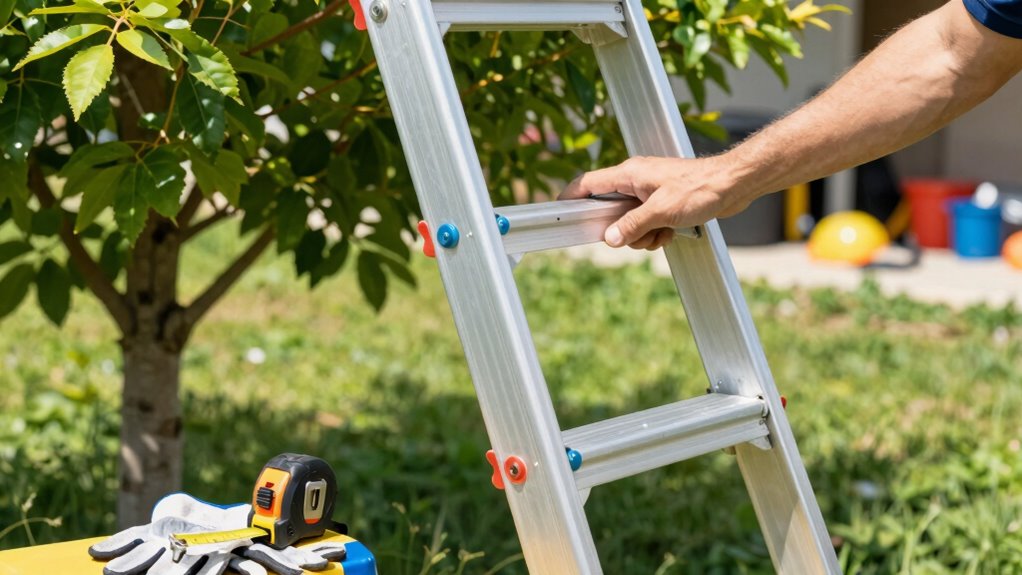

When picking a ladder, start by identifying the type you need—step stools for small tasks, or extension ladders for bigger jobs. Measure your height requirements and guarantee the ladder extends at least three feet above what you’re accessing. Check the weight capacity and stability features, like slip-resistant feet. Choose between aluminum for lightness or fiberglass for durability. Don’t overlook safety features. If you want more insights on maintaining your ladder, just keep going!
Key Takeaways
- Identify the specific tasks you need the ladder for to choose the appropriate type (step stool, extension, etc.).
- Measure the height you need to reach and select a ladder that extends at least three feet above that point.
- Assess your total weight, including tools, and ensure the ladder’s weight capacity meets or exceeds your needs.
- Look for safety features such as slip-resistant feet, sturdy construction, and locking mechanisms to ensure stability.
- Research prices, compare retailers, and check for sales to stay within your budget while selecting a quality ladder.
extension ladder for outdoor painting
As an affiliate, we earn on qualifying purchases.
As an affiliate, we earn on qualifying purchases.
Understanding Different Ladder Types
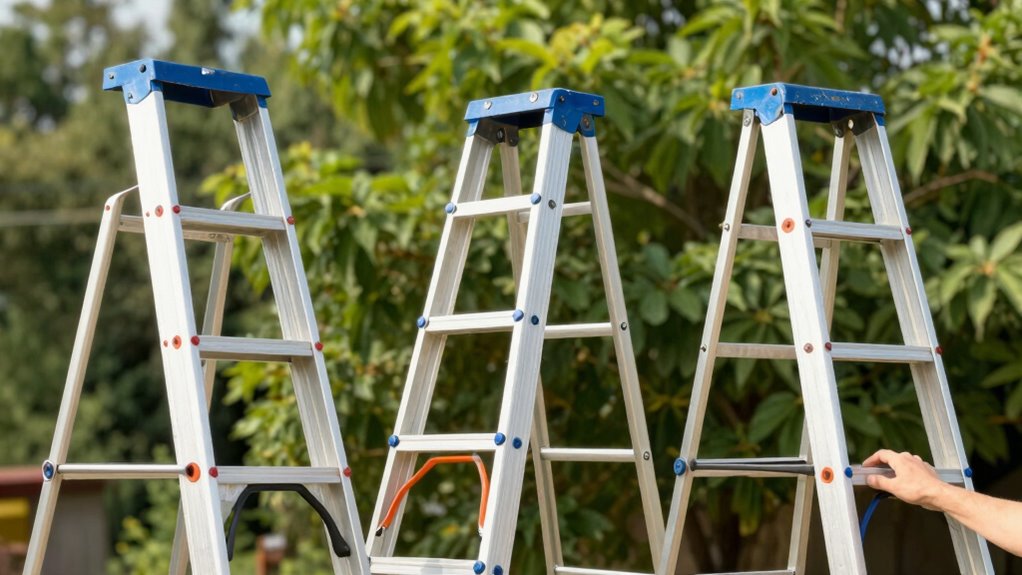
When you’re choosing a ladder, it’s essential to understand the different types available, as each serves a specific purpose. Step stools are perfect for small tasks around the house, like reaching high shelves or changing light bulbs. They’re lightweight and easy to store, making them ideal for quick access. On the other hand, extension ladders are designed for more significant jobs, such as painting your house or accessing roofs. These ladders can be extended to various heights, providing the reach you need for outdoor projects. Each type has its strengths, so consider your tasks before making a decision. Knowing whether you need a step stool or an extension ladder will help you choose the right tool for the job.
As an affiliate, we earn on qualifying purchases.
Budgeting for Your Ladder Purchase

Finding the right ladder for your needs doesn’t have to break the bank. With a little planning and research, you can stick to your budget constraints while ensuring you get a quality ladder. Here are three tips to help you budget effectively:
- Set a Budget: Determine how much you’re willing to spend before you start shopping. This helps narrow down your options and avoids impulse buys.
- Do a Cost Comparison: Check prices at different retailers, both online and in-store. Look for sales or discounts that could save you money.
- Consider Long-term Use: Invest in a slightly more expensive ladder if you plan to use it frequently. Quality often pays off over time, reducing the need for replacements.
fiberglass ladder with safety features
As an affiliate, we earn on qualifying purchases.
As an affiliate, we earn on qualifying purchases.
Assessing Your Height and Reach Needs
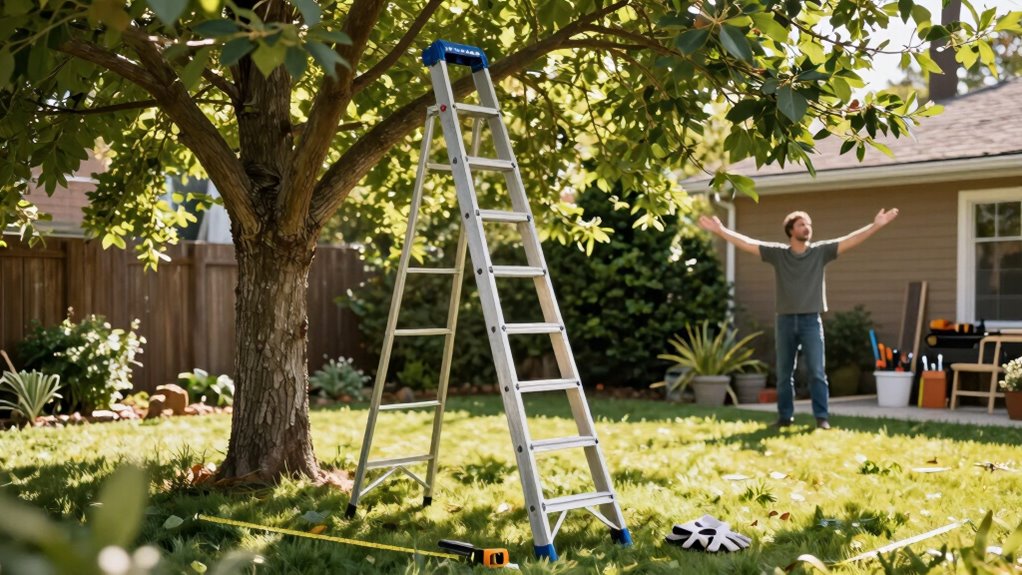
Before you make a purchase, it’s important to assess your height and reach needs to verify the ladder you choose is safe and effective for your tasks. Start by using height measurement techniques to determine how high you need to reach. Stand next to a wall, extend your arm upwards, and mark the highest point you can comfortably reach. This gives you a baseline for your ladder selection. Next, employ reach assessment tools, like a measuring tape, to gauge the distance from the ground to your intended work area. Remember to account for the ladder’s maximum safe reach, which is typically about four rungs lower than the ladder’s total height. This verifies you’ll work safely and efficiently.
lightweight aluminum step ladder
As an affiliate, we earn on qualifying purchases.
As an affiliate, we earn on qualifying purchases.
Considering Weight Capacity and Stability
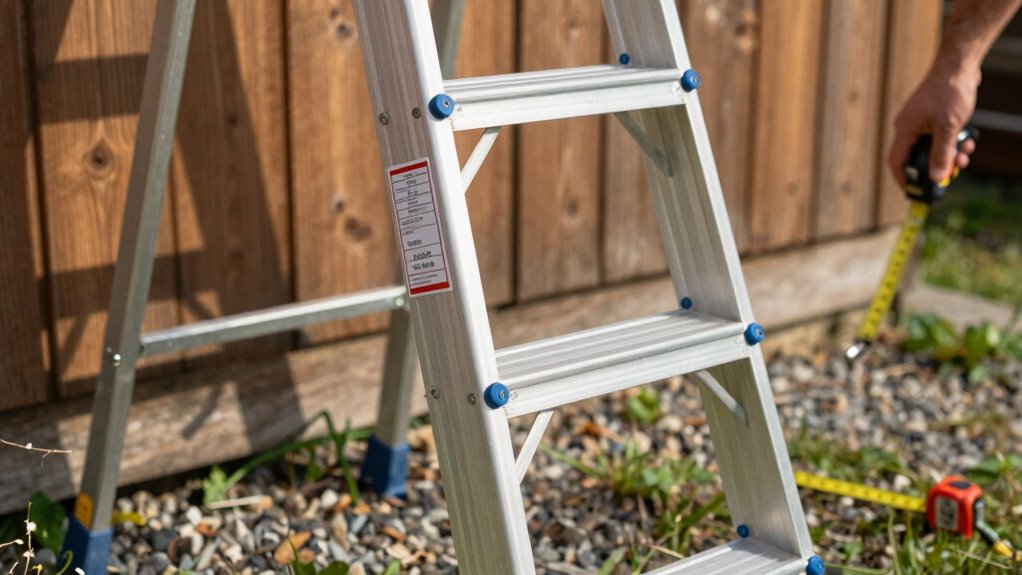
How can you guarantee the ladder you choose is both safe and stable? First, consider the load distribution. Make certain the ladder can support not just your weight, but any tools or materials you’ll be carrying. Next, check for stability features that enhance safety. A ladder with a wider base or non-slip feet can help prevent accidents. Finally, always verify the manufacturer’s weight capacity rating to confirm you’re within safe limits. Additionally, inspecting for proper maintenance routines can ensure the ladder remains in good condition and safe to use over time.
Choose Between Aluminum and Fiberglass Ladders
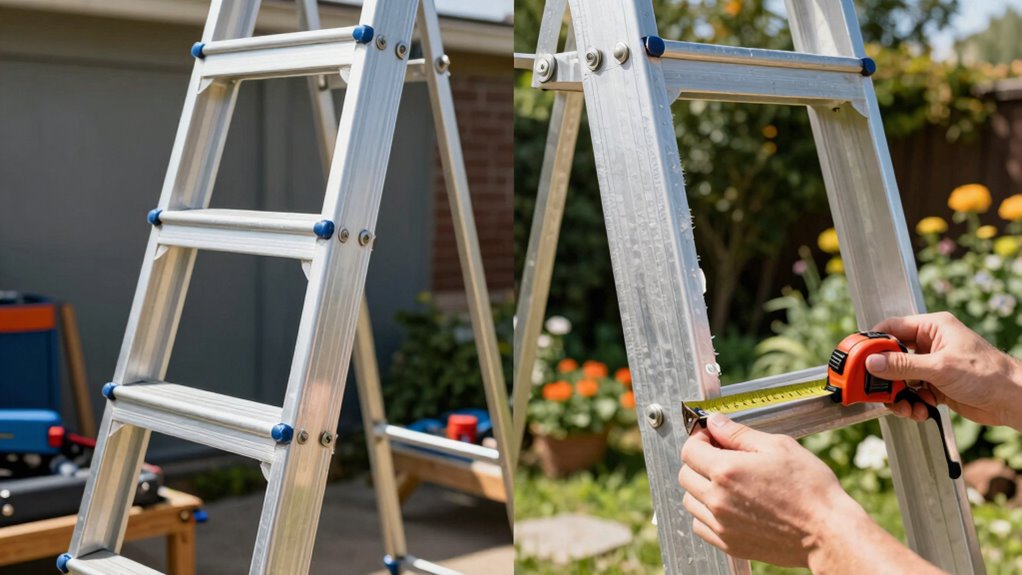
When choosing between aluminum and fiberglass ladders, consider weight and portability first. Aluminum is lightweight and easy to move, while fiberglass offers durability and better weather resistance. If you work near electricity, fiberglass is the safer option due to its non-conductive properties.
Weight Considerations And Portability
Choosing the right ladder often hinges on understanding the weight considerations and portability of aluminum and fiberglass options. Each material has its pros and cons that influence weight distribution and ladder maneuverability. Here’s what you should know:
- Aluminum Ladders: Lightweight and easy to carry, they offer excellent maneuverability for quick jobs, but be cautious around electrical sources.
- Fiberglass Ladders: Heavier but provide better weight distribution, making them stable for extended use; however, they can be cumbersome to transport.
- Portability: Consider how often you’ll need to move the ladder. If you’re frequently on the go, aluminum might suit you better, while fiberglass is ideal for heavier tasks.
Weigh your options carefully to find the right balance for your needs!
Durability And Weather Resistance
While both aluminum and fiberglass ladders have their strengths, durability and weather resistance can greatly impact your choice. When considering material selection, think about how often your ladder will face environmental exposure. Aluminum ladders are lightweight and resistant to rust, making them ideal for dry conditions. However, they can become less durable over time in extreme weather. On the other hand, fiberglass ladders offer superior durability and weather resistance, standing up well to moisture and UV rays. They’re heavier but provide better longevity in harsh climates. Ultimately, your choice should reflect the environments where you’ll use the ladder most. Assess your needs carefully to guarantee you pick the right ladder that withstands the test of time.
Electrical Conductivity Safety
How can you guarantee safety when working near electrical sources? Choosing the right ladder is essential to avoid electrical hazards. You’ll need to take into account the conductor materials used in ladders, as aluminum conducts electricity, while fiberglass is non-conductive. Here’s what to keep in mind:
- Ladder Material: Opt for fiberglass ladders when working near power lines or electrical equipment to prevent shocks.
- Weight Rating: Confirm the ladder can support your weight and any tools you’re using, especially in electrical environments.
- Inspection: Regularly check your ladder for damage. A compromised ladder can increase the risk of accidents.
Don’t Skip on Safety Features for Your Ladder
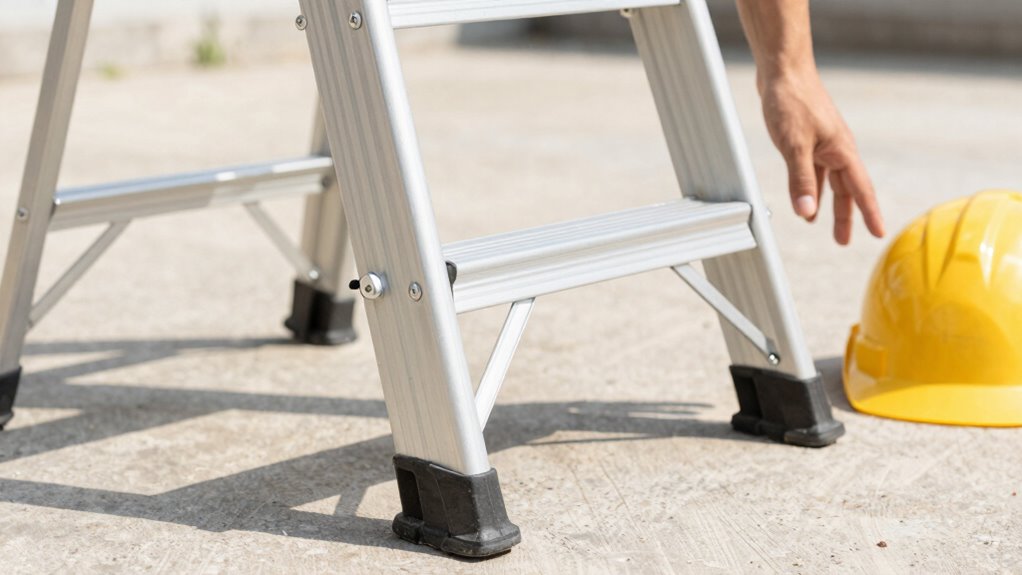
When it comes to selecting a ladder, prioritizing safety features is non-negotiable. You should always look for ladders that comply with recognized safety standards, ensuring you’re protected during your tasks. Key ladder features to take into account include slip-resistant feet, locking mechanisms, and sturdy construction materials. A ladder with a wide base will provide better stability, reducing the risk of tipping. Additionally, check for features like guardrails and safety harnesses, especially if you’ll be working at heights. Don’t forget to assess the weight capacity, as this is essential for your safety. By focusing on these safety elements, you’ll minimize hazards and make your climbing experience much more secure. Remember, safety should always come first!
Which Ladder Is Best for My Project?
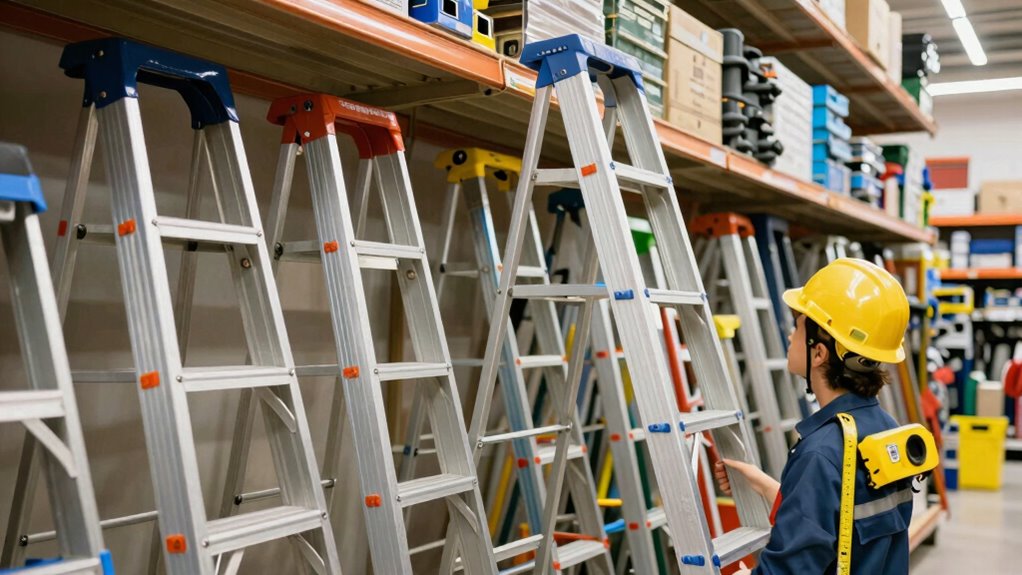
Choosing the right ladder for your project starts with understanding the types available and their specific uses. You also need to take into account the height you’ll be working at and guarantee the ladder can support your weight safely. Let’s break down these key factors to help you make the best choice.
Ladder Types Overview
Selecting the right ladder for your project can make all the difference in safety and efficiency. You’ll want to take into account various ladder types based on your specific needs. Here’s a quick overview:
- Step Ladders: Great for indoor tasks, these are typically made from aluminum or fiberglass and come in various sizes, perfect for reaching moderate heights.
- Extension Ladders: Ideal for outdoor projects, they extend to greater heights. Made from lightweight materials like aluminum, they’re easy to transport.
- Multi-Use Ladders: Versatile options that can function as both step and extension ladders. They’re usually adjustable, catering to different ladder sizes.
Choosing the right ladder materials and sizes guarantees you’ll tackle your project safely and efficiently.
Height Requirements Consideration
Understanding the height you’ll need to reach is essential for picking the right ladder for your project. Start by measuring the area you’ll be working in, including any overhead obstructions. Consider your height requirements carefully; the ladder should allow you to comfortably reach your target without overstretching. For most tasks, you should choose a ladder that extends at least three feet above the highest point you’ll need to access. When you’re choosing a ladder, think about the type of work you’ll be doing and how high you’ll be climbing. A little extra height in your ladder selection can provide added safety and stability, ensuring you complete your project efficiently and securely. Always prioritize safety and effectiveness in your ladder choice.
Weight Capacity Assessment
When evaluating weight capacity, it’s important to take into account both your body weight and any tools or materials you’ll be carrying. Choosing the right ladder is vital for ladder safety. Here are three key factors to think about:
- Total Weight: Add your body weight to the weight of any tools or materials you’ll be using on the ladder.
- Ladder Rating: Check the ladder’s weight capacity rating (often labeled as Type I, II, III) to make sure it can handle your total weight.
- Usage Type: Determine if you’re using the ladder for light-duty tasks or heavy-duty projects; this will influence your ladder choice.
Ladder Maintenance Tips for Longevity and Safety
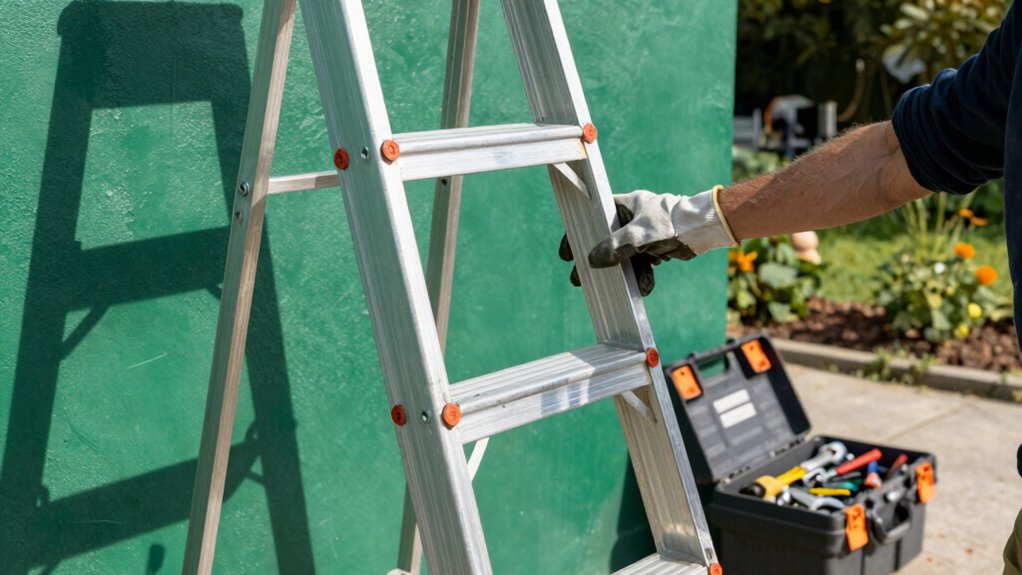
While you might think that a ladder is just a simple tool, proper maintenance is essential for ensuring its longevity and safety. To keep your ladder in top shape, establish a regular maintenance schedule. Perform routine ladder inspections for any signs of damage, like cracks or rust.
Here’s a quick reference table to help you remember key maintenance tasks:
| Task | Frequency |
|---|---|
| Inspect for damage | Every use |
| Clean the rungs | Monthly |
| Check joints and locks | Bi-annually |
| Store properly | After each use |
Frequently Asked Questions
Can I Use a Ladder on Uneven Surfaces?
You can use a ladder on uneven surfaces, but it’s essential to guarantee ladder stability. If the ground isn’t level, you risk losing balance and could fall. To enhance stability, place the ladder on a firm base, using ladder levelers or blocks if necessary. Always check the ladder’s positioning before climbing, and avoid using it on steep or unstable terrain. Safety should always come first when working on uneven ground.
What Is the Lifespan of a Typical Ladder?
A typical ladder’s lifespan varies based on materials and maintenance, usually lasting between 5 to 10 years. If you’ve got an aluminum ladder, it might last longer due to its corrosion resistance. Proper ladder maintenance, like inspecting for wear and storing it correctly, can extend its life. Always check for any damage before use, and keep it clean to guarantee it remains safe and effective for as long as possible.
How Do I Store My Ladder Safely?
To store your ladder safely, choose a dry, cool location away from direct sunlight and moisture. Use ladder storage racks or hooks to keep it off the ground and prevent damage. Make certain it’s secured and stable to avoid tipping over. If you’re stacking ladders, place the largest ones at the bottom. Always follow safety measures, checking for any damage before storing it, so you’re ready for your next project without any worries.
Are There Ladders Specifically for Outdoor Use?
Yes, there are ladders specifically designed for outdoor use! Have you ever thought about the materials that keep them durable against the elements? Look for ladder types made from aluminum or fiberglass, as these materials resist rust and corrosion. Also, consider ladders with non-slip features and weather-resistant coatings for added safety. With the right outdoor ladder, you can tackle any project with confidence while ensuring your equipment stands up to the weather.
What Should I Do if My Ladder Gets Damaged?
If your ladder gets damaged, start with a thorough safety inspection to assess the extent of the damage. Look for cracks, loose rungs, or bent parts. If it’s minor, you might be able to handle some ladder repair yourself with appropriate tools. However, if it’s serious, don’t risk it—consider replacing the ladder. Always prioritize your safety and guarantee your equipment is in top condition before using it again.
Conclusion
Choosing the right ladder can feel overwhelming, but it doesn’t have to be. You want a lightweight option for easy transport, yet it also needs to support your weight securely. Balancing safety features with budget constraints is key. By understanding your unique needs and the types available, you’ll find a ladder that’s not just functional, but a reliable partner in your projects. So, embrace the climb—your perfect ladder awaits!