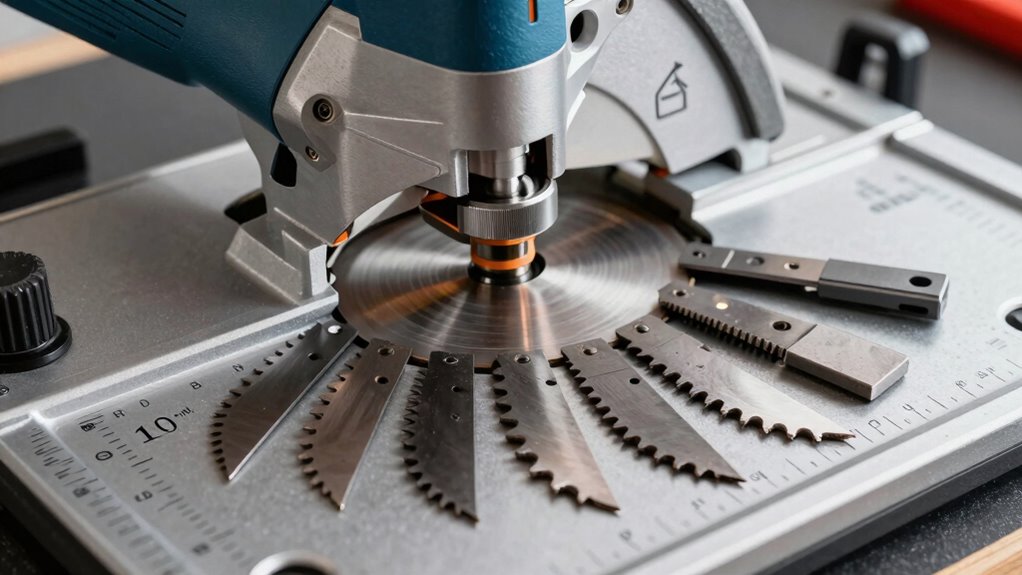

Choosing the right miter saw blade size depends on your project needs. A 12-inch blade offers wider cuts, ideal for crown molding or hardwood slabs, while a 7¼-inch blade is more maneuverable for small, detailed cuts like furniture or trim. Using the correct size helps you work safely and efficiently without overloading the saw. To learn how different blade materials impact performance and safety, keep exploring this guide for useful tips.

Get the little things that make your day delivered free with Prime
- Fast, free delivery on millions of items
- Prime Video, Amazon Music and more included
- Member-only deals all year
Key Takeaways
- Larger blades (e.g., 12-inch) allow wider, deeper cuts, suitable for larger projects like crown molding and hardwood slabs.
- Smaller blades (e.g., 7-¼-inch) are more maneuverable, ideal for detailed or small cuts such as trim or furniture.
- Blade size directly impacts the maximum cut capacity in height and width, matching saw capacity to project needs.
- Using the correct blade size prevents overloading the saw and reduces safety risks like kickbacks or blade damage.
- Regularly inspect and maintain blades to ensure optimal cut quality and safe operation, regardless of size.
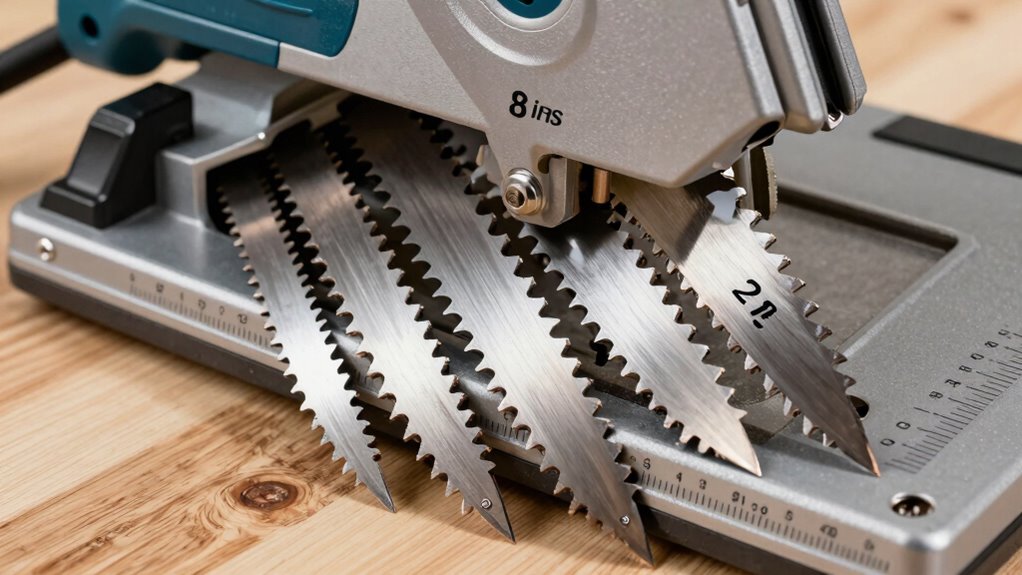
Ever wondered how the size of a miter saw blade affects your cutting capabilities? The blade size directly influences the maximum width and depth of cut you can achieve, so choosing the right size is essential for your projects. Larger blades, such as 12-inch models, allow for wider cuts, making them ideal for crown molding, framing, or large hardwood slabs. Smaller blades, like 7-¼-inch options, are more maneuverable and suited for detailed or smaller cuts, perfect for furniture or trim work. Knowing the right blade size helps you match your saw to your project requirements, ensuring efficiency and precision.
But beyond size, the blade material plays a pivotal role in performance and safety. Common materials include carbide-tipped blades, which last longer and cut cleaner through tough materials like hardwood or laminate. High-speed steel (HSS) blades are more affordable and handle softer woods well but dull faster with harder materials. When selecting your blade, consider the material you’ll be cutting most often, ensuring you get the best durability and cut quality. Using the appropriate blade material not only improves your work but also minimizes the risk of accidents caused by blade failure.
Safety precautions are essential whenever you’re working with a miter saw, especially when changing blades or adjusting settings based on blade size. Always disconnect the saw from power before swapping blades, and wear safety gear such as eye protection and gloves. When handling blades, be cautious of sharp edges to prevent cuts. Make sure the blade is securely mounted and properly aligned before turning the saw back on. Keep your hands away from the cutting path and use clamps or guides to hold your workpiece steady. Understanding the limits of your saw’s cut capacity based on blade size helps prevent overloading or forcing the saw, which can lead to dangerous kickbacks or broken blades. Regularly inspecting blades for damage or dullness and replacing them when needed keeps your operation safe and efficient.
12-inch miter saw blades for hardwood
As an affiliate, we earn on qualifying purchases.
As an affiliate, we earn on qualifying purchases.
Frequently Asked Questions
How Do I Choose the Right Blade Size for My Project?
To select the right blade size for your project, consider the type of cut you need and your saw’s compatibility. Larger blades, like 10 or 12 inches, handle thicker materials and deeper cuts, while smaller blades are for detail work. Also, check blade material—carbide-tipped blades last longer—and be mindful of noise levels, as larger blades can be louder. Matching the blade size to your project guarantees safety and peak performance.
Can I Use an Alternative Blade Size on My Miter Saw?
Like a skilled chef adapting a recipe, you can use an alternative blade size on your miter saw, but only if it’s compatible. Check blade compatibility carefully, ensuring the arbor size and cutting capacity align. Remember, safety precautions are vital—using an incompatible blade can cause accidents or damage. Always consult your saw’s manual or manufacturer before switching blades, so your project stays precise and safe.
How Does Blade Size Affect Cut Accuracy?
Blade size directly impacts cut accuracy because larger blades can cause more blade vibration, which reduces cut precision. Smaller blades tend to be more stable, offering cleaner, more accurate cuts. When you choose a blade size, consider how vibration might affect your work. Using the right size for your project helps minimize wobble and enhances overall cut accuracy, ensuring your finished cuts are precise and smooth.
Are Larger Blades Suitable for All Types of Cuts?
Larger blades are like mighty giants, but they’re not suited for every task. You need to take into account blade material and noise levels, as bigger blades often produce more noise and may require specific materials for durability. While they excel at heavy-duty cuts, for delicate or precise work, smaller blades offer better control. So, choose your blade size wisely, matching it to your project’s needs and the saw’s capacity.
What’s the Maintenance Required for Different Blade Sizes?
You need to regularly maintain your blades by sharpening them when they become dull to guarantee clean cuts and safety. Larger blades may require more frequent sharpening due to increased usage and wear. Don’t forget to keep dust collection systems clean to prevent buildup that can dull blades and reduce efficiency. Regularly inspect your blades, clean debris, and replace or sharpen them as needed to keep your saw performing at its best.
7-¼ inch precision miter saw blades
As an affiliate, we earn on qualifying purchases.
As an affiliate, we earn on qualifying purchases.
Conclusion
Now that you understand the different miter saw blade sizes and their cut capacities, you’re ready to tackle your next project. But here’s the question—are you prepared to choose the perfect blade for every cut? The right decision could make all the difference in your work’s precision and finish. Don’t settle for less—dive deeper and discover which blade will unleash your full potential. The next cut could change everything. Are you ready?
As an affiliate, we earn on qualifying purchases.
high-speed steel miter saw blades
As an affiliate, we earn on qualifying purchases.
As an affiliate, we earn on qualifying purchases.
NFL season / tailgating Picks
team gear
As an affiliate, we earn on qualifying purchases.