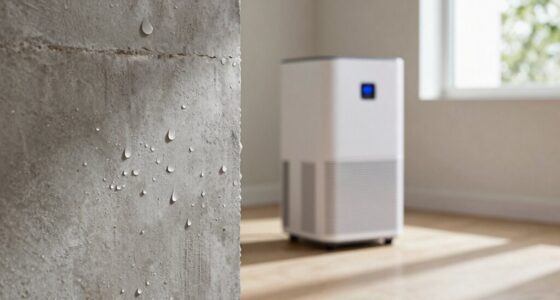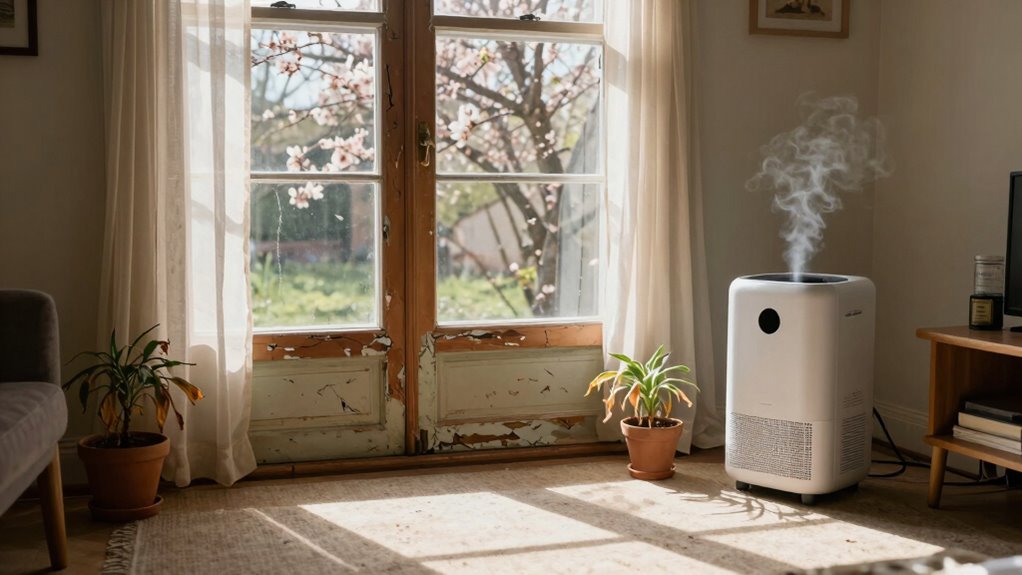

In spring, your home feels dry because even though outdoor air gets warmer and more humid, your heating systems and open windows often remove that moisture, creating low indoor humidity. Dry indoor air can cause skin, eyes, and nasal passages to feel uncomfortable and worsen allergy symptoms. To stay comfortable, managing humidity levels is key. If you want to discover simple ways to maintain a cozy indoor environment, keep exploring this topic.

Get the little things that make your day delivered free with Prime
- Fast, free delivery on millions of items
- Prime Video, Amazon Music and more included
- Member-only deals all year
Key Takeaways
- Heating systems reduce indoor humidity, making the air feel dry despite outdoor moisture levels.
- Opening windows introduces dry, pollen-laden air, lowering indoor humidity further.
- Outdoor air warms and becomes more humid, but indoor environments often stay dry due to heating.
- Seasonal fluctuations and indoor heating practices decrease humidity, causing dryness.
- Lack of proper humidification and ventilation leads to dry indoor air and discomfort.

As spring arrives, you might notice your home feels drier than usual, even if the weather outside seems moist and fresh. This shift in indoor humidity levels is common during this season. As the outdoor air warms up, it often becomes more humid, but your home’s indoor environment can feel surprisingly dry. Heating systems, which are frequently used during spring’s fluctuating temperatures, tend to lower indoor humidity by drawing moisture out of the air. Additionally, opening windows to enjoy the fresh spring air can sometimes introduce dry, pollen-laden air, further impacting your indoor environment.
Low indoor humidity can lead to a variety of discomforts, from dry skin and irritated eyes to a scratchy throat. You might find yourself reaching for moisturizing lotions more often or experiencing increased nasal congestion. These symptoms are often linked to seasonal allergies, which tend to intensify during spring. The dry air inside your home can dry out your nasal passages, making them more sensitive to pollen and other allergens. When your nasal passages are dry and irritated, you’re more vulnerable to allergy symptoms like sneezing and congestion. This creates a cycle where dry indoor air worsens allergy symptoms, leading to more discomfort and a feeling of overall dryness. Maintaining proper indoor humidity can help break this cycle and improve your overall comfort.
Dry indoor air worsens allergies, causing dryness, congestion, and discomfort, creating a cycle of irritation during spring.
You might not realize that your indoor humidity levels are contributing to these issues. Ideal indoor humidity should be around 30-50%. When levels drop below this range, your home feels noticeably dry, and your body struggles to maintain moisture. Using a humidifier can help restore balance, making the air more comfortable and less likely to irritate your respiratory system. Keep an eye on humidity levels with a simple hygrometer, and aim to keep the air from getting too dry or too moist. Proper ventilation is also essential for managing indoor humidity effectively and preventing issues like mold growth. Too much humidity can encourage mold growth and dust mites, which can worsen seasonal allergies. Good air circulation can further help in maintaining a healthy indoor environment by evenly distributing humidity and fresh air throughout your home.
Managing indoor humidity is especially important if you’re prone to allergies or respiratory issues. Besides using humidifiers, consider keeping windows open during the warmest parts of the day to let in fresh, moist air. Regularly cleaning your home to reduce dust and pollen buildup also helps minimize allergy symptoms. Remember, maintaining a comfortable indoor environment isn’t just about temperature; humidity plays a critical role in how you feel during spring. By controlling indoor humidity, you can reduce dryness, improve your comfort, and lessen the severity of seasonal allergy symptoms.
As an affiliate, we earn on qualifying purchases.
Frequently Asked Questions
How Does Indoor Heating Affect Spring Indoor Humidity Levels?
Indoor heating reduces indoor moisture, causing humidity levels to drop during spring. As you turn on your heater, it warms the air but also dries it out, making humidity regulation harder. This decrease in indoor moisture can lead to a dry, uncomfortable environment. To combat this, consider using humidifiers or placing water basins near vents, which helps maintain balanced humidity levels and keeps your home more comfortable.
Can Houseplants Help Increase Indoor Moisture During Spring?
Yes, houseplants can help increase indoor moisture during spring. As they grow, plants release moisture into the air through a process called transpiration, which boosts plant humidity. Keeping soil moisture adequate guarantees healthy plants that effectively add humidity. By adding a variety of houseplants, you create a natural humidifier, making your home more comfortable and reducing dryness caused by indoor heating and spring air.
Are Certain Building Materials More Prone to Causing Dry Indoor Air?
Certain building materials, like drywall, concrete, and brick, are more prone to causing dry indoor air because they absorb and release moisture slowly. If your home uses these materials extensively, you might notice lower indoor moisture levels, especially during dry seasons. To combat this, consider adding humidifiers or increasing indoor plants, which help maintain a comfortable, moisture-rich environment despite the natural tendency of these materials to dry out the air.
How Does Outdoor Pollen Impact Indoor Air Quality and Humidity?
Outdoor pollen sneaks inside, turning your home into a sneeze zone, and your pollen allergy worsens. It impacts indoor air quality, causing respiratory irritation and making you feel like you’re breathing spring’s dust. Humidity drops as pollen settles, drying out your space. To combat this, keep windows closed, run a HEPA filter, and maintain proper humidity. Otherwise, you’ll be trapped in a season of scratchy throats and stuffy noses indoors.
What Role Do Air Purifiers Play in Managing Indoor Dryness?
Air purifiers help manage indoor dryness by improving air quality and supporting humidifier effectiveness. They remove dust, pollen, and other allergens that can dry out your skin and respiratory system. Regular air purifier maintenance guarantees peak performance, preventing buildup that could hinder humidity levels. While purifiers don’t directly add moisture, they create a cleaner environment that complements humidifiers, making your home feel more comfortable and less dry during spring.
As an affiliate, we earn on qualifying purchases.
Conclusion
As spring’s gentle breeze drifts through your home, the air feels crisp and thin, like a whisper of dryness lingering on your skin. You can almost see the invisible dance of moisture fleeing through open windows, leaving your space feeling parched and longing for a touch of humidity. To bring back that cozy, humid embrace, consider adding a few houseplants or a humidifier. Let your home breathe easy, wrapping you in a soft, moist hug amid the blooming season.
As an affiliate, we earn on qualifying purchases.
As an affiliate, we earn on qualifying purchases.
NFL season / tailgating Picks
team gear
As an affiliate, we earn on qualifying purchases.