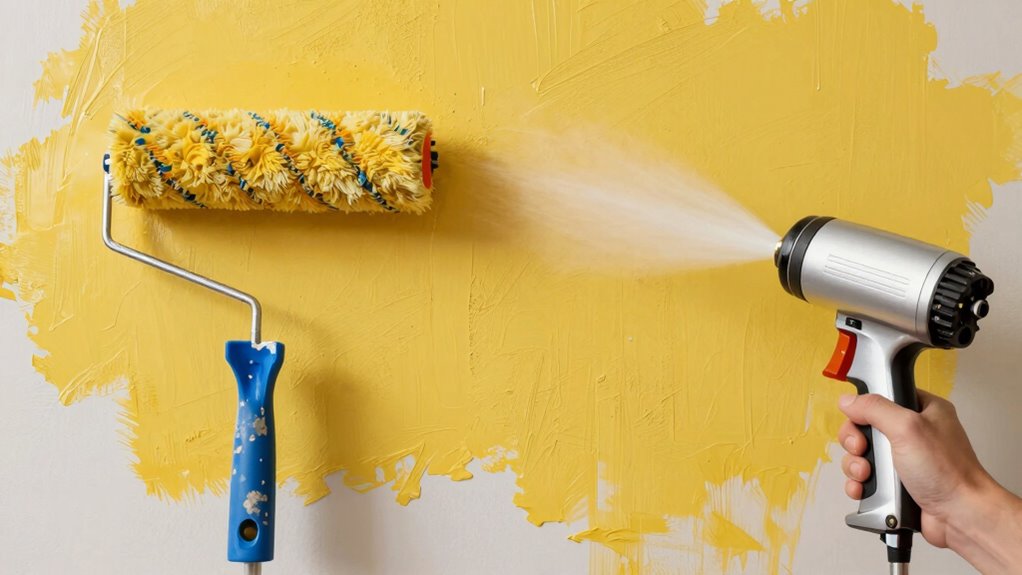

When deciding between a paint roller and a sprayer, think about your project’s size and surface type. Rollers are perfect for small areas and textured surfaces, giving you precise control and a durable finish. On the other hand, sprayers excel at covering large areas quickly, providing a smooth and uniform look. Each tool has its advantages, so it’s essential to evaluate your budget and clean-up preferences too. Discover more tips to make an informed choice.
Key Takeaways
- Use paint rollers for smaller, detailed areas requiring precise application and control, especially in tight corners.
- Choose paint sprayers for large surface areas to achieve faster coverage and a professional-quality finish.
- Rollers provide a thicker, more textured finish, enhancing durability for surfaces needing resilience.
- Sprayers excel on smooth surfaces, delivering a flawless, uniform look but may require touch-ups for consistency.
- Consider budget and clean-up: rollers are cost-effective and easy to clean, while sprayers save time but require thorough maintenance.

Bates – Paint Tray Set, Paint Rollers, Paint Brushes for Wall, Tray, Roller Brush, 11 Piece Home Painting Supplies, Foam Brush, House Painting Supplies, Painting Tools, Interior, Exterior
COMPREHENSIVE SET: Package includes 11 piece: Tray, Roller Frame (9"), 2 Roller Covers (9"x1/2"), Roller Frame (4"), 2…
As an affiliate, we earn on qualifying purchases.
As an affiliate, we earn on qualifying purchases.
Paint Rollers vs. Sprayers: A Side-by-Side Comparison
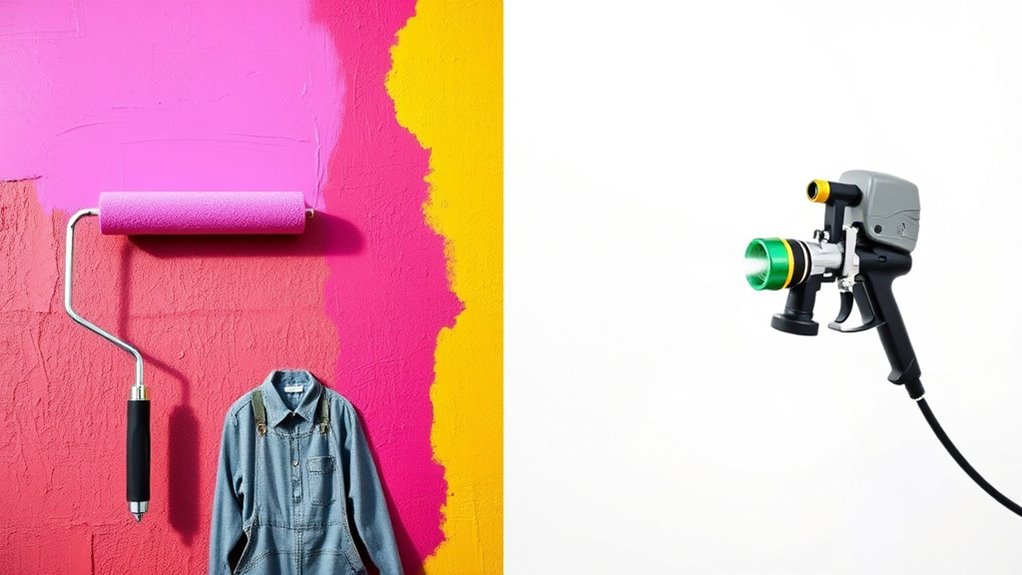
When deciding between paint rollers and sprayers, it’s essential to understand the key differences that can impact your project. In a paint roller comparison, you’ll find rollers are great for smaller, detailed areas and provide a smooth finish with less overspray. They’re also more affordable and easier to clean. On the other hand, paint sprayer benefits include faster coverage, especially for larger surfaces, and the ability to reach tricky spots like corners and textures. However, sprayers can be more expensive and require more prep time, including masking off areas. Ultimately, your choice depends on the size of your job, your budget, and the finish you’re aiming for. Consider these factors to make the best decision for your painting project.
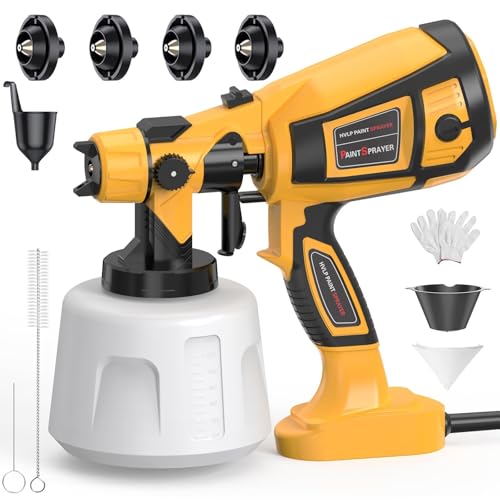
MirrorZone Paint Sprayer 1000W High Power Electric Spray Paint Gun with Adjustable Spray Width Knob,1400ML Container,4 Nozzles & 3 Patterns,Easy to Clean for Furniture Cabinets House Painting
Adjustable flow control:The paint sprayer boasts an adjustable spray width knob,minimizing overspray and maximizing paint utilization;The flow control…
As an affiliate, we earn on qualifying purchases.
As an affiliate, we earn on qualifying purchases.
Why Paint Rollers Are a Great Choice

When you’re looking for a cost-effective painting solution, paint rollers are hard to beat. They give you great control over application, allowing you to cover surfaces evenly without the mess. Plus, they’re perfect for tackling those small spaces where sprayers might struggle.
Cost-Effective Painting Solution
While many homeowners seek the quickest method to refresh their space, using a paint roller can be a surprisingly cost-effective choice. Paint rollers are often more affordable options compared to sprayers, as they require fewer upfront costs and equipment. You won’t need to invest in expensive spray guns or compressors—just a roller, tray, and quality paint. Plus, cleanup is simpler and less costly, saving you both time and money. For those on a budget, paint rollers offer budget-friendly choices that allow you to achieve a professional finish without breaking the bank. Whether you’re tackling a small room or a larger area, using a roller is a smart way to stretch your painting dollars further. Proper technique can also help ensure an even coat and minimize paint waste, making your project more efficient. Additionally, considering filter maintenance methods can help maintain your walls’ appearance over time, further protecting your investment. Regularly replacing or cleaning your filters can also improve overall paint application and help achieve smoother results. Moreover, choosing the right paint type can significantly impact the durability and look of your finished project.
Easy To Control Application
Using a paint roller not only saves you money but also gives you a level of control that sprayers often lack. With a roller, you can easily manage your paint control, ensuring even coverage and minimal drips. This hands-on approach allows you to adjust your pressure and speed, making it easier to navigate around corners and edges. When using application techniques like “W” or “M” patterns, you can effectively distribute paint, achieving a smooth finish. Plus, rollers are less likely to overspray, which means you won’t waste paint or create a mess. If you want precision and reliability in your painting project, choosing a roller helps you maintain control throughout the entire process.
Ideal For Small Spaces
For those tackling tight corners or compact rooms, paint rollers are often the perfect choice. Their design allows you to reach difficult areas with ease, making them ideal for small rooms. Unlike sprayers, rollers provide better control, ensuring you won’t overspray onto surfaces you want to keep clean. Additionally, their user-friendly design makes them accessible for DIYers of all skill levels. When working in confined spaces, rollers help prevent messes and reduce cleanup time. Because they are generally more affordable and easier to maintain, rollers are a practical option for quick touch-ups and small projects. For those seeking efficient application methods, rollers can often be quicker than other tools, especially for textured surfaces. Their simplicity also makes them a great choice for beginner painters, helping build confidence in DIY painting projects.

Mister Rui Paint Roller Kit-13 Piece, 4-Inch Microfiber Paint Rollers with Ergonomic Handle, Small Roller Paint Brush, Paint Tray with 3 Liners, Perfect for House Painting, Trim, and Touch-Ups
13 Pieces Painting Set: The paint roller kit includes a 4 inch paint poller with frame, a 4…
As an affiliate, we earn on qualifying purchases.
As an affiliate, we earn on qualifying purchases.
When to Go With a Paint Sprayer?

When you’re tackling large surface areas, a paint sprayer can save you time and effort. If your project involves intricate details or hard-to-reach spots, a sprayer can provide a smooth, even finish. Plus, if you need to complete your project quickly, a sprayer is often the best choice. Additionally, for achieving professional-quality results, a sprayer often outperforms traditional brushes or rollers.
Large Surface Areas
Painting large surface areas can be a challenging task, but a paint sprayer often makes it much easier and faster. When you’re faced with a big project, the coverage efficiency of a sprayer allows you to apply paint uniformly in less time than a roller. You can quickly coat walls, fences, or ceilings without the constant need for touch-ups. However, surface preparation is still essential; guarantee the area is clean and free of debris for the best results. By using a sprayer, you not only save time but also achieve a smooth, professional finish that can be hard to replicate with a roller. So, for large spaces, a paint sprayer is typically the better choice.
Intricate Details
Intricate details can be a painter’s biggest challenge, but a paint sprayer shines in these situations. When you’re working on projects that feature intricate designs or fine details, a sprayer offers precision and efficiency that brushes and rollers can’t match. Here’s why you should consider using one:
- Even Coverage: Sprayers deliver a uniform finish, ensuring no spots are missed in complex areas.
- Accessibility: They can reach tight corners and elaborate moldings with ease, making detailed work simpler.
- Speed: You’ll save time by covering intricate sections quickly without sacrificing quality.
- Proper Ventilation: Using a sprayer also benefits from adequate kitchen ventilation, helping to manage overspray and airborne particles effectively.
Quick Project Completion
If you’re looking to complete your painting project quickly, a paint sprayer is often the best choice. With its ability to cover large areas in a fraction of the time compared to traditional methods, you’ll enjoy significant quick project benefits. Paint sprayers apply an even coat rapidly, reducing the number of passes needed, which means you can finish your job sooner. Additionally, they’re great for time saving techniques, allowing you to tackle multiple surfaces or areas without frequent breaks for cleaning brushes or rollers. Whether you’re working on a large room or an outdoor project, using a sprayer can drastically cut down on your overall project time, letting you move on to your next task faster.
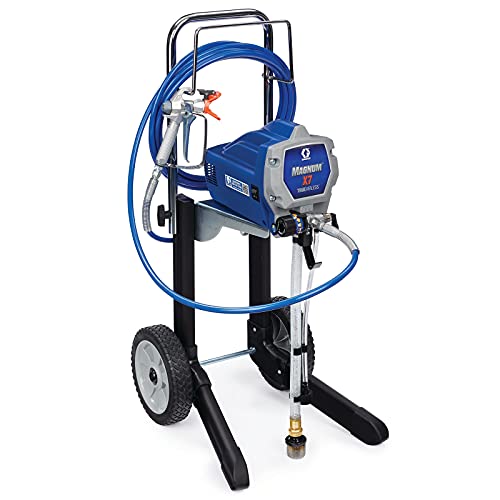
Graco Magnum 262805 X7 Cart Airless Paint Sprayer, Gray
CONTROL PAINT FLOW: Fully adjustable pressure to give you ultimate control of paint flow for any project size;…
As an affiliate, we earn on qualifying purchases.
As an affiliate, we earn on qualifying purchases.
Surface Types: Which Tool Works Best-Rollers or Sprayers?

When tackling various surface types, how do you decide between using a paint roller or a sprayer? Understanding surface compatibility and texture considerations can help you make the right choice.
- For smooth surfaces, like drywall, a sprayer delivers a flawless finish quickly.
- If you’re dealing with textured surfaces, a roller may be your best bet, as it can navigate grooves and bumps effectively.
- Consider the scale of your project; larger areas may benefit from the speed of a sprayer, while smaller spaces might be better suited for the precision of a roller.
Speed: Rollers vs. Sprayers
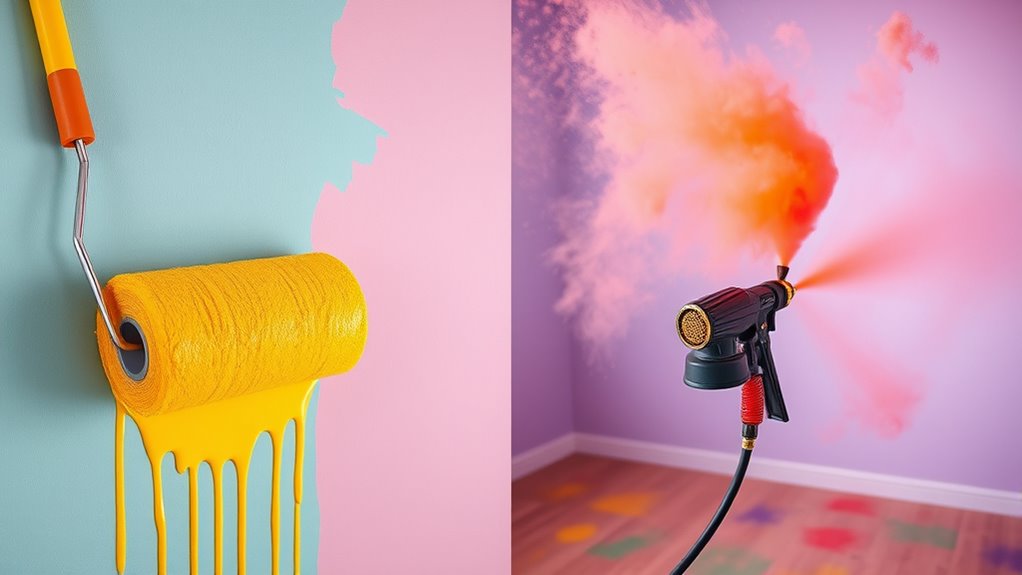
Choosing between rollers and sprayers not only depends on the surface but also on how quickly you want to complete your project. If application speed is your priority, sprayers generally take the lead, allowing you to cover large areas in less time. They’re perfect for extensive projects where efficiency is key. However, keep in mind that sprayers often require more prep work and cleanup, which can extend your overall project time.
On the other hand, rollers might take longer to apply paint but tend to have a shorter drying time, letting you complete multiple coats faster. If you’re working on smaller areas or need more control, rollers could be the better choice. Ultimately, weigh your needs against the desired speed for the best results.
How Paint Rollers and Sprayers Affect Finish Quality
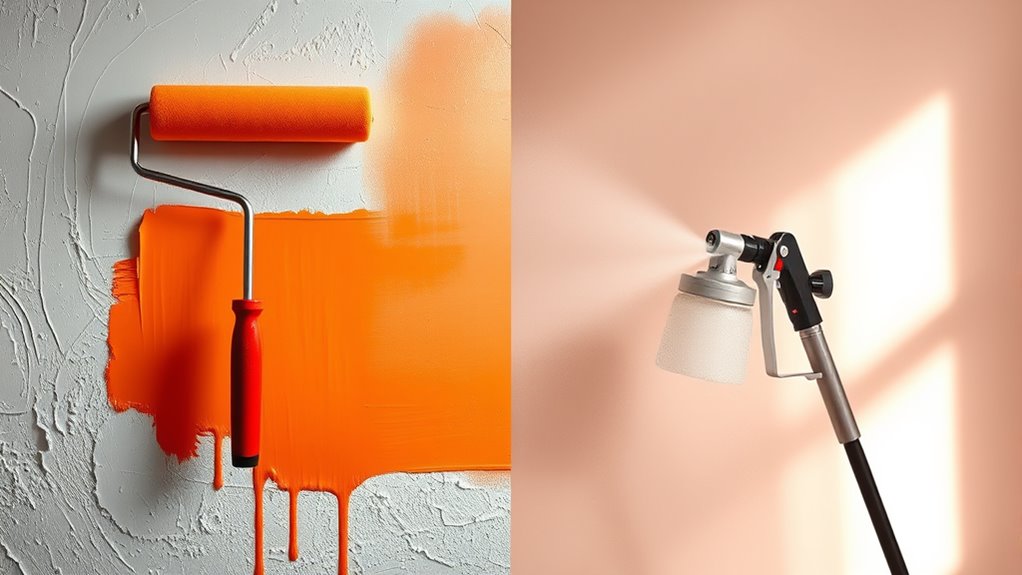
The finish quality of your paint job can vary considerably depending on whether you use a roller or a sprayer. Rollers tend to produce a thicker, more textured finish, which can enhance durability. In contrast, sprayers offer a smoother, more uniform look but may lead to texture variation.
Consider these factors when choosing your tool:
- Finish Durability: Rollers provide a robust finish that stands up to wear.
- Texture Variation: Sprayers can create different textures based on distance and technique.
- Application Speed: Sprayers cover large areas quickly, but may require more touch-ups for consistency.
Ultimately, your choice will impact how your project looks and lasts over time.
Budgeting for Your Painting Tool
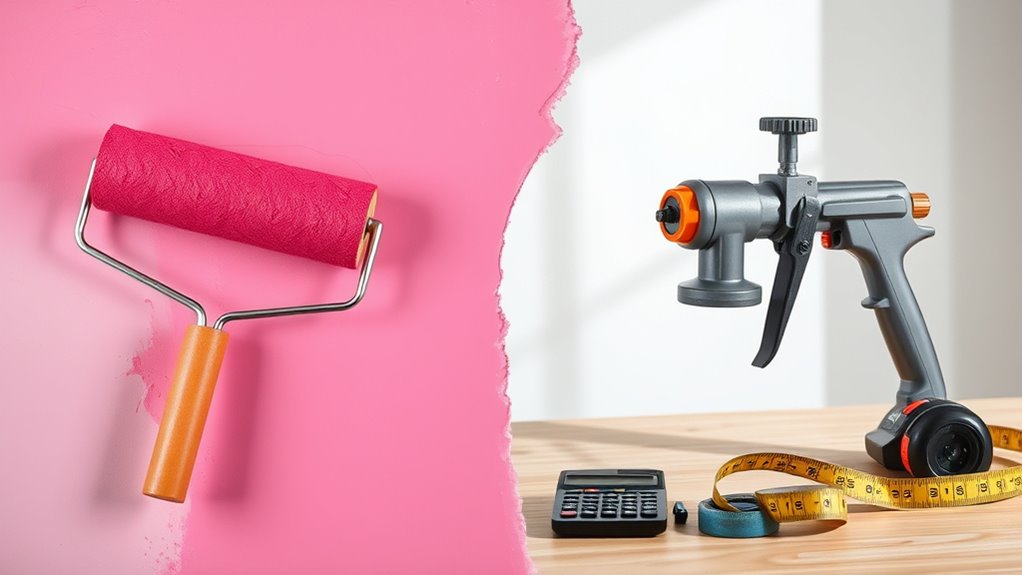
Understanding the difference in finish quality between rollers and sprayers can help you make informed decisions about your painting project, especially when it comes to budgeting. When considering your budget, think about both the initial cost and the tool lifespan. Rollers typically cost less upfront, making them ideal for tight budgets. However, sprayers can save you time and labor, which might justify their higher price tag. Factor in how often you’ll use the tool—if you’re painting frequently, investing in a sprayer could be wise. Additionally, consider long-term maintenance costs and whether you’ll need to replace parts. By weighing these budget considerations, you’ll choose the right tool that meets your needs without breaking the bank. Proper tool maintenance can also extend the lifespan of your equipment and save money in the long run. Knowing about security zone info can help you safeguard your investment and property effectively.
Clean-Up and Maintenance: What to Expect After Use

While both paint rollers and sprayers can help you achieve great results, their clean-up and maintenance processes differ considerably. After using a roller, clean-up is generally straightforward. You’ll just need to rinse it with water or solvent, depending on the paint type. Sprayers, however, require a more thorough approach, as they have multiple components that must be disassembled and cleaned properly to maintain peak performance. Here are some clean up tips to keep in mind:
- Always follow the manufacturer’s instructions for cleaning.
- Use appropriate solvents for the type of paint.
- Establish a regular maintenance routine to prevent clogs and damage.
Frequently Asked Questions
Can I Use a Paint Sprayer for Touch-Ups?
Yes, you can use a paint sprayer for touch-ups, but it requires careful technique. For better sprayer precision, keep the sprayer at a consistent distance from the surface and use a light hand to avoid overspray. Practice on a scrap piece first, if possible. While touch up techniques often involve brushes or rollers, a sprayer can work well for larger areas or when you need a smooth, even finish.
Are There Safety Concerns With Using Paint Sprayers?
Yes, there are safety concerns with using paint sprayers. You need to prioritize sprayer safety by wearing protective gear, ensuring proper ventilation, and keeping flammable materials away. Regular equipment maintenance is essential; check hoses for leaks, clean the nozzle, and store the sprayer properly to prevent accidents. By staying aware of these risks and taking preventive measures, you can enjoy a smooth and safe painting experience without unnecessary hazards.
What Type of Paint Works Best With Rollers?
When you’re using a paint roller, latex paints work best for most interior projects. They’re easy to apply, dry quickly, and clean up with water. However, if you’re tackling a more durable surface, like a kitchen or bathroom, oil-based paints might be your choice for a harder finish. Just remember, oil-based paints take longer to dry and require mineral spirits for cleanup, so plan accordingly!
How Long Does It Take for Paint to Dry After Spraying?
Think of paint drying like the sun rising after a storm. Typically, with a good spray technique, you’ll find that most paints dry to the touch in about 30 minutes to an hour. However, full curing can take longer, often up to 24 hours or more, depending on the type of paint and environmental conditions. Keep an eye on humidity and temperature, as they can affect the drying time greatly.
Can I Use a Roller on Textured Surfaces?
Yes, you can use a roller on textured surfaces! In fact, roller application works well because it can fill in the grooves and crevices effectively. Just make sure to choose a roller with a nap that’s appropriate for the texture—longer naps help cover more uneven areas. You’ll get a smooth finish while ensuring that the paint adheres well to those tricky spots. So, grab your roller and get started on that project!
Conclusion
In the paint world, choosing between a roller and a sprayer is like deciding between a brushstroke and a splash of color on a canvas. Each tool has its time to shine, whether you’re tackling a textured wall or a larger, open space. By understanding your project’s needs, you can wield your chosen tool like a painter with a palette, transforming your vision into reality. So, pick wisely, and let your creativity flow!