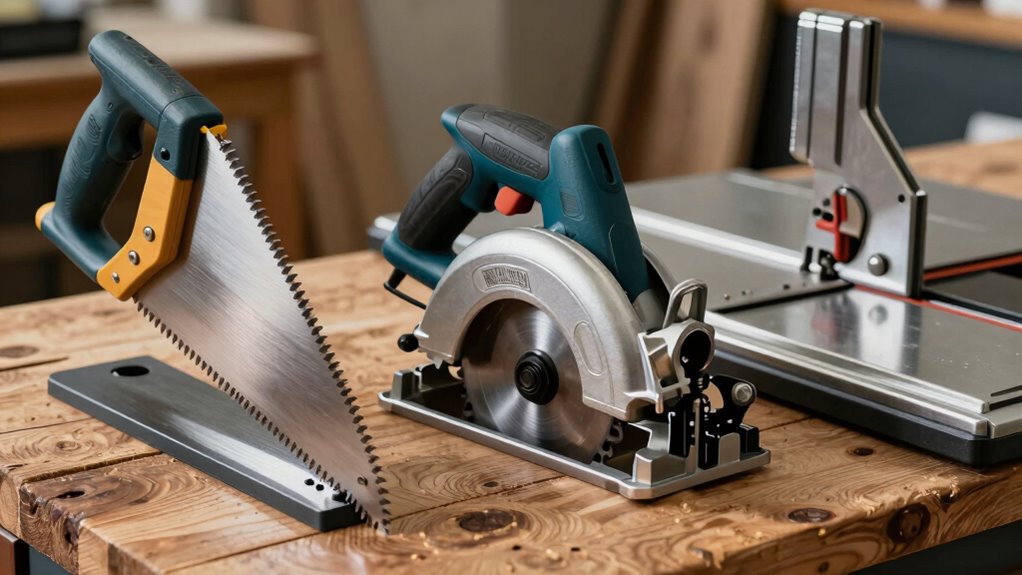

When it comes to saw types, miter, circular, and table saws each have distinct advantages. Miter saws excel at making precise angled cuts, perfect for trim work. Circular saws are versatile and great for various materials, while table saws provide stability and accuracy for larger pieces. Choosing the right saw depends on your specific project needs and cutting requirements. There’s more to discover about how each saw performs and what might be best for your next project.
Key Takeaways
- Miter saws are ideal for precise angled cuts, especially useful in trim work and framing projects.
- Circular saws offer versatility across various materials, with adjustable cutting depth for different tasks.
- Table saws provide stability and accuracy for straight cuts and repetitive tasks, perfect for larger pieces of wood.
- Miter saws require less maintenance compared to circular and table saws, making them easier to manage.
- Selecting the right saw depends on project requirements, including the complexity of cuts and material types.

Metabo HPT 10-Inch Single Bevel Compound Miter Saw, 15-Amp Power Saw with Xact Cut Shadow Line, Precision Miter Angles, Single Bevel 0-45°, 40T TCT Miter Saw Blade, Lightweight Design, C10FCG2
POWERFUL AND PRECISE: This 10-inch single bevel compound miter saw features a 15-Amp motor delivering high power for…
As an affiliate, we earn on qualifying purchases.
As an affiliate, we earn on qualifying purchases.
What Is a Miter Saw and When Should You Use One?
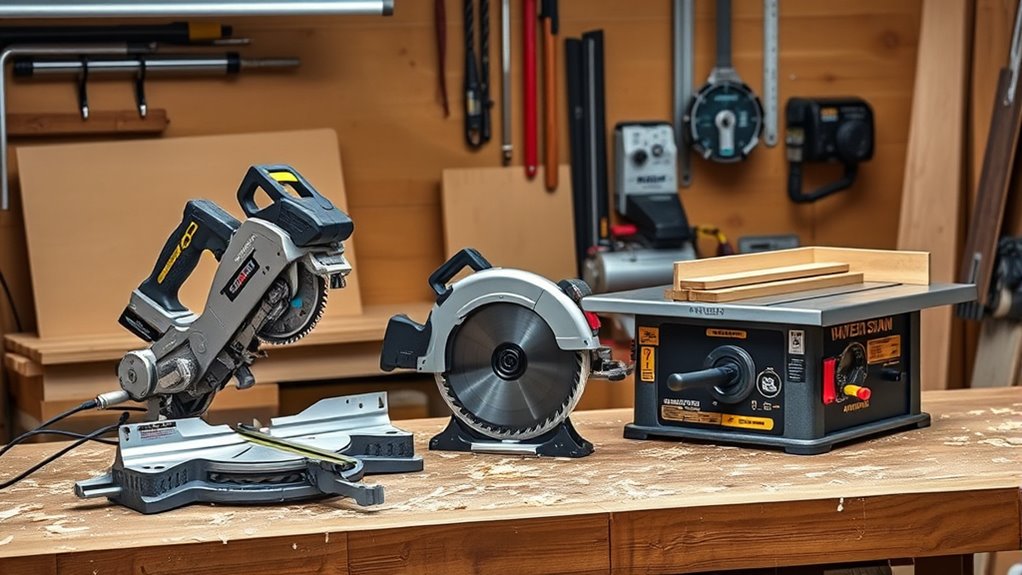
If you’re looking to make precise angled cuts in wood, a miter saw is your best friend. This powerful tool excels at creating clean, accurate cuts, especially for projects like framing, molding, and trim work. Miter saws allow you to adjust the angle of the blade, enabling you to tackle various cuts, such as miters and bevels. Whether you’re working on a DIY project or a professional job, using a miter saw can drastically improve your efficiency and accuracy. You’ll find it particularly useful when you need to join two pieces of wood at an angle, ensuring a tight fit. Knowing when to use a miter saw can elevate your woodworking skills and produce stunning results.

DEWALT 20V MAX Circular Saw, Cordless Sidewinder Style Portable, 6-1/2-Inch Blade, 5150 RPM, 0-50 Degree Bevel Capability, Battery Not Included (DCS391B)
5150 RPM motor delivers power and speed to make the most demanding cuts with ease
As an affiliate, we earn on qualifying purchases.
As an affiliate, we earn on qualifying purchases.
Key Features of Circular Saws You Should Know
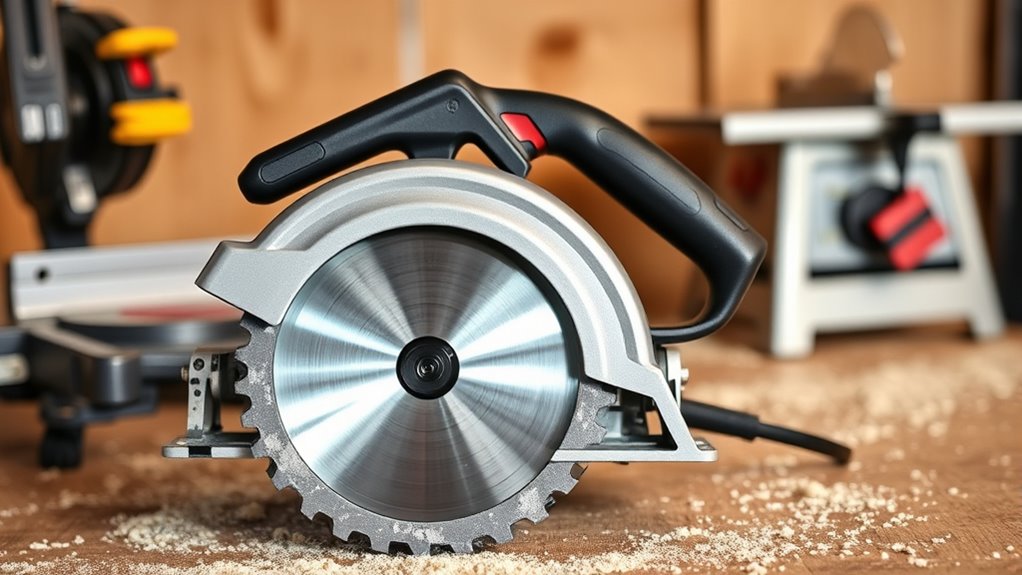
Circular saws are essential tools for any woodworker, offering versatility and power in a compact design. One of the key circular saw features is the adjustable cutting depth, allowing you to make precise cuts in various materials. You’ll also appreciate the different circular saw types available, such as corded and cordless models, which cater to different power needs and mobility preferences. The blade size is another important feature; typically ranging from 5-1/2 to 7-1/4 inches, it affects the thickness of the material you can cut. Additionally, many circular saws come with safety features like blade guards and electric brakes, ensuring your safety while working. Understanding these features will help you choose the right circular saw for your projects.
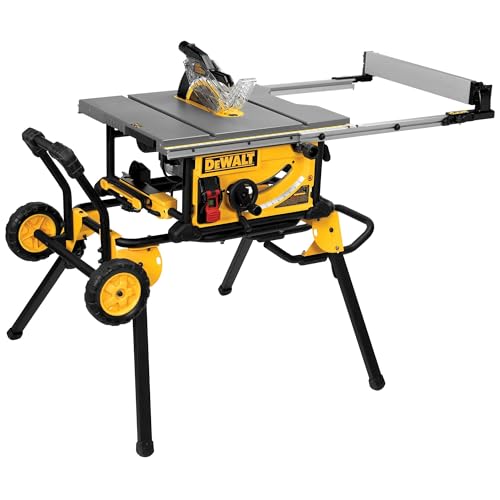
DEWALT Table Saw 10 Inch with Foldable Rolling Table Saw Stand, 15 Amp, 4800 RPM, 32-1/2-Inch Rip Capacity (DWE7491RS)
Rack & Pinion Telescoping Fence System Make fence adjustments fast, smooth and accurate
As an affiliate, we earn on qualifying purchases.
As an affiliate, we earn on qualifying purchases.
Table Saws: Essential for Precision Cuts in Woodworking
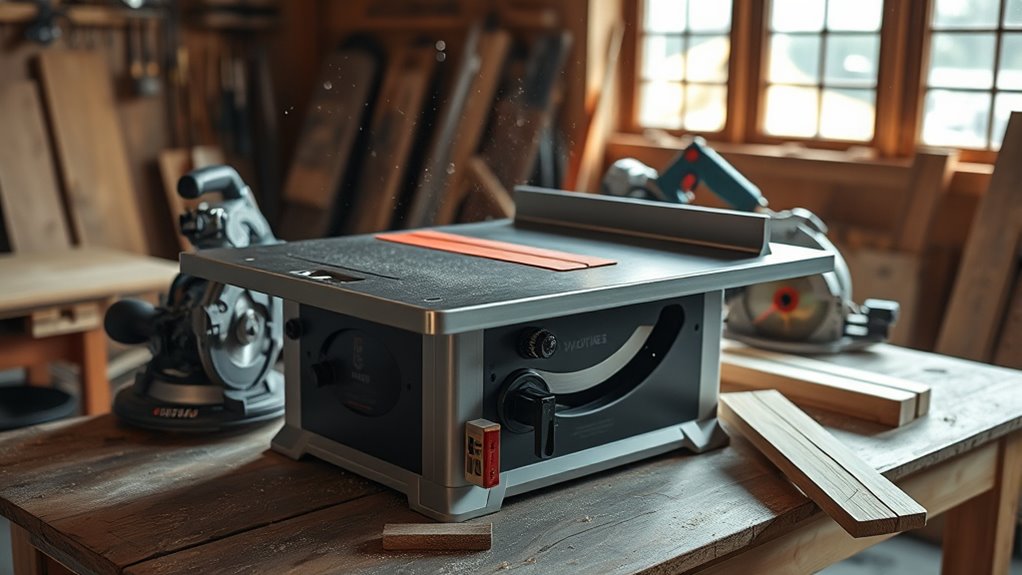
When you’re aiming for precision in your woodworking projects, a table saw is a must-have tool. Its key features make it perfect for straight cuts and repetitive tasks, ensuring consistency in your work. Let’s explore how this powerful saw can elevate your woodworking skills. A versatile power tool like the table saw also helps you handle a variety of materials and project sizes, making it a valuable addition to any workshop. Proper maintenance, such as cleaning and blade checks, can extend the lifespan of your saw and maintain cutting accuracy over time. Regular blade alignment is also crucial to keep your cuts precise and safe.
Key Features of Table Saws
Table saws are indispensable tools for any woodworking enthusiast, offering a blend of power and precision that makes them essential for achieving flawless cuts. One of the key table saw features is the adjustable blade height and angle, which allows you to make various cuts, from rip to bevel. Additionally, the large flat surface provides stability, ensuring your material stays secure while you work. The built-in fence system is another significant feature, helping you maintain accuracy and consistency in your cuts. The benefits of using a table saw include increased efficiency and reduced effort, allowing you to tackle larger projects with ease. Overall, investing in a quality table saw enhances your woodworking experience and elevates your craftsmanship. Incorporating safety features such as blade guards and riving knives is also crucial for preventing accidents and ensuring a secure working environment.
Ideal Uses for Woodworking
Precision in woodworking relies heavily on the right tools, and table saws excel in delivering accurate cuts. They’re perfect for various woodworking techniques, especially when you need consistent results. Whether you’re working on cabinetry, furniture, or intricate designs, a table saw guarantees your cuts are straight and true. Proper standing desk gear can also reduce fatigue, helping you work more accurately for longer periods. Additionally, understanding cutting techniques ensures you maximize the effectiveness of your table saw and achieve professional-quality results. Recognizing the importance of safety precautions is essential to prevent accidents and ensure a smooth workflow. Being familiar with filtration and suction basics can further improve your workshop environment by reducing dust and debris. Mastering blade types allows for more precise and specialized cuts, enhancing overall project quality. Here’s a quick overview of ideal uses:
| Use Case | Benefits |
|---|---|
| Rip Cuts | Straight cuts for wide boards |
| Crosscuts | Perfect for cutting across the grain |
| Bevel Cuts | Ideal for angled cuts and joints |

Skil 5080-01 13-Amp 7-1/4" Circular Saw, Red
13 Amp motor for more power and performance than the SKIL 5380
As an affiliate, we earn on qualifying purchases.
As an affiliate, we earn on qualifying purchases.
Which Saw Is Right for You? A Comparison of Miter, Circular, and Table Saws
Choosing the right saw can feel overwhelming with so many options available. Miter saws excel at making precise crosscuts and angles, perfect for trim work. Circular saws are versatile, allowing you to tackle various cuts, but you’ll need to evaluate the right blade types for your project, whether it’s wood or metal. Table saws offer stability and accuracy for larger pieces, making them ideal for ripping boards.
When deciding, think about your specific needs and the saw maintenance required for each type. Miter saws generally need less upkeep, while circular and table saws may require more attention to blade changes and adjustments. Ultimately, choosing the right saw depends on your projects and how much effort you’re willing to invest in maintenance.
Advantages of Each Saw for DIY and Professionals
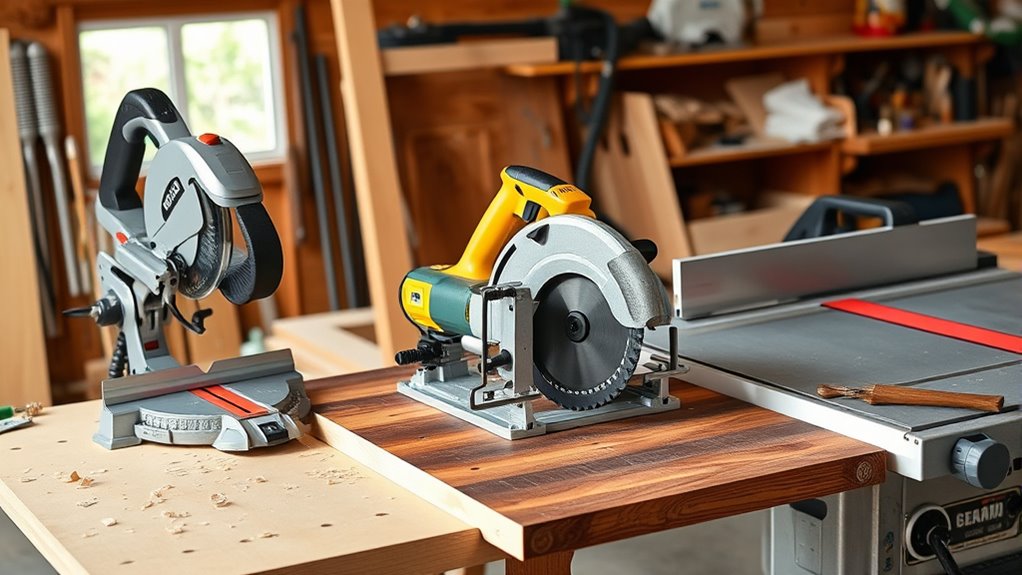
While each saw type has its strengths, understanding their advantages can help you decide which is best for your DIY projects or professional work. Miter saws offer precision for angled cuts, making them ideal for trim work and crown molding. Their advantages include ease of use and portability, which can be a game-changer on job sites. Circular saws, with their versatility, provide benefits like portability and adaptability for various materials, perfect for framing and ripping sheets. Ultimately, table saws boast efficiency in making straight cuts on larger pieces, ensuring consistency and speed for repetitive tasks. By recognizing these benefits, you can choose the right saw to enhance your woodworking experience, whether at home or professionally.
Essential Safety Tips for Using Miter, Circular, and Table Saws

Safety should always come first when using miter, circular, and table saws, as the right precautions can prevent accidents and injuries. Always wear protective gear, including safety glasses, ear protection, and gloves, to safeguard yourself during cutting tasks. Before you begin, verify your saw is in good working condition by performing regular saw maintenance. Check for sharp blades, secure guards, and proper alignment to reduce the risk of kickback. Keep your workspace clean and free of debris to avoid tripping hazards. Additionally, never wear loose clothing or jewelry that could get caught in the saw. By following these safety tips, you’ll create a safer environment for yourself and anyone nearby while working with these powerful tools.
Choosing the Right Saw: What You Need to Know for Your Project
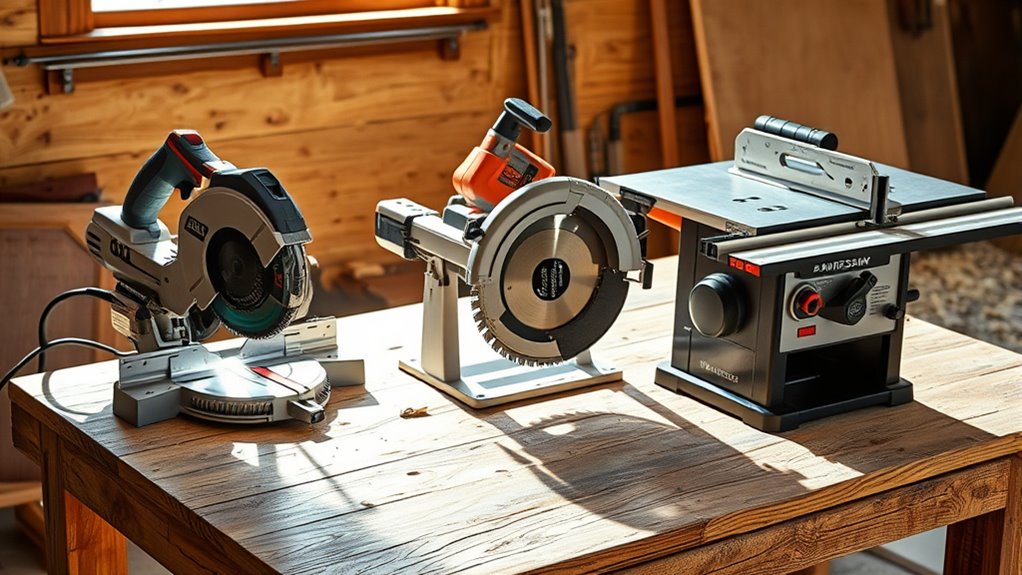
When choosing the right saw for your project, start by evaluating your specific requirements. Consider the features of different saws to find the best match for your needs. By focusing on what you need, you can make an informed decision that enhances your woodworking experience. Additionally, understanding essential DIY tools and safety tips can help you operate your chosen saw safely and effectively. Knowing how to select the appropriate studio acoustic treatment can also improve your workspace’s sound quality, especially if you’re incorporating live audio gear into your projects. Taking advantage of smart furniture options can further optimize your workspace for both storage and functionality. Being mindful of ergonomic workspace design ensures that your setup promotes comfort and reduces fatigue during your projects. Incorporating proper lighting techniques can also significantly impact your work efficiency and safety.
Project Requirements Assessment
Choosing the right saw for your project can make all the difference in achieving the desired results efficiently. Start by examining your project scope. Are you tackling intricate cuts or simple straight lines? Understanding the complexity will help you determine the type of saw you’ll need. Next, consider your material selection. Different materials require different blades and saws; for instance, softwoods are easier to cut than hardwoods or metal. If your project involves various materials, you might want to invest in a versatile saw like a circular saw. Additionally, evaluating the saw technology can help you select a tool that offers the best performance and safety features for your specific tasks. The mechanical components of a saw also play a crucial role in its durability and efficiency, especially in demanding projects. Being aware of the power source can further influence your choice, whether you prefer corded or cordless options for greater mobility. Incorporating air purifier maintenance dos and don’ts into your workspace can help maintain a clean environment and extend your tools’ lifespan. Also, considering the safety features of a saw is essential to prevent accidents and ensure a secure working environment. By evaluating both your project scope and material selection, you can confidently choose a saw that will meet your needs and help you complete your project successfully.
Saw Features Comparison
After evaluating your project requirements, it’s time to compare the features of different saws to find the best fit for your needs. Start by considering saw blade types; they greatly impact cutting accuracy. For instance, miter saws excel in bevel and angle cuts, making them ideal for trim work. Circular saws are versatile and great for cross-cutting, while table saws offer precision and stability for larger projects. Think about the depth of cut and the motor power as they influence performance. Additionally, consider portability if you’ll be moving your saw frequently. By weighing these features carefully, you’ll guarantee you choose a saw that meets your specific project demands and enhances your overall efficiency.
Frequently Asked Questions
Can I Use a Miter Saw for Making Curved Cuts?
You can’t use a miter saw for making curved cuts effectively. Miter saws are designed for straight cuts and precise angles, which makes them unsuitable for curves. If you need to create curved cuts, consider using a jigsaw or a band saw, as they’re better suited for that task. Sticking with the right tools will guarantee you achieve cleaner, more accurate results without damaging your material.
How Do I Maintain My Circular Saw for Optimal Performance?
To maintain your circular saw for peak performance, regularly check and clean the blade. Blade cleaning is essential; remove any sawdust or resin buildup to guarantee smooth cuts. Additionally, inspect the motor and housing for debris and keep the parts lubricated. Tighten any loose screws and replace the blade if it’s dull. Following these circular saw maintenance steps will help prolong its life and improve your cutting efficiency.
What Is the Best Blade Type for a Table Saw?
You might think any blade will do, but that’s not true! For your table saw, a carbide-tipped blade is best. It offers durability and sharpness, making it ideal for various cutting techniques. Whether you’re ripping or cross-cutting, this material handles hardwoods and softwoods alike, ensuring clean cuts every time. Don’t skimp on quality; investing in the right blade can greatly enhance your saw’s performance and longevity. Happy cutting!
Are There Battery-Powered Options for These Saws?
Yes, there are battery-powered options for these saws, enhancing their portability. Many manufacturers now offer cordless models that run on powerful lithium-ion batteries, allowing you to easily maneuver around your workspace without being tethered to an outlet. These battery options provide the convenience of using a saw anywhere, making them ideal for on-site projects or tight spaces. You’ll appreciate the freedom and flexibility that cordless saws bring to your woodworking tasks.
What Safety Gear Should I Wear While Using These Saws?
When you’re wielding woodworking wonders, safety should be your top priority. Slip on sturdy safety goggles to shield your eyes from splinters and debris. Don’t forget hearing protection, either; those powerful saws can produce a piercing sound that might harm your hearing over time. By donning these essential gear pieces, you’ll not only safeguard your senses but also enhance your confidence while crafting your next project. Stay safe and saw savvy!
Conclusion
To sum up, whether you’re tackling a DIY project or working on professional tasks, choosing the right saw can make all the difference. Did you know that miter saws can make precise cuts at angles as fine as 1 degree? Imagine effortlessly crafting perfect joints or frames with that kind of accuracy! By understanding the strengths of miter, circular, and table saws, you’ll not only enhance your skills but also enjoy the satisfaction of achieving flawless results in your woodworking endeavors.