When pondering the differences between a shop vac and a dust extractor, consider your specific needs. A shop vac excels in general cleanup and handles various debris types, while a dust extractor specializes in fine dust collection with superior filtration—ideal for woodworking. Shop vacs are typically more affordable, but dust extractors offer long-term air quality benefits. Understanding these differences will help you choose the right tool, and there’s more to explore about their applications and benefits.
Key Takeaways
- Shop vacs are versatile for general cleanup, while dust extractors excel at collecting fine dust and improving air quality during specific tasks.
- Dust extractors feature advanced HEPA filtration, capturing 99.97% of particles as small as 0.3 microns, unlike standard shop vac filters.
- Shop vacs are more affordable upfront, but dust extractors provide long-term health benefits and enhanced air quality for heavy dust projects.
- Dust extractors are designed for portability with integrated tool attachments, making them ideal for job sites and mobile applications.
- Consider the specific project needs: choose a shop vac for larger debris and quick cleanups, or a dust extractor for fine dust and safety.

ECOMAX Dust Extractor, Shop Vac, Semi-auto Filter Clean, HEPA Filter, 8 Gallon Stainless Steel Tank 6.5 HP Wet Dry Vacuum, Anti-Static Hose, Dust-Full Indicator, for Woodworking
Dual-mode Operation for Versatile Cleaning: This wet/dry shop vacuum switches between standard vacuum mode for everyday messes and…
As an affiliate, we earn on qualifying purchases.
As an affiliate, we earn on qualifying purchases.
What Is a Shop Vac?
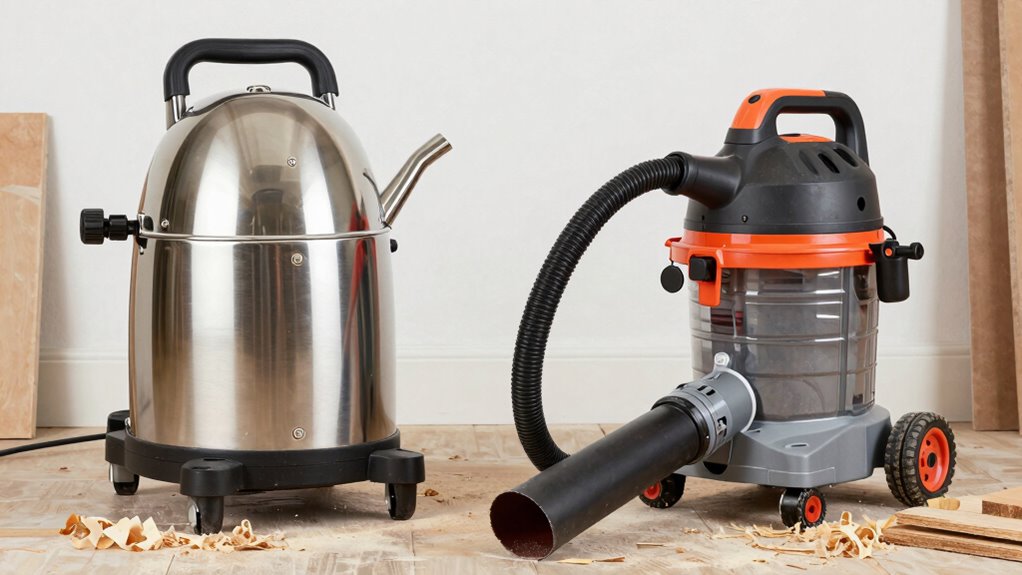
A shop vac, short for shop vacuum, is a powerful cleaning tool designed for heavy-duty tasks. You’ll find it indispensable for tackling messes in your workshop, garage, or during renovation projects. Shop vac features typically include a robust motor, large capacity tank, and versatile attachments that help you tackle various debris types—from sawdust to liquids. To keep your shop vac operating at peak performance, shop vac maintenance is essential. Regularly check and clean or replace the filters, empty the tank after use, and inspect hoses for clogs. By following these simple maintenance tips, you’ll extend the life of your shop vac and guarantee it’s always ready for your next big cleanup challenge.

Shop-Vac 12 Gallon 6.0 Peak HP Wet/Dry Vacuum, Stainless Steel Tank, 3 in 1 Function Portable Shop Vacuum with Attachments, Drain Port, Ideal for Jobsite, Garage & Workshop. 5926211
HEAVY-DUTY:Shop-Vac 12 gallon stainless steel collection tank and powerful 6.0 HP motor provide maximum power for heavy-duty and…
As an affiliate, we earn on qualifying purchases.
As an affiliate, we earn on qualifying purchases.
What Is a Dust Extractor?
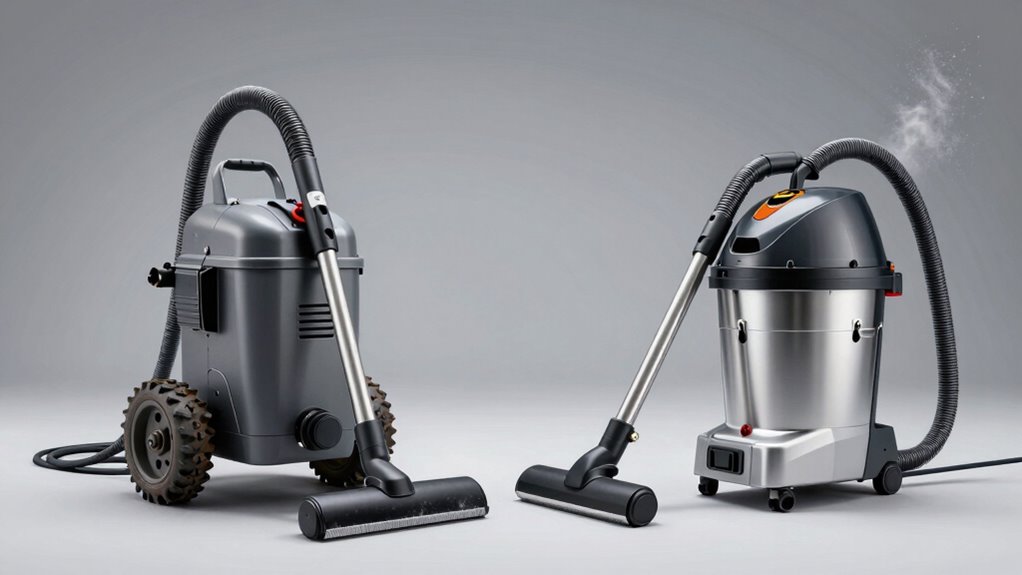
While both shop vacs and dust extractors serve the purpose of cleaning, a dust extractor is specifically engineered for capturing fine dust particles generated during woodworking or remodeling tasks. The dust extractor benefits you by improving air quality and reducing health risks associated with inhaling dust. Additionally, using a dedicated dust extraction system can help protect your tools and workspace from dust buildup, ensuring longevity and optimal performance. Proper dust collection techniques are essential for maintaining a safe and efficient workshop environment. Here’s a quick overview of dust extractor types:
| Type | Description |
|---|---|
| Portable | Easy to move, ideal for small jobs |
| Wall-Mounted | Saves floor space, efficient for workshops |
| HEPA | Captures 99.97% of particles, great for health safety |
| Central System | Installed in workshops, connects to multiple tools |
Choosing the right type guarantees you maximize efficiency and maintain a clean workspace!

Shop-Vac Dust Collection Attachment, 2-in-1 Vacuum Dust Collection Attachment for Drilling, Fits 4 Hose Sizes (1-1/4", 1-1/2", 1-7/8", 2-1/2")
Compatible with 4 Hose Sizes: This dust extractor supports four common hose sizes—1-1/4", 1-1/2", 1-7/8", and 2-1/2"—ensuring compatibility…
As an affiliate, we earn on qualifying purchases.
As an affiliate, we earn on qualifying purchases.
How Do Shop Vacs and Dust Extractors Differ?

When you compare shop vacs and dust extractors, you’ll notice key differences in their filtration systems and intended uses. Shop vacs are great for general clean-up, while dust extractors excel in capturing fine particles during specific tasks. Understanding these distinctions helps you choose the right tool for your projects.
Filtration System Differences
Understanding the differences in filtration systems can help you choose the right tool for your needs. Shop vacs typically use standard filters that capture larger debris but may not be as effective at trapping fine particles. Dust extractors, on the other hand, often come equipped with HEPA filters, which boast higher filtration efficiency. These filters can capture up to 99.97% of particles as small as 0.3 microns, making them ideal for hazardous dust and allergens. If you’re working in a space where air quality matters, a dust extractor with a HEPA filter will provide superior protection. In contrast, if you only need to clean up general debris, a shop vac may suffice. Choose wisely based on your filtration needs.
Application and Use Cases
Choosing between a shop vac and a dust extractor often hinges on your specific application and use case. If you’re tackling woodworking projects, a dust extractor is often the better choice. It offers superior filtration, capturing fine dust that can harm your health and your equipment. With its efficient design, it keeps your workspace cleaner, allowing for a safer and more enjoyable experience. Additionally, using weatherproof tool storage can help protect your equipment from environmental damage when not in use. Proper dust collection systems can also improve indoor air quality and overall safety in your workspace. Investing in a high-efficiency filtration system can further enhance dust removal and protect your respiratory health. When selecting equipment, consider also the portable design for easier mobility around your workspace. Incorporating ergonomic setups can make operating these tools more comfortable and reduce fatigue during extended use.

ECOMAX 5 Gallon Ultra Quiet Shop Vacuum Wet and Dry, 4 Peak HP Stainless Steel Shop Vac, Up to 80% Quieter Operation, Durable Long-Life Motor, Portable Vacuum for Garage, Workshop & Jobsite
【Quiet Power for Everyday Cleanup】Up to 80% quieter operation delivers strong 4 Peak HP suction with reduced noise,…
As an affiliate, we earn on qualifying purchases.
As an affiliate, we earn on qualifying purchases.
Best Scenarios for Using a Shop Vac
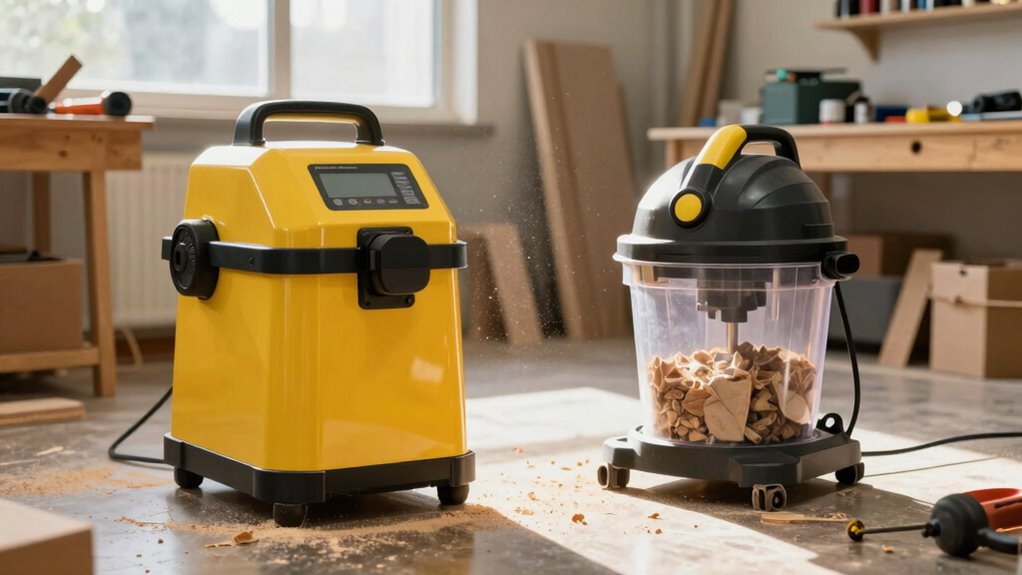
While a dust extractor is often the go-to for fine particles, a shop vac shines in various scenarios where versatility and power are essential. You’ll find it particularly beneficial for home improvement tasks and woodworking projects. Whether you’re cleaning up after a renovation or managing sawdust from your latest build, a shop vac can tackle the mess with ease. Its multi-purpose function makes it a flexible tool for tackling various cleanup needs around the workshop or job site. Additionally, its suction capacity is designed to handle a wide range of debris types, making it suitable for diverse applications. Its powerful motor ensures consistent performance even when dealing with heavier or wetter debris. Great for picking up larger debris and spills, it’s also ideal for both indoor and outdoor projects. Its ability to handle wet and dry debris adds to its versatility, making it a valuable asset for any cleanup task. Perfect for quick cleanups without the need for specialized tools, it offers a level of convenience that many other devices lack. With its robust suction and adaptability, a shop vac guarantees you’re ready for any challenge, making it a must-have for DIY enthusiasts and professionals alike.
When to Use a Dust Extractor
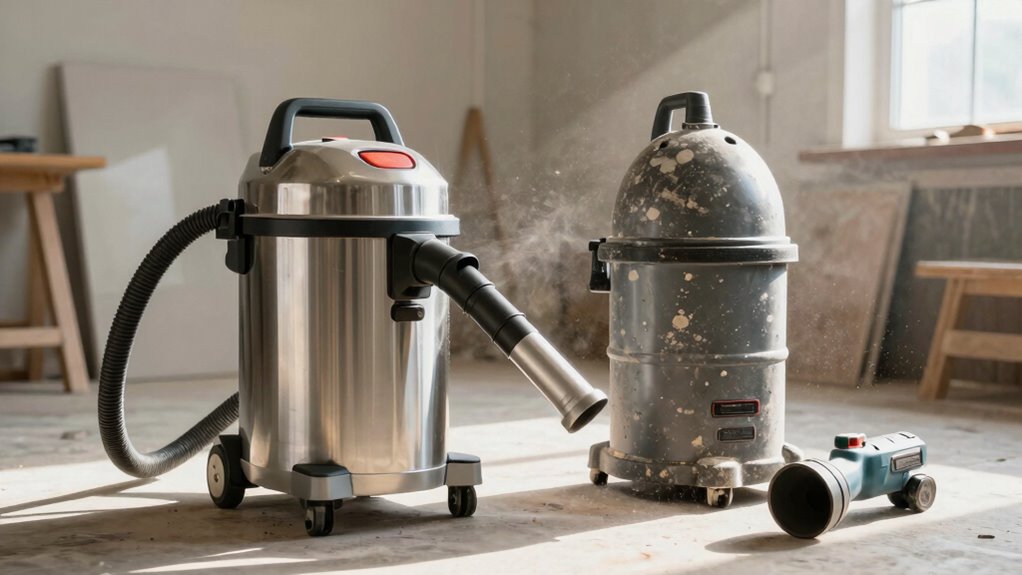
When tackling projects that generate fine dust or harmful particles, a dust extractor is your best bet for maintaining a clean and safe workspace. These powerful machines excel in dust extraction techniques, making them ideal for woodworking, concrete work, and remodeling projects. If you’re sanding, cutting, or grinding materials, using a dust extractor will considerably reduce airborne contaminants, protecting your health. Additionally, dust extractors are designed to handle various project types, ensuring you capture even the tiniest particles. By integrating a dust extractor into your workflow, you not only improve air quality but also enhance the overall efficiency of your work. So, whenever your project involves dust, don’t hesitate to reach for a dust extractor.
Which One Fits Your Needs?
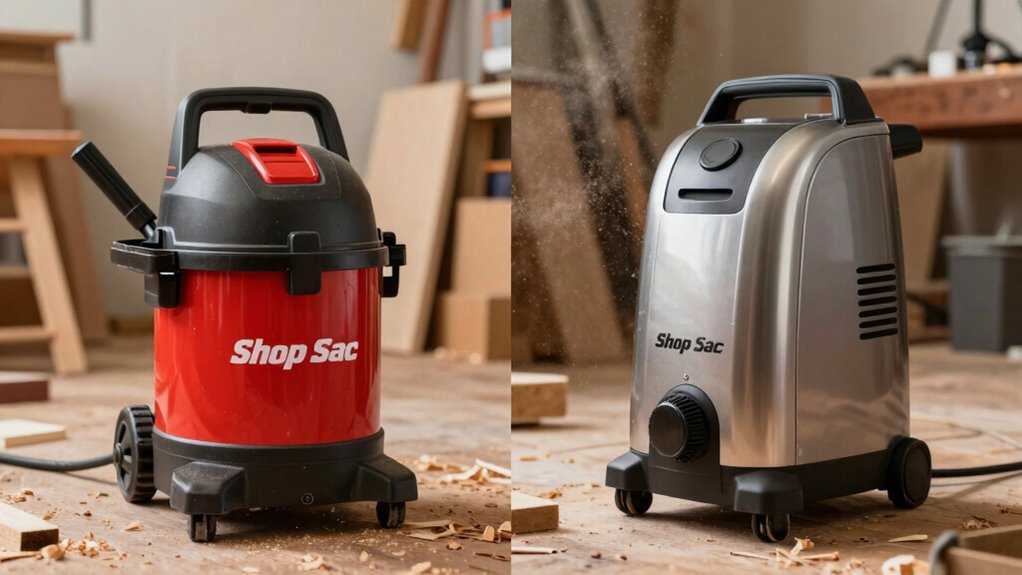
How do you decide between a shop vac and a dust extractor for your project? Start by evaluating your needs. Consider the following:
- Vacuum Power: Shop vacs typically have higher suction, ideal for heavy debris. Dust extractors excel at fine dust control.
- Tool Compatibility: If you’re using power tools, a dust extractor might be essential for best dust collection. Shop vacs can work with tools but may require additional adapters.
- Project Type: For woodworking or renovation, a dust extractor is often better. For general cleanup, a shop vac will suffice.
- Indoor Air Quality: Dust extractors are better at maintaining indoor air quality by capturing fine dust particles before they become airborne, which is especially important for health and allergy concerns. Additionally, air filtration features in dust extractors can help improve overall indoor environments during projects. Incorporating dust management strategies can further enhance your project’s cleanliness and safety. Using reliable filtration systems can also significantly reduce airborne contaminants, protecting your health during prolonged or intensive projects.
Frequently Asked Questions
Can I Use a Shop Vac for Wet Materials?
Yes, you can use a shop vac for wet materials, showcasing its versatility. Just make sure it’s designed for wet/dry use to avoid damage. When you tackle spills or clean up after projects, a shop vac can quickly handle the mess. Remember to switch the filter if needed, and always empty the tank afterward to keep it in good shape. Embrace this handy tool for both wet and dry tasks!
Are Dust Extractors Quieter Than Shop Vacs?
Silence is golden, especially when you’re working. Generally, dust extractors are quieter than shop vacs. They often come with better sound insulation, reducing noise levels considerably. If you’re in a tight space or working late, the lower decibel rating of dust extractors can make a big difference. So, when you need to get the job done without disturbing others, consider a dust extractor for a more peaceful experience.
How Portable Are Shop Vacs Compared to Dust Extractors?
Shop vacs are generally more portable than dust extractors, thanks to their lighter weight and compact design. You can easily move a shop vac around your workspace without much hassle. Dust extractors, while designed for efficiency, often come with larger components that can make them less mobile. If you need something that you can quickly transport between jobs, a shop vac’s portability might be the better choice for you.
What Filters Are Best for Dust Extractors?
For dust extractors, HEPA filters are your best bet if you want to capture fine particles and allergens effectively. They can trap up to 99.97% of particles as small as 0.3 microns, making them essential for maintaining air quality. Foam filters, on the other hand, are great for pre-filtering larger debris and extending the life of your HEPA filter. Using both types can optimize your dust extraction process and keep your workspace cleaner.
Can Shop Vacs Handle Fine Dust Particles Effectively?
Yes, shop vacs can handle fine dust particles effectively, especially when you consider that they can capture up to 99% of particles down to 0.3 microns. Their vacuum power is impressive, allowing you to clear away sawdust, drywall dust, and other fine debris. However, it’s crucial to use the right filter for peak performance. With the correct setup, you’ll keep your workspace clean and reduce respiratory risks associated with fine dust.
Conclusion
In the battle of shop vacs versus dust extractors, you’ve got to weigh your specific needs. Picture yourself tackling a messy workshop or fine woodworking—each tool has its strengths. A shop vac whirs to life, ready to swallow up debris, while a dust extractor stands poised, expertly capturing fine particles. Choose the one that fits your project like a glove, and you’ll breathe easier, knowing you’ve got the right companion for your dust control journey.