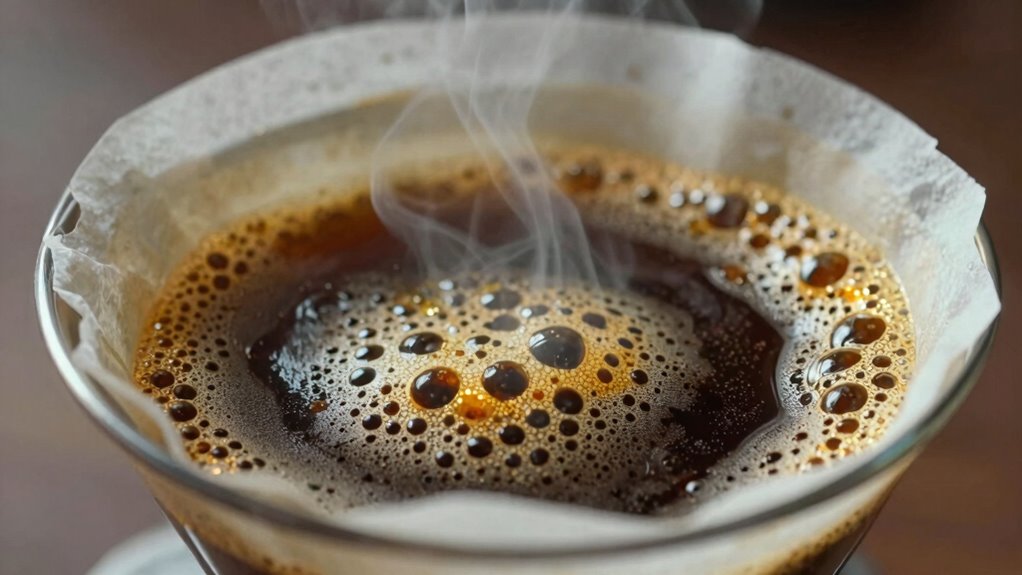

Coffee blooming is a essential step that releases trapped gases, mainly carbon dioxide, when hot water hits the grounds. This bubbling signals freshness and helps improve flavor and aroma development. Proper blooming allows gases to escape, ensuring better water penetration and balanced extraction, which prevents bitterness or sourness. Fresh, evenly ground coffee responds best. Taking the time to bloom properly boosts aroma and flavor, making your cup richer and more vibrant—if you want to learn how to perfect it, keep exploring the details.

Get the little things that make your day delivered free with Prime
- Fast, free delivery on millions of items
- Prime Video, Amazon Music and more included
- Member-only deals all year
Key Takeaways
- Coffee blooming is the initial bubbling when hot water contacts fresh grounds, signaling gas release and freshness.
- Proper blooming releases trapped carbon dioxide, promoting even water penetration and balanced extraction.
- Blooming enhances aroma and flavor by releasing volatile compounds, resulting in a more vibrant coffee experience.
- Allowing sufficient bloom time improves flavor, prevents bitterness, and ensures a richer, more balanced cup.
- Factors like fresh coffee, grind size, and timing are essential for effective blooming and optimal brewing results.

Have you ever noticed the mesmerizing explosion of bubbles when hot water first touches freshly ground coffee? That initial burst isn’t just visually captivating; it’s an important sign of the coffee’s freshness and the beginning of the brewing process. When hot water hits the coffee grounds, trapped gases—mainly carbon dioxide—are released, creating tiny bubbles that rise to the surface. This is called blooming, and it plays a key role in flavor extraction and aroma development. By allowing the coffee to bloom properly, you give your brew a better chance to release its full potential.
The bubbling during blooming signals freshness and kickstarts flavor and aroma development.
During blooming, the carbon dioxide escapes rapidly, making way for water to penetrate the grounds more evenly. This release of gas is essential because it prevents the coffee from becoming over-extracted later in the process, which can lead to bitterness. Instead, it guarantees a balanced extraction, where the desirable flavors and aromas are drawn out smoothly. When you pour water over the grounds and see the bloom, you’re fundamentally giving the coffee a head start to develop its rich flavors. Without this initial release, you risk under-extracting or unevenly extracting the coffee, which can result in a flat or sour taste.
Aroma development is closely tied to blooming. As the gases escape and the grounds swell, volatile aromatic compounds are released into the air. This creates an inviting, fragrant aroma that hints at the coffee’s unique flavor profile—whether that’s fruity, nutty, or chocolaty. Proper blooming allows these aromas to emerge more fully, making the overall sensory experience more vibrant and enjoyable. If you skip or rush this step, you might miss out on some of those enticing smells that set the stage for a delicious cup.
In essence, giving your coffee a proper bloom is simple but impactful. It’s about patience and understanding that this initial bubbling isn’t just a visual cue—it’s a sign that your coffee is awakening, ready to deliver its best. Understanding the importance of gas release can help you refine your brewing technique and achieve a more flavorful cup. When you take the time to let the bloom happen, you’re enhancing both flavor extraction and aroma development, leading to a richer, more balanced brew. This process is also supported by freshness of the coffee, which directly influences the amount of gases trapped in the grounds. Additionally, proper grind size can optimize the bloom process by ensuring gases are released efficiently during brewing. Properly timing the bloom is also crucial, as rushing this step can diminish its benefits. So next time you prepare coffee, watch those bubbles and appreciate how this small step can make a big difference in the final taste and smell of your cup. It’s a simple ritual that transforms your brewing experience from ordinary to extraordinary.
As an affiliate, we earn on qualifying purchases.
Frequently Asked Questions
How Does Coffee Blooming Affect Flavor Extraction?
Coffee blooming profoundly impacts flavor extraction by enhancing aroma release and revealing richer flavors. As you pour water over the grounds, the bloom releases trapped gases, which boosts aroma and allows flavors to develop fully. This process guarantees your coffee’s taste is more vibrant and complex. By paying attention to blooming, you maximize flavor enhancement, resulting in a more satisfying and aromatic cup every time you brew.
Can Blooming Improve the Taste of Stale Coffee?
Blooming can’t revive stale coffee, but it can enhance flavor if the beans are still fresh. Using blooming techniques, you release carbon dioxide and improve extraction, making your brew taste better. If your coffee is stale, blooming won’t fix the loss of flavor or aroma. To enjoy the best taste, always use fresh coffee and incorporate blooming techniques to maximize flavor extraction and enjoy a richer, more vibrant cup.
Does Water Temperature Influence Blooming Effectiveness?
Like a conductor tuning an orchestra, your water temperature plays a vital role in bloom enhancement. Hotter water speeds up CO₂ release, making blooming more effective, while cooler water may slow it down. To maximize bloom, aim for water around 200°F (93°C). This guarantees your coffee releases gases properly, releasing vibrant flavors and aromas. So, yes, water temperature directly influences bloom effectiveness, shaping your brewing masterpiece.
Is Blooming Necessary for All Brewing Methods?
Blooming isn’t necessary for all brewing methods, but it helps release carbon dioxide from fresh coffee, enhancing flavor. If your coffee’s freshness is high and your grinding consistency is precise, blooming can improve extraction. For methods like pour-over or AeroPress, it’s beneficial, but less so for espresso or drip brewing. Ultimately, understanding your coffee’s freshness and ensuring a consistent grind helps you decide if blooming is worth the effort.
How Long Should Coffee Bloom Before Brewing?
Think of coffee blooming as a curtain rising on a performance—you don’t want to rush it. You should let it bloom for about 30-45 seconds, especially if your coffee’s fresh. Fresh beans release more CO2, requiring a longer bloom. Adjust your grind size accordingly; a coarser grind may need a slightly longer bloom, ensuring the coffee’s flavors develop fully before brewing.
As an affiliate, we earn on qualifying purchases.
Conclusion
Now that you know the ins and outs of coffee blooming, you’re well-equipped to elevate your brewing game. Mastering this simple step can transform your cup from good to great, revealing richer flavors and aromas. Don’t let this chance slip through your fingers; it’s the secret ingredient your coffee routine has been missing. Remember, a little knowledge goes a long way—so get blooming and enjoy every sip to the fullest!
As an affiliate, we earn on qualifying purchases.
As an affiliate, we earn on qualifying purchases.
Fall Picks
fall essentials
As an affiliate, we earn on qualifying purchases.