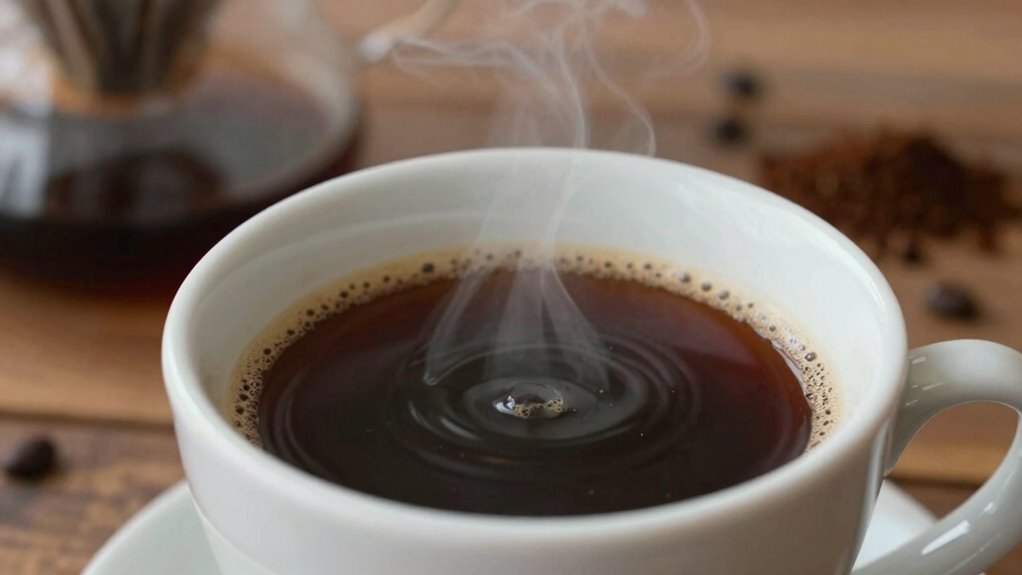
If your coffee tastes flat despite good beans, chances are you’re not controlling key brewing factors. Common issues include water that’s too cool or too hot, which affects extraction, or using the wrong grind size for your method. Poor consistency in temperature, grind, or brew time can lead to under- or over-extraction, dulling flavors. Fine-tuning these variables can make a big difference. Keep exploring these details to *release* a richer, more satisfying cup every time.

Get the little things that make your day delivered free with Prime
- Fast, free delivery on millions of items
- Prime Video, Amazon Music and more included
- Member-only deals all year
Key Takeaways
- Brewing at incorrect temperatures (too low or too high) can lead to under- or over-extraction, dulling flavors.
- Using the wrong grind size for your brewing method can cause weak or flat coffee due to suboptimal extraction.
- Inconsistent brewing practices or equipment calibration may prevent proper flavor development.
- Insufficient brew time or poor water quality can diminish the coffee’s flavor complexity.
- Even good beans need precise control of variables like temperature and grind to fully unlock their potential.
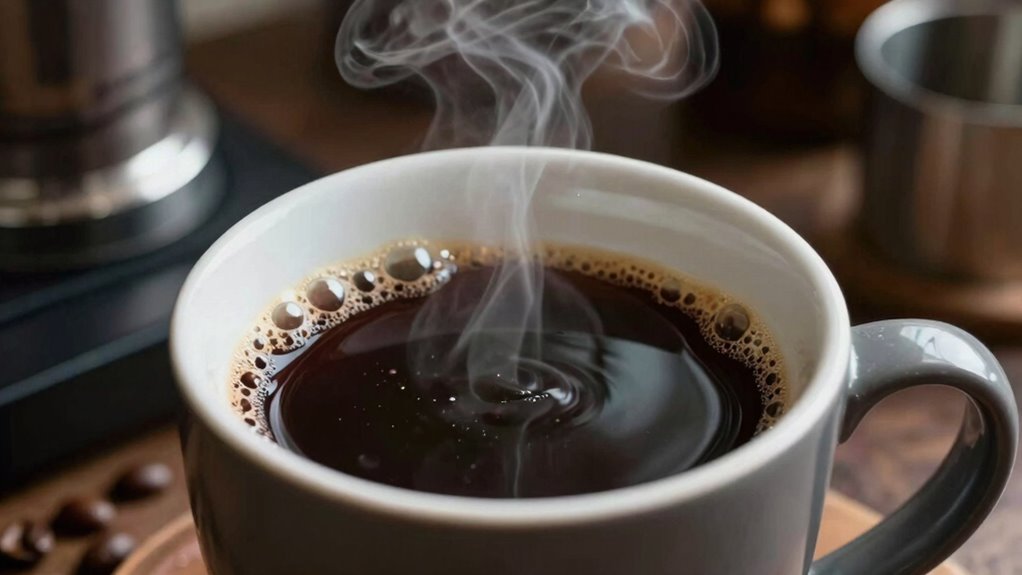
Even with high-quality beans, your coffee can taste flat if the brewing process isn’t optimized. Two critical factors that influence the flavor are brewing temperature and grind size. If either isn’t just right, your coffee’s full potential won’t be realized, leaving you with a bland or dull taste.
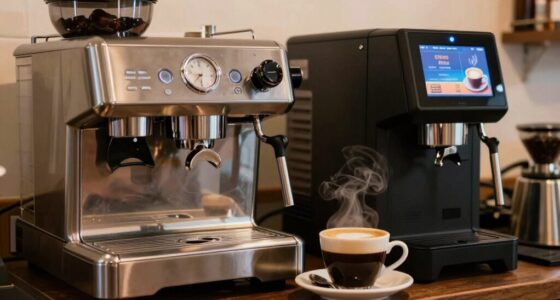
Starting with brewing temperature, it’s essential to hit the right range—generally between 195°F and 205°F. Too low, and the extraction process isn’t vigorous enough, resulting in under-extracted coffee that tastes weak and sour. Too high, and you risk over-extraction, which can produce bitter, harsh flavors. You might think boiling water is best, but excessively hot water can scorch the beans, dulling their natural flavors. Using a reliable thermometer or an espresso machine with precise temperature controls helps you maintain that perfect brewing temperature. If your coffee consistently tastes flat, check your brewing temperature first; small adjustments can make a significant difference.
Maintain brewing temperature between 195°F and 205°F for optimal extraction and flavor.
Next, consider your grind size. It may seem minor, but the size of your coffee grounds directly influences extraction. If the grind is too coarse, water flows through too quickly, and you end up with under-extracted coffee that’s weak and flat-tasting. Conversely, a grind that’s too fine can slow down the brewing process, leading to over-extraction and bitterness. Finding the right grind size depends on your brewing method: a coarse grind for French press, medium for drip coffee, and fine for espresso. If you’re using the wrong grind, even the freshest beans won’t give you a satisfying flavor profile. Adjusting grind size to match your brewing method ensures optimal extraction, unlocking the beans’ flavor complexity. Additionally, paying attention to brew time helps ensure your coffee isn’t under- or over-extracted, further enhancing flavor. Proper grind consistency** plays a vital role in achieving balanced extraction, so using a burr grinder can help maintain uniformity. Regularly calibrating your grinder can also help maintain the right particle size distribution, which is crucial for consistent results. Furthermore, understanding the importance of extraction process** can help you fine-tune your technique for the best flavor.
Beyond these factors, consistency is key. Even slight variations in grind size or brewing temperature can cause noticeable differences in taste. Using calibrated equipment and paying close attention to your process helps you avoid these pitfalls. Also, keep in mind that your beans’ freshness, water quality, and brew time play roles, but if your coffee still tastes flat despite good beans, start by fine-tuning your brewing temperature and grind size. Maintaining consistent brewing practices is essential for achieving a balanced and flavorful cup.
In the end, achieving a flavorful cup isn’t about luck; it’s about precision. By controlling these variables, you maximize the potential of your high-quality beans, transforming a flat-tasting brew into a rich, satisfying cup.
Products Worth Considering

Dyson Cyclone V10 Origin Cordless Vacuum

Shark AI Ultra Robot Vacuum with Self-Empty Base

Dyson V8 Cordless Vacuum
As an affiliate, we earn on qualifying purchases.
Frequently Asked Questions
Can Water Quality Affect Coffee Flavor?
Yes, water quality impacts your coffee’s flavor. If the water has high mineralization, it can overpower or dull the taste, making your coffee flat. Using filtration methods like activated carbon or reverse osmosis can improve water clarity, removing unwanted minerals and impurities. By choosing the right filtration, you allow your coffee’s true flavors to shine, ensuring a richer, more balanced cup every time.
Does the Type of Grinder Impact Coffee Taste?
Yes, the type of grinder impacts your coffee’s taste considerably. A burr grinder offers consistent grind size, which helps extract flavors evenly, while a blade grinder produces uneven grounds, leading to dull or flat flavors. The consistency of your grinder’s output influences the overall taste, aroma, and body of your coffee. Investing in a quality burr grinder ensures you get a more balanced, vibrant cup every time.
How Does Brewing Time Influence Coffee Flavor?
Timing is everything when it comes to brewing, as it directly impacts extraction consistency and your flavor profile. If you brew too long, over-extraction can make your coffee bitter; if too short, it’ll taste weak. You need to find that sweet spot where the flavors are perfectly balanced. Pay attention to your brewing time and adjust it to enhance the richness and complexity of your coffee.
Can Storage Containers Affect Coffee Freshness?
Yes, storage containers can affect your coffee’s freshness. You should use containers made of airtight seals and non-reactive materials like glass or stainless steel to preserve flavor. Avoid clear or plastic containers that let in light and air, which can accelerate staling. Proper storage keeps oils intact, maintaining aroma and taste. So, investing in a quality container with an airtight seal is essential for keeping your coffee fresh longer.
Is Brew Temperature Critical for Flavor?
Yes, brew temperature is critical for flavor. When you maintain proper temperature stability, you optimize flavor extraction, ensuring your coffee isn’t flat or dull. Too low, and you won’t extract enough flavor; too high, and you risk over-extraction, which can cause bitterness. To get the best taste, keep your brewing temperature steady around 195-205°F. This balance helps you enjoy rich, vibrant flavors every time.
Conclusion
Next time your coffee feels flat despite using good beans, remember it’s often about the brewing process. Small tweaks—like adjusting grind size or water temperature—can make a big difference. Did you know that over 60% of coffee drinkers admit they’ve never experimented with their brewing method? Don’t settle for dull flavor—take control and reveal the full potential of your beans. With a few simple changes, you’ll enjoy richer, more vibrant coffee every time.