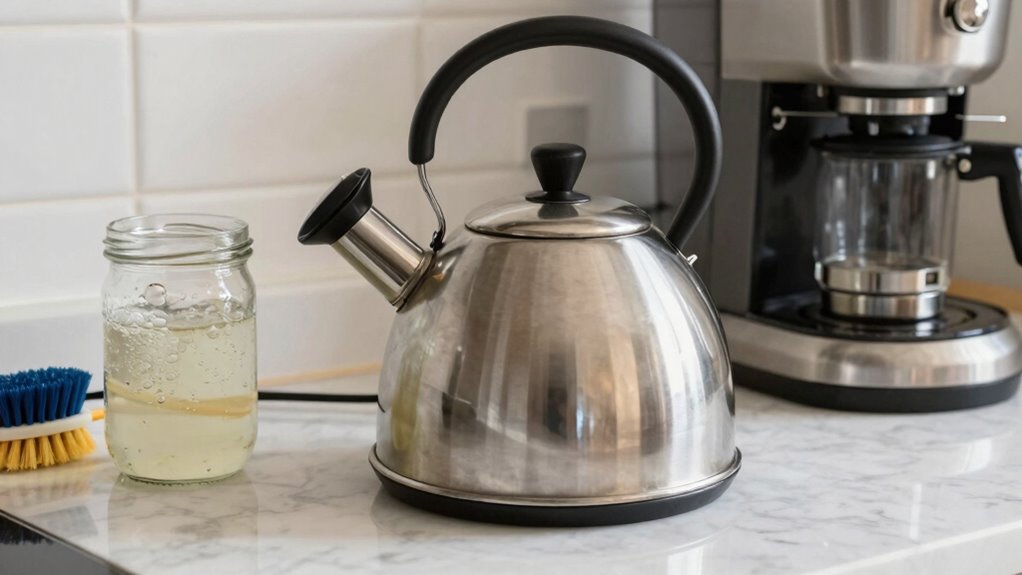

To keep your kettles and coffee gear running smoothly, regularly descale them using simple solutions like equal parts white vinegar and water. Bring the mixture to a boil or run a brewing cycle, then let it sit for 15-20 minutes to loosen mineral buildup. Rinse thoroughly afterward to remove any residue. Consistent descaling prevents performance issues and extends their lifespan. Stick around to discover more tips on easy maintenance and effective cleaning techniques.

Get the little things that make your day delivered free with Prime
- Fast, free delivery on millions of items
- Prime Video, Amazon Music and more included
- Member-only deals all year
Key Takeaways
- Use equal parts white vinegar and water, bring to a boil, then let sit to loosen mineral deposits.
- Run commercial descaling solutions as per manufacturer instructions for effective cleaning.
- Rinse thoroughly after descaling to remove vinegar or chemical residues and ensure appliance readiness.
- Regularly descale every 1-3 months to prevent stubborn mineral buildup and maintain optimal performance.
- Wipe external surfaces and dry appliances after use to prevent external mineral deposits and prolong lifespan.
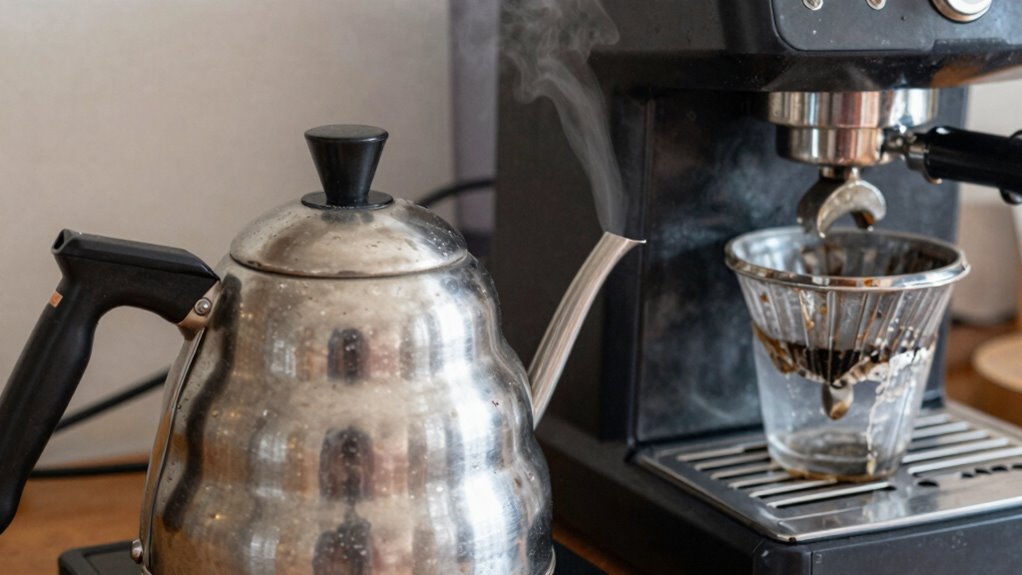
Over time, mineral deposits from hard water can build up inside your kettles and coffee gear, affecting their performance and lifespan. These deposits, known as mineral buildup, can cause your appliances to work less efficiently, take longer to heat, or even break down prematurely. These deposits can be particularly stubborn if not addressed regularly. Fortunately, descaling doesn’t have to be a chore. With the right approach and simple cleaning solutions, you can keep your appliances in top shape without stress or hassle.
The key to effective descaling is using the right cleaning solutions. White vinegar is a popular, affordable choice that cuts through mineral buildup effortlessly. Simply fill your kettle or coffee maker with a mixture of equal parts vinegar and water, then bring it to a boil or run a brewing cycle. Afterward, let the solution sit for about 15-20 minutes to loosen the deposits. Rinse thoroughly with cold water to remove any vinegar residue, ensuring your appliance is ready to use again. For coffee machines, running a couple of brew cycles with plain water after the vinegar rinse helps eliminate any lingering taste.
If you prefer commercial cleaning solutions, choose those specifically designed for descaling appliances. These products are formulated to dissolve mineral buildup quickly and safely. Follow the manufacturer’s instructions carefully—usually, this involves diluting the solution and running it through the appliance as if brewing coffee or boiling water. Afterward, rinse thoroughly with clean water, just like with vinegar. Regular descaling, every one to three months depending on water hardness, keeps your appliances running smoothly and prevents stubborn mineral buildup from forming. Additionally, using appropriate descaling methods can extend the lifespan of your appliances and improve their performance. Incorporating proper maintenance routines can further help prevent excessive mineral accumulation.
Another simple tip is to wipe down the exterior and accessible parts of your appliances with a damp cloth. This prevents mineral deposits from accumulating outside and keeps your appliances looking clean. Remember, routine cleaning is essential to maintaining your appliances’ efficiency and longevity. Always remember to empty and dry your kettle or coffee maker after each use to prevent mineral deposits from settling and hardening over time.
As an affiliate, we earn on qualifying purchases.
Frequently Asked Questions
How Often Should I Descale My Kettle or Coffee Maker?
You should descale your kettle or coffee maker every 1 to 3 months, depending on your water’s hardness. Follow a regular maintenance schedule to keep your appliances running smoothly and prevent mineral buildup. If you notice slower heating or strange tastes, increase your descaling frequency. Consistent descaling not only prolongs the lifespan of your gear but also guarantees better-tasting beverages every time.
Can Descaling Damage My Equipment’s Finish or Components?
You don’t have to worry much about descaling harming your equipment’s finish or components when you follow proper cleaning frequency and prioritize descaling safety. Using gentle descaling agents and avoiding harsh chemicals helps protect surfaces. Regular, moderate descaling prevents mineral buildup without risking damage. As long as you stick to recommended methods and avoid overdoing it, you can keep your gear in great shape without any worries.
Are Natural Descaling Methods as Effective as Commercial Products?
Natural DIY solutions can be quite effective at descaling your equipment, though they may take a bit longer than commercial products. Vinegar and lemon juice work well because of their acidity, providing good chemical effectiveness for removing mineral buildup. However, commercial descaling products often contain specialized chemicals that act faster and are designed specifically for appliances. So, while DIY methods are eco-friendly and cost-effective, they might not always deliver the same quick results.
What Signs Indicate My Appliance Needs Descaling?
You’ll notice your appliance needs descaling when it takes longer to heat water, or if you see mineral deposits or white spots on the surfaces. You might also hear strange noises during operation or notice a change in water taste. Regular appliance maintenance involves using descaling techniques to remove buildup. If these signs appear, it’s time to descale with natural or commercial methods to keep your appliance running smoothly.
Is It Safe to Use Vinegar or Citric Acid for Descaling?
Yes, using vinegar or citric acid for descaling is generally safe when done correctly. These are popular alternative cleaning techniques that effectively remove mineral buildup. Just guarantee you dilute them properly and rinse thoroughly afterward to avoid residue. Be mindful of chemical safety considerations—avoid ingestion or contact with eyes—and follow manufacturer instructions. This careful approach keeps your appliance safe and clean without risking damage or health issues.
coffee machine descaling solution
As an affiliate, we earn on qualifying purchases.
As an affiliate, we earn on qualifying purchases.
Conclusion
Now that you know the simple steps to descale your kettle and coffee gear, you’re just a few moments away from perfectly brewed drinks every time. But the real question is—how long can you keep the buildup at bay before it starts affecting your taste? Stay vigilant, follow these tips regularly, and you might just discover a surprising secret to maintaining flawless flavor. Ready to keep your favorite brews at their best? The choice is yours.
As an affiliate, we earn on qualifying purchases.
As an affiliate, we earn on qualifying purchases.
Halloween Picks
halloween
As an affiliate, we earn on qualifying purchases.