Fermentation safety is all about fun without the risks. Start by monitoring pH and keeping temperatures between 60°F and 75°F for best results. Practice good hygiene—clean surfaces, sanitize tools, and wash hands before handling ingredients. Watch for signs of spoilage, like off colors or unpleasant odors. Use appropriate equipment like food-grade vessels and airlocks to keep unwanted bacteria out. When you know the basics, you’re set for a successful fermentation journey, with more tips ahead!
Key Takeaways
- Monitor pH levels regularly to prevent harmful bacteria and ensure a safe fermentation environment.
- Maintain fermentation temperatures between 60°F and 75°F for optimal results and flavor.
- Clean and sanitize all tools and surfaces thoroughly to reduce the risk of contamination.
- Watch for signs of spoilage, such as off colors or unpleasant odors, and discard if necessary.
- Use appropriate fermentation vessels and airlocks to protect your batch from unwanted bacteria.

FastRack 2-Pack 6.5 Gallon Fermentation Bucket with Lid & Airlocks | White | BPA-Free Food-Grade HDPE Brew Buckets with Grommeted Lids for Beer, Wine, Mead & Cider
[WHAT’S INCLUDED] 2-pack of 6.5-gallon food-grade fermentation buckets w/ tight-fitting lids. Each lid comes pre-drilled with a hole…
As an affiliate, we earn on qualifying purchases.
As an affiliate, we earn on qualifying purchases.
Foundational Principles of Fermentation Safety
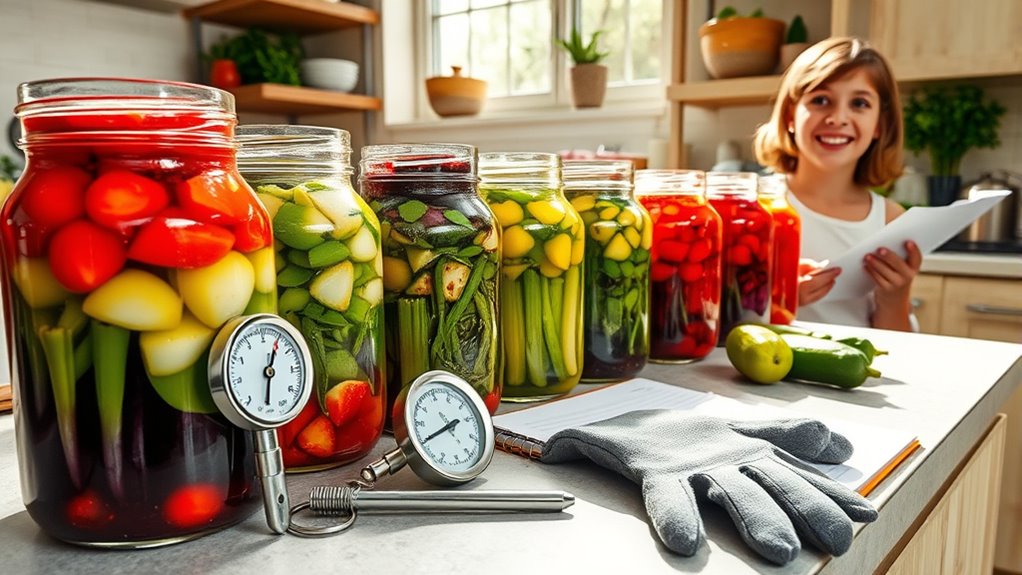
When you’re diving into fermentation, understanding the foundational principles of safety is vital. First, you need to monitor pH levels closely. Most successful ferments thrive within a specific pH range, which helps prevent harmful bacteria growth. Keeping your pH levels in check guarantees a healthy fermentation process.
Next, temperature control plays an important role. Fermentation occurs best at stable temperatures, typically between 60°F and 75°F, depending on the type of food or beverage. Too much heat can lead to off-flavors and unwanted bacteria, while low temperatures might slow down the process. By mastering these two principles, you’ll create a safer environment for your fermentation adventures, making the experience enjoyable and rewarding.
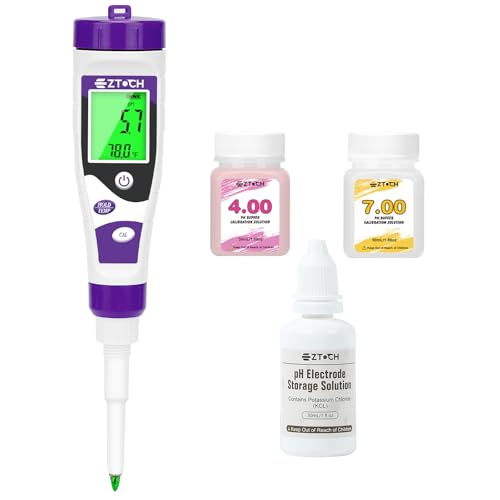
EZTOCH Food pH Meter, Digital pH Meter for Food Fermentation Canning Cooking, Smart Sourdough pH Tester for Bread Cheese Sauces, Measure pH in Water, Brewing, Meat, Sausages, Pickles, Sushi Rice
Food pH Meter for Canning: When canning season arrives, use Food pH tester to test the pH value…
As an affiliate, we earn on qualifying purchases.
As an affiliate, we earn on qualifying purchases.
Essential Hygiene Practices for Fermentation Safety
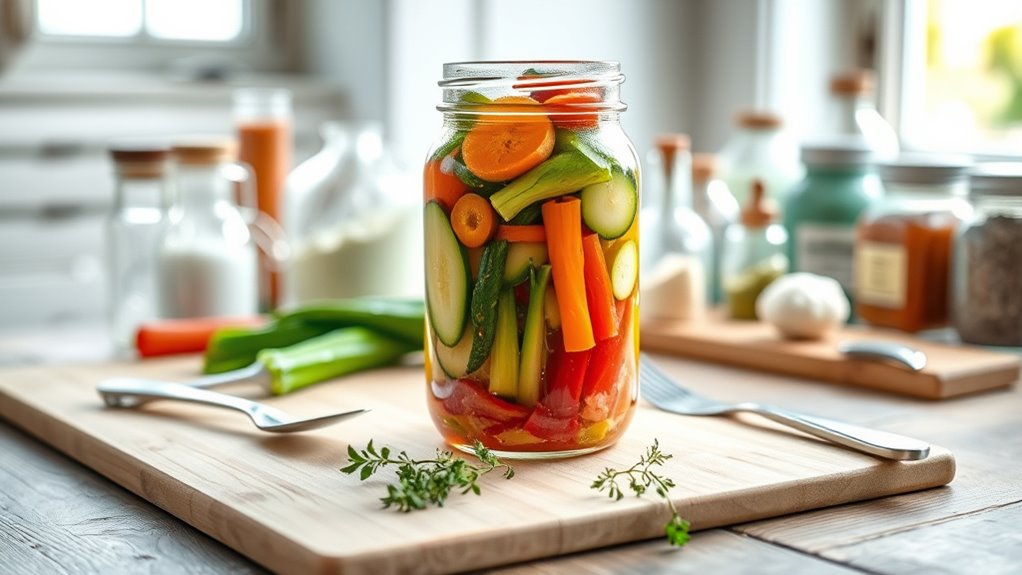
To guarantee the safety of your fermentation projects, practicing good hygiene is essential. By employing effective sanitation techniques, you can greatly reduce the risk of contamination. Here are four key practices to follow:
- Clean Surfaces: Always clean your work area and tools with hot, soapy water before starting.
- Sanitize Equipment: Use a food-safe sanitizer on all fermentation vessels and utensils to eliminate harmful bacteria.
- Wash Hands: Before handling ingredients, wash your hands thoroughly to prevent cross-contamination.
- Store Ingredients Properly: Keep your ingredients sealed and stored in a cool, dry place to minimize the risk of spoilage.

Inkbird ITC-308 Digital Temperature Controller 2-Stage Outlet Thermostat Heating and Cooling Mode Carboy Homebrew Fermenter Greenhouse Terrarium 110V 10A 1100W
【Easy to use】 Supports °C/°F display.
As an affiliate, we earn on qualifying purchases.
As an affiliate, we earn on qualifying purchases.
Understanding the Fermentation Process: What to Expect
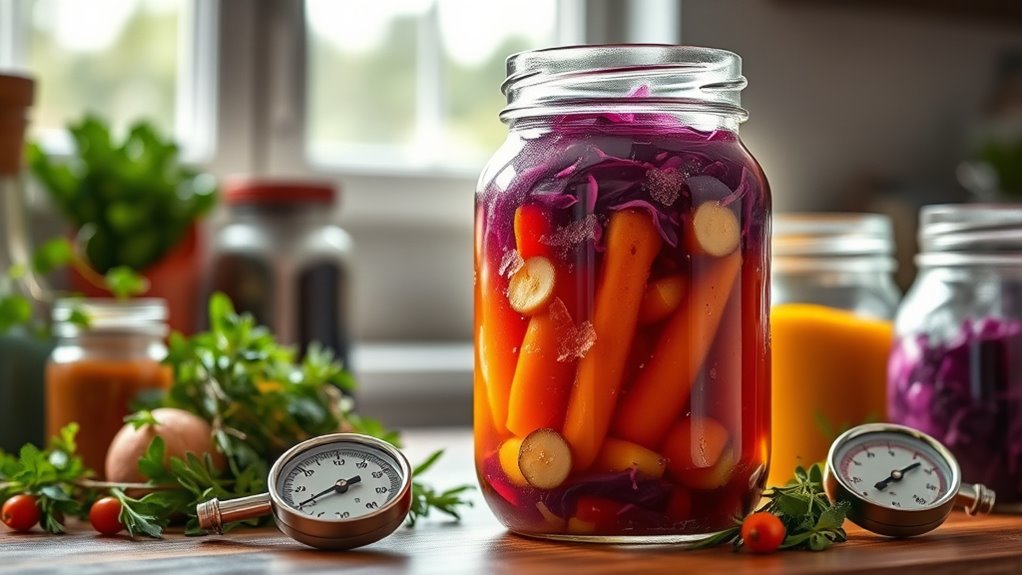
As you begin your fermentation journey, understanding the process can help you anticipate what to expect at each stage. The fermentation timeline varies, but you’ll notice active yeast activity right away. Initially, you may see bubbles forming as the yeast consumes sugars and produces carbon dioxide.
Here’s a quick reference table to guide you through the stages:
| Stage | Duration | Key Indicators |
|---|---|---|
| Preparation | 1-2 days | Mixing ingredients |
| Primary Ferment | 3-7 days | Bubbles, foam |
| Secondary Ferment | 1-2 weeks | Settling, clearer liquid |
| Bottling | 2-4 weeks | Carbonation begins |
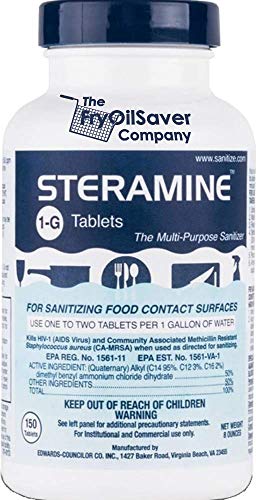
1 Bottle Steramine Sanitizer Tablets – Multi Purpose Steramine Sanitizing Tablets for Food Contact Surfaces in Kitchen, Diners, Hotels, Restaurants & Food Trucks by FryOilSaver Co. (150 Count)
1 BOTTLE OF STERAMINE SANITIZING TABLETS FOR COMMERCIAL AND PROFESSIONAL USE – This bottle contains 150 concentrated Steramine…
As an affiliate, we earn on qualifying purchases.
As an affiliate, we earn on qualifying purchases.
Recognizing Spoilage in Ferments
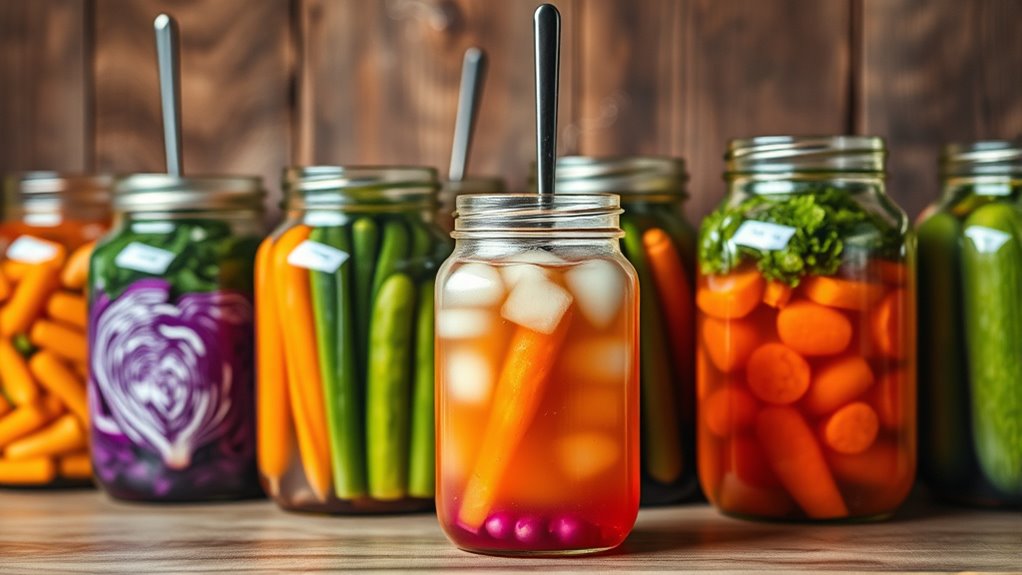
Fermentation can lead to delicious results, but it also comes with the risk of spoilage. Recognizing spoilage indicators is essential to guarantee your ferments are safe to consume. Here are four key signs to watch for:
- Off Colors: If your ferment changes to an unusual hue, it might indicate spoilage.
- Unpleasant Odors: A strong, foul smell can signal that something’s gone wrong.
- Off Flavor Detection: If the taste is drastically different from what you expected, it’s best to discard it.
- Mold Growth: Any visible mold on the surface should be taken seriously; it’s a clear spoilage indicator.
Stay vigilant and trust your senses to keep your fermentation journey enjoyable and safe!
How to Choose Safe Ingredients for Fermentation

Choosing safe ingredients for fermentation is essential since they directly impact the final product’s safety and quality. Start with ingredient sourcing; always choose fresh, organic produce when possible. This helps minimize exposure to harmful pesticides and chemicals. When sourcing grains or other dry ingredients, look for reputable suppliers with good quality control standards.
Next, perform a quality evaluation before using any ingredient. Check for signs of spoilage, such as off smells or unusual colors. If you’re unsure, it’s better to err on the side of caution and discard questionable items. Remember, your goal is to create delicious ferments that are safe to enjoy. By focusing on quality sourcing and evaluation, you can guarantee a successful fermentation experience every time.
Equipment and Storage Tips for Safe Fermentation
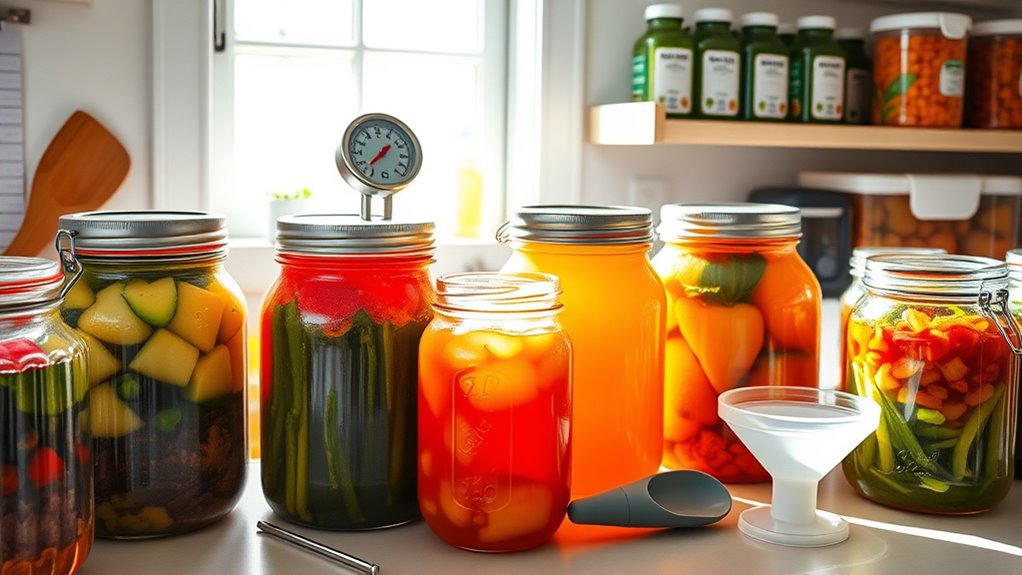
When it comes to safe fermentation, having the right equipment and proper storage conditions is vital. You’ll want to guarantee your tools are clean and your environment is suitable for fermenting. Let’s explore key hygiene practices and essential items that will keep your fermentation process safe and successful.
Essential Fermentation Equipment
To guarantee a successful fermentation process, having the right equipment is vital. You’ll want to invest in a few key items that secure safety and effectiveness. Here’s a quick list to get you started:
- Fermentation Vessels: Choose glass or food-grade plastic containers to prevent contamination.
- Fermentation Airlocks: These allow gases to escape while keeping unwanted bacteria out.
- Thermometer: Monitor temperature to maintain ideal fermentation conditions.
- pH Strips: Check acidity levels, which is critical for certain ferments.
With this equipment, you’ll not only enhance your fermentation experience but also minimize risks. Enjoy the process, and remember that each batch is a learning opportunity!
Proper Storage Conditions
Proper storage conditions are essential for ensuring the success and safety of your fermentation projects. First, keep your fermenting jars or containers in a space with an ideal temperature, typically between 60°F and 75°F, to promote healthy fermentation. Too much heat can spoil your batch, while cold temperatures may slow the process. Next, pay attention to humidity levels; a moderately humid environment is ideal to prevent spoilage and mold growth. If you’re in a dry area, consider using a damp cloth to cover your container. Additionally, store your fermentation equipment in a clean, dry place, away from direct sunlight. Following these tips will help you achieve delicious results without compromising safety. Happy fermenting!
Hygiene and Safety Practices
Maintaining hygiene and following safety practices is just as important as ensuring the right storage conditions for your fermentation projects. By adhering to proper hygiene protocols and safety regulations, you can minimize risks and enjoy the process more. Here are some essential tips:
- Clean all equipment thoroughly before use to eliminate any unwanted bacteria.
- Always wear clean gloves when handling ingredients to prevent contamination.
- Store your fermented products in sterilized containers to maintain quality and safety.
- Regularly check storage conditions, ensuring they’re cool and dark to inhibit harmful growth.
- Be aware of the impact of indoor air quality on fermentation environments, as dust and microplastics can influence microbial activity and product safety. Additionally, proper ventilation can help maintain a healthy home environment and prevent fungal growth, and using air purifiers can help reduce airborne contaminants that might affect fermentation.
- Monitoring air quality levels can further reduce the risk of contamination and ensure a safer fermentation process. Incorporating filtration systems into your home can also improve overall air hygiene, supporting safer fermentation conditions.
Frequently Asked Questions
Can I Ferment Foods Together in the Same Container?
Yes, you can ferment foods together in the same container! Mixed fermentations can create unique flavor combinations that enhance your dishes. Just make certain the ingredients complement each other, as some might overpower the taste of others. Experiment with vegetables, fruits, or spices, but keep in mind the fermentation times may vary. Monitor the process closely to guarantee everything’s developing as it should, and enjoy the delicious results of your culinary creativity!
How Can I Tell if My Ferment Is Ready?
You can tell if your ferment is ready by looking for key fermentation signs and taste testing. Check for bubbles or a fizzy texture, which indicate active fermentation. The color and smell will also change, often becoming more vibrant and tangy. For the final confirmation, taste a small sample; if it’s pleasantly sour and has developed flavors you enjoy, it’s time to enjoy your creation! Remember, patience is key in fermentation.
What Should I Do if I See Mold?
If you see mold, it’s essential to act quickly. Notably, about 10% of home ferments can develop mold. Start by identifying the type of mold—if it’s black or fuzzy, it’s best to discard the entire batch. For other colors, you might be able to salvage some of it. Always practice safe disposal by sealing the moldy ferment in a bag before throwing it away to avoid contamination. Your health’s worth it!
Is Fermentation Safe for Pregnant Women?
Fermentation can be safe for pregnant women, but you need to take certain precautions. Always verify that the fermentation process is controlled and hygienic to avoid harmful bacteria. Incorporating safely fermented foods into your diet can enhance pregnant nutrition, providing beneficial probiotics. However, it’s wise to consult with your healthcare provider before adding new foods, as individual needs vary. Staying informed helps you enjoy the benefits of fermentation while prioritizing your health and your baby’s.
Can I Reuse Fermentation Jars for Different Recipes?
Yes, you can reuse fermentation jars for different recipes! Just make sure you clean the jars thoroughly between uses to prevent contamination. A good jar cleaning routine will help maintain the integrity of your new recipe variations. Rinse with hot water and use a mild soap if necessary, then let them dry completely. This way, you can enjoy experimenting with different flavors without worrying about lingering residues from previous ferments.
Conclusion
In the world of fermentation, safety isn’t just a guideline—it’s your best friend! By following these foundational principles and hygiene practices, you’ll turn your kitchen into a haven of delicious, safe ferments. Keep an eye out for spoilage, choose quality ingredients, and use the right equipment. With these tips, you’re not just fermenting; you’re crafting culinary masterpieces that’ll impress even the most discerning foodies. So, get started and make fermentation fun, not risky!