
Many streamers overlook essential aspects when selecting and setting up microphones, leading to significant audio issues. You might choose the wrong type of mic, neglect proper placement, or fail to manage background noise effectively. Ignoring connection types and not testing your setup can also compromise your streaming quality. Don’t let these mistakes undermine your efforts. Stick around to discover how to choose the right microphone and improve your audio game for an engaging streaming experience.

Get the little things that make your day delivered free — and shop member deals
- Fast, free delivery on millions of items
- Access to Prime Big Deal Days deals on October 6–7
- Prime Video, Amazon Music and more included
Key Takeaways
- Choosing the wrong microphone type, such as an omnidirectional mic in a noisy environment, can result in poor audio quality and background noise interference.
- Failing to properly position the microphone within the ideal distance (6 to 12 inches) can lead to distant or overly loud sounds.
- Neglecting to use a pop filter can result in plosive sounds that disrupt the audio experience during streaming.
- Overlooking the importance of audio interfaces with XLR microphones may lead to subpar sound quality and limited functionality.
- Not testing microphone quality and audio levels before streaming can cause issues like clipping or low volume during the live session.
USB condenser microphone for streaming
As an affiliate, we earn on qualifying purchases.
As an affiliate, we earn on qualifying purchases.
How Choosing the Right Microphone Impacts Your Streaming Quality
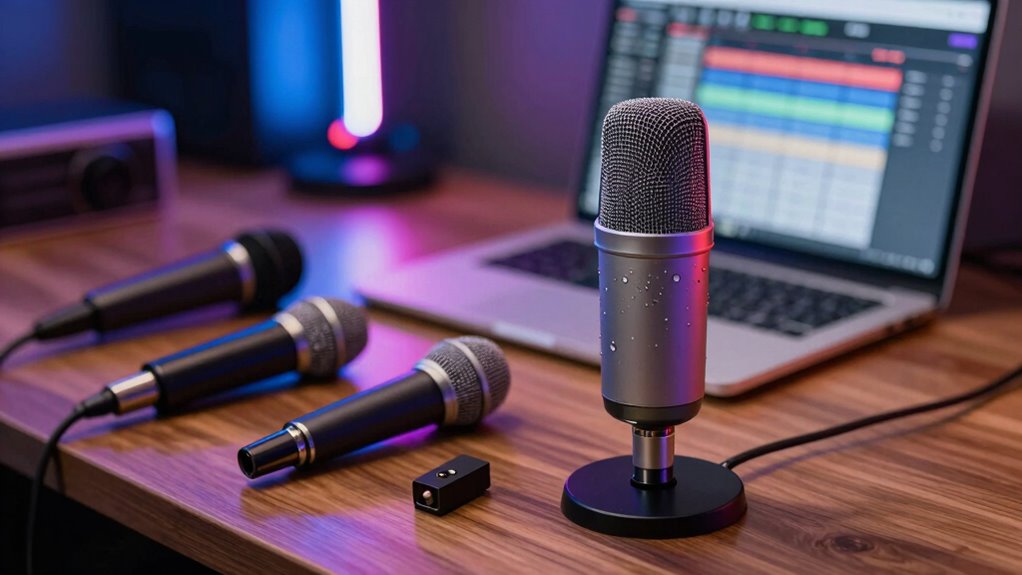
When you choose the right microphone for streaming, you can greatly enhance your audio quality. Selecting a microphone with the appropriate frequency response is essential. A microphone that captures a wide range of frequencies guarantees your voice sounds natural and full. This directly impacts audio clarity, allowing your audience to hear every word without distortion. You’ll want to take into account dynamic and condenser microphones, as each has its strengths depending on your streaming environment. For instance, condenser mics often excel in capturing nuances, while dynamic mics can handle louder sounds without clipping. By investing in a quality microphone, you’re not just improving sound; you’re creating a more engaging experience for your viewers. Quality audio can remarkably elevate your streaming game.
As an affiliate, we earn on qualifying purchases.
Why Microphone Placement Matters for Streaming?
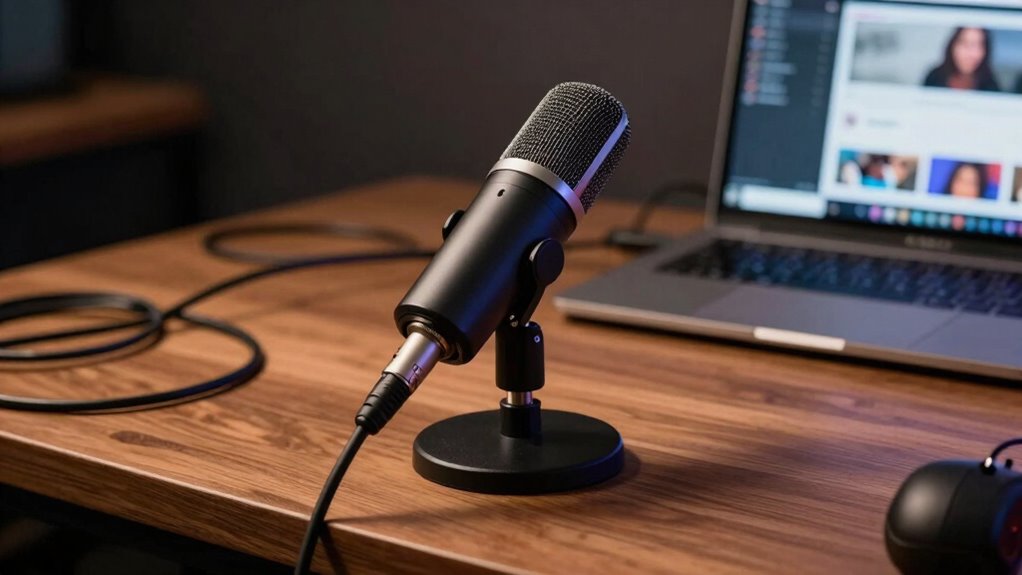
Microphone placement can make or break your streaming experience. When you position your mic at the ideal distance and angle, you enhance clarity while minimizing unwanted background noise. Understanding directionality also helps you capture sound more effectively, ensuring your audience hears you loud and clear.
Optimal Distance Matters
Although it might seem trivial, the distance between you and your microphone can greatly impact your streaming quality. Proper microphone proximity helps guarantee your voice is clear and prominent, while avoiding unwanted noise. If you’re too close, you risk plosive sounds, but if you’re too far, your voice may sound distant and muffled. Finding that sweet spot is vital. Aim for an ideal angle, typically around 6 to 12 inches away, angled slightly towards your mouth. This positioning captures your voice effectively while minimizing background noise. Experimenting with different distances can help you discover what works best for your setup. Ultimately, the right placement will enhance your audio quality, making your streams more enjoyable for your audience.
Directionality Impact Explained
Understanding how directionality affects your audio is vital for successful streaming. The type of microphone you choose can greatly impact sound quality. For instance, cardioid patterns pick up sound primarily from the front, making them ideal for focused audio capture. This arrangement minimizes background noise, helping your voice stand out. On the other hand, if you opt for omnidirectional use, the microphone captures sound from all directions, which can lead to unwanted noise interference. Knowing when to use each type is essential. Positioning your cardioid microphone correctly guarantees clarity and prevents audio distractions, while omnidirectional microphones work well in group settings. Ultimately, selecting the right directionality and placement can improve your streaming experience.
Background Noise Reduction
When you’re streaming, proper microphone placement can make a significant difference in background noise reduction. Using effective noise cancellation techniques and good ambient sound management helps guarantee your voice stands out. Consider these factors when positioning your microphone:
| Microphone Positioning | Noise Reduction Effect |
|---|---|
| Close to your mouth | High |
| On a desk surface | Moderate |
| Far from sound sources | Low |
| Using a pop filter | Enhances clarity |
Additionally, understanding the microphone polar pattern can help optimize your setup for noise reduction and clarity. Proper microphone placement is also essential for achieving optimal sound quality and minimizing unwanted noise interference. Being aware of ambient sound control techniques further improves your overall streaming audio experience, especially when integrated with smart home technology to manage environmental noise levels effectively. Adjusting your microphone sensitivity can further fine-tune the balance between capturing your voice and reducing background noise.
XLR audio interface for microphones
As an affiliate, we earn on qualifying purchases.
As an affiliate, we earn on qualifying purchases.
Choosing the Right Connection for Your Microphone
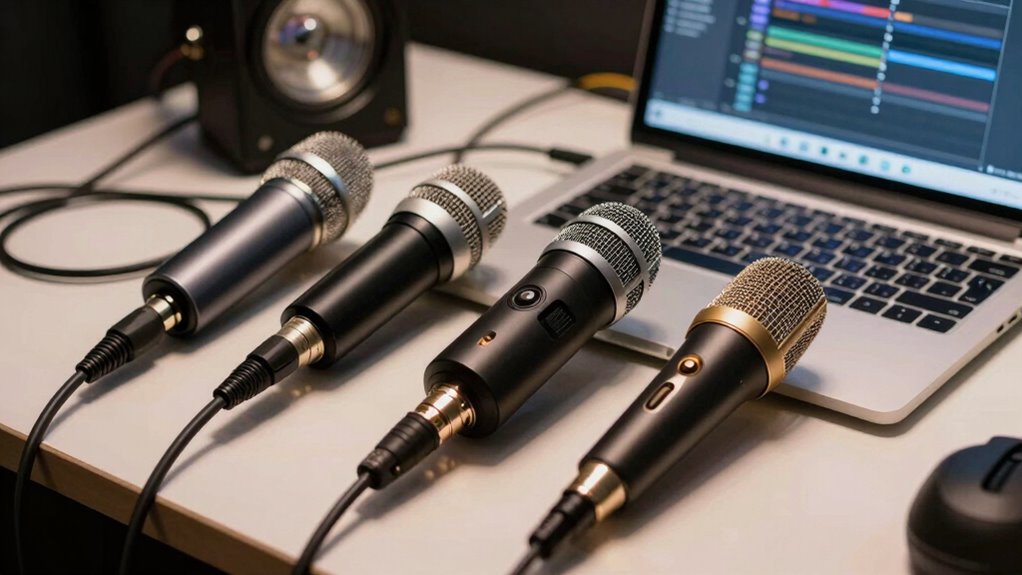
Choosing the right connection for your microphone can greatly impact your streaming quality, especially since various options exist, each with its own advantages. USB microphones are perfect for beginners due to their simplicity and portability. However, if you’re serious about your sound, consider XLR connections, which offer better audio quality but require more equipment, like mic preamps. Keep budget considerations in mind, as XLR setups can be costly. If you go this route, invest in quality connection adapters and pay attention to cable management to avoid tangles. Additionally, guarantee your streaming software supports the microphone type you choose. Whether you prioritize convenience or superior sound, knowing your options will help you make the right decision for your streaming setup.
microphone boom arm with adjustable positioning
As an affiliate, we earn on qualifying purchases.
As an affiliate, we earn on qualifying purchases.
Controlling Room Acoustics for Better Audio Quality
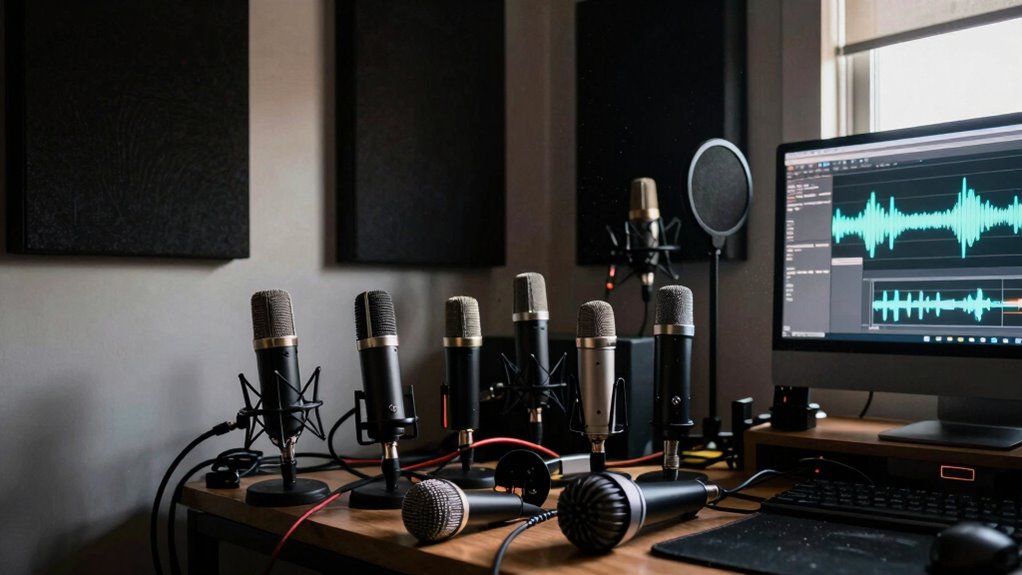
To achieve the best audio quality for your streaming setup, you need to pay attention to your room’s acoustics. Start by implementing soundproofing techniques to minimize external noise. This can include sealing gaps around windows and doors, using heavy curtains, or adding weather stripping. Next, focus on room treatment to enhance sound quality. You can use acoustic panels, foam, or even bookcases to absorb sound reflections. Rugs and carpets can help reduce echo on hard floors as well. Remember, the goal is to create a space where your microphone picks up your voice clearly without unwanted background noise. Additionally, understanding your air purifier maintenance can help ensure your environment remains clean and free of airborne contaminants that might interfere with audio clarity. Maintaining proper indoor air quality can also prevent dust buildup on equipment and microphones, which can degrade sound quality over time. Regularly cleaning and filter replacement for your audio equipment can further improve clarity. Being aware of environmental factors such as humidity and temperature can also help optimize your acoustic environment. Ensuring good ventilation can reduce stale air and improve overall sound conditions. By controlling your room’s acoustics, you’ll improve your overall streaming experience and sound professional to your audience.
Adjusting Microphone Settings for Your Environment
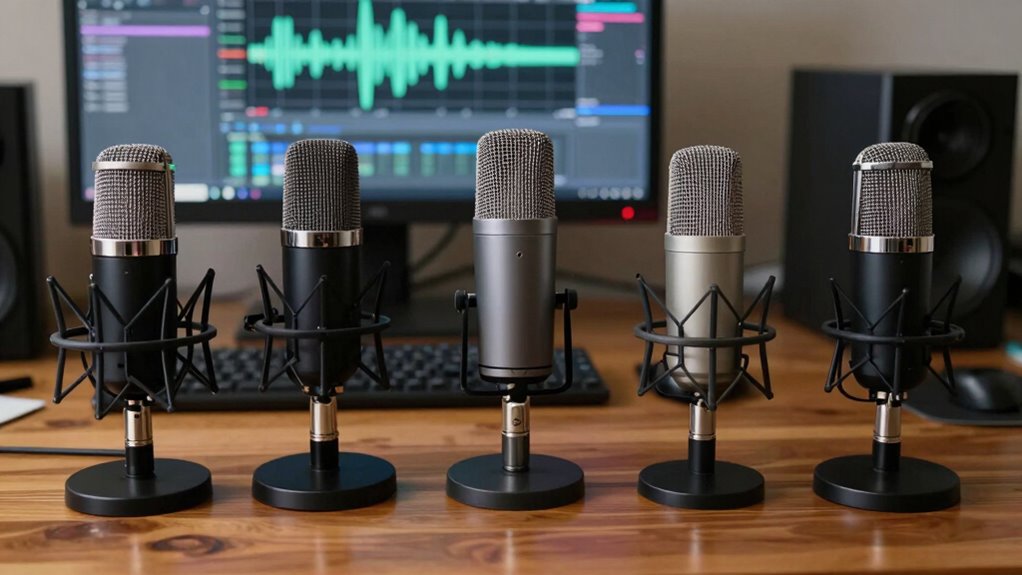
While setting up your streaming microphone, adjusting the settings based on your environment is essential for ideal audio performance. Start by tweaking the gain control; too high, and you’ll pick up unwanted noise, while too low can make your voice sound distant. Test different levels to find the sweet spot that captures your voice clearly without background interference. Next, implement a noise gate to eliminate any distracting sounds when you’re not speaking. This helps guarantee that only your voice comes through, enhancing the overall audio quality. Remember, the right settings can transform your stream, making it more enjoyable for your audience. So, take the time to adjust these settings for the best results in your unique streaming environment.
Essential Accessories for Optimal Streaming Audio
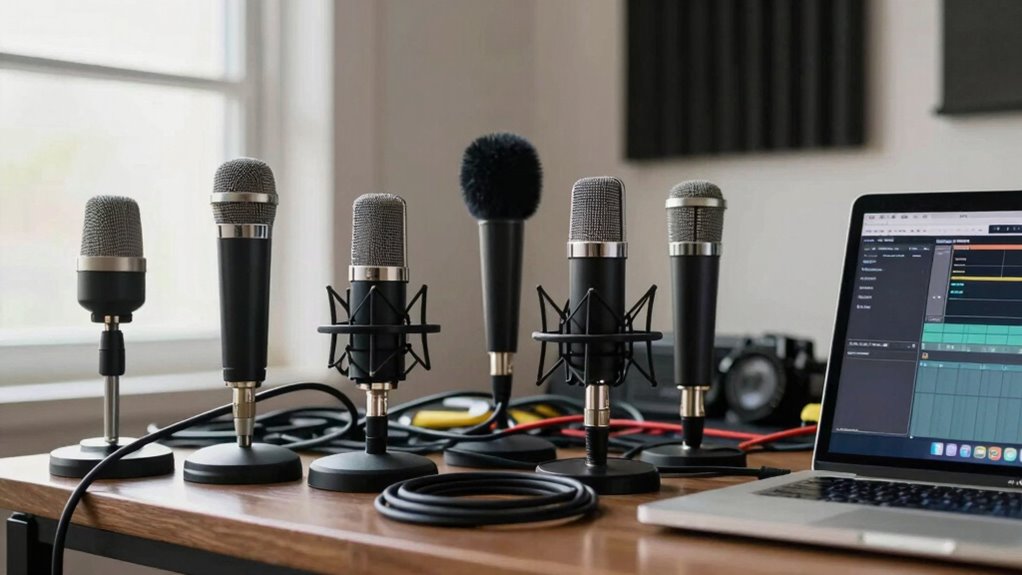
To achieve the best audio quality while streaming, you’ll want to evaluate some essential accessories. A pop filter can minimize unwanted plosives, while a shock mount helps reduce vibrations that might disrupt your sound. Additionally, an audio interface is vital for connecting your microphone and ensuring a clear, professional sound.
Pop Filters Importance
When you’re streaming, the clarity of your audio can make or break the experience for your audience, which is why using a pop filter is vital. Pop filters reduce plosive sounds—like “p” and “b”—that can distort your audio. There are various pop filter types, including foam and mesh, each with its own benefits. Foam filters are great for portability, while mesh filters provide better sound clarity. Proper pop filter placement is important; position it about 2-4 inches away from your microphone. This distance guarantees it effectively blocks harsh sounds without interfering with your voice. Additionally, understanding the role of microphone types can help you select the best gear for your streaming setup. Using a microphone polar pattern can also improve your audio quality by minimizing background noise. Selecting the right pop filter type based on your setup can further enhance your sound. By incorporating a pop filter into your setup, you’ll enhance your audio quality, leading to a more professional and enjoyable streaming experience.
Shock Mount Benefits
A shock mount is a crucial accessory for anyone serious about streaming audio quality. Its primary function is to provide vibration isolation, which greatly reduces unwanted noise from desk movements or nearby activities. By using a shock mount, you’ll notice a marked improvement in your audio clarity, as it helps prevent low-frequency rumble and other disturbances that can occur while recording. One of the key shock mount advantages is that it allows you to focus on your content without worrying about extraneous sounds. With a secure fit for your microphone, you can maintain ideal positioning, enhancing overall performance. Investing in a shock mount will elevate your streaming experience, ensuring your audience hears your voice clearly and professionally. Proper setup and protocols for your microphone can further optimize sound quality and reduce interference. Additionally, understanding soundproofing techniques can help create a more controlled environment for your recordings. Incorporating proper microphone placement techniques can also significantly improve your audio results, and selecting the right microphone type based on your streaming needs can further enhance your sound quality.
Audio Interface Necessity
While a shock mount greatly improves audio quality by isolating your microphone from vibrations, an audio interface takes your streaming setup to the next level. You might wonder why you need one. The audio interface benefits are clear: it converts your microphone’s analog signal into a digital format that your computer can process. This results in cleaner, more professional sound. Plus, with the right interface compatibility, you can connect multiple microphones or instruments, enhancing your streaming capabilities. It also offers features like gain control and phantom power, which are vital for certain microphones. Investing in an audio interface guarantees that your audio quality matches your visual content, making your streams stand out to your audience. Don’t skip this essential piece of equipment!
Test Your Setup Before Going Live
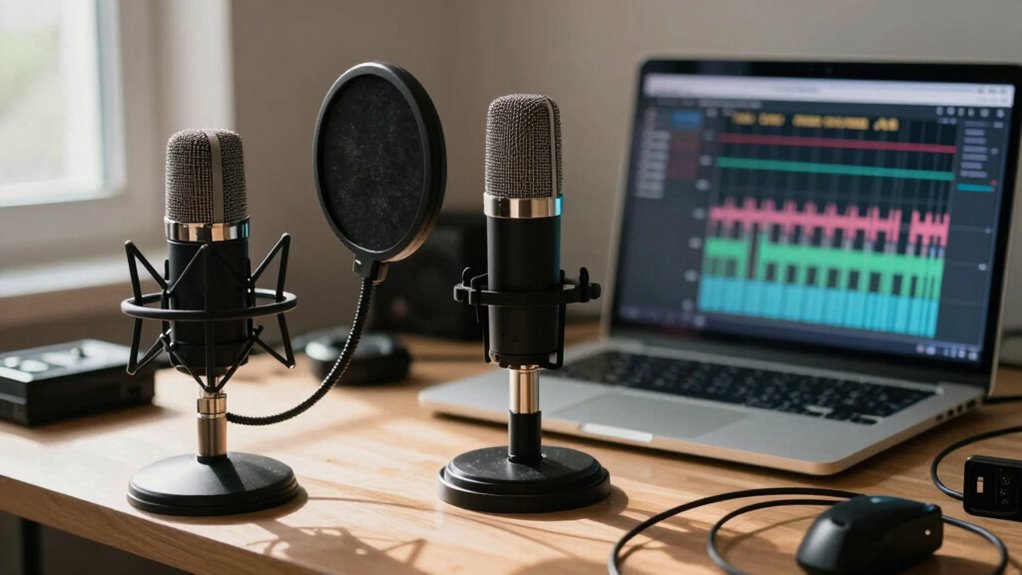
Before you hit that live button, it’s essential to test your setup to confirm everything runs smoothly. A solid pre stream checklist can save you from potential disasters. Here are three key things to check:
- Microphone Quality: Verify your mic is working correctly and capturing audio as intended.
- Testing Audio Levels: Adjust your audio levels to avoid clipping or sounding too quiet during your stream.
- Connection Stability: Check your internet connection to prevent lag or disconnections while you’re live.
Understanding Microphone Types: Dynamic vs. Condenser
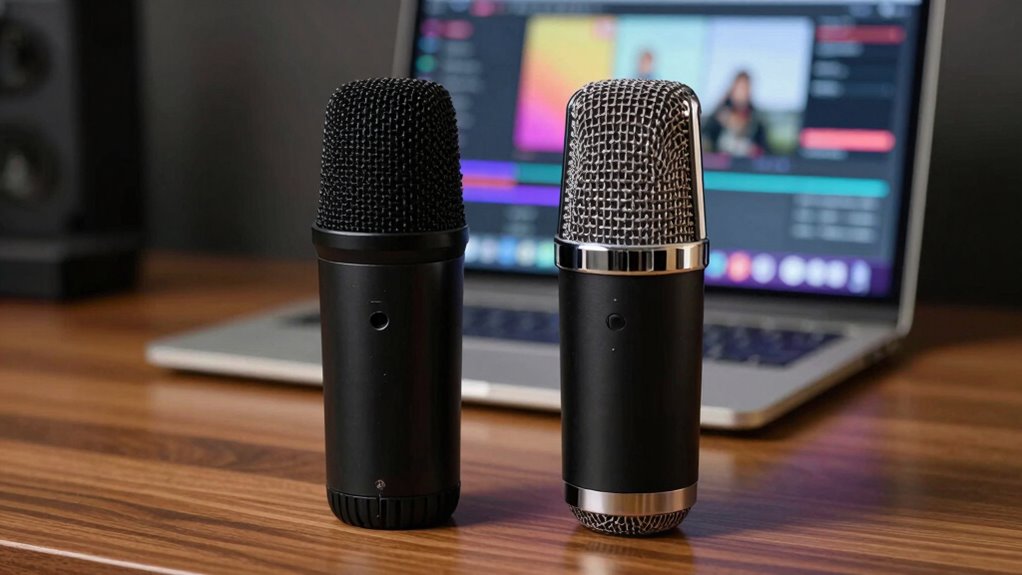
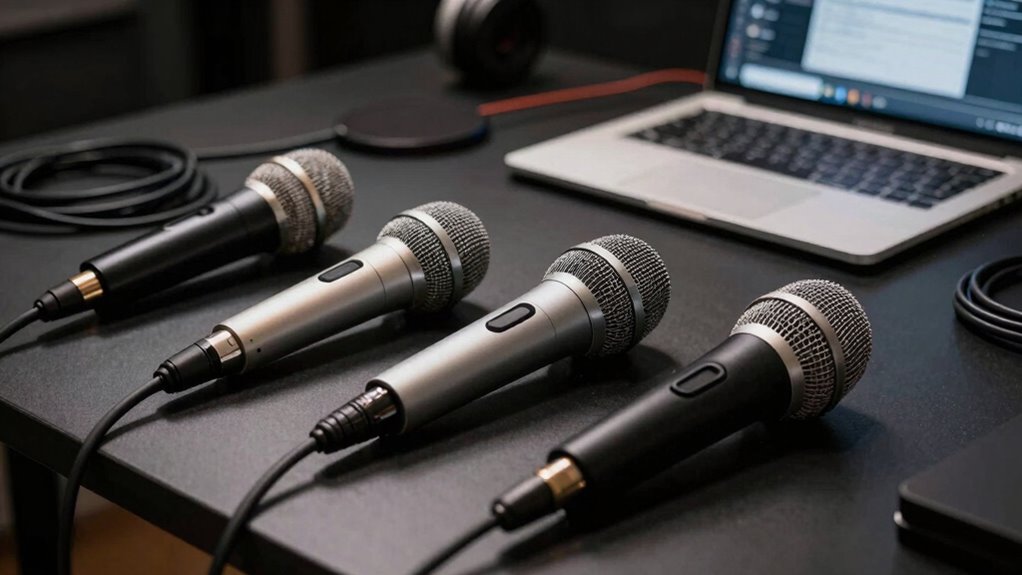
When it comes to choosing the right microphone for streaming, understanding the differences between dynamic and condenser mics can make a significant impact on your audio quality. Dynamic microphones excel in handling high sound pressure levels, making them ideal for loud environments. Their robust construction and dynamic characteristics provide durability and less sensitivity to background noise. On the other hand, condenser microphones offer exceptional clarity and detail, capturing a wider frequency range. The condenser benefits shine in quieter settings, where you want to pick up nuanced sounds and vocals. By evaluating your streaming environment and needs, you can confidently choose the microphone that enhances your audio experience, ensuring your audience hears you clearly and effectively.
Why Not All Microphones Are Created Equal?
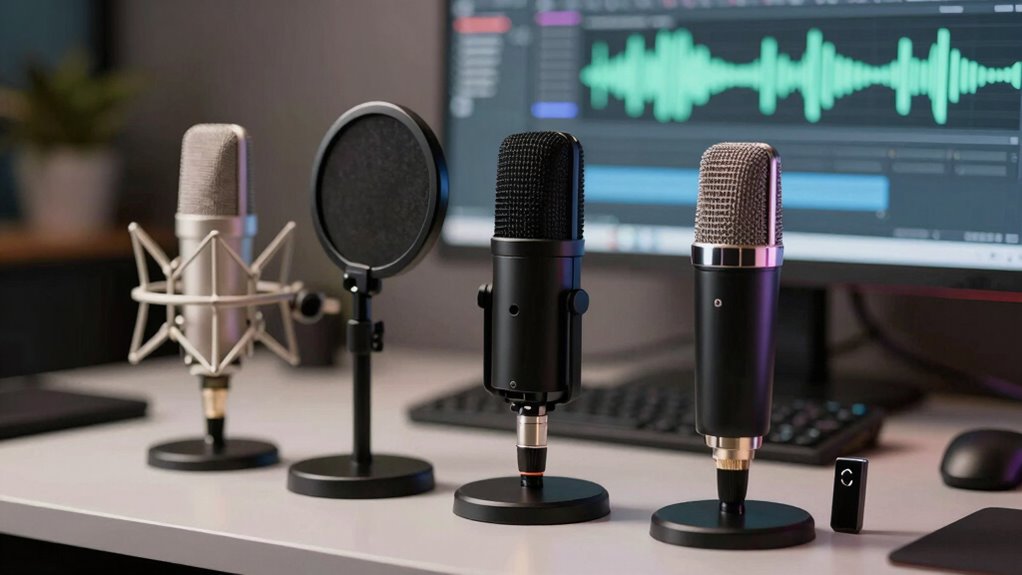
Not all microphones are created equal, and this disparity can greatly affect your streaming experience. When choosing between different microphone types, you need to reflect on how they impact sound quality. Here are a few factors to keep in mind:
- Sensitivity: Some microphones pick up quieter sounds better than others, which can enhance your voice clarity.
- Directionality: Cardioid mics focus on sound from one direction, reducing background noise, while omnidirectional mics capture sound from all around.
- Frequency Response: Different types of microphones respond differently to various frequencies, affecting how your voice or instruments sound.
Frequently Asked Questions
What Budget Should I Allocate for a Quality Streaming Microphone?
You should allocate around $100 to $200 for a quality streaming microphone. This budget allows you to explore reputable microphone brands like Audio-Technica, Blue, and Rode, which offer excellent sound quality without breaking the bank. Keep in mind your specific needs and consider features such as USB or XLR connections. It’s crucial to balance your budget considerations with the microphone’s performance to guarantee a great streaming experience.
Can I Use a USB Microphone for Professional Streaming?
Yes, you can definitely use a USB microphone for professional streaming! Many USB microphones offer great sound quality, making them suitable for various streaming setups. They’re easy to use—just plug them into your computer and start streaming. However, make certain you choose a model with good reviews and features that meet your needs. With the right USB microphone, you can achieve the professional sound quality you’re aiming for in your streams.
How Often Should I Replace My Streaming Microphone?
When it comes to replacing your streaming microphone, it’s best to know that every cloud has a silver lining. Generally, a good microphone has a lifespan of three to five years, but if you notice a drop in audio quality or any noticeable wear and tear, it’s time for an upgrade. Keeping your gear in top shape guarantees your streams sound professional, so don’t hesitate to make the change when necessary!
Do I Need a Pop Filter for My Microphone?
Yes, you do need a pop filter for your microphone. It helps reduce plosive sounds that can cause distortion, ensuring your audio remains clear and professional. By using a pop filter, you’ll enhance the quality of your recordings, making them more enjoyable for your audience. Plus, it protects your microphone from moisture damage caused by breath. Investing in a pop filter is a smart move for any serious streamer looking to improve sound quality.
Is Wireless or Wired Better for Live Streaming Audio?
When you’re racing towards the finish line, you want a steady bike, not one with wobbly wheels. For live streaming, wired mics usually offer better sound quality and connection stability. Think of them as that reliable bike, ensuring your voice comes through crisp and clear. Wireless mics provide freedom of movement, but they can struggle with interference. Choose what’s best for your setup, but don’t compromise on sound quality!
Conclusion
In streaming, the right microphone can make all the difference in your audio quality. Have you considered how your microphone choice and placement affect your viewers’ experience? By avoiding common mistakes and understanding the nuances of dynamic and condenser mics, you can elevate your content. Remember, testing your setup and controlling room acoustics are essential steps. With the right tools and knowledge, you’ll capture your audience’s attention like never before. Happy streaming!
NFL season / tailgating Picks
team gear
As an affiliate, we earn on qualifying purchases.