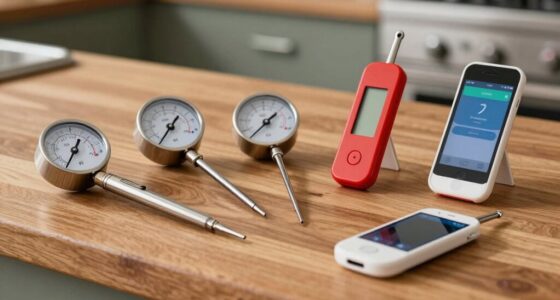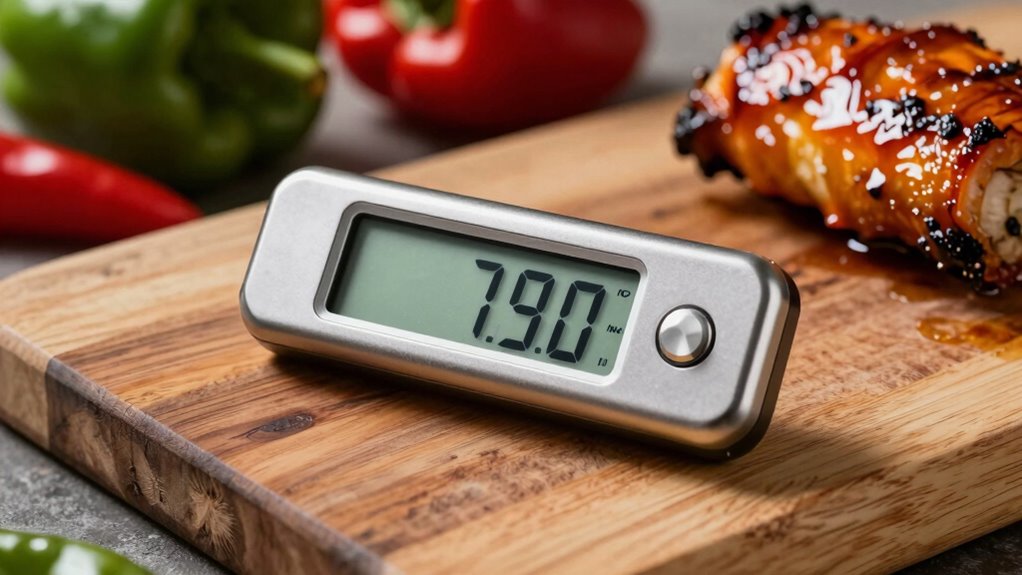
To guarantee safe, delicious food, focus on these key thermometer temperatures: cook poultry to 165°F, ground meats to 160°F, and steaks or roasts to 145°F with a rest time. Fish should reach 145°F, eggs at 160°F, and leftovers reheated to 165°F. Accurate readings depend on proper calibration and probe placement. Keep these numbers in mind, and you’ll cook confidently—if you want to master these temps, there’s plenty more to learn.
Key Takeaways
- Use a food thermometer to ensure meats reach safe internal temperatures: 145°F for beef, 160°F for ground meats, 165°F for poultry.
- Calibrate thermometers regularly with ice water or boiling water to maintain accuracy.
- Insert the probe into the thickest part of food, avoiding bones, fat, or contact with pan sides.
- Reheat leftovers to at least 165°F to prevent bacterial growth.
- Clean and sanitize thermometers between uses to prevent cross-contamination.

Alpha Grillers Meat Thermometer Digital – Instant Read Food Thermometer for Cooking & Grilling – Professional Kitchen Gifts for Men, Dad & Mom
Instant Read Food Thermometer | Our instant read thermometer features a temperature probe and advanced, highly accurate technology…
As an affiliate, we earn on qualifying purchases.
As an affiliate, we earn on qualifying purchases.
Why Knowing Food Thermometer Temperatures Is Critical for Safe Cooking
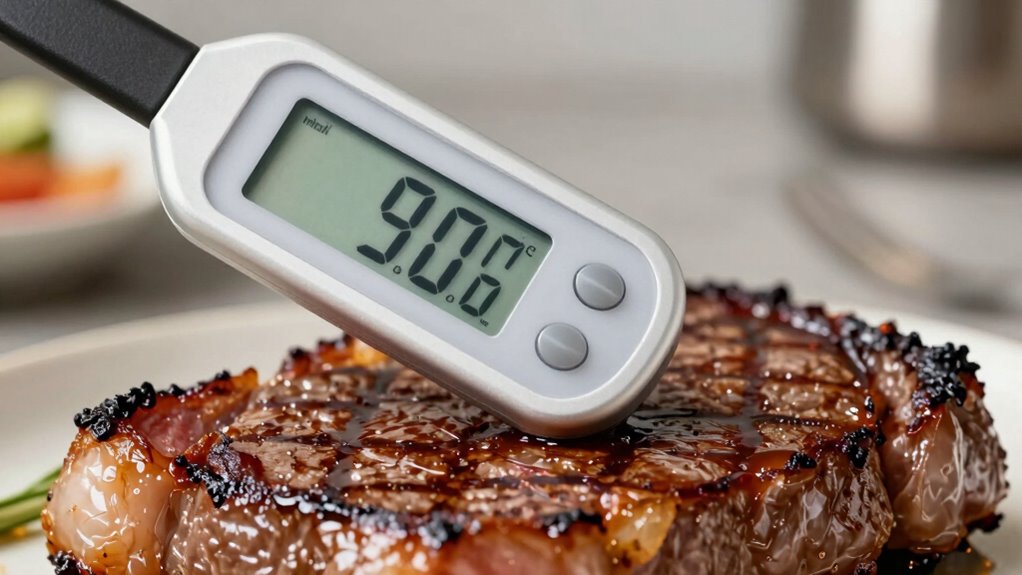
Knowing the proper food thermometer temperatures is essential because it guarantees your food is cooked safely and minimizes the risk of foodborne illnesses. When you understand the right temperatures for different foods, you ensure each dish reaches a safe level of doneness. Accurate readings depend on proper thermometer calibration, which keeps your device precise over time. Without proper calibration, you might rely on incorrect temperatures, risking undercooked or overcooked food. This is especially important for meats, seafood, and poultry, where pathogens can survive if not cooked properly. Prioritizing food safety means regularly calibrating your thermometer and knowing the correct temperatures. Proper calibration is vital to maintaining accurate readings over time. Doing so helps you serve safe, delicious meals and protects your health and those you cook for.
Alpha Grillers Meat Thermometer Digital – Instant Read Food Thermometer for Cooking & Grilling – Professional Kitchen Gifts for Men, Dad & Mom
Instant Read Food Thermometer | Our instant read thermometer features a temperature probe and advanced, highly accurate technology…
As an affiliate, we earn on qualifying purchases.
As an affiliate, we earn on qualifying purchases.
How to Use a Food Thermometer Correctly for Accurate Results
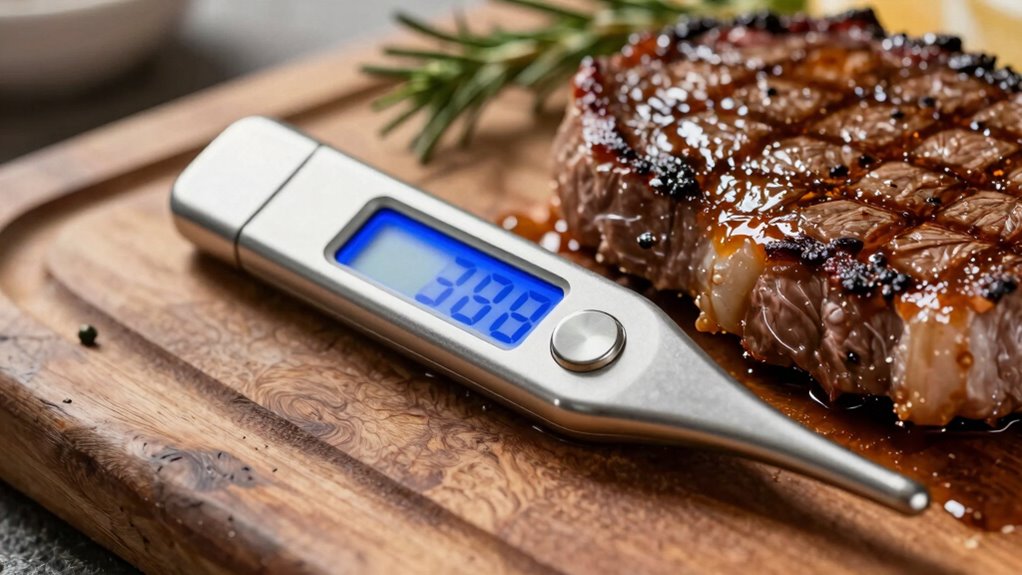
To get accurate temperature readings, you need to place the probe correctly in the thickest part of the food. Make sure to avoid cross-contamination by cleaning the thermometer between uses and not touching other surfaces. Finally, read the temperature at eye level and wait for the display to stabilize before recording the result. Proper probe placement ensures precise readings for optimal food safety.
Proper Probe Placement
Proper probe placement is essential for getting accurate temperature readings when cooking or reheating food. To guarantee reliable results, insert the probe into the thickest part of the food, avoiding bones, fat, or gristle, which can skew the temperature. Make sure the probe tip is fully embedded for a proper reading. Consistent probe placement helps achieve temperature consistency across different batches and cooking sessions. If you’re measuring the internal temperature of a roast or a casserole, check multiple spots to confirm even cooking. Avoid touching the sides of the pan or container, as this can give false readings. Proper placement not only ensures food safety but also guarantees your dishes are cooked to perfection every time. Using a quality digital thermometer ensures precise readings and enhances your cooking confidence.
Avoiding Cross-Contamination
Using a food thermometer correctly also means taking steps to prevent cross-contamination, which can cause foodborne illnesses. To guarantee food safety practices, always clean your thermometer between uses and avoid touching raw and cooked foods with the same probe. Use separate thermometers or sanitize thoroughly when switching between different food items. Here’s a quick guide:
| Food Type | Cross Contamination Prevention |
|---|---|
| Raw meats | Use a dedicated thermometer or sanitize after use |
| Cooked foods | Keep separate utensils and probe after testing |
| Ready-to-eat items | Never reuse probes without cleaning |
Reading Temperature Correctly
Accurately reading a food thermometer is essential for ensuring your food reaches safe temperatures. To do this, insert the probe into the thickest part of the food without touching bone or fat, which can give false readings. Wait for the thermometer to stabilize before recording the temperature. Always check if your thermometer needs calibration; an improperly calibrated device can lead to unsafe food. To calibrate, use the ice water method or boiling water, depending on your thermometer type, and adjust if necessary. Proper calibration guarantees you get accurate readings every time, supporting food safety. Remember, consistently correct readings help prevent foodborne illnesses. Handle your thermometer carefully, clean it thoroughly, and check calibration regularly for reliable, safe results. Additionally, understanding the correct usage techniques ensures you maximize the accuracy of your thermometer readings.
Alpha Grillers Meat Thermometer Digital – Instant Read Food Thermometer for Cooking & Grilling – Professional Kitchen Gifts for Men, Dad & Mom
Instant Read Food Thermometer | Our instant read thermometer features a temperature probe and advanced, highly accurate technology…
As an affiliate, we earn on qualifying purchases.
As an affiliate, we earn on qualifying purchases.
The Right Internal Temperatures for Meat and Poultry
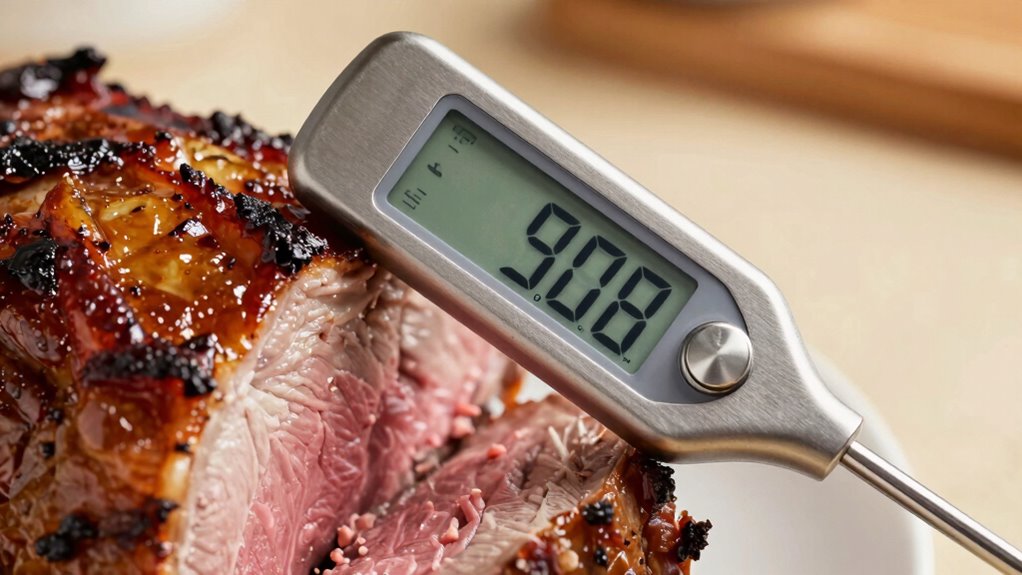
To guarantee your meat and poultry are safe to eat, you need to cook them to specific internal temperatures. These temperatures ensure proper meat doneness and poultry safety, reducing the risk of foodborne illnesses. For beef, steaks and roasts should reach 145°F, then rest for 3 minutes for tenderness. Ground beef needs to hit 160°F to ensure safety. Poultry, including chicken and turkey, must reach 165°F to eliminate harmful bacteria. Use a reliable thermometer to check these temperatures at the thickest part. Remember, proper cooking temperatures aren’t just about safety—they influence meat doneness, from rare to well-done. Following these guidelines guarantees your meat is safe and delicious every time. Additionally, digital distractions can hinder your focus when checking temperatures, so minimize interruptions for accuracy.
Alpha Grillers Meat Thermometer Digital – Instant Read Food Thermometer for Cooking & Grilling – Professional Kitchen Gifts for Men, Dad & Mom
Instant Read Food Thermometer | Our instant read thermometer features a temperature probe and advanced, highly accurate technology…
As an affiliate, we earn on qualifying purchases.
As an affiliate, we earn on qualifying purchases.
Safe Temperatures for Cooking Fish and Seafood
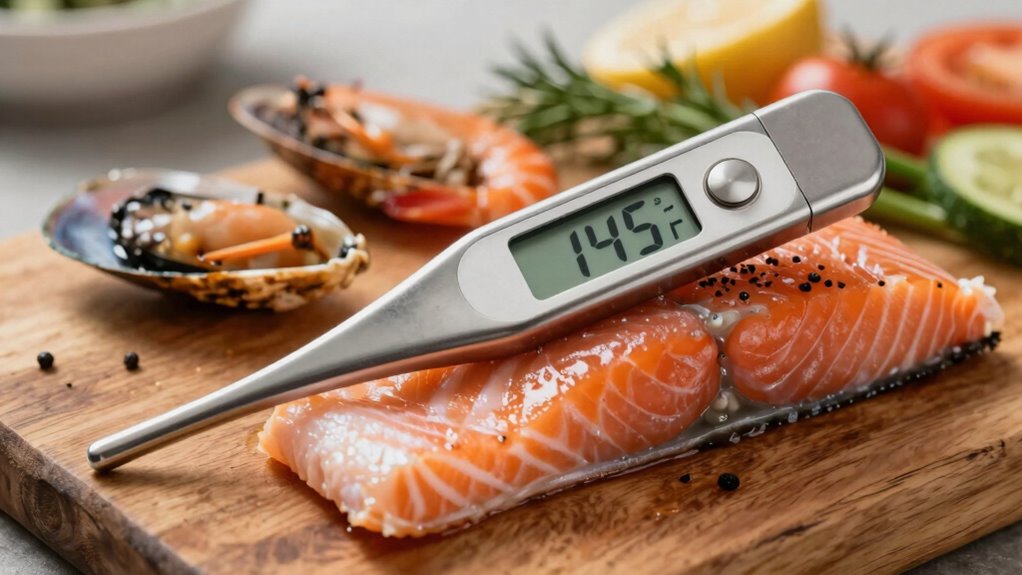
To guarantee your fish and seafood are safe to eat, you need to know the proper internal temperature guidelines. You’ll also want to recognize the signs of fully cooked fish, like firm texture and opaque color. Using a food thermometer makes it easy to get these details just right. Additionally, understanding early warning signs can help you prevent foodborne illnesses.
Proper Internal Temperature Guidelines
Ensuring fish and seafood are cooked to the right internal temperature is essential for safety and quality. Accurate temperature measurement helps prevent foodborne illnesses and guarantees ideal texture. To maintain proper food safety, follow these guidelines:
- Cook fish fillets to an internal temperature of 145°F (63°C) to ensure harmful bacteria are killed.
- For shellfish like shrimp and scallops, aim for 140°F (60°C) for safe consumption.
- Use a reliable food thermometer to verify temperature accuracy, inserting it into the thickest part of the seafood without touching bones or the pan.
- Staying informed about latest market trends and technological advancements can help consumers select better-quality thermometers and cooking tools.
Signs of Fully Cooked Fish
Knowing when fish is fully cooked is essential for both safety and quality. One key sign of fish doneness is a flaky texture that easily separates with a gentle touch or fork. When your fish reaches this point, it’s a good indicator that it’s cooked through without becoming dry or overdone. The flesh should turn opaque and lose its translucent appearance. You might notice the color change from raw to cooked, and the meat should appear firm yet tender. Relying solely on visual cues can be tricky, so using a food thermometer helps confirm that your fish has reached the safe internal temperature of 145°F (63°C). A properly calibrated thermometer ensures accuracy and consistency in your cooking. Paying attention to these signs ensures your fish is perfectly cooked, safe to eat, and maintains its delightful flaky texture.
Temperature Guidelines for Eggs and Dairy
Have you ever wondered what the perfect temperature is for cooking eggs and dairy to guarantee safety and quality? For egg safety, cook eggs until the yolk and white are firm, reaching at least 160°F. Dairy storage should be maintained at or below 40°F to prevent bacterial growth. When preparing eggs, use a thermometer to ensure they reach the correct temperature, especially when making custards or sauces. For dairy, proper storage involves keeping products chilled and avoiding temperature fluctuations. To maximize safety: 1. Always cook eggs to 160°F. 2. Store dairy at or below 40°F. 3. Use a thermometer to verify both cooking and storage temperatures. Following these guidelines helps prevent foodborne illnesses and preserves the freshness of your eggs and dairy products. Additionally, maintaining requirements traceability ensures that food safety standards are consistently met throughout the production process.
Reheating Leftovers: Safe Temperatures to Prevent Foodborne Illness
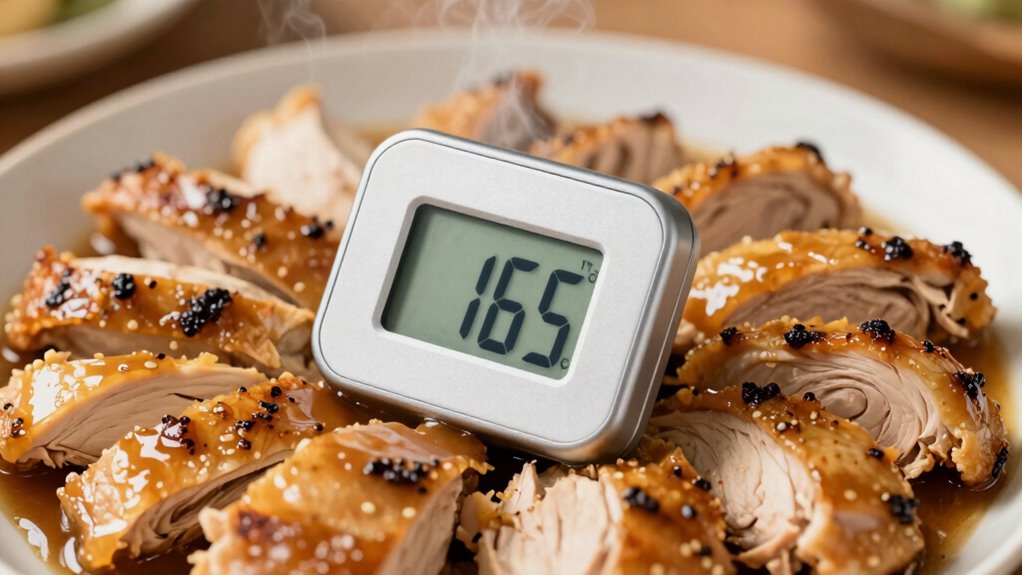
Reheating leftovers safely is essential to prevent foodborne illness, and achieving the right temperature is key. When reheating leftovers, follow proper temperature guidelines to make sure harmful bacteria are destroyed. The USDA recommends reheating leftovers to at least 165°F (74°C) to make sure they’re safe to eat. Use a food thermometer to check the internal temperature, especially in the thickest part of the food. This ensures even heating and reduces the risk of cold spots where bacteria can survive. Remember, leftovers reheating should be done quickly and evenly to prevent bacterial growth. Proper reheating techniques are vital for maintaining food safety and preventing illness. By sticking to these temperature guidelines, you can enjoy your leftovers without worry, knowing they’ve been heated to a safe, bacteria-free temperature.
Common Mistakes When Checking Food Temperatures: and How to Avoid Them
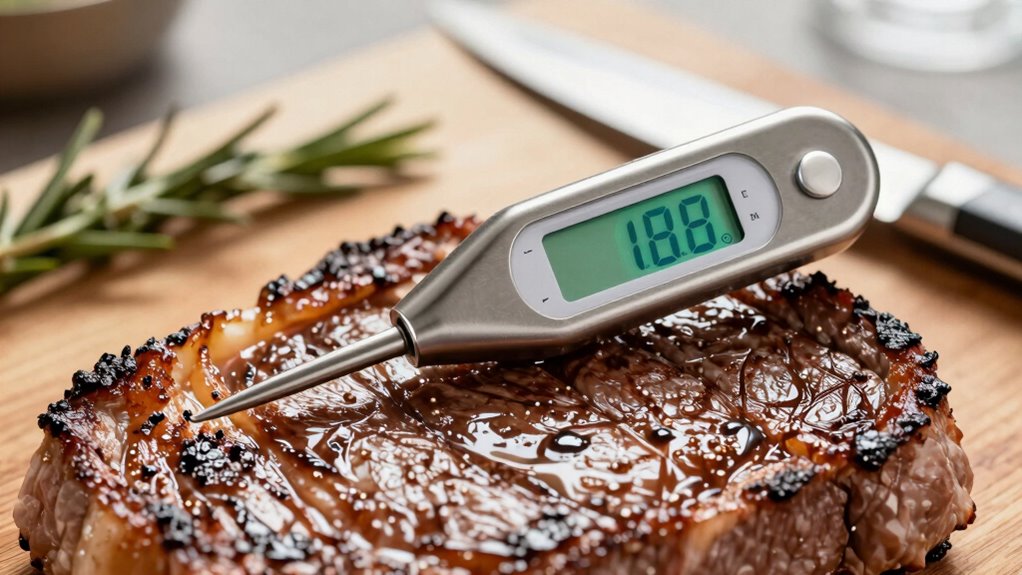
Checking food temperatures accurately is crucial for food safety, but common mistakes can undermine your efforts. One mistake is believing cooking myths that suggest you can guess doneness without a thermometer. Always rely on proper tools instead. Another error is neglecting thermometer calibration; if your thermometer isn’t accurate, your readings may be off, risking undercooked or overcooked food. Additionally, inserting the probe into the wrong part of the food can give false readings—make sure to test the thickest part or the center for accuracy. To avoid these issues, regularly calibrate your thermometer, discard myths about visual cues, and always measure in the proper spot. Proper technique ensures your food reaches safe temperatures and prevents foodborne illness.
Adjusting Cooking Times Based on Thermometer Readings
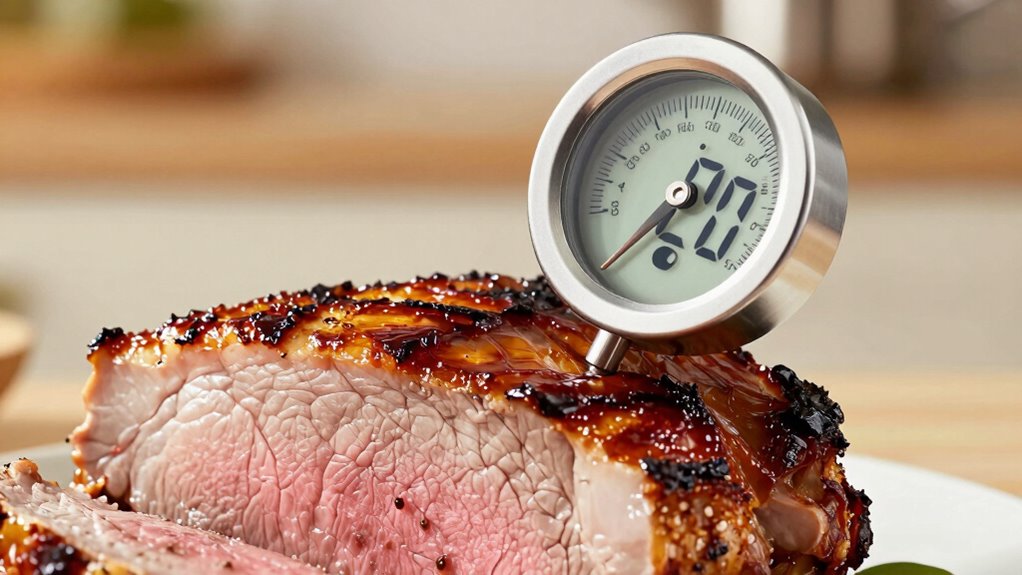
When you use a food thermometer to monitor doneness, you may need to modify your cooking times to guarantee safety and ideal texture. If your thermometer reads lower than the recommended temperature, extend your cooking time accordingly. Conversely, if it shows higher, you can reduce the time. Regular thermometer calibration ensures accuracy; a miscalibrated device skews your cooking time adjustments. Visualize your adjustments with this table:
| Temperature Reading | Action | Adjustment |
|---|---|---|
| Below target | Cook longer | Add 5-10 minutes |
| At target | Ready to serve | No change |
| Above target | Remove from heat | Reduce time slightly |
Accurate readings help you fine-tune your cooking time adjustments, ensuring safe, perfectly cooked food.
Quick Reference: Essential Food Thermometer Temperatures
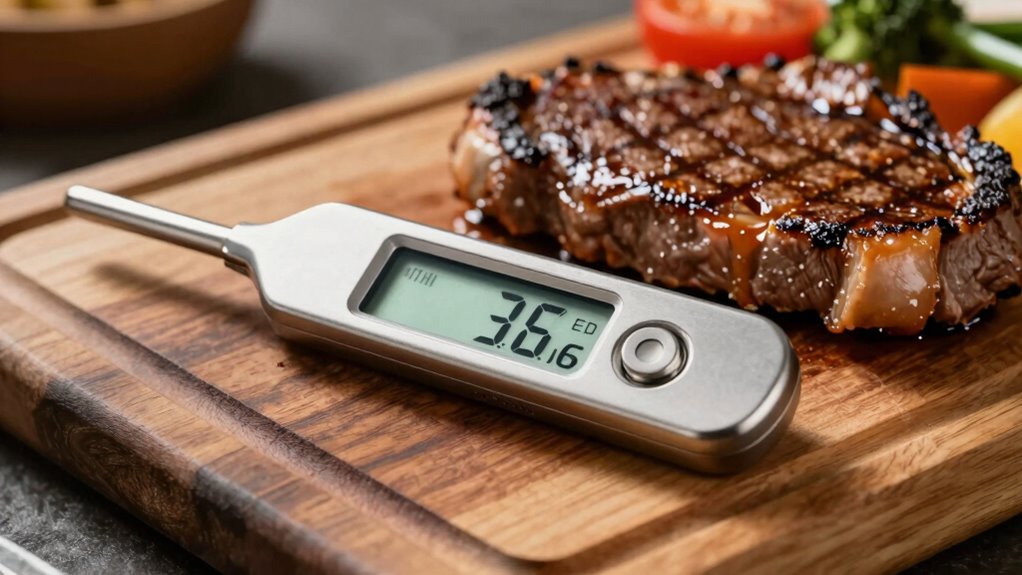
Having accurate temperature guidelines handy guarantees you time and assures your food is both safe and perfectly cooked. Knowing key temperatures helps you master cooking techniques and maintain proper food storage. Here are essential food thermometer temperatures to keep in mind:
- Poultry (chicken, turkey): 165°F (74°C) – prevents foodborne illness and ensures thorough cooking.
- Ground meats: 160°F (71°C) – confirms safety for beef, pork, and other ground meats.
- Leftovers and reheated foods: 165°F (74°C) – guarantees food safety during storage and reheating.
These temperatures serve as a quick reference, helping you cook safely and avoid undercooking or overcooking. Remember, accurate readings are crucial for food safety and quality in all your cooking techniques and food storage practices.
Frequently Asked Questions
How Often Should I Calibrate My Food Thermometer?
You should calibrate your food thermometer at least once a year to guarantee accuracy, but more often if you notice inconsistent readings. Regular calibration maintains your thermometer’s accuracy, which is vital for food safety. Always check calibration before use, especially if you’ve dropped it or it’s been stored improperly. Proper calibration frequency helps you avoid undercooked or overcooked food, giving you peace of mind and better results every time.
Can a Meat Thermometer Be Used for Liquids?
Think of your meat thermometer as a versatile tool, like a Swiss Army knife. Yes, you can use it for liquids, especially for measuring liquid temperature. Many cooks use their meat thermometers to check temperature in soups or hot beverages. Just make certain it’s calibrated and properly cleaned before switching from meat to liquids. This way, you get accurate readings for all your meat thermometer applications, including liquid temperature measurement.
What’s the Best Way to Store My Food Thermometer?
You should store your food thermometer in a clean, dry place to keep it accurate. Use storage tips like keeping it in a protective case or a designated drawer to prevent damage. When storing, place the thermometer in a spot where it won’t be jostled or bent, ensuring proper thermometer placement. This way, it stays reliable and ready for your next cooking adventure.
Are Digital Thermometers More Accurate Than Analog Ones?
Digital thermometers are generally more accurate than analog ones because of their precise digital accuracy. You’ll find that digital models provide quicker readings and often have better calibration features. However, analog thermometers can be reliable if properly maintained and calibrated. If you want quick, precise measurements, go for a digital thermometer. But if durability and simplicity matter most, an analog thermometer can still serve you well.
How Do Ambient Temperatures Affect Thermometer Readings?
Ambient variance can substantially impact your thermometer accuracy. When the surrounding temperature fluctuates, it may cause your thermometer to give inaccurate readings, especially if it’s not calibrated properly. To guarantee precise measurements, avoid taking temperatures near heat sources or in direct sunlight. Keep your thermometer in a stable environment, and always allow it to reach room temperature before use. This helps you get consistent, reliable readings every time.
Conclusion
So, now that you know the secret numbers for perfect, safe meals, there’s no excuse for undercooked chicken or sushi surprises. Just remember, a trusty thermometer is your best friend—unless you enjoy the thrill of food poisoning. Follow these tips, keep those temps in check, and enjoy your culinary adventures without the risk of accidental salmonella or soggy seafood. Happy cooking, and may your steaks always be rare—at the right temperature!