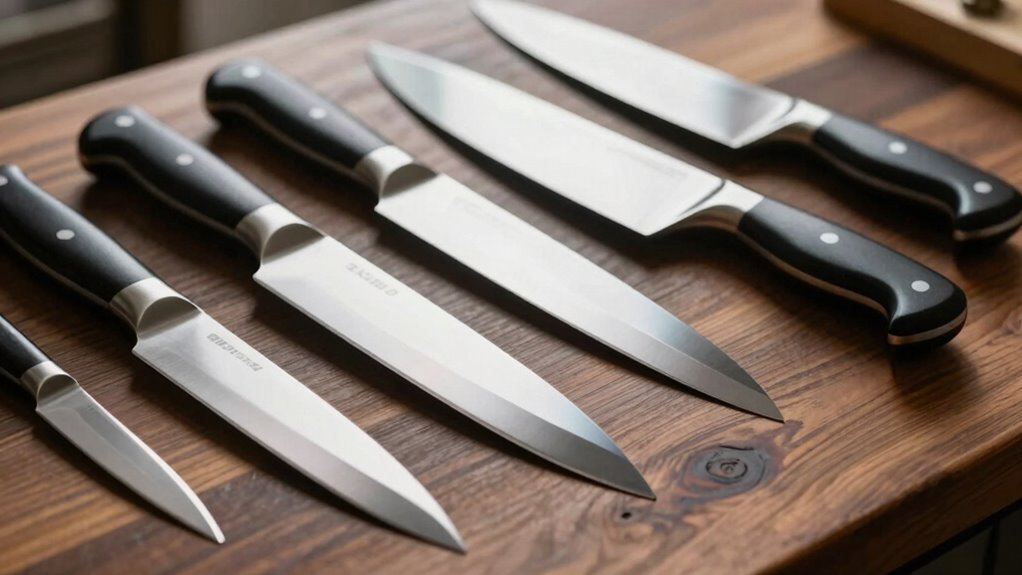

To understand knife shape names without confusion, focus on their distinctive features and common uses. Recognize that each shape is designed for specific tasks—like a chef’s knife for versatile chopping or a paring knife for detailed work. Pay attention to details such as blade length, flexibility, and edge type. By becoming familiar with these key traits, you’ll easily match knives to tasks, improving safety and efficiency. Keep exploring to discover more tips for mastering your kitchen tools.

Get the little things that make your day delivered free — and shop member deals
- Fast, free delivery on millions of items
- Access to Prime Big Deal Days deals on October 6–7
- Prime Video, Amazon Music and more included
Key Takeaways
- Learn common knife shape names and their specific functions to quickly identify the right tool.
- Understand the distinct design features of each shape, such as blade length, curvature, and serration.
- Use visual references or charts that categorize knives by shape and purpose for easier recognition.
- Familiarize yourself with terminology like “paring,” “slicing,” or “fillet” associated with each shape.
- Practice handling different knives to internalize their shapes and improve your ability to read their names confidently.
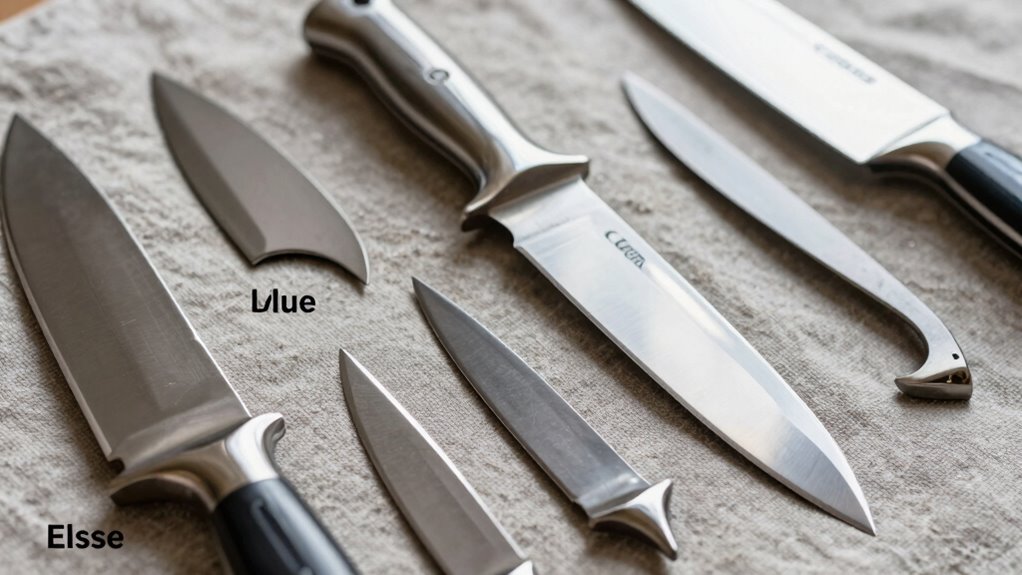
Ever wonder how to decipher the different names given to knife shapes? It’s a common confusion, especially when you’re new to using handheld tools in the kitchen. Knife shape names can seem overwhelming because they often reflect specific culinary techniques or the tasks they’re designed for. When you understand what each shape signifies, you’ll find it easier to choose the right knife for the job, making your cooking more efficient and enjoyable.
Each knife shape is crafted with a purpose, and recognizing these shapes helps you quickly identify the best tool for your needs. For instance, a chef’s knife has a broad, curved blade that allows for rocking cuts, which are essential in many culinary techniques. Its shape makes it versatile enough for chopping vegetables, slicing meat, and disjointing poultry. Meanwhile, paring knives are small and pointed, perfect for precision work like peeling fruits or deveining shrimp. These knives excel at detailed, delicate tasks, and their shape reflects that purpose.
Understanding knife shapes helps you choose the perfect tool for every culinary task.
Another common shape is the serrated knife, often called a bread knife. Its scalloped, saw-like edge is specifically designed to cut through crusty bread or tomatoes without crushing them. The shape of the blade allows the teeth to grip and slice through tough exteriors while maintaining a clean cut inside. This design is a perfect example of how a knife shape aligns with specific culinary techniques, emphasizing the importance of understanding the shape’s role.
More specialized shapes include fillet knives, which have long, flexible blades that bend easily, making them ideal for delicate fish filleting. The flexible blade shape allows you to maneuver around bones and skin with precision. Utility knives fall somewhere between paring and chef’s knives, with a narrow, straight blade that’s handy for slicing sandwiches or cutting small fruits and vegetables. Recognizing the shape of these handheld tools helps you quickly match them to the task, streamlining your workflow. Additionally, understanding knife shape design can enhance your overall cooking efficiency. Developing familiarity with common knife shapes can also improve your safety and cutting technique, reducing the risk of accidents in the kitchen.
As an affiliate, we earn on qualifying purchases.
Frequently Asked Questions
Are Knife Shape Names Standardized Across Brands?
Knife shape names aren’t fully standardized across brands due to variations in knife manufacturing and branding consistency. Different companies might use similar names for slightly different shapes, which can cause confusion. To avoid this, you should familiarize yourself with common shapes and their characteristics, and don’t rely solely on brand labels. Comparing knives physically and understanding their design features helps guarantee you choose the right shape for your needs.
How Do Regional Names Differ for the Same Knife Shape?
Regional naming variations can cause confusion because different cultures and regions often have unique terminology for the same knife shape. Cultural influences on terminology lead to diverse names, even for identical designs, making it tricky to identify the shape accurately. You should consider researching regional terminology or consulting local experts, especially when purchasing or comparing knives across different areas. Knowing these variations helps you avoid misunderstandings and choose the right knife for your needs.
Can a Knife Have Multiple Shape Names?
Yes, a knife can have multiple shape names due to the evolution of knife design and custom knife naming practices. As knife shapes evolved over time, different regions or makers might assign unique names, leading to overlapping terminology. You should recognize that knife shape evolution influences naming variations, making it common for a single knife to be called different names based on its design, origin, or custom naming conventions.
Do Knife Shape Names Indicate the Knife’s Purpose?
Yes, knife shape names often hint at their purpose, but it’s not always straightforward. You’ll notice that blade material variations and handle ergonomics also influence a knife’s function. A shape designed for slicing might share features with one meant for precision tasks, creating confusion. Pay close attention to the details—blade length, grind, and design—to truly understand what each knife is built for, beyond just its name.
Are There Historical Reasons for Specific Knife Shape Names?
Yes, many knife shape names have historical origins of blade terminology and reflect cultural influences. For instance, the French “santoku” means “three virtues,” highlighting cultural values, while the “Bowie” knife honors American frontier history. These names often evolved from regional language, traditional uses, or notable figures, shaping how we identify and understand each knife’s purpose. Recognizing these origins helps you appreciate the rich history behind each blade.
As an affiliate, we earn on qualifying purchases.
Conclusion
Understanding knife shape names might seem tricky at first, but once you familiarize yourself with the terms, it becomes much easier to choose the right tool. Remember, nearly 60% of home cooks admit they’ve purchased a knife that’s not suited for their needs, leading to frustration and inefficiency. By learning to read these names confidently, you’ll make smarter choices, improve your cooking experience, and guarantee your knives serve you well for years to come.
As an affiliate, we earn on qualifying purchases.
As an affiliate, we earn on qualifying purchases.
Halloween Picks
halloween
As an affiliate, we earn on qualifying purchases.