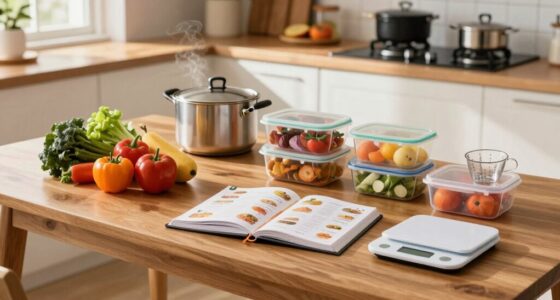
To keep your pantry organized and efficient, start by deciding what to keep based on expiration dates and usage frequency. Use clear, stackable containers for visibility, and maximize vertical space with shelf risers or wall-mounted racks. Categorize items into distinct zones and label everything clearly for easy access. Don’t forget to implement a First In, First Out method to manage stock. With a few maintenance habits, you can guarantee your pantry remains clutter-free and functional. Explore more strategies to streamline your organization process.
Key Takeaways
- Establish clear keep and toss criteria for pantry items to ensure only essential and fresh products remain.
- Utilize clear, stackable containers with airtight seals to enhance visibility and maintain freshness.
- Create distinct pantry zones for different categories and label them clearly for easy access.
- Implement a regular inventory check schedule to manage stock and minimize expired items.
- Adopt daily maintenance habits, returning items to designated spots after use to maintain organization.

Vtopmart 6 Pack Clear Stackable Storage Bins with Lids, Large Plastic Containers with Handle for Pantry Organizer and Storage,Perfect for Bathroom,Cabinet,Kitchen,Fridge,Closet Organization
✅Functional Storage for Any Space: You can use these pantry bins for various things throughout your home to…
As an affiliate, we earn on qualifying purchases.
As an affiliate, we earn on qualifying purchases.
How to Decide What to Keep and Toss in Your Pantry
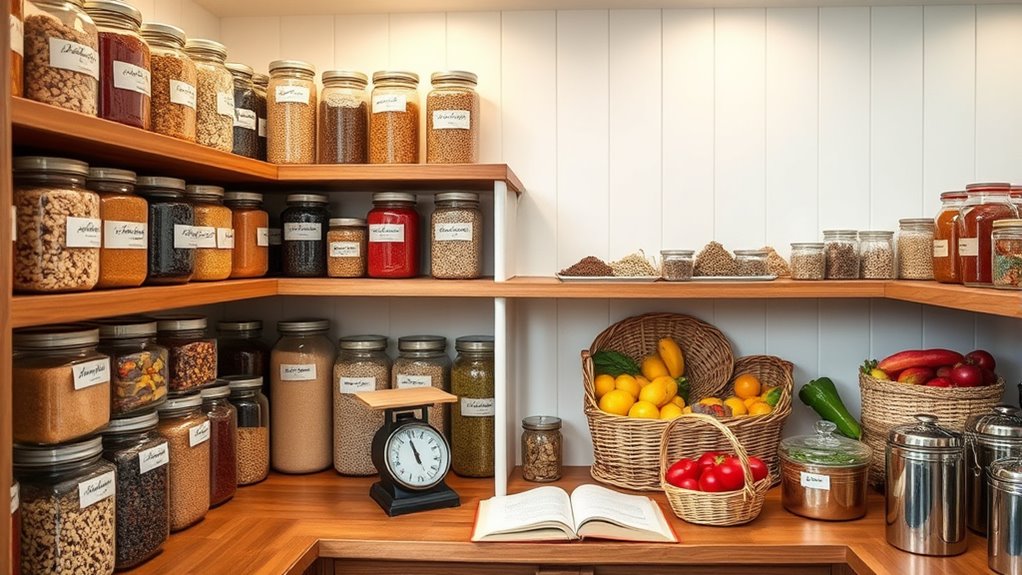
How do you determine what to keep and what to toss in your pantry? Start by setting clear keep criteria. Think about pantry essentials that you use regularly, like pasta, rice, and canned goods. Check expiration dates; if something’s past its prime or you can’t remember the last time you used it, it’s time to toss it. Next, apply your toss criteria to items that are damaged or expired. Consider repurposing items you’re not using; for instance, stale crackers can be turned into breadcrumbs. This helps reduce food waste while keeping your pantry organized. Regularly evaluate your inventory, so you always know what to keep and what needs to go. A clean pantry makes cooking more enjoyable!

Rubbermaid Brilliance Glass Food Storage Containers, Assorted Sizes, Set of 9, BPA-Free, Leak-Proof, Clear
LEAK-PROOF AND AIRTIGHT: Rubbermaid Brilliance Glass Food Storage Containers have crystal-clear lids that are 100% airtight and leak-proof,…
As an affiliate, we earn on qualifying purchases.
As an affiliate, we earn on qualifying purchases.
Choosing the Best Storage Solutions for Your Pantry
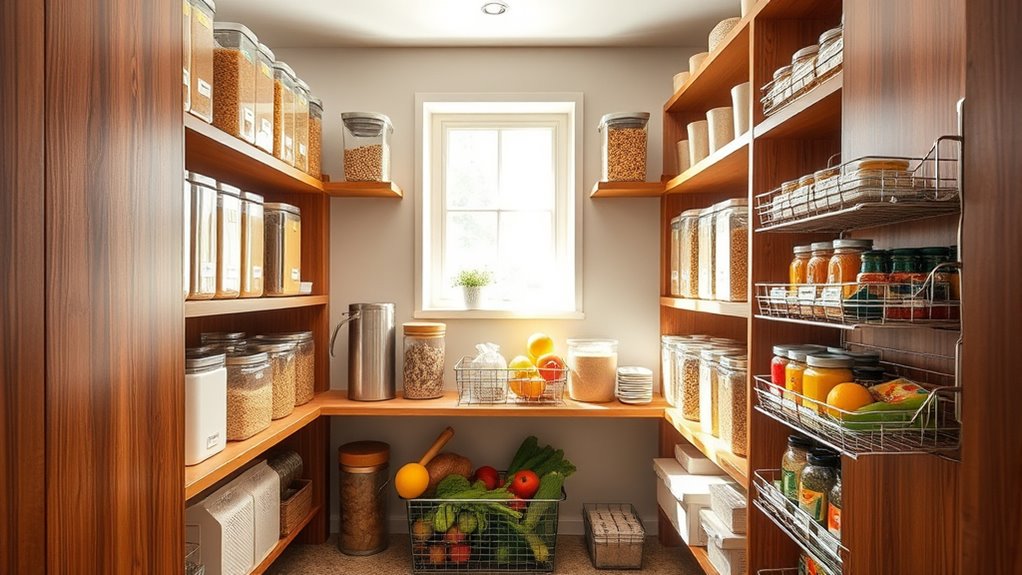
When it comes to pantry organization, choosing the right storage solutions can make a big difference. Clear containers not only keep your ingredients visible but also help you maintain freshness. Plus, stackable storage options maximize your space, making it easier to find what you need. Incorporating simple systems can further streamline your routine and keep your pantry clutter-free.
Clear Containers Benefits
While organizing your pantry, choosing clear containers can greatly enhance your storage solutions. Here are three key benefits of using them:
- Visibility: Clear container types let you see what’s inside at a glance, making it easier to find what you need without rummaging through your pantry. This quick identification can save time during meal prep.
- Freshness: Many container materials, like glass or BPA-free plastic, help keep your food fresher for longer by providing airtight seals that prevent moisture and pests. Proper sealing also helps preserve the quality of stored foods.
- Aesthetics: Clear containers create a uniform look, reducing visual clutter and giving your pantry a clean, organized appearance. Additionally, container materials like glass and BPA-free plastics are chosen for their durability and safety, ensuring your pantry stays functional and stylish.
Stackable Storage Options
If you want to maximize your pantry space, stackable storage options are a smart choice. You’ll find that stackable bins and modular containers can transform your pantry into an organized haven. These solutions allow you to utilize vertical space effectively, making it easier to access items without clutter. Incorporating organized storage can further improve your pantry’s overall efficiency. Opt for stackable bins that fit your pantry’s dimensions, ensuring you can neatly categorize snacks, grains, or spices. Modular containers are perfect for creating a cohesive look while keeping everything fresh. Look for options that come with airtight seals to extend shelf life. By incorporating these stackable storage solutions, you’ll not only enhance your pantry’s functionality but also simplify your meal prep routines and overall kitchen organization.
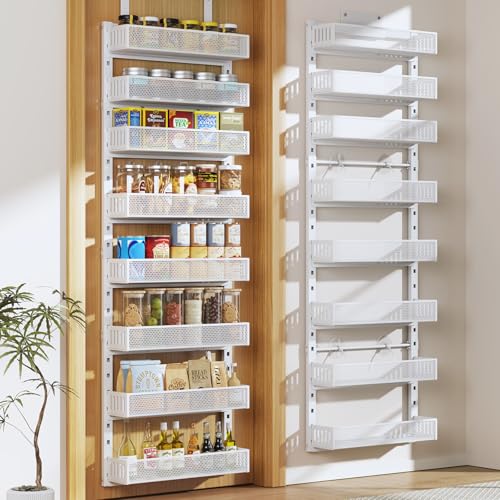
Pantry Door Organizers and Storage, 8-Tier Large Metal Heavy-Duty Frame Over the Door Spice Rack, 2 in 1 Wall-Mounted or Hanging shelf for Kitchen, Bathroom, Laundry Room, Bedroom, Closet &Nursery
Dual Installation: Hang it over the door or mount it to the wall. Perfect for kitchens, pantries, bathrooms,…
As an affiliate, we earn on qualifying purchases.
As an affiliate, we earn on qualifying purchases.
Maximizing Vertical Space for Efficient Pantry Storage
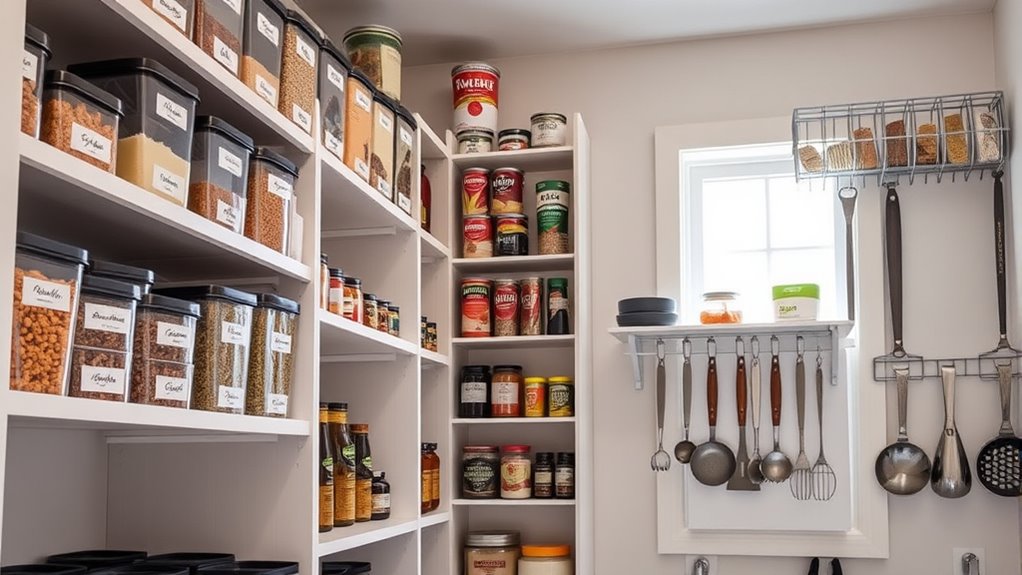
To make the most of your pantry’s vertical space, consider using shelves, racks, and bins that stack efficiently. Here are three effective strategies:
- Shelf Risers: Use shelf risers to create multiple levels for cans and jars, making everything visible and accessible. Incorporating space-saving furniture can further enhance storage capacity.
- Wall Mounted Racks: Install wall-mounted racks to store spices or utensils, freeing up counter space while keeping essentials within reach.
- Stackable Bins: Opt for stackable bins to categorize snacks or baking supplies, maximizing height without sacrificing organization. Incorporating recycled materials in gardening can also inspire eco-friendly storage solutions.

60 Pack 1.2" x 4.3" Self Adhesive Label Holders with 60Pcs Paper Label Inserts, Shelf Tag Label Holder Clear Pockets for Bookshelf Mailbox Shelves Storage Bins
【Package】Package contains 60 pack 1.2" x 4.3" clear label pockets and 60 pieces blank 0.8" x 3.9" labels…
As an affiliate, we earn on qualifying purchases.
As an affiliate, we earn on qualifying purchases.
How to Categorize Pantry Items for Easy Access
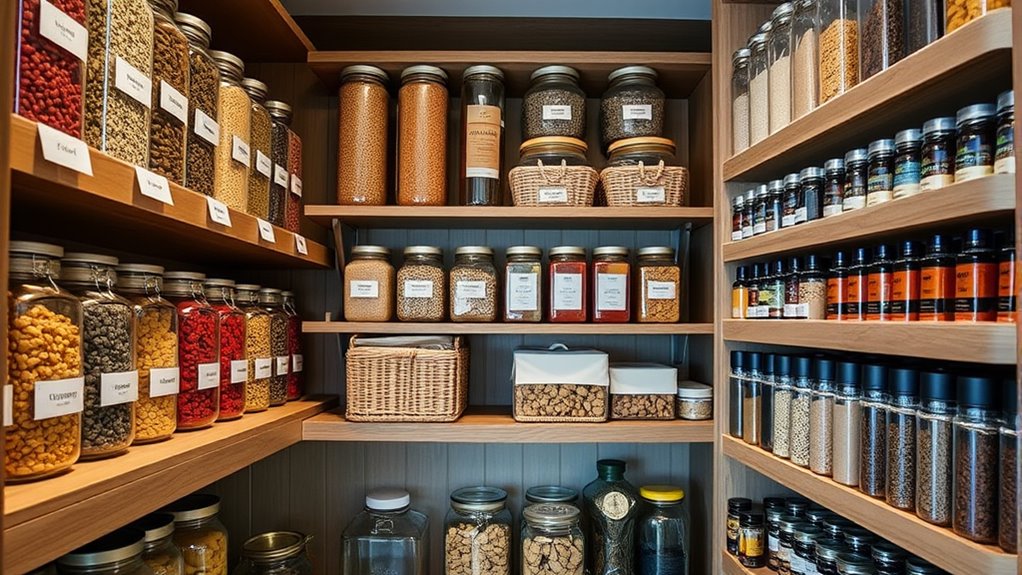
Organizing your pantry by categorizing items can greatly enhance your cooking experience, as it allows you to find what you need quickly and easily. Start by creating distinct pantry zones based on item grouping. For example, designate one area for canned goods, another for grains and pasta, and a zone for snacks. You might also set aside space for baking essentials, spices, and oils. Consider using clear bins or baskets to keep similar items together, making it easier to grab what you need. This method not only keeps your pantry tidy but also speeds up meal prep. Regularly reassess your pantry zones to verify they still meet your cooking habits and adjust as necessary for peak efficiency. Incorporating smart storage solutions can further optimize your organization system and maintain long-term order. Additionally, labeling containers and zones can help everyone in the household maintain organization and find items quickly.
Practical Labeling Tips for Your Pantry
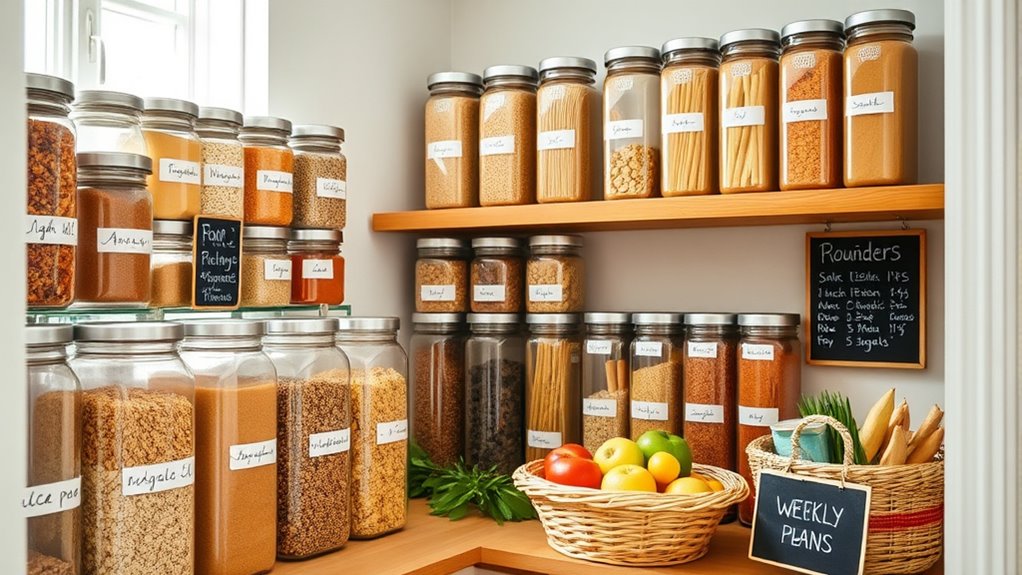
When it comes to labeling your pantry, clear labels make a big difference. You’ll want to categorize items effectively and stick to consistent formats for a polished look. This way, finding what you need becomes a breeze!
Choose Clear Labels
How can you make finding ingredients in your pantry a breeze? Choosing clear labels is essential. You want to employ effective labeling techniques that enhance visibility. Here’s how to do it:
- Select the Right Material: Use durable, waterproof labels that can withstand pantry conditions.
- Choose Clear Fonts: Opt for legible and bold fonts, ensuring that you can read the labels from a distance.
- Strategic Label Placement: Position labels on the front of containers or shelves for easy access.
Categorize Items Effectively
Effective pantry organization starts with categorizing items. Begin by defining your pantry zones, like baking supplies, snacks, canned goods, and grains. This not only makes it easier to find what you need but also helps maintain order. Next, create item groupings within those zones. For instance, keep all baking ingredients together—flour, sugar, and yeast—so you can grab them quickly when you’re ready to bake. Use baskets or bins to keep similar items contained, which further aids in organization. Incorporating labeling techniques can further enhance your system’s effectiveness. Don’t forget to label each zone clearly, so everyone in your household knows where things belong. Utilizing storage solutions designed for pantry organization can also maximize space and improve accessibility. By establishing clear categories and groupings, you’ll streamline your cooking process and keep your pantry looking neat and tidy.
Use Consistent Formats
To keep your pantry organized, using consistent formats for labeling is crucial. It not only enhances the visual appeal but also makes finding items effortless. Here are some practical tips for consistent labeling:
- Choose a Label Style: Use the same font and size for all labels to create a cohesive look.
- Stick to Color Codes: Assign specific colors for different categories, like grains, snacks, or spices, to easily identify items.
- Use Uniform Containers: When you transfer items to uniform containers, make sure the labels match in style and color for a tidy appearance.
With these consistent labeling practices, you’ll maintain an organized pantry that functions smoothly and looks great!
Why You Should Use Clear Containers for Visibility and Freshness
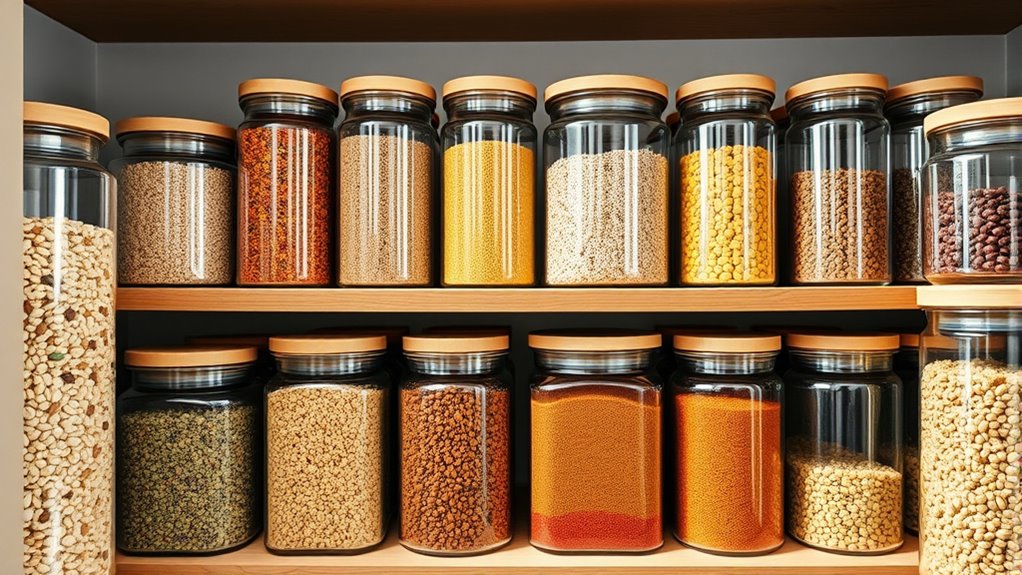
Have you ever opened your pantry and struggled to find what you need? Using clear containers can transform your organization game. One of the clear container advantages is visibility; you can see everything at a glance, saving you time during meal prep. No more digging through opaque jars or bags! Plus, these containers help maintain food freshness benefits. They create an airtight seal, keeping your ingredients safe from moisture and pests. You’ll notice that your dry goods last longer and taste better. By choosing clear containers, you not only enhance your pantry’s aesthetic appeal but also streamline your cooking process. With everything easily accessible and fresh, you’ll find cooking becomes a more enjoyable experience. Additionally, incorporating airtight seals into your storage solutions helps preserve food quality even further. Properly sealed containers also help reduce odor transfer, keeping your pantry smelling clean and fresh.
How to Rotate Your Pantry Stock Effectively
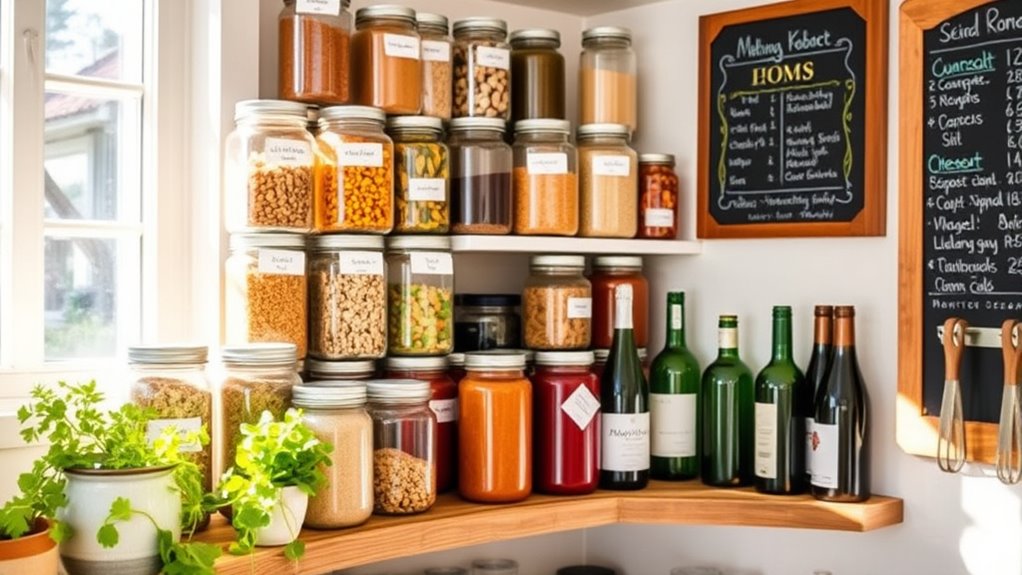
To keep your pantry stocked with fresh ingredients, it’s crucial to rotate your items effectively. Using a First In, First Out method helps guarantee older products are used first, while labeling and dating items makes tracking easier. Regular inventory checks will help you stay on top of what you have and what needs to be used up.
Use First In, First Out
When it comes to keeping your pantry organized and minimizing food waste, using the First In, First Out (FIFO) method is crucial. This inventory management technique helps guarantee that older items get used before newer ones. Here’s how to implement it effectively:
- Place New Items at the Back: Always store fresh products behind older ones. This way, you grab the older items first.
- Regularly Check Expiration Dates: Periodically review your pantry to identify items nearing their expiration. This keeps you aware of what needs to be used soon.
- Create a Shopping List: Note down items that are running low or expiring soon to avoid wasteful purchases.
Label and Date Items
Labeling and dating items in your pantry not only enhances organization but also simplifies the process of rotating your stock. Use effective labeling techniques, such as clear, bold labels that include both the item name and the expiration date. This helps you easily identify what you have and when it needs to be used. Consider using color-coded labels for different categories, like grains or canned goods, to make locating items quicker. When you bring in new products, always place them behind older items. This guarantees you use your pantry stock efficiently and minimize waste. By maintaining an organized labeling system, you’ll keep track of expiration dates and enjoy a fresh, well-stocked pantry.
Regular Inventory Checks
While it might seem tedious, conducting regular inventory checks is essential for effectively rotating your pantry stock. By staying on top of your inventory management, you guarantee that items don’t expire and your meals remain fresh and delicious. Follow this easy pantry checklist:
- Inspect: Check expiration dates and remove any expired items.
- Reorganize: Move older items to the front and newer items to the back to promote usage.
- Update: Record what you have left and what you need to restock.
Set a schedule—weekly or monthly—and stick to it. This practice not only helps in keeping your pantry organized but also saves you money and reduces food waste. By doing this, you’ll maintain a well-functioning pantry for all your cooking needs.
When and How to Refresh Your Pantry Organization
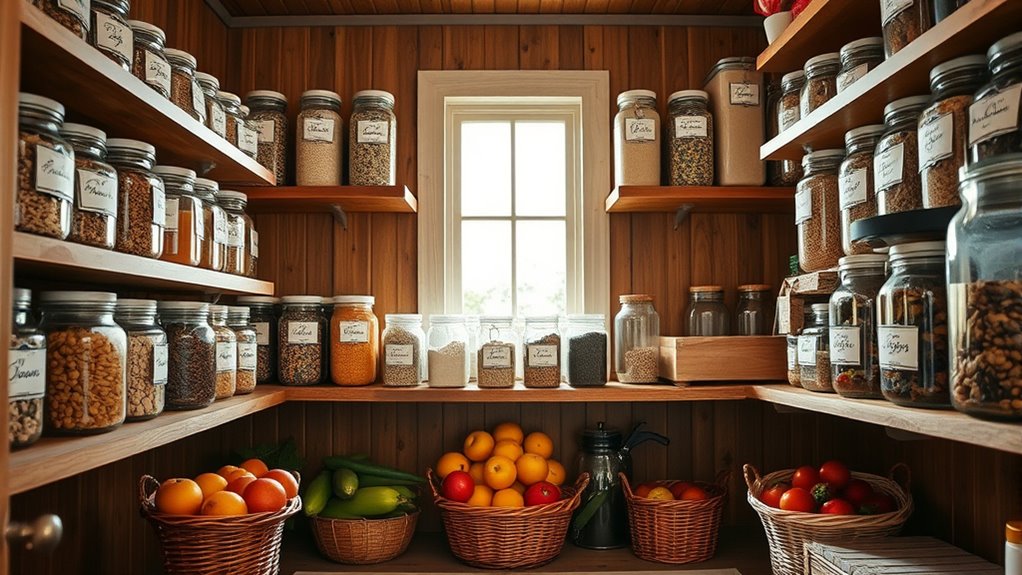
Have you ever wondered how often you should renew your pantry organization? Ideally, aim for a pantry renewal every six months. This timeframe allows you to assess what you’ve used, what’s expired, and what needs reorganization. Start by emptying your pantry and cleaning the shelves. Then, sort items into categories, like canned goods, grains, and snacks. Implement organization strategies such as clear bins or labeled jars to make everything easily accessible. As you restock, keep an eye on expiration dates and adjust your layout for efficiency. Incorporating food storage techniques and nutritional information into your food storage decisions can help you choose healthier options and reduce waste. By routinely renewing your pantry, you not only maintain order but also guarantee that your cooking and meal prep remain enjoyable and hassle‑free.
Daily Habits to Maintain Your Organized Pantry
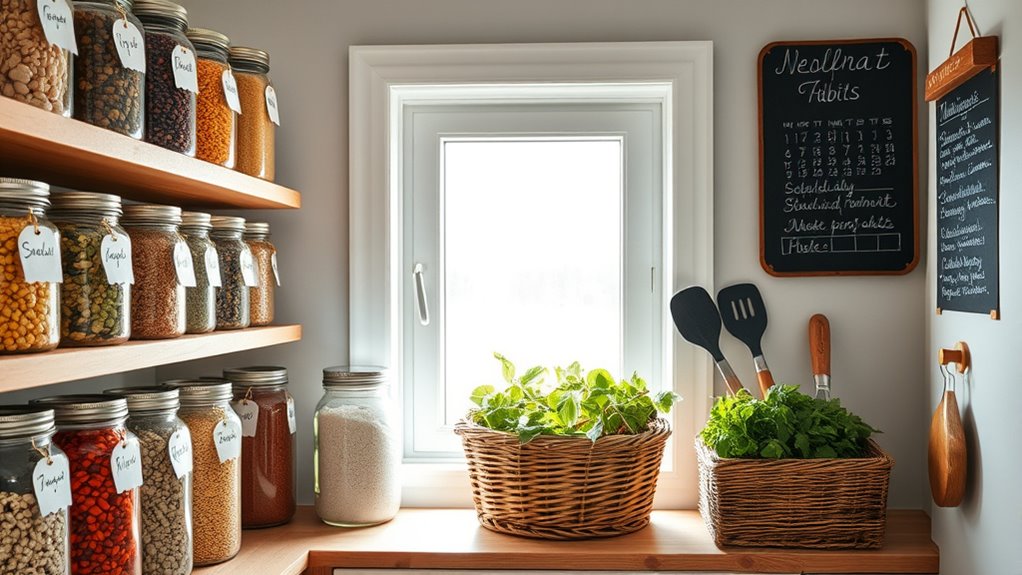
To keep your pantry organized day-to-day, establish simple habits that make a big difference. By implementing these practices, you’ll tackle organization challenges effectively and minimize the need for extensive pantry cleaning:
- Put things back: After using an item, always return it to its designated spot. This prevents clutter and confusion.
- Check expiration dates: Weekly, glance through your pantry for expired items. Disposing of them keeps your space tidy and fresh.
- Restock mindfully: When you buy new supplies, make sure they’re placed behind older items. This rotation helps you use what you have and avoids duplicates.
How to Create and Maintain a Master Inventory of Pantry Supplies
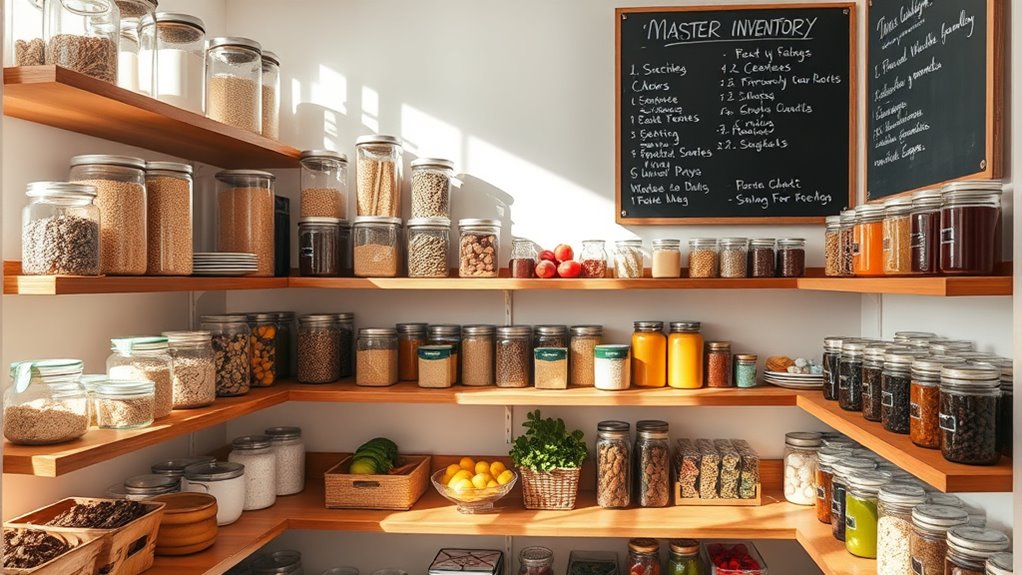
Creating and maintaining a master inventory of pantry supplies not only streamlines your cooking process but also guarantees you make the most of what you have. Start by listing all your items, including their quantities and expiration dates, in a digital or physical format that suits you. Use a spreadsheet or an app for easy updates. Regularly check your pantry to ascertain the accuracy of your pantry inventory and adjust as necessary. Implement supply tracking by noting when you use items and when it’s time to restock. Set reminders to review your inventory monthly, making sure you stay on top of what you need. This proactive approach will save you time and reduce waste, keeping your pantry organized and efficient.
Frequently Asked Questions
How Often Should I Clean My Pantry Shelves?
You should clean your pantry shelves at least every three to six months. This shelf cleaning frequency helps you maintain a fresh space and spot expired items. Regularly check for spills or crumbs, and follow these pantry maintenance tips: wipe down shelves with a damp cloth, organize items by category, and discard anything past its prime. Staying on top of this will make your pantry more efficient and enjoyable to use!
Can I Store Canned Goods in a Warm Pantry?
Storing canned goods in a warm pantry isn’t ideal. Imagine your favorite soup can, nestled among others, slowly losing its flavor and texture due to heat. Temperature effects can compromise the integrity of the seals and lead to spoilage. Ideally, you should keep canned goods in a cool, dry place to maintain their quality. So, if your pantry’s warm, consider relocating those cans to a cooler spot for better preservation.
What Are the Best Pantry Organization Apps?
The best pantry organization apps include Pantry Check, Out of Milk, and Sortly. These apps help you maintain a pantry inventory effortlessly. Look for features like barcode scanning, expiration date tracking, and customizable categories. You’ll love how easy they make it to see what you have and what you need. Plus, some apps even offer sharing options, so your family can stay in the loop about what’s stocked or running low.
How Can I Prevent Pests in My Pantry?
To prevent pests in your pantry, start with regular pantry inspections. Check for any signs of infestations, like droppings or webs. Keep food in airtight containers, which acts as effective pest prevention. Clean up spills promptly and avoid leaving food out. Declutter your pantry to minimize hiding spots for pests. Finally, seal any cracks or gaps in your pantry walls to keep unwanted guests from getting in. Stay vigilant, and you’ll maintain a pest-free pantry!
Is It Okay to Mix Different Brands in Containers?
Mixing different brands in containers is usually okay, but keep brand compatibility in mind. About 70% of consumers prefer uniformity in their pantry, as it creates a visually appealing space. When you combine brands, confirm the contents are similar, which helps maintain flavor and quality. Plus, matching container aesthetics can enhance your kitchen’s look. Just remember to label everything clearly, so you always know what’s inside, regardless of the brand!
Conclusion
Keeping your pantry organized isn’t just about aesthetics; it can save you time and money. Did you know that an organized pantry can reduce food waste by up to 30%? By following the tips outlined, you can create a system that not only looks great but also guarantees you use what you have before it expires. Make daily habits part of your routine, and you’ll enjoy a clutter-free space that stays organized for the long haul.