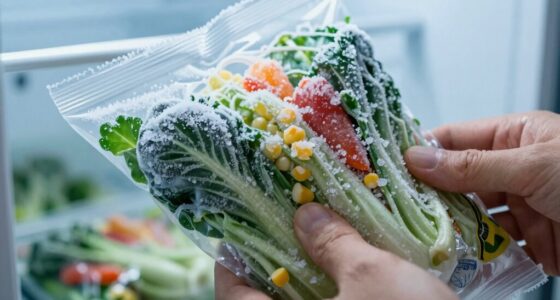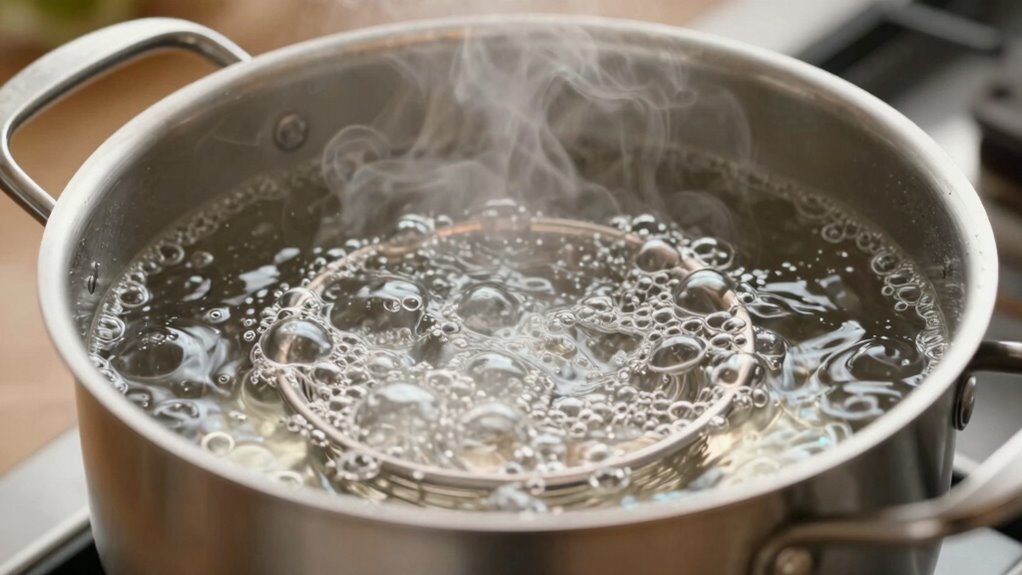

Simmering, boiling, and steaming are different cooking techniques based on temperature and how heat is transferred. Simmering keeps liquids just below boiling point, giving gentle, slow cooking perfect for tenderizing meats and delicate ingredients. Boiling uses high heat, with vigorous bubbling, ideal for quickly cooking starchy foods. Steaming involves vapor from boiling water, cooking foods evenly without direct contact, preserving nutrients. Understanding these differences helps you choose the best method for your dish—stay with us to learn more.

Get the little things that make your day delivered free with Prime
- Fast, free delivery on millions of items
- Prime Video, Amazon Music and more included
- Member-only deals all year
Key Takeaways
- Simmering occurs just below boiling point (~185°F to 205°F), with gentle bubbles, ideal for delicate foods; boiling is at 212°F with vigorous bubbles.
- Steaming cooks food using vapor from boiling water, without direct contact, preserving nutrients and delicate textures.
- Boiling involves immersing ingredients in rapidly boiling water, suitable for starchy foods requiring quick softening.
- Simmering provides gentle heat for flavor development and tenderizing, whereas boiling speeds up cooking but can damage delicate foods.
- Steaming offers even cooking without water contact, maintaining shape, color, and nutrients better than boiling or simmering.

Understanding the differences between simmering, boiling, and steaming can considerably improve your cooking results. These are fundamental cooking techniques that rely heavily on temperature control, and mastering them guarantees you get the desired texture and flavor in your dishes. When you simmer, you’re cooking food gently in liquid just below its boiling point, typically around 185°F to 205°F. This gentle heat is perfect for delicate ingredients like eggs, custards, or slow-cooked meats, allowing flavors to meld without breaking down the food or causing over-agitation. You control the temperature precisely, keeping it steady and low, so you’re less likely to overcook or scorch your ingredients.
Boiling, on the other hand, involves cooking at a higher temperature—around 212°F at sea level—and requires more vigorous bubbling. This method is suited for quickly cooking starchy foods like pasta, potatoes, or grains, where speed and even heat distribution are important. When you bring water to a boil, the rapid movement of bubbles helps break down cell walls and softens the food faster. However, the high temperature can also make certain ingredients lose their delicate texture if left too long, so it’s essential to keep an eye on timing. Proper temperature control here is key to preventing overcooking, especially with foods that can turn mushy or lose their flavor. temperature regulation is especially crucial during boiling to avoid overdoing it.
Steaming is quite different because it involves cooking food with the vapor generated from boiling water, without immersing the food directly in liquid. You place ingredients in a steamer basket or on a rack above boiling water, and the hot steam gently cooks them. This technique preserves nutrients, color, and texture, making it ideal for vegetables, fish, and dumplings. Here, temperature control means maintaining a consistent, rolling boil to produce enough steam without letting it escape or become too weak. Since steaming doesn’t involve direct contact with water, it’s a gentler method that helps retain the shape and integrity of delicate foods. The gentle nature of steaming makes it a preferred choice for preserving the qualities of fragile ingredients.
stainless steel steamer basket for vegetables
As an affiliate, we earn on qualifying purchases.
As an affiliate, we earn on qualifying purchases.
Frequently Asked Questions
Can You Simmer, Boil, and Steam the Same Food Simultaneously?
You can’t typically simmer, boil, and steam the same food simultaneously because they require different conditions. Simmering gently enhances flavor without overcooking, boiling is more intense, and steaming preserves nutrients and texture. If you try to do all at once, you risk uneven cooking and loss of flavor enhancement, plus texture alteration. To get the best results, choose the method best suited for your dish and adjust the heat accordingly.
Which Method Preserves Nutrients Best in Vegetables?
Imagine you’re steaming broccoli; this method preserves nutrients better than boiling. Steaming minimizes nutrient loss because vegetables aren’t submerged in water, unlike boiling, where nutrients leach out. For ideal nutrient retention and cooking efficiency, steaming is your best choice. It preserves vitamins and minerals while cooking quickly, making it a healthier, more efficient method for vegetables. So, choose steaming to retain maximum nutrients and enjoy a nutritious meal.
How Do Altitude Changes Affect Boiling and Steaming?
Altitude changes lower the boiling point due to altitude adjustments, meaning water boils at temperatures below 212°F (100°C). This affects boiling and steaming because your food may cook slower or unevenly. To compensate, you should increase cooking times or use a pressure cooker. By understanding boiling point variations, you guarantee your vegetables and other foods cook thoroughly, preserving nutrients and flavor despite altitude challenges.
Are There Specific Cookware Recommendations for Each Method?
For simmering, use cookware with good heat distribution efficiency, like heavy-bottomed pots, to prevent hot spots. Boiling benefits from sturdy, wide pots that promote even cooking and are compatible with high heat. Steaming requires a steamer basket or insert that fits securely inside your cookware, ensuring proper steam circulation. Always choose cookware compatible with your stovetop type, and prioritize heat distribution for consistent results across all methods.
How Do Cooking Times Vary Between Simmering, Boiling, and Steaming?
Cooking times vary based on the method, with simmering typically taking longer to gently cook ingredients at lower temperatures, allowing flavors to infuse slowly. Boiling, at higher temperatures, speeds up the process, reducing cooking time but risking flavor loss. Steaming preserves nutrients and flavor infusion without direct contact with water, often resulting in quicker cooking for delicate foods. Adjust times based on desired flavor and texture, keeping temperature control in mind.
digital thermometer for boiling and simmering
As an affiliate, we earn on qualifying purchases.
As an affiliate, we earn on qualifying purchases.
Conclusion
Now that you understand simmering, boiling, and steaming, you can confidently choose the right method for your dish. Whether you’re gently simmering soup, boiling pasta, or steaming vegetables, each technique brings its own flavor and texture. By mastering these methods, you’ll elevate your cooking skills. So, embrace the differences, experiment often, and enjoy creating delicious meals with confidence, clarity, and a deeper appreciation for the art of cooking.
multi-tier steamer for fish and dumplings
As an affiliate, we earn on qualifying purchases.
As an affiliate, we earn on qualifying purchases.
non-stick pot for simmering and boiling
As an affiliate, we earn on qualifying purchases.
As an affiliate, we earn on qualifying purchases.
NFL season / tailgating Picks
team gear
As an affiliate, we earn on qualifying purchases.