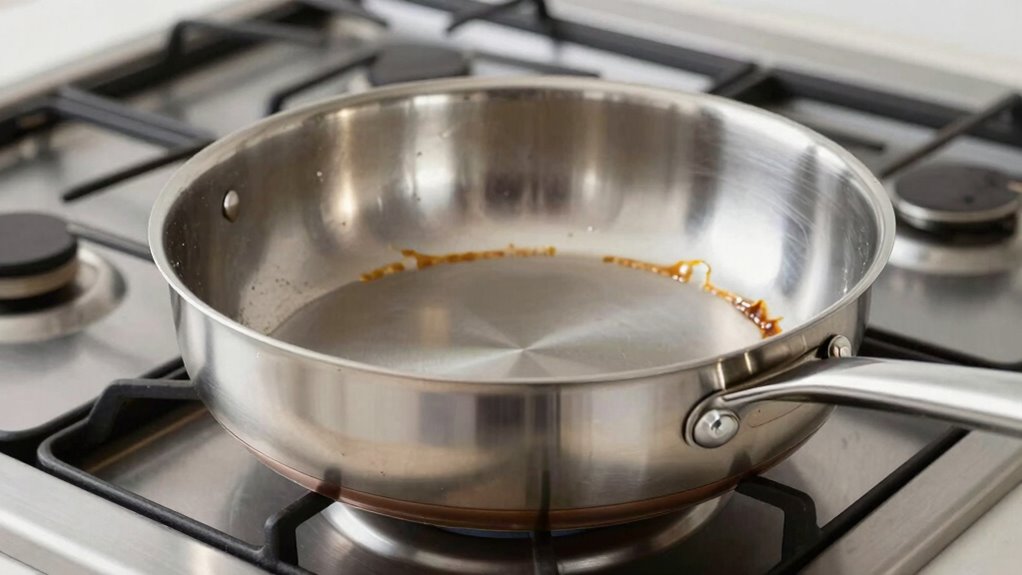
Food tends to stick to stainless steel cookware mainly because of improper preheating, uneven or excessive heat, or not using enough oil. To prevent sticking, make sure you preheat your pan properly until it’s hot, add enough oil, and maintain a steady temperature. Proper seasoning and correct cleaning also help. If you keep these tips in mind, you’ll find cooking with stainless steel much easier—keep going, and you’ll discover even more ways to improve your results.
Key Takeaways
- Proper preheating and heating oil until it smokes create a natural non-stick layer, preventing food from sticking.
- Using adequate oil and maintaining consistent medium heat helps form a barrier and reduces sticking.
- Avoid overcrowding the pan, which lowers temperature and causes food to adhere.
- Ensuring the pan and food are dry before cooking minimizes moisture that promotes sticking.
- Regularly cleaning and seasoning the pan enhances its non-stick properties and prevents food from sticking.

AcuRite 00620A2 Stainless Steel Oven Thermometer (150°F to 600°F)
Oven and grill safe for leave-in use while cooking
As an affiliate, we earn on qualifying purchases.
As an affiliate, we earn on qualifying purchases.
Why Does Food Stick to Stainless Steel Cookware?
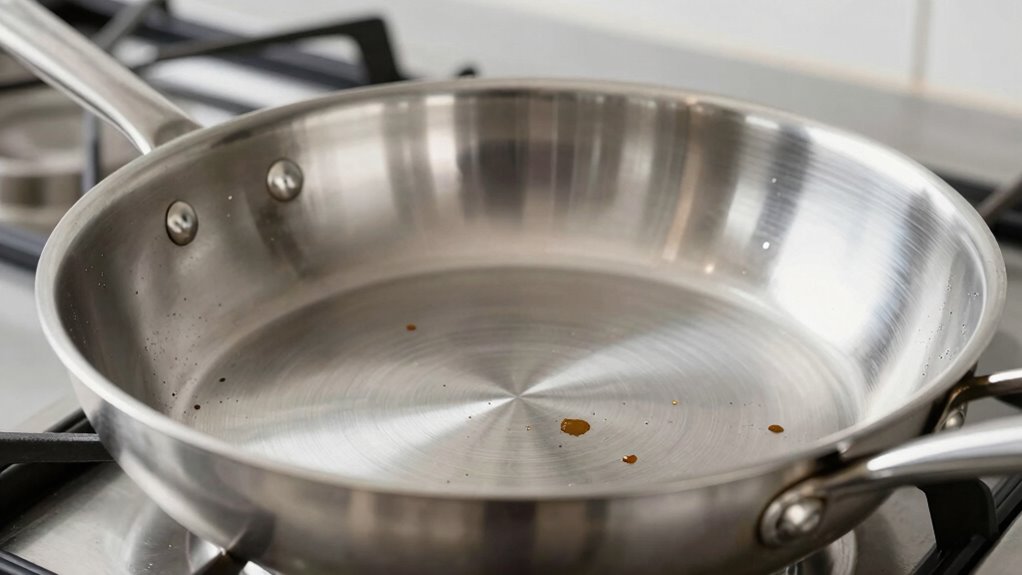
Food tends to stick to stainless steel cookware because it often isn’t fully heated before adding ingredients. When your cooking vessel isn’t hot enough, the food can adhere, making cleanup frustrating. Unlike non-stick coatings, stainless steel relies on proper heat and technique to prevent sticking. If the pan isn’t preheated properly, food molecules stick to the surface because the temperature isn’t high enough to create a barrier. This sticking isn’t due to the cookware being faulty, but rather because the cooking vessel isn’t hot enough initially. To avoid this, you need to ensure your stainless steel pan reaches the right temperature before adding ingredients. Proper preheating and using enough oil can help prevent food from sticking, even without non-stick coatings. Additionally, understanding the importance of proper heat transfer can help you achieve better cooking results and prevent sticking issues.

VEDNHOL Stainless Steel Frying Pan 12 Inch with Lid, Fully Clad Tri-Ply Stainless Steel Skillet for Even Heating, Brushed Finish, Dishwasher & Oven Safe, Induction & All Stovetops Compatible
【Even Heat, No Hot Spots】This 12-inch stainless steel frying pan features a fully clad stainless steel pan with…
As an affiliate, we earn on qualifying purchases.
As an affiliate, we earn on qualifying purchases.
How Do Temperature and Preheating Prevent Food From Sticking?
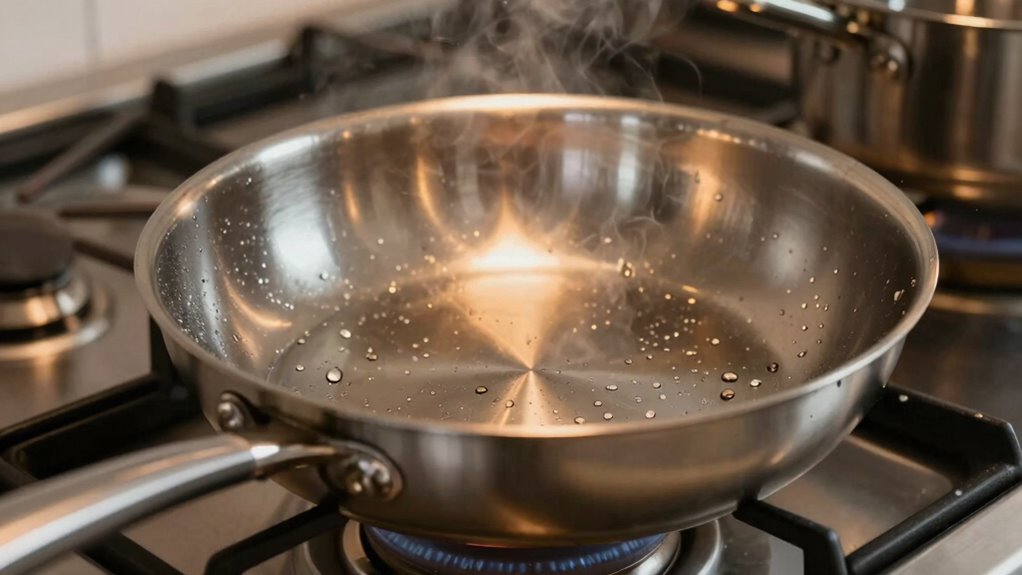
Proper temperature control and thorough preheating are essential for preventing food from sticking to stainless steel cookware. When you preheat your pan correctly, the heat transfer becomes even across the surface, reducing hot spots that can cause sticking. By regulating the temperature, you ensure the pan reaches the right level of warmth before adding food, allowing proteins and sugars to set quickly and form a natural barrier. This prevents food from bonding directly to the metal. If the pan is too cold, food sticks because it doesn’t release easily; if it’s too hot, it can burn or stick. Consistent heat and proper preheating create a smooth, non-stick surface, making your cooking more efficient and your cleanup easier. Monitoring piercing care and hygiene helps maintain the cookware’s cleanliness and prevents buildup that could contribute to sticking.

Cast Iron Scrubber with Pan Scraper, 316 Chainmail Scrubber, Upgraded Chain Mail Scrubber Sponge, Cast Iron Cleaner for Grill Pan Skillet Wok Carbon Steel, Dutch Oven Metal Brush Cleaning Kit, Black
𝗩𝗲𝗿𝘀𝗮𝘁𝗶𝗹𝗲 𝗖𝗼𝗿𝗻𝗲𝗿 𝗗𝗲𝘀𝗶𝗴𝗻 𝘄𝗶𝘁𝗵 𝗟𝗮𝗿𝗴𝗲 𝗦𝗶𝘇𝗲: The Chain mail scrubber with handle stands out with its unique round…
As an affiliate, we earn on qualifying purchases.
As an affiliate, we earn on qualifying purchases.
How Does Proper Oil Use and Seasoning Help?
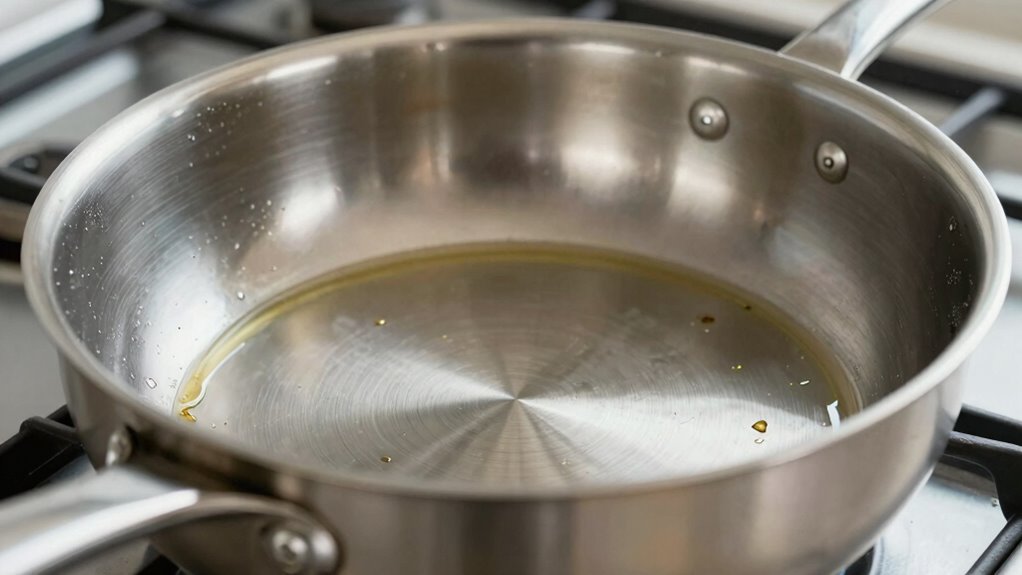
Using the right amount of oil and properly seasoning your stainless steel cookware creates a natural non-stick surface that makes cooking and cleaning easier. Effective oil application ensures a thin, even layer that bonds well during seasoning. When you use proper seasoning techniques, you develop a resilient patina that prevents food from sticking. Start by heating the pan, then add a small amount of oil, spreading it evenly across the surface. Allow the oil to heat until it smokes slightly, then let it cool. Repeat this process several times to build up a durable coating. This seasoned layer enhances the cookware’s natural non-stick properties, reducing food adhesion and making future cooking smoother. Proper seasoning and oil use are key to keeping your stainless steel pan performing at its best. Consistent maintenance helps maintain the seasoning layer and prolongs the cookware’s optimal performance.

Evo Oil Sprayer 18/8 Stainless Steel, Non-Aerosol for Olive, Cooking Oils, and Vinegars, Silver, 16-Ounce Capacity
Evo Stainless Steel Non-Aerosol Oil Sprayer dispenses any cooking oil and vinegar in unique fan pattern without any…
As an affiliate, we earn on qualifying purchases.
As an affiliate, we earn on qualifying purchases.
What Common Mistakes Make Food Stick in Stainless Steel Pans?
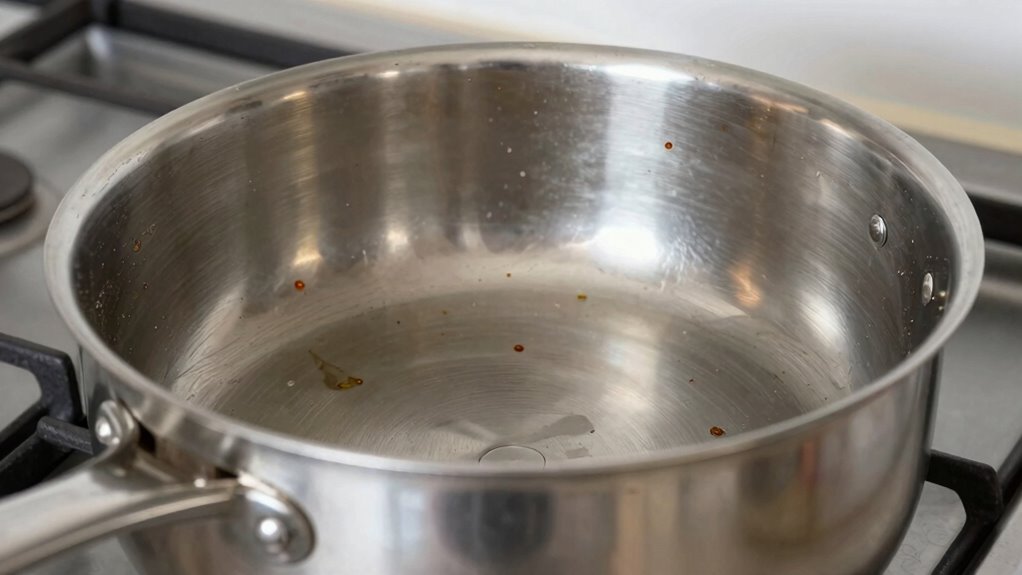
One common mistake that causes food to stick is adding ingredients to a pan that hasn’t been properly preheated or seasoned. If your pan isn’t hot enough, the food will cling instead of sear. Additionally, poor oil selection can contribute to sticking; using oils with low smoke points or not enough oil can cause food to adhere. To avoid this, focus on:
- Ensuring your pan is adequately heated before adding ingredients
- Using high-smoke-point oils suited for searing
- Properly seasoning your pan to develop a natural non-stick surface
- Avoiding overcrowding the pan, which lowers heat
- Paying attention to the timing of oil addition relative to heating
Mastering pan seasoning and oil choice helps create a smoother cooking experience and reduces sticking.
How Can You Prevent Food From Sticking When Cooking?
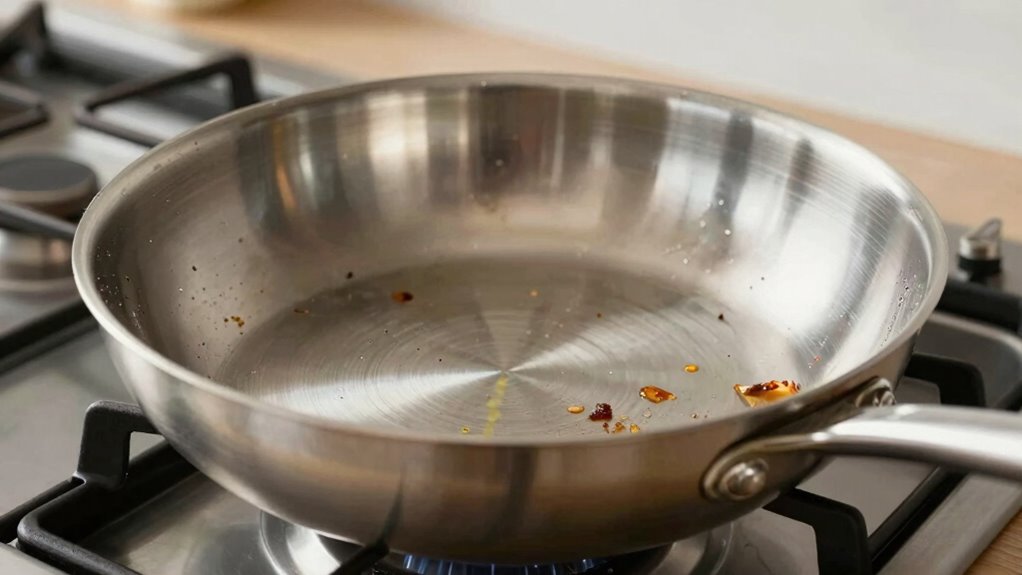
To prevent food from sticking when cooking, start by making sure your cookware is properly preheated over medium heat. When the pan is hot enough, it helps create a natural barrier, reducing the chances of sticking. While stainless steel pans don’t have non-stick coatings, using the right cooking accessories, like silicone or wooden utensils, can prevent scratches that might cause sticking. Also, add a sufficient amount of oil or fat before adding food; this creates a slick surface that helps food release easily. Avoid overcrowding the pan, as this drops the temperature and increases sticking. Proper preheating, correct use of cooking accessories, and enough fat are key steps to keep your food from sticking and ensure better results.
How to Clean and Maintain Stainless Steel Pans to Avoid Sticking
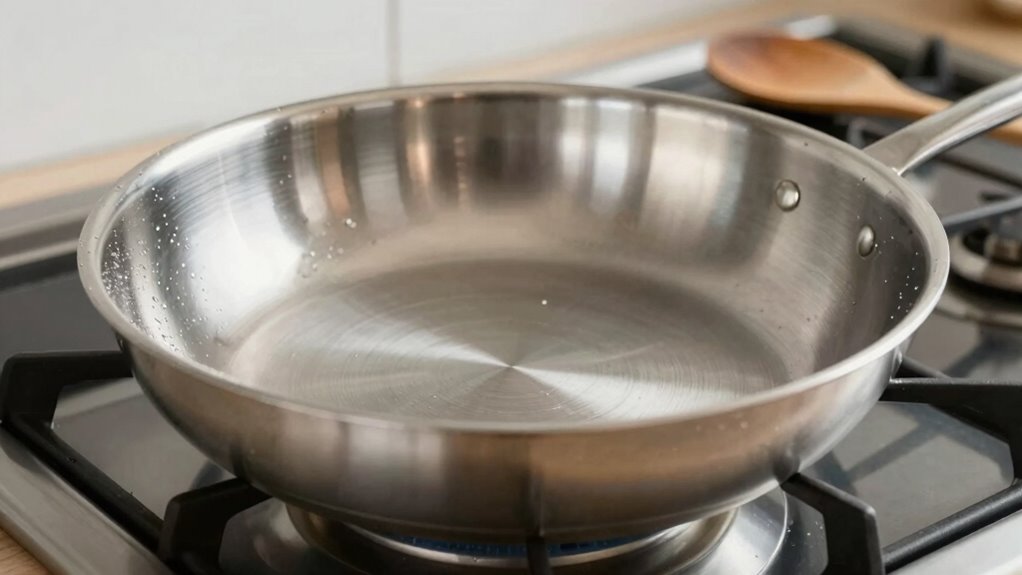
Keeping your stainless steel pans in top shape involves proper cleaning and regular maintenance. Using the right techniques helps prevent food from sticking and keeps your cookware looking new. Let’s explore simple tips for cleaning, seasoning, and maintaining your pans effectively. Regularly inspecting and adjusting your gear care practices can also extend the lifespan of your cookware.
Proper Cleaning Techniques
Proper cleaning is essential for maintaining your stainless steel cookware and preventing food from sticking. To keep your pans in top shape, avoid abrasive cleaners that can scratch the surface. Instead, stick to gentle scrubbing tools and proper techniques. Here are some tips:
- Use non-abrasive sponges or cloths
- Rely on baking soda or vinegar for tough stains
- Wash immediately after use to prevent buildup
- For stubborn residue, soak with warm water and mild detergent
- Check if the pan is dishwasher safe—most are, but confirm first
- Regularly inspect your cookware for signs of damage or wear to ensure optimal cleaning and maintenance
Seasoning and Maintenance Tips
Regularly seasoning your stainless steel cookware helps create a natural non-stick surface and makes cleaning easier. To do this, choose the right seasoning methods, such as heating the pan gradually and adding a thin layer of oil. Maintaining proper cooking temperature is vital; avoid high heat that can cause food to stick and damage the seasoning. Instead, preheat your pan on medium heat, then add oil before cooking. After each use, clean the pan with warm water and a gentle scrub, avoiding harsh abrasives. Reapply a light coat of oil periodically to reinforce the seasoning layer. Consistent seasoning and careful maintenance ensure your stainless steel cookware stays stick-free and easy to clean over time. Additionally, understanding how cooking temperature affects food sticking can help you optimize your cooking techniques and prolong the life of your pans.
When Should You Use Special Techniques or Tools to Prevent Sticking?
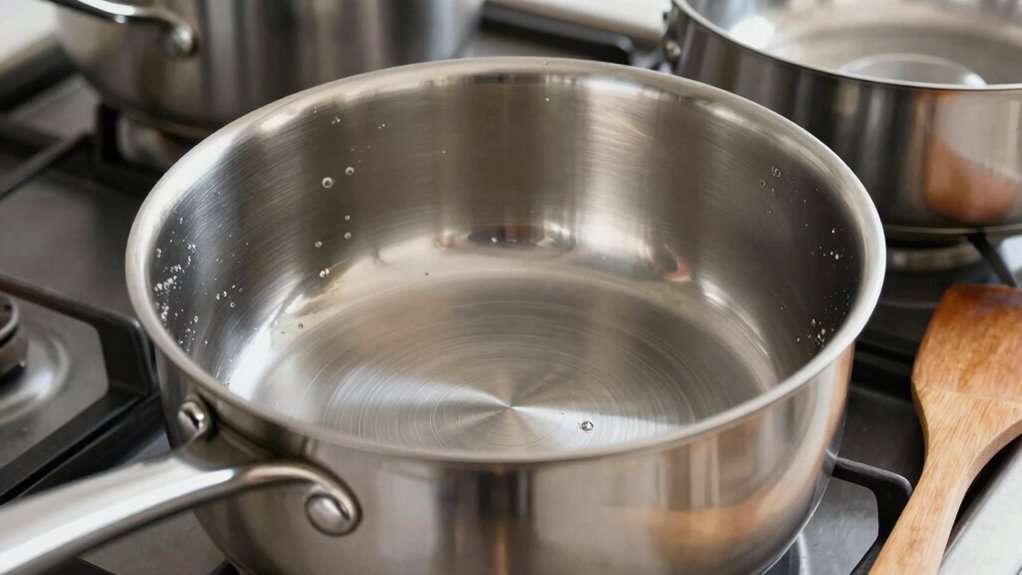
Stainless steel cookware can be prone to sticking, especially when cooking delicate foods or at high temperatures. In these cases, using special techniques or tools can make a difference. For example, understanding thermal expansion helps you heat the pan gradually to prevent hotspots that cause sticking. Choosing the right utensil—like a silicone or wooden spatula—can also reduce sticking and scratching. You should consider special techniques when:
Using proper techniques and tools prevents sticking and protects your stainless steel cookware.
- Cooking delicate foods like eggs or fish
- Searing at very high temperatures
- Trying to avoid sticking during deglazing
- Using thinner or cheaper stainless steel pans
- Noticing uneven heating due to poor cookware quality
Employing these tools and techniques ensures better results, minimizes food sticking, and prolongs your cookware’s lifespan.
What to Do When Food Still Sticks? Troubleshooting Tips
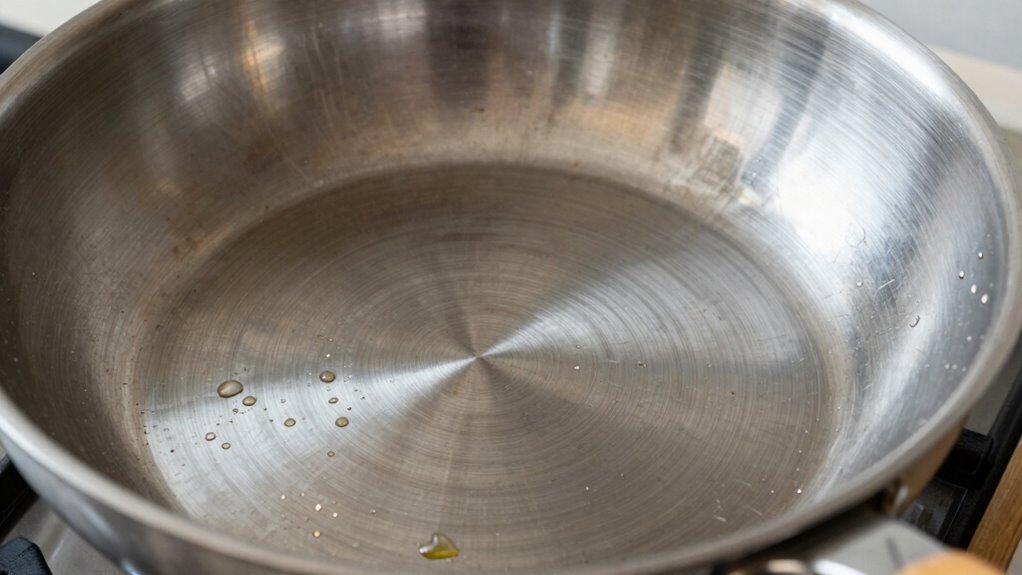
Even with the right techniques and tools, sometimes food still sticks to the pan. If you’re pan searing a steak or trying to prevent sauce sticking, don’t panic. First, remove the pan from heat and let it cool slightly before attempting to lift the food. If the food is stuck, add a little hot water or broth to loosen it up and gently scrape with a non-abrasive tool. Reheat the pan gradually to help release any stubborn bits. For sauce sticking, consider adding a splash of vinegar or wine to deglaze the pan, which also enhances flavor. Proper pan care and maintenance can help prevent sticking issues in the future. These troubleshooting tips help prevent damage to your stainless steel cookware while ensuring your food releases more easily during cooking.
Frequently Asked Questions
Can Type or Grade of Stainless Steel Affect Sticking Issues?
Yes, the type or grade of stainless steel affects sticking issues. Different stainless steel compositions, like 304 or 316, contain varying alloy types that influence heat distribution and surface smoothness. Higher-quality alloys often have better non-stick properties because they resist warping and create a more even cooking surface. Choosing cookware with the right alloy types can reduce food sticking, making cooking and cleaning easier.
Does the Shape or Size of Cookware Influence Food Sticking?
Think of your cookware as a dance partner; the shape and size set the rhythm. Smaller pans heat faster but may cause food to stick if not handled properly, while larger ones provide space but can cool unevenly. Ergonomics and surface texture considerations influence how evenly heat spreads and how food interacts with the surface. Choose the right size and shape to match your cooking style, reducing sticking and ensuring a smooth performance.
Are There Specific Foods More Prone to Sticking in Stainless Steel?
Certain foods, like season-specific vegetables or fish, are more prone to sticking in stainless steel cookware, especially if not cooked properly. Sticky sauces, such as caramel or thick reductions, can also cling to the surface. To prevent this, guarantee your pan is properly preheated, use enough oil, and avoid overcrowding. These steps help create a non-stick effect, making your cooking experience smoother and your cleanup easier.
How Does Altitude or Humidity Impact Sticking During Cooking?
Imagine a humid kitchen where moisture clings to everything, making your food more prone to sticking. Humidity effects can make stainless steel surfaces slightly more sticky because moisture creates a thin film, reducing the non-stick effect. Similarly, at higher altitudes, reduced air pressure can alter boiling points and cooking times, subtly influencing how food interacts with the pan. Both factors can increase sticking if you don’t adjust your cooking approach.
Can Adding Water or Broth During Cooking Reduce Sticking?
Adding water or broth during cooking can help reduce sticking, especially when combined with proper seasoning techniques and heat adjustment. By introducing moisture, you create a barrier that prevents food from sticking to the pan’s surface. Adjust the heat to medium or medium-low to avoid burning, and use water or broth to keep the food moist. This approach helps maintain even cooking and minimizes sticking without sacrificing flavor.
Conclusion
Think of your stainless steel pan as a dance partner—you need to warm up and find the right rhythm. When you master proper preheating, oil, and cleaning techniques, cooking becomes smooth sailing. I once burned dinner because I ignored these steps, but once I learned to “dance” with my pan, meals turned out perfectly every time. With patience and practice, you’ll turn sticking issues into a thing of the past, making cooking more enjoyable and less frustrating.