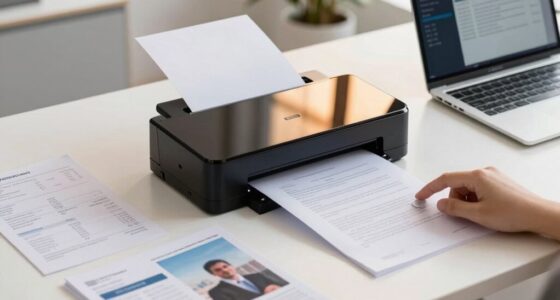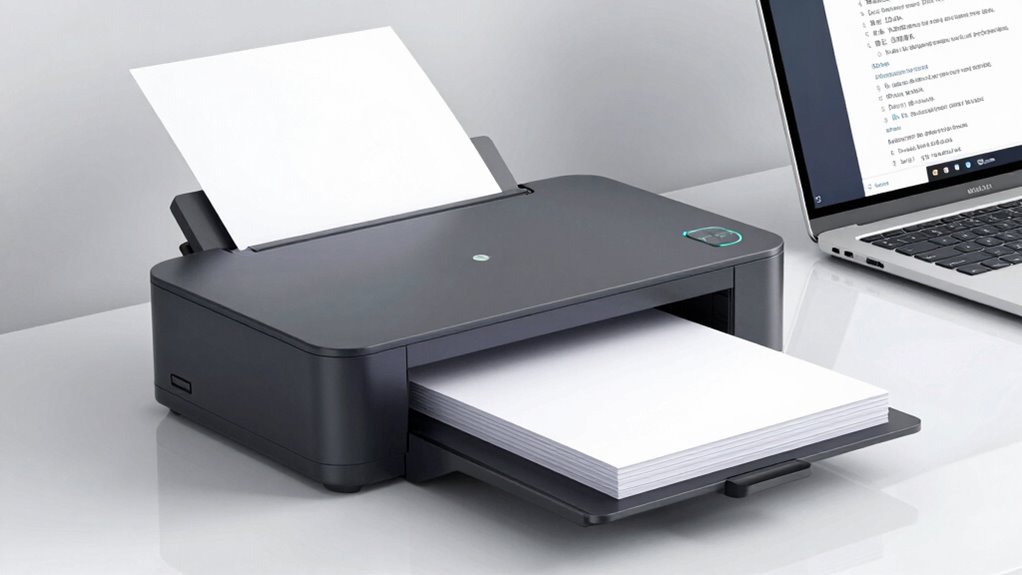

When choosing a document scanner, you’ll want to take into account speed, duplex, and OCR features. Speed is measured in pages per minute (PPM), so faster scanners handle large jobs efficiently. Duplex scanning allows automatic two-sided page scans, saving time. OCR technology converts scans into editable text, especially important for searchable documents. Balancing these features helps optimize your workflow. Keep exploring to find out how these elements work together to meet your scanning needs effectively.

Get the little things that make your day delivered free with Prime
- Fast, free delivery on millions of items
- Prime Video, Amazon Music and more included
- Member-only deals all year
Key Takeaways
- Scanner speed is measured in pages per minute (PPM), affecting workflow efficiency, especially for high-volume tasks.
- Duplex scanning enables automatic two-sided document capture, saving time and increasing productivity.
- Higher scanning resolution improves image clarity and OCR accuracy for better text recognition and editing.
- Compatibility with OCR software and quality of the software influence ease of converting images into editable text.
- Supporting various page sizes ensures versatility for different document types, streamlining the scanning process.
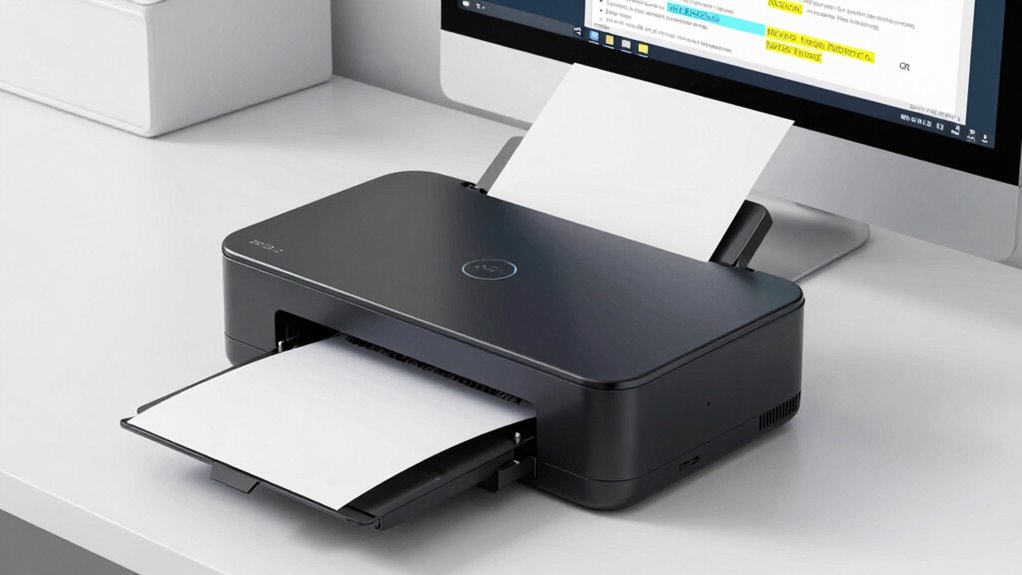
When choosing a document scanner, understanding key features like speed, duplex capability, and OCR functionality is essential. These features considerably impact how efficiently you can handle your scanning needs. One important aspect to consider is page size. Different scanners support various maximum page sizes, so you need to select one that fits your typical documents. If you often scan large documents like posters or blueprints, a scanner that accommodates larger page sizes will save you time and hassle. For everyday office tasks, standard letter or legal size support might suffice, but double-check the specifications to guarantee compatibility. Along with page size, scanning resolution plays a critical role in capturing clear, legible images. Higher scanning resolutions, measured in dots per inch (DPI), produce sharper images, especially useful for detailed documents or images that require OCR to convert into editable text. Additionally, understanding gadget features like connectivity options can influence how easily you integrate the scanner into your existing workflow. Knowing the scanning technology used in a device can also help you determine its compatibility with various file formats and software. Speed is another essential factor, especially if you handle high volumes of documents. Scanner speed is usually measured in pages per minute (PPM). If you regularly scan hundreds of pages, opting for a model with a faster PPM rating helps keep your workflow smooth. Keep in mind that speed can vary depending on the complexity of the scan—simple black-and-white pages are processed faster than color or double-sided scans. Duplex capability, which allows the scanner to automatically scan both sides of a page in a single pass, greatly enhances efficiency. If you frequently scan double-sided documents, a duplex scanner reduces your workload and speeds up the process without sacrificing quality. OCR (Optical Character Recognition) functionality is equally essential if you want to convert scanned images into editable text. A scanner with good OCR capabilities can accurately recognize characters, making it easy to search, edit, or extract data from scanned documents. The quality of OCR depends on the scanning resolution; higher DPI settings generally improve recognition accuracy. When evaluating scanners, consider both the OCR software included and its compatibility with your preferred applications. Additionally, scanning speed can be affected by factors such as document complexity and the scanner’s processing power, so understanding these variables helps you choose the right device. Incorporating advanced features, such as automatic document feeders or cloud connectivity, can further streamline your workflow. It’s also helpful to look into maintenance and support options, as these can influence the overall longevity and reliability of your scanner. Balancing these features—page size support, scanning resolution, speed, duplex, and OCR—helps guarantee you select a scanner that meets your needs today and scales for future demands. Whether you’re digitizing a handful of documents or managing a high-volume workflow, understanding these basics helps you make an informed decision, saving time and improving productivity in the long run.
Products Worth Considering

Levoit Core 600S-P Smart Air Purifier for Large Rooms

Shark Navigator Robot Vacuum with 30-Day Self-Empty Base, White (AV2110S)

Ring Battery Doorbell Plus (2nd Gen) and Indoor Cam Plus Bundle, Nickel Silver and White
As an affiliate, we earn on qualifying purchases.
Frequently Asked Questions
How Does Scanner Speed Affect Overall Workflow Efficiency?
You’ll notice that faster scanner speeds directly improve your workflow efficiency by speeding up document organization and reducing bottlenecks. When your scanner operates swiftly, you spend less time waiting and more time on other tasks. Plus, good scanner ergonomics minimizes strain during prolonged use, keeping you productive. Overall, a higher scanner speed combined with ergonomic design streamlines your process, making document management smoother and more efficient.
What Are the Limitations of Duplex Scanning Technology?
Duplex scanning isn’t perfect; it has limitations that can surprise you. You might encounter issues with duplex limitations, especially when scanning fragile or uneven pages, which can compromise scanning accuracy. Sometimes, the technology struggles with certain paper types or double-sided documents, leading to misaligned images or missed data. These challenges can slow your workflow unexpectedly, making it essential to understand these limits and choose your scanner accordingly.
Can OCR Accurately Recognize Handwriting?
OCR can struggle with handwriting recognition because of its limitations, especially with cursive or messy writing. While some advanced OCR systems are improving, they still may not accurately interpret all handwriting styles. You might find that OCR works well with printed text, but for handwriting, it can misread characters or produce errors. So, if you need precise results, manual review remains essential due to OCR limitations in recognizing handwriting.
How Do Different Scanner Speeds Impact Large-Volume Scanning Projects?
Higher scanner speeds greatly boost your large-volume scanning projects by increasing scanning throughput. With high-speed scanners, you can process more documents in less time, reducing bottlenecks and improving efficiency. This benefit is especially vital when handling bulk jobs, as faster speeds help you meet tight deadlines. However, make sure the scanner maintains quality at high speeds to avoid compromising accuracy, especially when using OCR for digitization.
What Are Common OCR Errors and How Can They Be Minimized?
Common OCR errors include misread characters, such as confusing ‘0’ with ‘O’ or ‘1’ with ‘l’, which can hinder accurate text recognition and digital storage. To minimize these issues, guarantee high-quality scans, correct lighting, and proper alignment. Using OCR software with advanced algorithms improves accuracy, reducing errors. Regularly proofreading and editing your digital files also helps catch mistakes, ensuring your stored data remains reliable and easy to search.
Conclusion
Understanding scanner speed, duplex, and OCR basics is like having the keys to a well-oiled machine. With this knowledge, you can navigate your document needs smoothly and efficiently, avoiding bottlenecks and errors. Think of these features as the gears that keep your scanning process running seamlessly. Mastering them empowers you to optimize your workflow, turning what once felt like a tangled web into a straight path of productivity.