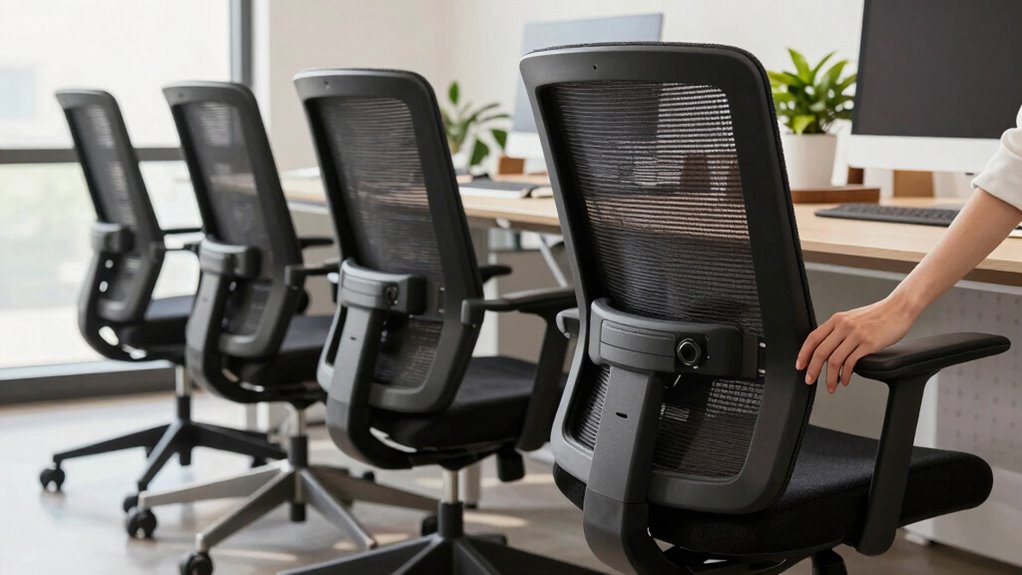

To choose the right ergonomic office chair, start by evaluating your body’s measurements for height and weight distribution. Look for key features like adjustable seat height, lumbar support, and armrests. Test different styles to find one that feels comfortable for long hours. Set a budget, prioritizing critical features that enhance support. Don’t forget to take into account materials that suit your comfort needs. Want to know more about finding the perfect fit? There’s plenty to explore!
Key Takeaways
- Measure your height and weight to ensure proper chair alignment and support for your body type.
- Look for adjustable features like seat height, armrests, and lumbar support to customize comfort.
- Choose materials that balance durability and breathability, such as mesh or high-density foam padding.
- Set a budget and prioritize essential ergonomic features to maximize value and comfort.
- Test the chair in person to assess adjustments, stability, and overall fit for your workspace.

Ergonomic Office Chair with Adjustable Lumbar Support, 3D Arms and Headrest, High Back Wide Desk Computer Chair with Wheels, for Home & Office, Black
Large & Non-Deformable Cushion: Made from 4.33" thick, high-density shaped sponge, this wide comfy cushion resists sagging and…
As an affiliate, we earn on qualifying purchases.
As an affiliate, we earn on qualifying purchases.
Why Ergonomics Matter in the Workplace
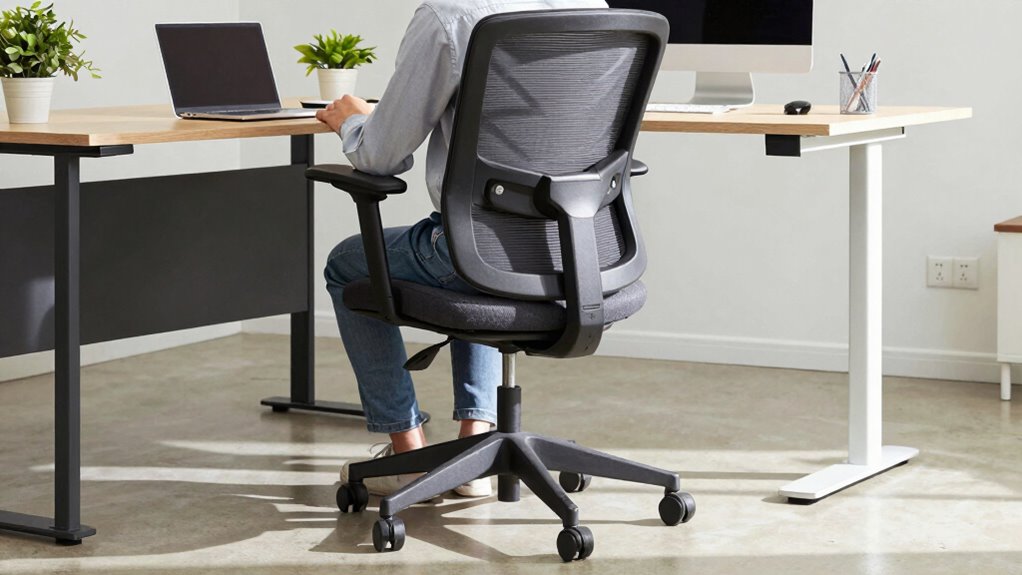
When you think about your work environment, it’s easy to overlook the impact of ergonomics on your health and productivity. Poor ergonomics can lead to discomfort, fatigue, and even chronic pain, which can greatly hinder your office productivity. By prioritizing ergonomic principles, you’re not just enhancing your comfort; you’re also promoting better employee health. A well-designed workspace encourages proper posture, reduces strain, and minimizes distractions, allowing you to focus on your tasks. Investing in ergonomic solutions can lead to fewer sick days, increased morale, and higher efficiency. Remember, when you feel good at work, you perform better. So, take a moment to assess your setup and see how small adjustments can make a big difference in your daily routine. Incorporating ergonomic principles into your workspace can also help prevent long-term musculoskeletal issues.

NEO Chair Office Desk Gaming Chair Computer High Back Mesh Seat with Rolling Wheels Ergonomic Adjustable Comfy Flip-up Armrests Lumbar Support Height for Home (Black)
All-Day Ease – Breathable mesh backrest provides targeted lower back support, encouraging healthy posture and lasting comfort through…
As an affiliate, we earn on qualifying purchases.
As an affiliate, we earn on qualifying purchases.
Key Features to Look for in an Ergonomic Chair
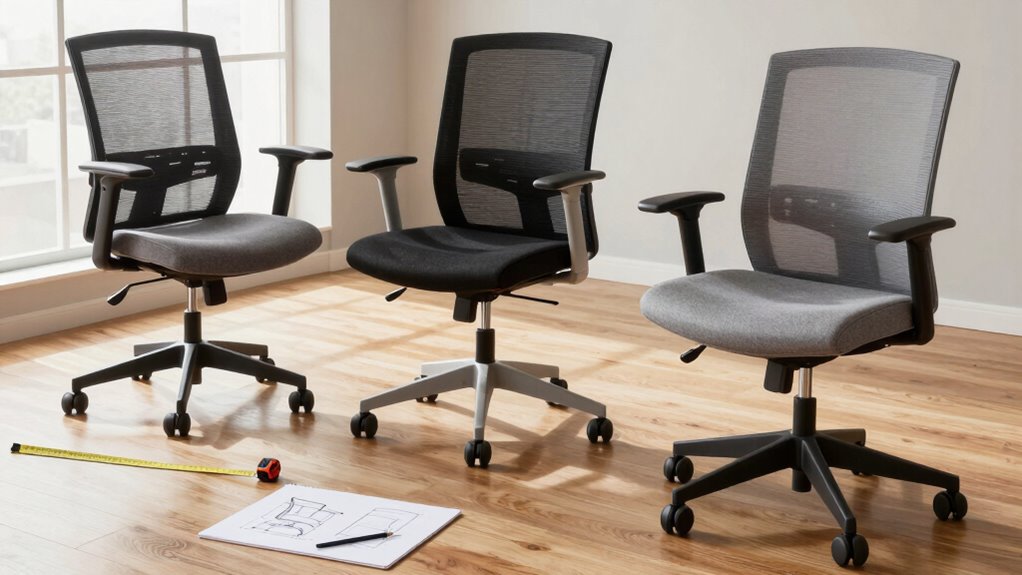
A key element of creating a comfortable and productive workspace is choosing the right ergonomic chair. Look for a chair that offers adjustable seat depth, allowing you to position it correctly according to your leg length. This feature helps maintain proper posture and prevents discomfort during long hours of sitting. Additionally, lumbar support is essential; it should conform to the natural curve of your lower back. Your chair should allow you to adjust the lumbar support to fit your needs, ensuring your spine stays aligned. Other important features include adjustable armrests and a seat height that accommodates your desk. By focusing on these key elements, you can enhance your comfort and productivity while working. Incorporating ergonomic design principles can further optimize your workspace and reduce strain. Considering adjustability features can also help tailor the chair to your unique body shape and preferences, promoting better posture alignment and long-term comfort. Paying attention to proper chair maintenance can extend the lifespan of your chair and maintain its ergonomic benefits over time. Additionally, selecting a chair with breathable materials can improve airflow and keep you cooler during extended periods of use.

HOLLUDLE Ergonomic Mesh Office Chair – 3D Adjustable Lumbar Support & 3D Armrests, V-Shaped Back, Adjustable Desk Chair for Office & Home, Black
[Advanced 3D Lumbar Support] Customize your comfort with Holludle's unique 3D lumbar support. Adjust it up, down, forward,…
As an affiliate, we earn on qualifying purchases.
As an affiliate, we earn on qualifying purchases.
Comparing Various Ergonomic Chair Styles: Pros and Cons
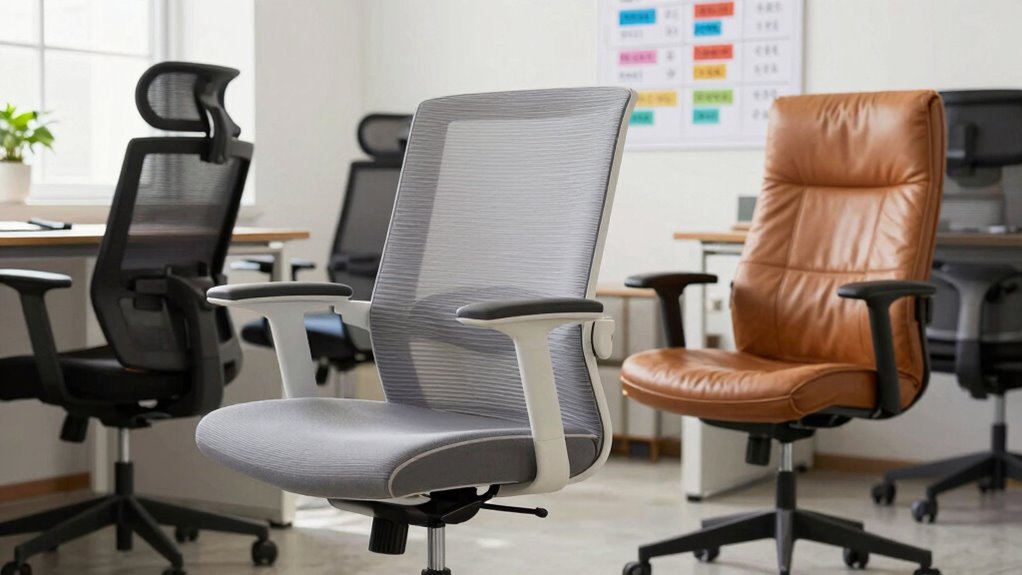
Choosing the right ergonomic chair style can markedly impact your comfort and productivity. Mesh chairs offer breathability, keeping you cool, while executive chairs provide ample cushioning and support for long hours. Kneeling chairs promote active sitting, engaging your core but may not suit everyone’s preference. Saddle chairs encourage good posture and can be great for short tasks. Gaming chairs combine comfort with style, but they may lack adjustability for long-term use. Task chairs are versatile and functional, perfect for various work environments. If you’re using standing desks, consider a chair that allows quick shifts. Additionally, understanding ergonomic design principles can help you select a chair that minimizes strain and enhances overall comfort. Familiarizing yourself with adjustability features can further ensure your chair accommodates your body and work habits effectively. Incorporating smart home technology such as ergonomic accessories or adjustable components can optimize your workspace setup. Considering office ergonomics can also help prevent discomfort and improve your overall workspace setup. Being aware of ergonomic standards can guide you in choosing a chair that aligns with best practices for health and comfort. Each chair has its pros and cons, so think about your needs and workspace before making a final choice.

Ergonomic Office Chair with Footrest – Adjustable Lumbar Support & Headrest, 90-160° Reclining Mesh Back Computer Chair – Home Office/Gaming, 350lbs Capacity
This is more than a chair; it's a personalized comfort zone for work, rest, and play. We've meticulously…
As an affiliate, we earn on qualifying purchases.
As an affiliate, we earn on qualifying purchases.
How to Measure Your Body for the Perfect Chair Fit
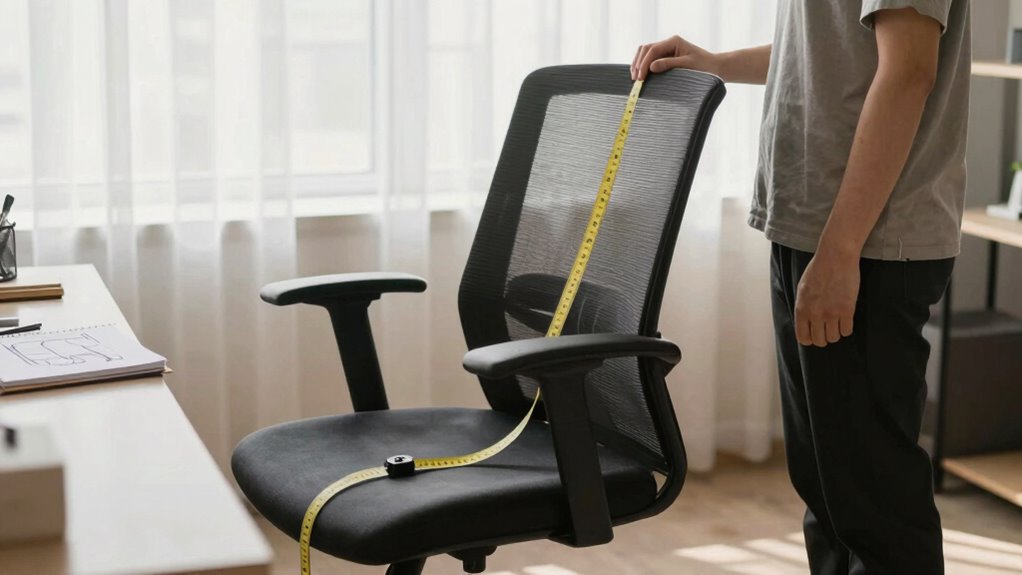
To find the perfect ergonomic chair, you first need to determine your height range. Knowing your weight distribution also plays a key role in ensuring the chair supports you properly. With these measurements, you’ll be on your way to a comfortable and productive seating experience. Additionally, understanding ergonomic principles can help you select a chair that promotes healthier posture and reduces discomfort during long work sessions. Considering factors like microplastics in dust and air quality can also contribute to a healthier office environment, enhancing overall well-being.
Determine Your Height Range
Finding the right ergonomic office chair starts with knowing your height range, which can greatly impact comfort and support. Accurate height measurement guarantees your chair aligns with your body, enhancing chair compatibility and reducing strain. To determine your height range, measure yourself standing straight against a wall, marking your height on the wall for reference. Knowing your body measurements ensures you select an ergonomic chair that provides optimal lumbar support and proper seat height for long-term comfort.
Assess Your Weight Distribution
While height plays an essential role in selecting an ergonomic chair, evaluating your weight distribution is equally important for achieving ideal comfort and support. Your weight affects how your body aligns with the chair, impacting your posture during long hours of sitting. Here’s how to assess your weight distribution effectively:
- Sit on a flat surface to gauge how your weight is distributed across your hips and thighs.
- Notice if you lean more to one side; this can affect body alignment.
- Check if the chair’s seat pan supports your weight evenly.
- Consider adjustable features that accommodate your unique weight distribution.
Why Adjustability Matters in Your Office Chair
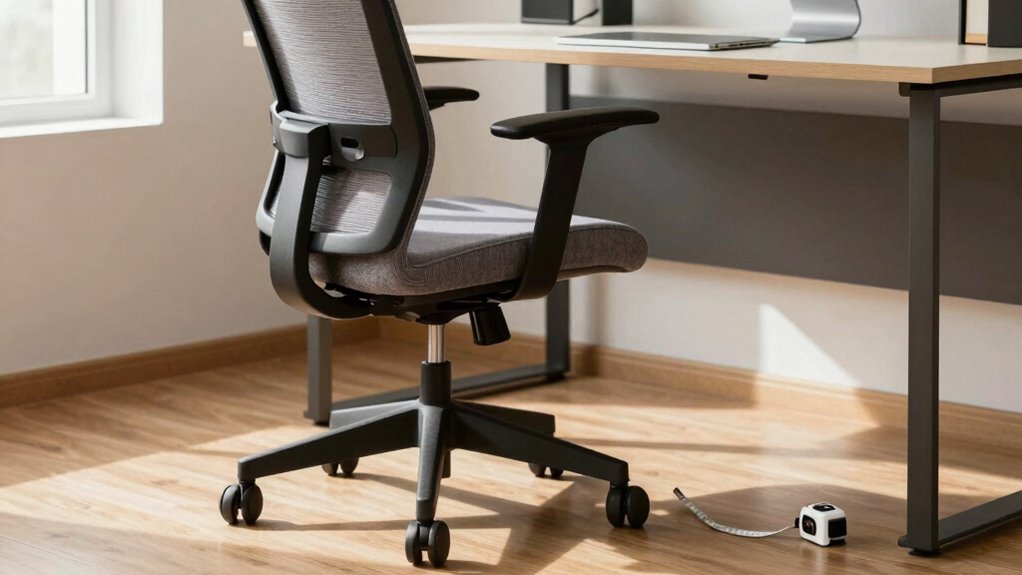
When it comes to your office chair, adjustability is key to enhancing your comfort levels throughout the day. You’ll find that a chair that fits your unique body shape helps support better posture, reducing strain on your back and neck. Investing in an adjustable chair means you can tailor it to your needs, promoting a healthier work environment. Additionally, ergonomic design principles ensure that your chair supports natural body alignment, minimizing discomfort during long hours of work.
Enhanced Comfort Levels
Choosing an ergonomic office chair isn’t just about aesthetics; it directly impacts your comfort and productivity. When you prioritize adjustability, you can create customized settings that cater to your personal preferences. This flexibility allows you to tailor the chair to your unique needs, enhancing your overall experience. Being aware of smart programming principles can help you develop routines that maximize your chair’s benefits and support long-term comfort. Here are some key features to take into account for enhanced comfort levels:
- Seat Height: Adjust to your leg length for ideal support.
- Armrest Height: Set them to reduce shoulder strain.
- Backrest Angle: Customize to fit your spine’s natural curve.
- Lumbar Support: Confirm it aligns with your lower back for better comfort.
Additionally, understanding ergonomic design can aid you in selecting features that promote better posture and reduce fatigue, ensuring sustained comfort during long work sessions. Incorporating adjustability features into your chair can help you make quick changes throughout the day, maintaining comfort and focus. Recognizing the importance of personalized fit can further improve your seating experience, allowing for a truly ergonomic setup that adapts to your movements. With these adjustments, you’ll find yourself more comfortable, focused, and productive throughout the day.
Improved Posture Support
Adjustability in your office chair not only boosts comfort but also plays an important role in supporting proper posture. When you can modify features like lumbar support and seat depth, it enables you to find the best position that aligns your spine and reduces strain. Poor posture can lead to discomfort and long-term health issues, so having a chair that adapts to your body’s needs is essential.
| Feature | Importance |
|---|---|
| Lumbar Support | Reduces lower back strain |
| Seat Depth | Supports thigh comfort |
| Armrest Height | Prevents shoulder tension |
| Backrest Angle | Encourages proper spine alignment |
| Seat Height | Keeps feet flat on the ground |
Choose a chair that fits you well, and you’ll notice the difference in your posture!
Choosing Ergonomic Chair Materials: Comfort vs. Durability
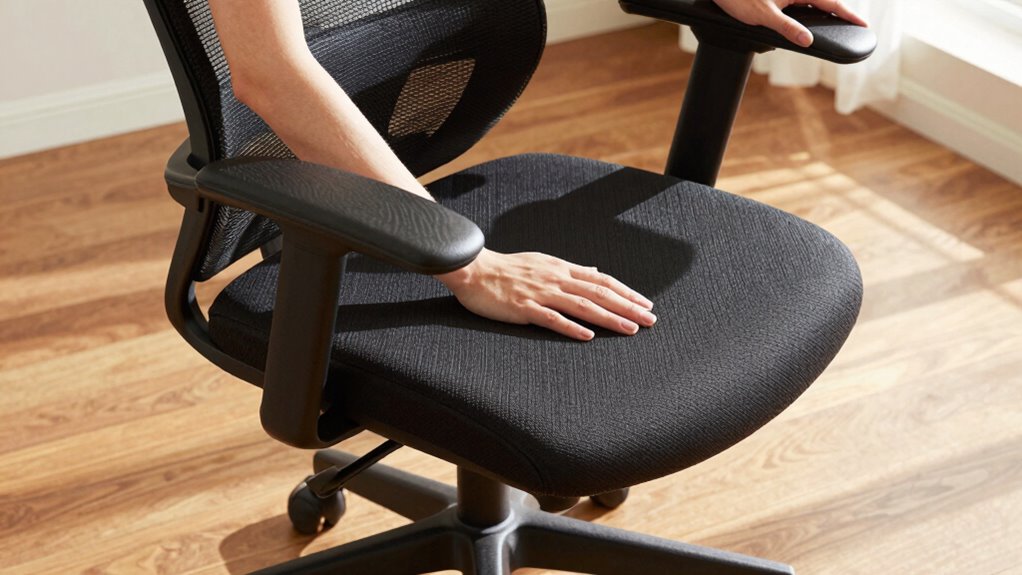
While comfort often takes precedence when selecting an ergonomic office chair, the materials used play a significant role in balancing that comfort with long-lasting durability. Different material types can affect how your chair feels and holds up over time. Here are some key points to take into account:
- Fabric: Soft and breathable, great for short-term comfort but may wear quickly.
- Mesh: Provides excellent airflow and flexibility, maintaining comfort during long hours.
- Leather: Offers a luxurious feel and durability but can be less breathable.
- Foam Padding: Guarantees a comfortable sit, but it’s essential to choose high-density options for durability.
How to Set a Budget for Your Ergonomic Chair
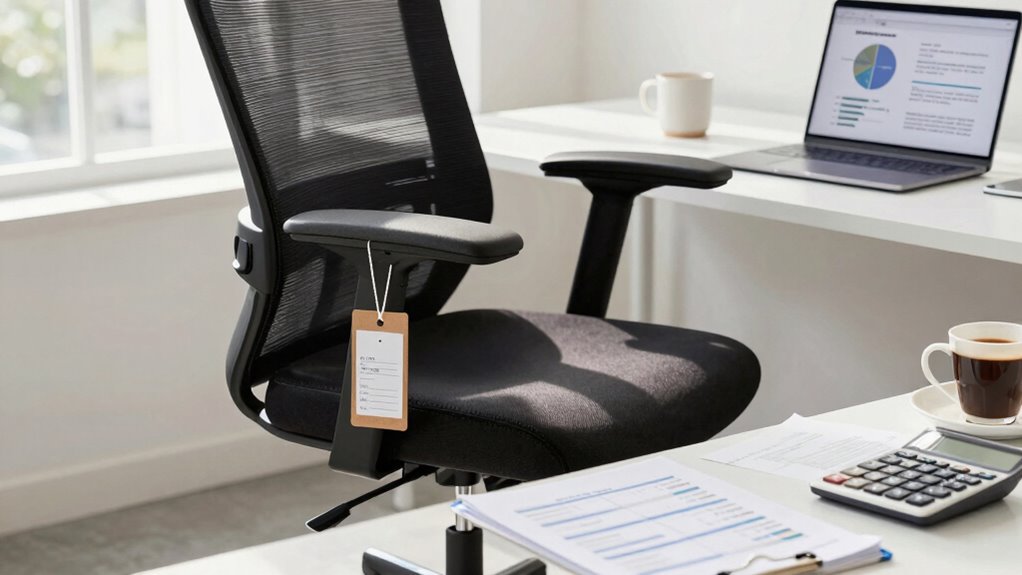
Selecting the right materials for your ergonomic chair is just the first step; setting a budget is equally important to guarantee you get the best value for your investment. Start by determining your maximum spend limit, keeping in mind your specific needs and preferences. Factor in budget considerations like features that enhance comfort and support, as these often justify a higher price. Conduct cost comparisons across different brands and models to find a chair that meets your requirements without breaking the bank. Remember, investing in a quality ergonomic chair can save you money in healthcare costs down the line. Prioritize what’s essential for your comfort, so you can enjoy a productive workspace without overspending.
Where to Find Ergonomic Chairs: Online vs. In-Store
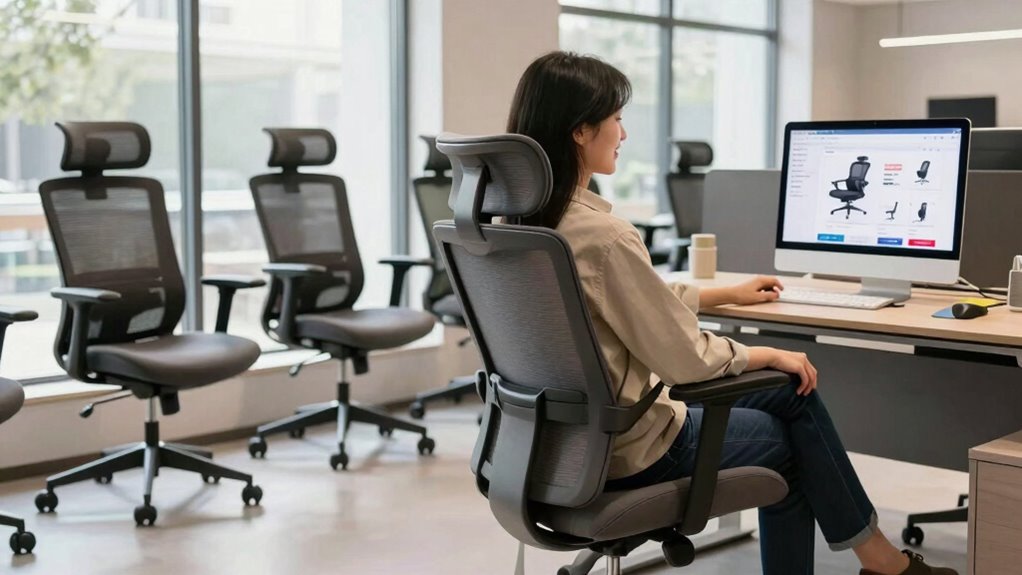
When you’re ready to search for the perfect ergonomic chair, deciding between online shopping and visiting a store can greatly impact your experience. Each option has its benefits, so consider what matters most to you.
- Online retailers often provide a wider selection and better pricing.
- You can read reviews and compare features easily from the comfort of your home.
- Local showrooms allow you to physically test the chair for comfort and fit.
- Sales staff can offer personalized advice based on your specific needs.
Ultimately, think about convenience versus hands-on experience. Whether you choose to explore online or head to a local showroom, make sure it aligns with your preferences and requirements for the best ergonomic chair.
How to Test an Ergonomic Chair Before You Buy?
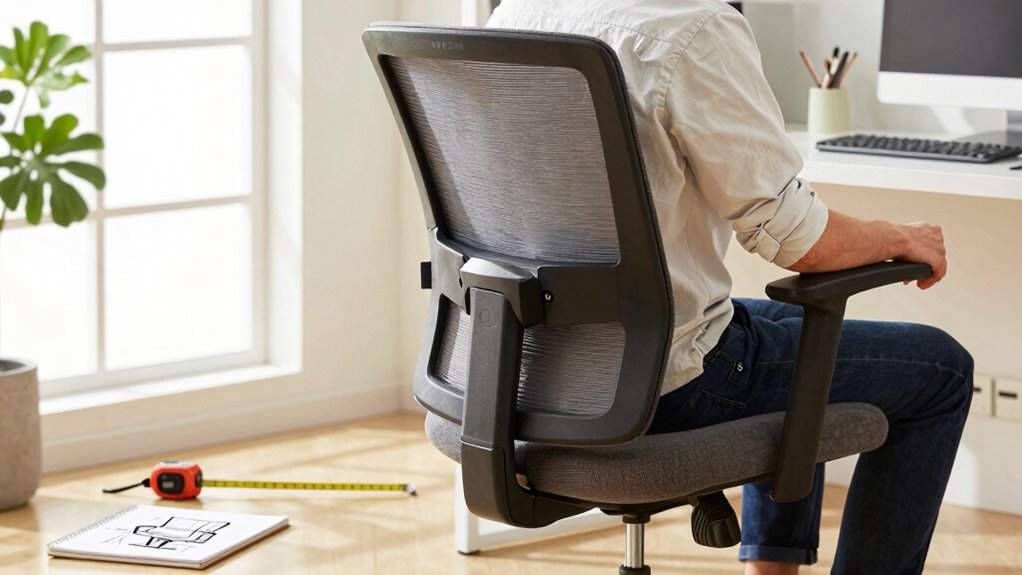
When testing an ergonomic chair, focus on adjustability and comfort to guarantee it meets your specific needs. Sit down and make any necessary adjustments to find the right height and support. Don’t forget to check for stability to make certain the chair feels secure while you work.
Adjustability and Comfort
Before committing to an ergonomic office chair, it’s essential to test its adjustability and comfort to guarantee it meets your needs. Here’s what you should pay attention to:
- Seat depth: Make sure you can sit back comfortably without feeling cramped.
- Lumbar support: Check if it supports your lower back properly, reducing strain during long hours.
- Height adjustment: Verify the chair can be easily adjusted to fit your desk height.
- Armrest position: Test if the armrests can be adjusted to keep your arms relaxed and shoulders at ease.
Support and Stability Test
To guarantee an ergonomic chair provides the necessary support and stability, you should conduct a few simple tests during your shopping experience. First, sit in the chair and adjust it to find the ideal height. Check the support mechanisms by ensuring your feet rest flat on the floor and your knees are at a 90-degree angle. Next, lean back and test the lumbar support. It should fit the curve of your lower back comfortably. Finally, assess the stability features by gently rocking the chair side to side; it should feel steady without wobbling. If it meets these criteria, you’re likely looking at a chair that will support you well during long hours of work.
Maintaining Your Ergonomic Chair for Longevity
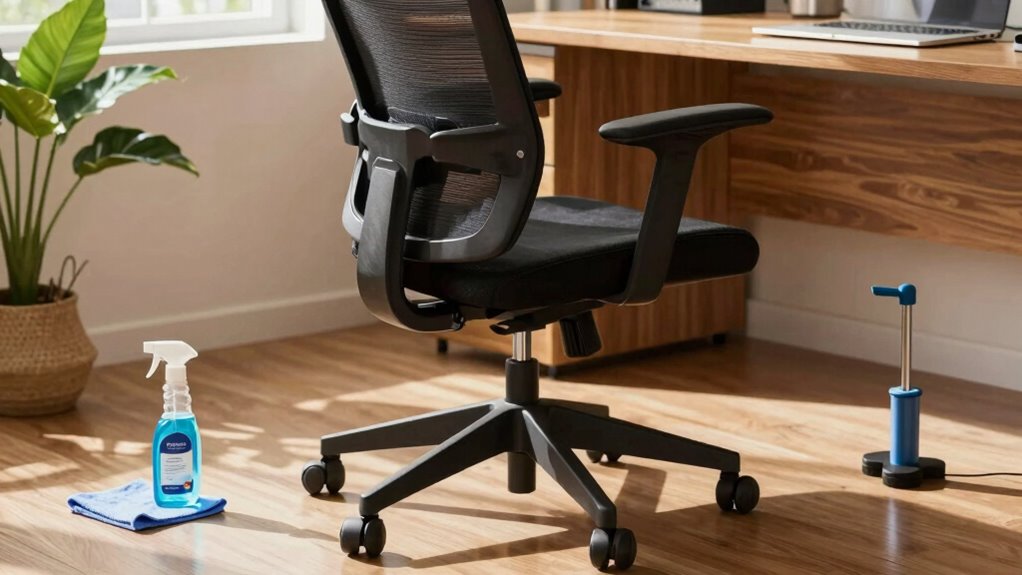
Although investing in an ergonomic chair can greatly enhance your comfort and productivity, neglecting its maintenance can lead to premature wear and tear. To guarantee your chair lasts, establish a regular maintenance schedule and follow effective cleaning techniques.
- Wipe down surfaces weekly with a damp cloth to remove dust and grime.
- Check and tighten screws or bolts every few months to maintain stability.
- Inspect the wheels and casters for debris and clean them as needed.
- Rotate and adjust the chair’s settings periodically to prevent uneven wear.
Frequently Asked Questions
What Are the Health Benefits of Using an Ergonomic Chair?
Using an ergonomic chair offers significant health benefits. You’ll notice improved posture, which reduces strain on your back and neck, helping you feel more comfortable throughout the day. This comfort translates to increased productivity, as you can focus better without discomfort distracting you. Plus, ergonomic chairs often provide better lumbar support, promoting healthier sitting habits and reducing the risk of chronic pain. Overall, investing in an ergonomic chair can enhance your well-being at work.
Can Ergonomic Chairs Help With Existing Back Pain?
If you’re looking for pain relief, ergonomic chairs can definitely help with existing back pain. By supporting your spine and promoting posture improvement, these chairs encourage healthier sitting habits. You’ll find that when you sit correctly, your back feels a lot better, and you can tackle tasks with ease. Don’t let discomfort hold you back; investing in an ergonomic chair might be just what you need to get back on track.
How Long Should I Expect My Ergonomic Chair to Last?
You can expect your ergonomic chair to last anywhere from five to ten years, depending on several durability factors. High-quality materials and construction typically enhance chair longevity. If you’re using it daily, consider how often you adjust it and the weight it supports. Regular maintenance can also extend its life. So, invest in a chair that meets your needs and maintains comfort to guarantee it serves you well for years to come.
Are There Ergonomic Chairs Specifically Designed for Short Individuals?
Yes, there are ergonomic chairs specifically designed for short individuals. You’ll find plenty of short chair options that cater to your needs. Look for chairs with adjustable features like seat height and lumbar support to guarantee proper alignment and comfort. These adjustments help you find the perfect fit, allowing you to maintain good posture while working. Investing in a chair tailored to your height can greatly improve your overall workspace experience.
What Is the Return Policy for Ergonomic Chairs?
Most ergonomic chairs come with a return policy ranging from 30 to 90 days, giving you a chance to test it out. Did you know that nearly 30% of office workers experience discomfort due to poor seating? Before you buy, check the chair warranty—some brands offer extended coverage that can include returns if you’re not satisfied. Always read the fine print to guarantee you know what’s covered and for how long.
Conclusion
Investing in an ergonomic office chair can dramatically improve your comfort and productivity. Did you know that a staggering 80% of people experience back pain at some point in their lives? By choosing the right chair, you can be part of the solution, creating a workspace that supports your body and keeps you focused. Remember, it’s not just about style; it’s about finding the perfect fit for your health and well-being as you work.