

TL;DR

Get the little things that make your day delivered free with Prime
- Fast, free delivery on millions of items
- Prime Video, Amazon Music and more included
- Member-only deals all year
This article explains how a video can become a full publishing kit without using the cloud. It covers the workflow, outputs, and benefits of local control. Perfect for creators prioritizing privacy and independence.
Imagine transforming a single raw video into a full suite of publish-ready assets—titles, descriptions, clips, social posts—without ever touching a cloud-based server. It’s a game-changer for anyone who values privacy, control, and offline operation. In this article, you’ll learn how a local publishing workflow can handle everything, from ingestion to distribution, all on your own hardware.
We’ll explore how this approach works, what it produces, and why it might be the right choice for creators, educators, and teams with strict compliance or security needs. Get ready to see how one video can turn into a complete publishing kit—no cloud required.
Key Takeaways
- A local workflow turns a single video into a complete publishing kit—titles, clips, posts, and URLs—without depending on the cloud.
- It offers maximum privacy, control, and offline operation—ideal for sensitive or remote projects.
- The process involves automated analysis (transcription, scene detection, OCR) to generate tailored assets for each platform.
- Tradeoffs include setup complexity and scalability limits, but for many, control outweighs convenience.
- This setup is perfect for internal teams, regulated industries, or creators prioritizing security over collaboration.
As an affiliate, we earn on qualifying purchases.
What does a ‘cloud-free’ workflow really mean?
“Cloud-free” means handling all your media processing and publishing locally—on your own machine or server—without relying on third-party cloud services. This setup keeps your data private, reduces dependency on internet access, and gives you full control over every step. For more insights, see home automation and smart tech reviews. For example, instead of uploading your raw footage to a web platform, you insert your video into your local system, which then handles all tasks internally.
Take a filmmaker working in a remote area. They can edit, package, and distribute videos without ever connecting to the internet. All processing happens on their laptop or local server, ensuring security and speed. This setup is especially useful for sensitive content or environments with limited connectivity.
While the concept sounds straightforward, the implications are significant. By processing everything locally, creators avoid data exposure to third parties, reducing risks of leaks or hacking. However, this also means relying on your own hardware capabilities; if your system isn’t powerful enough, processing times may increase, and scalability can become a concern. The tradeoff is between total control and the convenience of cloud scalability. For many, especially those handling sensitive or proprietary content, the security and privacy benefits outweigh these limitations.

As an affiliate, we earn on qualifying purchases.
How a local publishing system turns one video into everything you need
Here’s how it works in practice. You start by dropping a video file or pasting a link into your local system. Then, a series of automated processes analyze the video—transcribing speech, detecting scene changes, reading on-screen text, and understanding the content.
Within minutes, the system generates a complete package: a catchy title, description, social snippets, clips for TikTok or Reels, and even blog drafts. Each asset is tailored for specific platforms, all created without external cloud services. Think of it as a factory that turns raw footage into a multi-channel campaign, right on your own hardware.
This automation is powerful but also comes with tradeoffs. Learn more about tools and equipment for content creators. The algorithms need to be sophisticated enough to analyze content accurately, which can require substantial local processing power. Additionally, the system’s ability to adapt to new formats or languages depends on the quality of its models and updates—something that might be easier to manage in cloud-based environments. Nonetheless, the benefit of having everything on your own hardware provides unmatched control, especially when dealing with sensitive or proprietary content. This approach empowers creators to maintain full oversight of their assets without external dependencies, making it a compelling choice for those prioritizing security and independence.
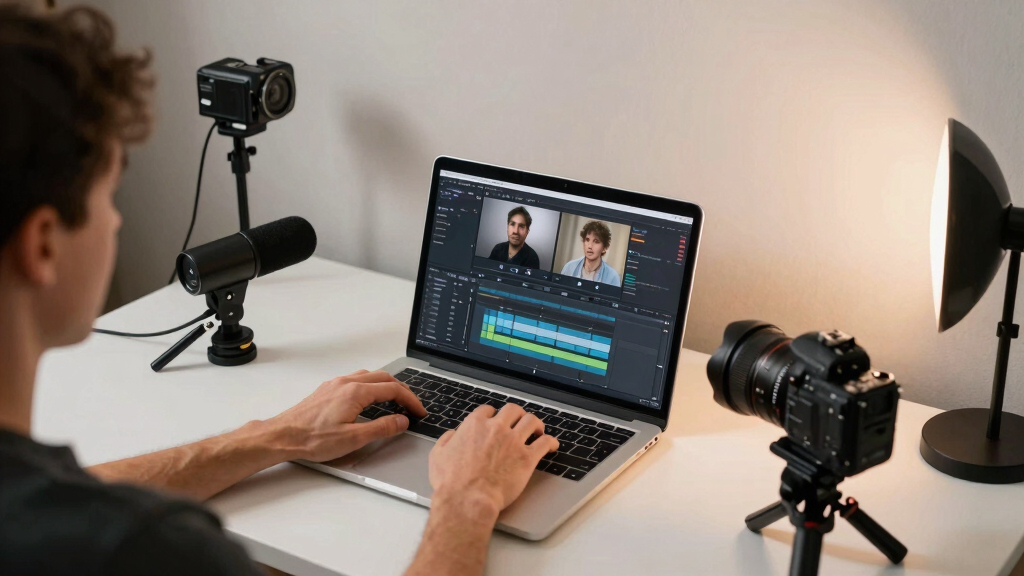
privacy-focused video editing hardware
As an affiliate, we earn on qualifying purchases.
As an affiliate, we earn on qualifying purchases.
What assets can you generate from a single upload?
From one video, you get a full set of publish-ready assets. Here’s a quick comparison:
| Asset Type | What It Includes |
|---|---|
| Titles & Descriptions | Multiple options scored by relevance and length, ready to copy and tweak |
| Clips & Shorts | High-retention moments cut and rendered as vertical videos for TikTok or Shorts |
| Thumbnails & Banners | Concepts pulled from highlight moments, optimized for each platform |
| Social Posts & Threads | Crafted posts tailored for Facebook, Twitter, Instagram, and more |
| Blog & Newsletter Drafts | Briefs, summaries, and engaging headlines |
| Embed Codes & URLs | Ready-to-publish links and embed snippets for websites |
This extensive range of assets illustrates the power of automation—transforming a single raw file into a comprehensive content package. However, it’s important to recognize that the quality and relevance of these outputs depend heavily on the sophistication of your analysis tools and your initial input. While automation accelerates content creation, it also requires careful setup and ongoing calibration to ensure outputs meet your standards. Ultimately, this capability allows creators to streamline workflows significantly, but understanding its limitations ensures you can maximize its benefits without overreliance on imperfect AI models.

video transcription and scene detection software
As an affiliate, we earn on qualifying purchases.
As an affiliate, we earn on qualifying purchases.
Why choose a local, offline workflow over cloud-based publishing?
Choosing a local system means you have total control over your data. Discover more at off-grid power and energy solutions. No risk of accidental leaks, hacking, or vendor lock-in. Plus, you can work without an internet connection—perfect for remote locations or sensitive content. For example, a government agency can process classified videos entirely offline, avoiding cloud vulnerabilities.
However, this approach may sacrifice some scalability and collaboration features. Read about top household appliances and tech to complement your setup. Cloud platforms excel at handling massive data loads, providing easy sharing, and disaster recovery. But if your priority is privacy, speed, and autonomy, a local workflow often wins. It allows you to tailor your hardware and software environment precisely to your needs, avoiding the limitations and costs associated with cloud subscriptions. The key is weighing these benefits against the potential drawbacks—namely, the need for more technical expertise, hardware investment, and manual maintenance.
For organizations or individuals whose primary concerns revolve around security, compliance, or connectivity, the advantages of a local workflow are compelling. By maintaining everything in-house, you reduce attack vectors and ensure your assets stay within your control, which is often a critical requirement in regulated industries or sensitive projects.

What are the main concerns with a no-cloud system?
Setup complexity can be intimidating. You might need some technical skill to install, configure, and maintain your local tools. Scalability is another concern—handling multiple videos or large projects might require hardware upgrades or more manual work.
For example, a small team might find it manageable, but a media house with hundreds of videos needs robust infrastructure. Also, recovery from hardware failure depends solely on your backups—no automatic cloud safety net.
Despite these challenges, many find the control and security worth the extra effort. The main tradeoff is balancing the initial investment of time and resources against the long-term benefits of autonomy. For creators or organizations willing to invest in setup and maintenance, the payoff is a resilient, secure workflow that aligns perfectly with their privacy and control priorities. Conversely, those seeking quick scalability or minimal maintenance may find cloud solutions more practical, despite their inherent tradeoffs in data sovereignty.

Best use cases for a local, cloud-free publishing kit
This approach suits situations where privacy and control matter most. Think internal corporate videos, educational content in sensitive environments, or field recordings in remote areas. For example, an NGO working in conflict zones can process and publish videos without risking data leaks or connectivity issues.
It also works well for teams needing quick turnaround times, where waiting for cloud processing isn’t feasible. Internal communications, compliance-heavy industries, or creative freelancers who want full ownership of their assets love this setup. The key is understanding that the benefits in security and control come with a tradeoff in ease of collaboration and scalability. For organizations with strict data policies or in environments where internet access is limited or unreliable, this method ensures continuous operation without dependency on external infrastructure.
Frequently Asked Questions
What does ‘without the cloud’ actually mean?
It means managing all media processing and publishing on your own hardware—your PC or local server—without uploading content to third-party cloud platforms. Everything happens offline or locally, giving you full control and privacy.
Is this a software workflow, a device, or a platform?
It’s primarily a software system—like ChannelHelm—that runs on your local machine, automating the process of turning one video into a full set of publish assets. It’s not a hardware device, but a local application.
What can one video automatically generate?
From a single video, it can produce titles, descriptions, social clips, thumbnails, blog drafts, and embed links—everything needed to publish across multiple platforms, all generated automatically by analyzing the content.
Can it produce embeds, pages, playlists, and URLs from a single upload?
Yes. A local system can generate embeddable code, dedicated pages, playlists, and URLs, all from one uploaded video, making multi-channel publishing quick and efficient without cloud reliance.
How does it work offline or on-premises?
The entire processing pipeline runs on your local hardware—no internet connection needed once set up. You can upload, analyze, package, and publish entirely offline, which is ideal for sensitive or remote projects.
Conclusion
Imagine having a full publishing factory on your own hardware—no cloud, no third-party servers, just your content and your control. That’s the promise of a local-first workflow: faster, safer, and more private. If you’re tired of relying on external platforms, this approach gives you the power to run your media operation entirely on your terms.
Next time you finish a video, ask yourself: what could I do if I had a local system that turned one file into everything I need? The future of publishing might just be a single click away—on your own machine.

NFL season / tailgating Picks
team gear
As an affiliate, we earn on qualifying purchases.