

To run a meeting that ends early, you need to clearly define your objectives and set strict time limits for each agenda item. Create a focused agenda and stick to it, ensuring discussions stay on track. Encourage all attendees to participate while quickly addressing off-topic conversations. Summarize action items effectively at the end. By fostering a culture of conciseness, you’ll make meetings more efficient. There’s plenty more to discover about optimizing your meeting strategies.

Get the little things that make your day delivered free with Prime
- Fast, free delivery on millions of items
- Prime Video, Amazon Music and more included
- Member-only deals all year
Key Takeaways
- Establish clear meeting objectives and share them in advance to keep discussions focused.
- Create a prioritized agenda with time limits for each item to ensure efficient use of time.
- Encourage concise communication and set expectations for brevity to minimize lengthy discussions.
- Actively steer conversations back on track if they drift off-topic to maintain momentum.
- Summarize action items and responsibilities at the end to ensure clarity and accountability, avoiding the need for follow-up meetings.
As an affiliate, we earn on qualifying purchases.
Define Your Meeting Objectives Clearly

Setting clear meeting objectives is like laying a solid foundation for a house; without it, everything else can crumble. You need to define your meeting purpose upfront, ensuring everyone understands why they’re gathering. When you articulate objective clarity, you guide the discussion and keep participants focused. Start by outlining the desired outcomes and share them before the meeting. This way, attendees come prepared and aligned. Encourage input from team members, fostering ownership and engagement. By having a clear purpose, you minimize off-topic conversations and distractions, ultimately leading to a more efficient meeting. Remember, when everyone knows the meeting’s objectives, you create a productive environment that respects everyone’s time, allowing you to achieve your goals swiftly and effectively.
As an affiliate, we earn on qualifying purchases.
Set Strict Time Limits for Agendas
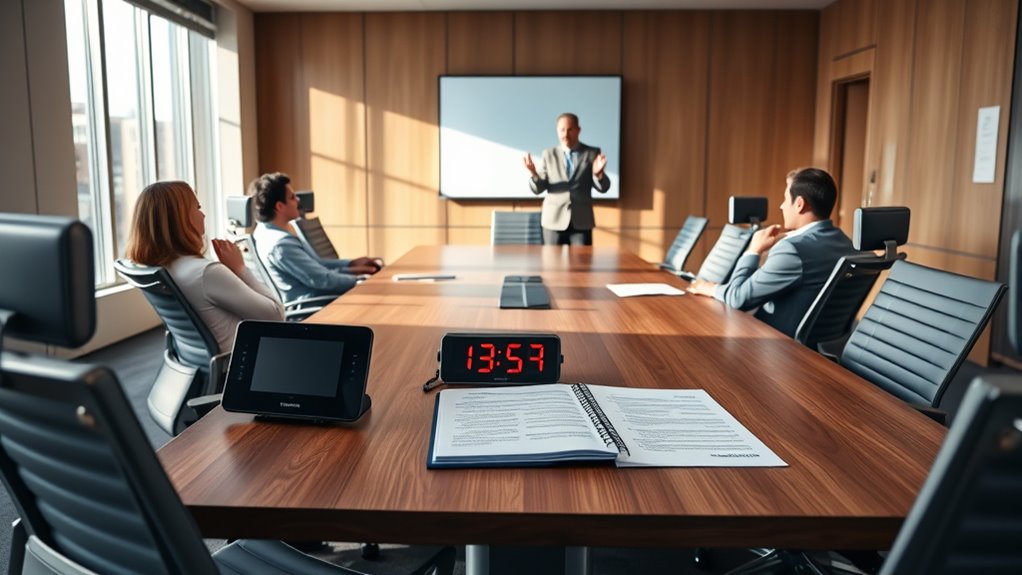
Once you’ve defined your meeting objectives clearly, it’s time to tackle the agenda. Setting strict time limits for each item is essential for maintaining focus and efficiency. Start by determining the time allocation for each agenda point based on its importance and urgency. This will help in agenda prioritization, ensuring you address the most significant issues first. Communicate these time limits to all participants, so everyone understands the necessity of staying on track. You’ll find that when you adhere to these limits, discussions remain concise and productive. If an item runs over, consider tabling it for a future meeting rather than allowing it to derail your agenda. Remember, sticking to these time constraints will lead to shorter, more effective meetings.
As an affiliate, we earn on qualifying purchases.
Create a Focused Agenda and Stick to It

To guarantee your meeting stays productive, creating a focused agenda is key. Start by determining agenda prioritization—identify the most critical topics that need discussion. This guarantees everyone knows what’s essential and what can be tabled for later. Allocate time appropriately for each item; do this by estimating how long each topic deserves based on its importance. Stick to this time allocation during your meeting to maintain momentum and prevent drift. If a discussion veers off course, gently steer it back to the agenda. Sharing the agenda in advance allows attendees to prepare, making the meeting more efficient. Clear meeting objectives help ensure everyone remains aligned throughout the session. Additionally, setting boundaries for discussion can prevent conversations from becoming too lengthy or unfocused. By following these steps, you’ll create a focused agenda that keeps your meeting on track and helps you finish early.
As an affiliate, we earn on qualifying purchases.
Encourage Attendee Participation

To keep your meeting engaging, it’s essential to foster open communication among attendees. By encouraging everyone to share their thoughts, you create a more collaborative environment. Plus, using interactive tools can enhance participation and make discussions more dynamic.
Foster Open Communication
How can you create an environment where everyone feels comfortable sharing their thoughts? Start by practicing active listening. When team members speak, give them your full attention; nod and respond to show you value their input. Encourage open dialogue by asking questions and inviting feedback. Make it clear that all opinions are welcome and appreciated. Building trust also involves understanding and managing your own emotional responses to foster a supportive atmosphere built on emotional skills. To foster trust, share constructive feedback respectfully, focusing on ideas rather than individuals. This approach helps recognize early warning signs of discomfort or misunderstanding, allowing you to address issues promptly and maintain a positive environment. Additionally, being aware of your own emotional awareness can help you respond more empathetically. Developing emotional intelligence can further enhance your ability to gauge team dynamics and adapt your communication style accordingly. This helps create a safe space where attendees feel empowered to express their views without fear of judgment. By promoting open communication, you not only enhance participation but also drive more meaningful discussions, ultimately leading to quicker resolutions and a more productive meeting.
Utilize Interactive Tools
Incorporating interactive tools can considerably enhance attendee participation during your meeting. By using these tools, you’ll encourage interactive brainstorming and gather real-time feedback, making everyone feel involved. Leveraging high-impact recommendations ensures your meeting remains focused and productive. Here’s a table to illustrate some effective tools:
Utilize Timekeeping Tools for Efficiency

While meetings can easily drag on, utilizing timekeeping tools can greatly boost efficiency and keep everyone focused. Start by integrating digital timers into your meetings. These tools not only provide a visual cue for time limits but also encourage participants to stay on track. Set specific time slots for each agenda item, enhancing your time management strategies. You can use apps or simple countdown timers to remind everyone of the remaining time, fostering a sense of urgency. Additionally, consider assigning someone to monitor the clock, ensuring discussions don’t exceed their allotted time. By doing this, you’ll cultivate a culture of respect for everyone’s time, making your meetings more productive and enjoyable for all participants.
Quickly Address Off-Topic Discussions

Even with timekeeping tools in place, off-topic discussions can still derail a meeting. To keep everyone focused and minimize off-topic distractions, address these conversations quickly and effectively. Here’s how you can redirect conversations:
- Acknowledge the point: Recognize the speaker’s input to show you value their contribution.
- Restate the agenda: Remind everyone of the meeting’s purpose to bring focus back.
- Offer to discuss later: Suggest setting aside time for the off-topic discussion after the meeting.
- Use a parking lot: Create a space for off-topic points to revisit later, keeping the meeting on track.
- Stay firm but polite: Gently guide the conversation back on course without dismissing participants.
Summarize Action Items Effectively

To keep your meeting on track, you need to summarize action items clearly. Use a simple format that everyone understands and assign responsibilities right away. This way, everyone knows what they need to do as soon as the meeting wraps up.
Clear Action Item Format
A clear action item format is essential for keeping your meetings productive and on track. When you summarize action items, use a consistent structure to guarantee everyone understands their responsibilities. Here’s a format you can follow:
- Action Item: Briefly describe the task.
- Owner: Assign who’s responsible for it.
- Due Date: Specify when it needs to be completed.
- Status: Indicate whether it’s pending, in progress, or completed.
- Follow-Up Reminder: Schedule reminders to keep everyone accountable. Incorporating standardized templates can help streamline this process and guarantee clarity. Additionally, incorporating practical home tips can inspire your team to adopt efficient habits even outside the meeting. To ensure ongoing progress, regularly reviewing task management strategies can further enhance your team’s productivity. Using clear communication principles can also improve understanding and reduce misunderstandings. By organizing your action items this way, you’ll keep your team focused and enhance your meeting’s effectiveness. Implementing time management techniques can further optimize meeting durations and improve efficiency.
Assign Responsibilities Immediately
Once the meeting wraps up, it’s essential to assign responsibilities immediately to confirm everyone knows their tasks. This step fosters accountability and guarantees smooth execution. Clearly outline who’s responsible for what, and don’t hesitate to use a table for clarity. To help maintain a calm and organized environment, consider creating simple systems that streamline task management and ensure everyone stays on track. Implementing clear maintenance routines can also prevent confusion and keep projects running efficiently. Incorporating home organization techniques can inspire team members to take ownership of their roles with greater purpose. Additionally, establishing consistent follow-up procedures ensures ongoing accountability and helps address any issues promptly.
How to Measure Meeting Success?

Measuring the success of a meeting isn’t just about how much time you saved; it involves evaluating whether the objectives were met and participants felt engaged. To gauge this, consider collecting meeting feedback and defining success metrics beforehand. Here are five key factors to assess:
- Were the meeting objectives clearly defined and achieved?
- Did participants contribute and stay engaged throughout?
- Was there a clear action plan established at the end?
- How did attendees feel about the meeting’s productivity?
- Were follow-up tasks assigned and deadlines set? Incorporating training concepts such as setting clear goals, providing effective feedback, and fostering continuous improvement can enhance your meeting outcomes and ensure ongoing development. Recognizing the importance of trust-building techniques can also lead to more open communication and better collaboration in future meetings. Additionally, understanding and applying mindfulness practices can help create a calmer and more focused meeting environment, ultimately improving overall effectiveness.
Cultivate a Culture of Conciseness in Meetings

To foster a culture of conciseness in meetings, it’s essential to set clear expectations from the start. Communicate that everyone should practice meeting etiquette by keeping their comments brief and to the point. Encourage concise communication by providing guidelines on how to share ideas effectively. For instance, consider limiting each person’s speaking time or using a timer to keep discussions focused. Remind participants that the goal isn’t just to share information but to make decisions and drive action. Additionally, implementing power management techniques such as scheduling breaks and utilizing appropriate tools can help maintain focus throughout the meeting. Recognizing the importance of effective communication can also motivate participants to stay concise and relevant. By modeling this behavior yourself and recognizing those who excel in brevity, you’ll create an environment where everyone feels empowered to contribute without rambling. Implementing consistent meeting standards helps reinforce these practices and promotes a culture of efficiency. Establishing boundaries for discussion ensures that conversations stay on track and productive. In time, this culture will lead to more efficient meetings that end early.
Frequently Asked Questions
What Should I Do if Attendees Are Consistently Late?
If attendees are consistently late, you need to address the issue directly. Start by discussing time management and emphasize the importance of punctuality strategies. Consider setting clear expectations for start times and sending reminders before meetings. You might also want to adjust the meeting time to accommodate everyone’s schedules better. Encourage a culture of accountability by recognizing those who arrive on time, which can motivate others to follow suit.
How Can I Handle Dominating Participants?
When dominating participants start to overshadow the conversation, it’s like trying to hear a whisper in a thunderstorm. You can use active listening techniques to acknowledge their points while steering the discussion. Practice assertive communication by gently interrupting with phrases like, “I appreciate your input, but let’s hear from others too.” This way, you create space for everyone’s voice, ensuring a more balanced and inclusive meeting environment.
What if the Meeting Runs Over Despite Planning?
If your meeting runs over despite planning, it’s vital to refocus on time management. Quickly assess your agenda prioritization—identify which topics are essential and which can wait. Politely ask participants for their input on what’s most urgent. You might say, “Let’s prioritize our key points.” If discussions drift, gently steer them back on track. Remember, keeping an eye on the clock helps maintain momentum and respect everyone’s time.
How Can I Follow up on Action Items Effectively?
To follow up on action items effectively, start by implementing action item tracking. Create a shared document where everyone can update their progress. Schedule regular check-ins to maintain accountability, and consider pairing team members as accountability partners. This encourages open communication and a sense of responsibility. By keeping the momentum going and addressing any roadblocks promptly, you’ll guarantee that everyone stays focused and committed to completing their tasks on time.
Are There Meeting Formats That Naturally Promote Brevity?
Absolutely, certain meeting formats naturally encourage brevity! Stand-up meetings are a fantastic way to keep things short and focused, as they literally keep everyone on their feet. Time-boxed discussions also work wonders, ensuring you stick to a set timeframe. Think of it as an invigorating sprint rather than a marathon; you’ll find that energy and enthusiasm stay high, making it easier for everyone to stay engaged and get to the point quickly.
Conclusion
By prioritizing purpose and promoting punctuality, you can transform tedious meetings into timely triumphs. Embrace efficiency and empower everyone to engage, ensuring that every voice is valued. When you cultivate a culture of conciseness, you not only respect your colleagues’ time but also inspire innovation and collaboration. So, let’s commit to cutting clutter and creating concise conversations that foster fruitful outcomes, leaving everyone enthusiastic for the next meeting instead of dreading it.
Halloween Picks
halloween
As an affiliate, we earn on qualifying purchases.