

To create an agenda template that prevents rambling, start by clearly defining your meeting’s purpose and objectives. Outline discussion points with specific time slots and designate a facilitator to keep conversations on track. Use concise language and encourage participants to stick to the agenda. Share the agenda in advance, and remind everyone of time limits during discussions. By following these steps, you’ll guarantee your meetings remain focused and productive. There’s more effective strategies to explore!

Get the little things that make your day delivered free with Prime
- Fast, free delivery on millions of items
- Prime Video, Amazon Music and more included
- Member-only deals all year
Key Takeaways
- Define clear meeting objectives to maintain focus and prevent digressions during discussions.
- Allocate specific time slots for each agenda item to encourage adherence to the schedule.
- Designate a facilitator to steer conversations back to the agenda when they stray off-topic.
- Use a structured agenda format with logical topic order for easy readability and flow.
- Encourage participants to share off-topic thoughts after the meeting, reducing interruptions during discussions.
As an affiliate, we earn on qualifying purchases.
How to Create an Effective Agenda Template
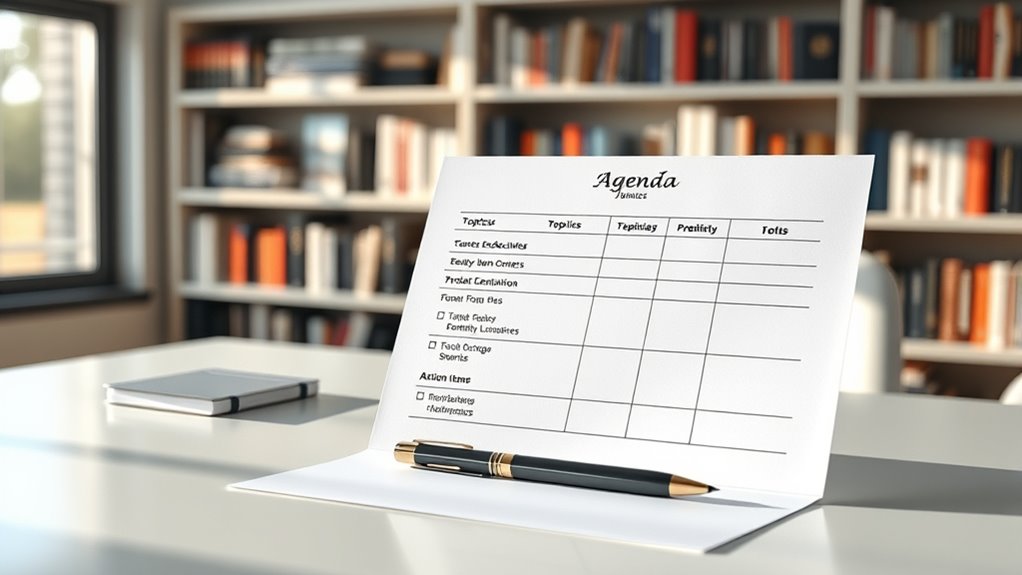
Creating an effective agenda template is essential for keeping meetings focused and productive. Start by defining your meeting’s purpose and objectives. Use brainstorming techniques to gather input from team members, ensuring everyone’s voice is heard. Next, outline key discussion points, allocating specific time slots for each topic to maintain momentum. Utilize agenda software to create a visually appealing and accessible template. This software can help you organize information, set reminders, and share the agenda with participants ahead of time. Don’t forget to include a section for action items and follow-ups, which will keep everyone accountable. Incorporating time management strategies can further improve meeting efficiency. Additionally, establishing clear meeting guidelines can prevent digressions and keep discussions on track. Implementing a well-structured agenda can significantly enhance meeting productivity, ensuring that all topics are covered efficiently. You can also consider integrating home organization techniques to streamline the process of preparing for meetings, especially in remote work settings. By implementing these strategies, you’ll create a streamlined agenda that enhances collaboration and drives results in your meetings.
As an affiliate, we earn on qualifying purchases.
Why Agenda Templates Are Essential for Productive Meetings

While some may overlook the importance of an agenda template, having one can greatly enhance the productivity of your meetings. An effective agenda helps keep discussions focused, ensuring everyone knows the meeting’s purpose and goals. With meeting technology and virtual tools, you can easily share the agenda in advance, allowing participants to prepare. Incorporating structured routines into your meetings ensures consistency and efficiency. Additionally, a well-designed agenda can help prevent rambling by guiding the conversation back to key topics when discussions stray. Utilizing meeting templates can also standardize your approach and streamline the planning process. Implementing focused discussion points within your agenda can further improve the clarity and purpose of your meetings. Incorporating financial planning strategies within your agenda can further align discussions with your overarching goals. Here’s a quick overview of how an agenda template can impact your meetings:
structured meeting agenda printable
As an affiliate, we earn on qualifying purchases.
As an affiliate, we earn on qualifying purchases.
Key Components of a Successful Agenda Template

A successful agenda template typically includes five key components that can make your meetings more effective. First, start with a clear title and date to guarantee everyone knows what to expect. Next, outline the meeting objectives to guide discussions. Third, list the topics in a logical order, using proper agenda formatting for easy readability. Fourth, allocate time for each topic to keep discussions on track and prevent rambling. Fifth, designate a facilitator to steer the conversation and manage time. Utilizing digital tools can enhance your agenda by allowing for easy updates and sharing with participants. Incorporating simple systems can help make even complex agenda items more manageable and clear. Additionally, implementing effective planning techniques can further streamline your meetings and improve overall productivity. Understanding home appliances and air systems can also provide valuable context for more specialized meetings related to maintenance or upgrades. Being familiar with remote work best practices can further optimize your meeting efficiency and team collaboration. By incorporating these components, you’ll create a focused agenda that boosts productivity and keeps everyone engaged.
time management tools for meetings
As an affiliate, we earn on qualifying purchases.
As an affiliate, we earn on qualifying purchases.
Tips for Customizing Your Agenda for Different Meeting Types

When customizing your agenda, it’s essential to define your meeting objectives clearly to keep everyone focused. Don’t forget to allocate time for each topic to guarantee you stay on track. Finally, include only relevant participants to promote a productive discussion.
Define Meeting Objectives Clearly
Defining meeting objectives clearly is essential for guaranteeing that everyone stays focused and productive. When you set specific goals, you create meeting clarity that helps participants understand what’s expected. Start by identifying the purpose of the meeting and what you want to achieve. This goal-oriented approach ensures that everyone is on the same page and working toward a common goal. When drafting your agenda, include these objectives upfront, so participants can prepare accordingly. Consider tailoring your objectives based on the meeting type, whether it’s a brainstorming session, status update, or decision-making meeting. Clear objectives not only keep discussions on track but also enhance engagement, leading to more effective outcomes and less time wasted. Incorporating research-backed insights can further improve your agenda’s effectiveness. Additionally, understanding financial terms and jargon can help clarify the meeting’s context when discussing budgets or investments. Recognizing the importance of emotional skills can also foster better communication and collaboration among participants. Furthermore, emphasizing feedback loops during meetings can promote continuous improvement and alignment with overarching goals.
Allocate Time For Each
Allocating time for each agenda item is essential for keeping your meetings efficient and focused. Start by evaluating the importance of each topic, then assign specific durations to guarantee you cover all items without going off track. For instance, if you’re discussing project updates, allocate time based on the significance of updates and the need for input. Setting meeting milestones helps you gauge progress and adjust as necessary. Keep in mind that some topics may require more time than others, so be flexible. Encourage participants to stick to their allotted time, and if discussions run long, consider scheduling follow-up meetings. This approach guarantees you reach your goals while maximizing everyone’s productivity. Additionally, effective time management is a cornerstone of inspiring leadership, ensuring that meetings foster motivation rather than drain energy. Understanding meeting structure can further enhance your agenda planning and overall efficiency. Incorporating time allocation strategies can also help you prioritize topics more effectively, ensuring a balanced and productive discussion. Practicing time management techniques can lead to more efficient meetings and better use of everyone’s time. Incorporating home cleaning routines into your planning can also serve as a helpful analogy for establishing clear, time-bound tasks that promote consistency and order.
Include Relevant Participants Only
How can you guarantee your meetings are effective? One key strategy is to include only relevant participants. Identify the necessary participant roles for each meeting type. When you invite the right people, you enhance focus and ascertain that discussions stay on track. Each participant should have a clear purpose, whether it’s to provide insights, make decisions, or offer feedback. Incorporating ultrawide monitors can also help display agendas and participant contributions more clearly, further streamlining the process. Implement engagement strategies tailored to your attendees. For instance, if your meeting involves brainstorming, include creative thinkers. If it’s a decision-making session, invite those who’ll act on the outcomes. Additionally, understanding smart home technology concepts can help you create a more efficient and connected environment that supports productivity during and outside meetings. By carefully selecting participants, you foster a productive environment where everyone feels valued and contributes meaningfully, ultimately leading to more effective meetings.
Techniques for Keeping Meeting Discussions on Track
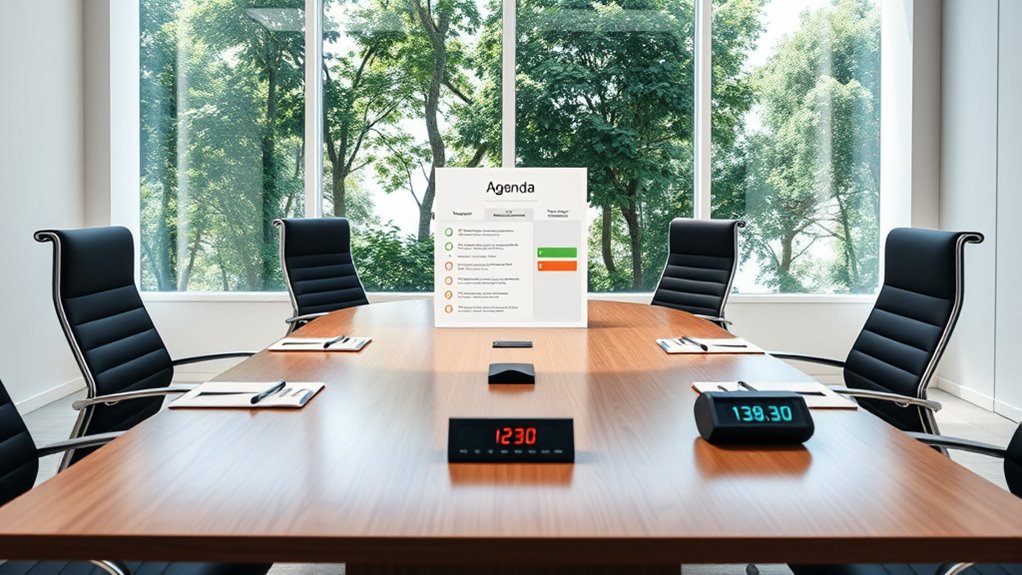
Ever wondered why some meetings seem to drift off course while others stay focused and productive? To keep discussions on track, start with a clear agenda that outlines specific topics and time allocation for each. This sets expectations right from the beginning. Encourage participant engagement by inviting input and questions, but remind everyone to stick to the agenda. If discussions begin to meander, gently steer them back by referencing the agenda items. Use a timer to keep track of time allocation and guarantee each topic receives adequate attention without overrunning. Finally, assign a note-taker to capture key points, which helps maintain focus and provides a reference for future discussions. Implement these techniques, and watch your meetings transform!
Avoiding Common Pitfalls in Meetings

When planning your meetings, it’s essential to set clear objectives to keep everyone focused. You also need to manage time effectively to avoid running over and losing participants’ attention. By addressing these common pitfalls, you can guarantee your meetings are productive and engaging.
Clear Meeting Objectives
Establishing clear meeting objectives is essential for effective collaboration and productivity. When you define specific meeting goals upfront, everyone knows what to focus on, which helps avoid confusion and miscommunication. Make certain to outline outcome expectations that align with your goals. This approach keeps the conversation targeted and relevant, preventing unnecessary rambling.
Before the meeting, share a brief agenda that highlights these objectives, so participants can prepare accordingly. Encourage team members to contribute by asking about their expectations. By doing this, you not only clarify your goals but also foster a sense of ownership and accountability among attendees. Ultimately, clear meeting objectives guarantee that everyone leaves with a shared understanding and actionable takeaways, leading to more effective outcomes.
Time Management Strategies
While effective time management is essential for productive meetings, it’s easy to fall into common pitfalls that can derail your agenda. To stay on track, consider these strategies:
- Time Blocking: Allocate specific time slots for each agenda item. This keeps discussions focused and efficient.
- Priority Setting: Identify the most critical topics and address them first. This guarantees important matters get the attention they deserve.
- Limit Attendees: Invite only those necessary for the discussion. Fewer voices lead to quicker decisions.
- Establish Ground Rules: Set clear guidelines for participation and contributions. This helps curb tangents and maintains focus.
Distributing Your Agenda Effectively

How do you guarantee your agenda reaches everyone who needs it? Effective agenda distribution is essential for successful meetings. Start by identifying your target audience and their preferred communication channels. Use email, shared drives, or project management tools to make certain everyone gets the agenda in a timely manner. When planning your meeting logistics, consider sending reminders closer to the meeting date to keep it top of mind. Also, make certain the agenda is clear and concise, highlighting key points and expectations. This way, participants can prepare adequately and stay focused during discussions. Finally, check in with attendees after distribution to confirm they’ve received it and understand the meeting’s objectives. This proactive approach fosters engagement and makes sure everyone is on the same page.
Encouraging Participant Input During Agenda-Focused Meetings

Once your agenda is distributed and attendees are aware of the meeting’s objectives, fostering an environment where participants feel comfortable sharing their thoughts becomes essential. Here are four effective ways to encourage engagement and foster collaboration:
- Set ground rules: Establish guidelines for respectful communication to create a safe space for sharing ideas.
- Ask open-ended questions: Encourage deeper discussions by posing questions that require more than a yes or no answer.
- Use breakout sessions: Divide participants into smaller groups to brainstorm, making it easier for everyone to contribute.
- Acknowledge contributions: Recognize and appreciate input from attendees, reinforcing their value in the conversation.
Implementing these strategies helps guarantee a productive meeting where everyone feels heard and involved.
How to Check If Your Agenda Worked?
Did your agenda achieve its intended goals? To find out, gather meeting feedback from participants. Ask them specific questions about what worked and what didn’t. This can help you assess whether the agenda kept everyone focused and engaged. Next, conduct an agenda evaluation by reviewing the meeting outcomes against your objectives. Did you cover all the topics? Were decisions made? Reflecting on these points will give you insights into your agenda’s effectiveness. Consider using a quick survey or informal chat to encourage honest input. By actively seeking feedback and evaluating the agenda, you can refine your approach for future meetings, ensuring they remain productive and on track. Remember, continuous improvement is key!
Handling Off-Topic Discussions Gracefully

When off-topic discussions arise, it’s essential to acknowledge them without letting them derail your meeting. You can gently redirect the conversation back to the agenda while setting clear boundaries for what topics are off-limits. This approach keeps the focus on your goals and respects everyone’s time.
Acknowledge and Redirect
Handling off-topic discussions can be a challenge, but with the right approach, you can steer conversations back on track without alienating participants. Here are some effective acknowledgment techniques and redirection strategies to contemplate:
- Listen Actively: Show you value their input by nodding or summarizing their thoughts briefly.
- Acknowledge the Point: Recognize their contribution, saying something like, “That’s an interesting perspective.”
- Redirect Gently: Shift by stating, “Let’s circle back to our main topic,” or “That relates to our next agenda item.”
- Encourage Future Discussion: Suggest, “We can explore that further in a separate meeting.”
Set Clear Boundaries
To maintain an effective discussion, it’s essential to set clear boundaries that keep everyone focused on the agenda. Start by establishing norms that guide interactions; this helps prevent off-topic tangents. Clearly communicate your expectations at the beginning of the meeting, so everyone knows what to prioritize. For instance, if someone starts to veer off course, gently remind them of the agenda and encourage them to share their thoughts later. By fostering a culture of respect for these boundaries, you create a space where everyone feels heard while staying on track. Remember, effective discussions thrive on clarity, so don’t hesitate to reiterate the importance of sticking to the topic at hand. This approach guarantees productive and engaging meetings.
Frequently Asked Questions
Can I Use a Digital Tool for My Agenda Template?
Absolutely, you can use a digital tool for your agenda template! Digital tools offer great agenda flexibility, allowing you to easily adjust items, set reminders, and collaborate with others. They help keep you organized and focused, preventing any rambling during meetings. Whether you prefer apps like Trello, Google Docs, or specialized agenda software, you’ll find that these tools make it simple to stay on track and manage your time effectively.
How Long Should an Agenda Be?
An agenda should ideally be one to two pages long, keeping it concise for effective meetings. Aim for a clear structure that highlights key topics, time allocations, and speakers. This agenda length helps you stay focused and prevents unnecessary rambling. By sticking to a concise format, you encourage productive discussions and guarantee everyone’s time is respected. Remember, the goal is to cover essential points efficiently without overwhelming participants with excessive details.
What if Participants Don’T Follow the Agenda?
When it comes to participants not following the agenda, you’ve got to roll with the punches. To boost participant engagement, you can allow for some agenda flexibility, letting discussions flow naturally while still keeping an eye on the time. If conversations veer off course, gently steer them back with reminders of the key topics. This balance guarantees everyone feels heard while still respecting the structure you’ve set up for the meeting.
How Often Should I Update My Agenda Template?
You should update your agenda template regularly, ideally during weekly reviews. This allows you to assess what’s working and what isn’t, ensuring your template remains effective. When you notice trends or changes in your meetings, customize the template accordingly. It’s important to keep it fresh and relevant, so participants stay engaged and focused. Regular updates help you avoid unnecessary rambling and maintain a productive flow in discussions.
Are There Examples of Agenda Templates Online?
Yes, there are plenty of agenda examples available online. You can find templates tailored for different needs, whether for meetings, project updates, or daily tasks. Websites like Canva and Microsoft Office offer customizable options that you can easily adapt. You’ll also find printable templates on platforms like Google Docs and Trello, perfect for organizing your thoughts. Just search for “agenda templates,” and you’ll discover a variety of resources to help you stay focused.
Conclusion
Just like a ship needs a sturdy compass to navigate through stormy seas, your agenda template guides meetings toward clear shores. By crafting a focused agenda, you steer discussions away from the rocky distractions that can derail productivity. When you distribute it effectively and encourage input, you create a crew ready to sail together. So, set your course, keep the wind in your sails, and watch as your meetings transform into smooth voyages of collaboration and achievement.
Halloween Picks
halloween
As an affiliate, we earn on qualifying purchases.