

Wrist rests can improve your comfort and help prevent repetitive strain injuries if used correctly. They support your wrists in a neutral position, reducing nerve pressure and muscle strain during extended typing or mouse use. Good designs with supportive materials like gel or memory foam guarantee comfort and stability. To get the most benefit, your wrist rest should fit well and not interfere with your movements. Want to discover more tips for choosing the right one? Keep going to learn more.

Get the little things that make your day delivered free with Prime
- Fast, free delivery on millions of items
- Prime Video, Amazon Music and more included
- Member-only deals all year
Key Takeaways
- Proper wrist rests promote neutral wrist positioning, reducing nerve pressure and preventing repetitive strain injuries like carpal tunnel syndrome.
- Material quality and design, such as gel or memory foam, impact comfort and support during extended use.
- An appropriately sized and inclined wrist rest maintains natural wrist alignment without hindering movement.
- Wrist rests should seamlessly fit into your workspace without interfering with keyboard or mouse activity.
- Ergonomic benefits depend on correct workspace setup and choosing a support that encourages healthy typing habits.
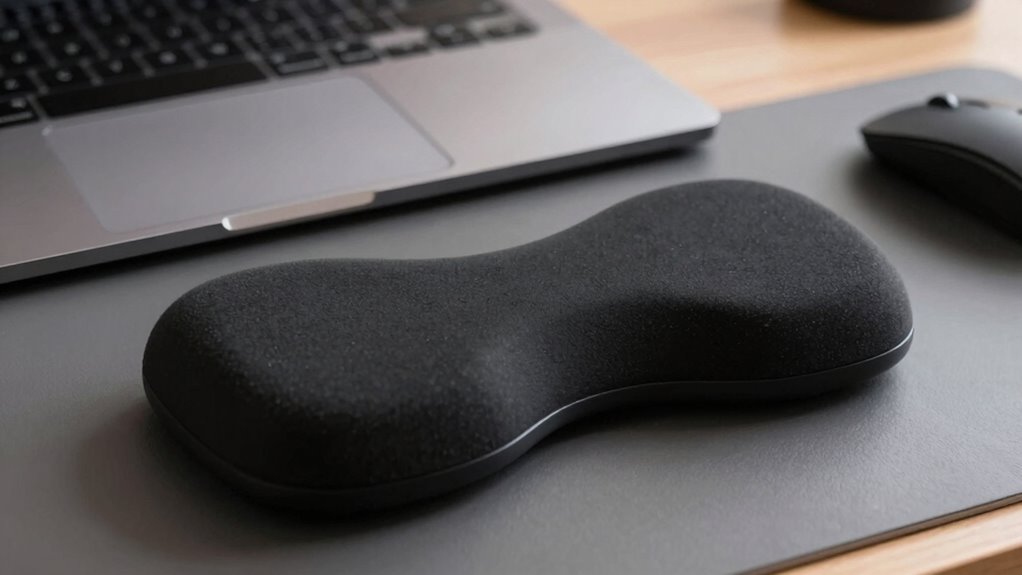
If you spend long hours at your desk, wrist rests can be a simple yet effective way to improve comfort and prevent strain. These accessories aren’t just about convenience—they offer real ergonomic benefits that can reduce the risk of repetitive strain injuries like carpal tunnel syndrome. When selecting a wrist rest, it’s essential to evaluate design considerations that align with your workspace and personal comfort. A well-designed wrist rest supports your wrists in a neutral position, helping to minimize pressure on nerves and tendons, which is vital during extended periods of typing or mouse use.
The ergonomic benefits of wrist rests go beyond comfort; they promote proper wrist alignment. When your wrists are elevated or bent unnaturally without support, you increase strain on muscles and joints. A good wrist rest maintains your wrists straight, reducing tension and fatigue. This can help you type more comfortably for longer stretches and maintain better overall posture. Proper wrist support can also prevent discomfort from developing into chronic pain, making it a smart investment for anyone who works at a computer daily. Additionally, choosing a material that is biocompatible and hypoallergenic can help prevent skin irritation during prolonged use. Selecting a wrist rest with suitable materials is important for ensuring safety and comfort over time.
Design considerations are key when choosing the right wrist rest. For example, the material should be soft yet supportive, like gel or memory foam, to conform to your wrists without causing pressure points. The surface should be smooth to allow easy movement, but also non-slip to keep it stable during use. The size and height matter, too; your wrist rest should be wide enough to support your entire forearm, and its height should keep your wrists in a neutral position—not too high or low. Some wrist rests come with a slight incline to reduce wrist extension, which can be beneficial depending on your typing style. It is also helpful to consider ergonomic design principles to ensure that the accessory promotes healthy habits. A well-chosen wrist rest can also help maintain the correct posture, reducing the risk of long-term musculoskeletal issues. Incorporating an ergonomic assessment of your workspace can further enhance the overall benefits of your setup.
Another important factor is compatibility with your desk setup. A wrist rest that’s too bulky may interfere with your mouse or keyboard, while one that’s too small might not provide enough support. Consider a design that integrates seamlessly with your workspace, allowing free movement without sacrificing ergonomic benefits. Adjustable wrist rests can offer personalized support, catering to different hand sizes and preferences. Ultimately, the goal is to find a balance between comfort, support, and functionality.
ergonomic wrist rest for keyboard
As an affiliate, we earn on qualifying purchases.
As an affiliate, we earn on qualifying purchases.
Frequently Asked Questions
Are Wrist Rests Suitable for All Types of Keyboards?
Wrist rests aren’t suitable for all types of keyboards. If your keyboard has an ergonomic design, a wrist rest can enhance comfort and reduce strain. However, for compact or mechanical keyboards, a wrist rest may interfere with your typing posture. Consider the material durability — a sturdy, cushioned wrist rest offers long-term support. Always choose one that complements your keyboard style and promotes healthy ergonomics for the best results.
How Often Should I Replace My Wrist Rest?
Think of your wrist rest as a trusty sidekick—when it starts to show signs of wear, it’s time for a replacement. Typically, you should swap it out every 1-2 years, depending on its ergonomic design and material durability. If it becomes flattened, torn, or loses its cushioning, it no longer offers proper support. Regularly inspect it to keep your comfort and wrist health in check.
Can Wrist Rests Help Prevent Carpal Tunnel Syndrome?
Yes, wrist rests can help prevent carpal tunnel syndrome by providing ergonomic benefits, such as maintaining proper wrist alignment during typing or mouse use. To guarantee effectiveness, choose a wrist rest made from durable, high-quality materials that offer adequate cushioning without losing shape over time. Properly using a wrist rest reduces strain on your wrists, helping to lower the risk of developing carpal tunnel syndrome and improving overall comfort during long work sessions.
Do Wrist Rests Affect Typing Speed?
Think of a wrist rest as a gentle sail guiding your fingers across the keyboard. It won’t slow you down but can improve your ergonomic benefits by promoting proper wrist positioning. While some fear it may hinder typing speed, in reality, it reduces discomfort and helps maintain a steady rhythm. With a wrist rest, you can focus more on your work and less on aches, making your typing both faster and more comfortable.
Are There Any Health Risks Associated With Using Wrist Rests?
Using wrist rests can pose health risks if they lack ergonomic design or are made from unsafe materials. Poorly designed rests may cause wrist extension or pressure, leading to discomfort or strain over time. Make sure your wrist rest offers proper support and is made from safe, non-toxic materials. Properly chosen, ergonomic wrist rests can help reduce strain, but avoid those that promote poor positioning or contain harmful substances.
As an affiliate, we earn on qualifying purchases.
Conclusion
While wrist rests can seem unnecessary, they actually help reduce strain and prevent injury if used correctly. Some worry they might encourage poor posture, but when positioned properly, they promote comfort and support during long hours at your desk. Don’t dismiss them outright; instead, incorporate wrist rests thoughtfully to enhance your workspace. Proper use guarantees you stay comfortable and healthy, making your desk setup both effective and ergonomic.
As an affiliate, we earn on qualifying purchases.
As an affiliate, we earn on qualifying purchases.
NFL season / tailgating Picks
team gear
As an affiliate, we earn on qualifying purchases.