To set up a better first aid pouch for trips, organize medications in labeled small containers sorted by type, and keep frequent-use items easily accessible. Pack essential trauma supplies like gauze, bandages, antiseptic wipes, and tweezers, stored in waterproof bags. Tailor contents to your activity, adding child-safe items or specialized tools as needed. Regularly review and update your kit for expiration and completeness, ensuring everything stays ready for emergencies. Continue exploring for more detailed tips to optimize your trip safety pack.

Get the little things that make your day delivered free with Prime
- Fast, free delivery on millions of items
- Prime Video, Amazon Music and more included
- Member-only deals all year
Key Takeaways
- Organize supplies by type and frequency of use for quick access during emergencies.
- Include essential trauma supplies like sterile gauze, antiseptic wipes, and medical tape.
- Use waterproof containers and sealable bags to protect contents from moisture.
- Customize the kit based on trip activities and destination-specific needs.
- Regularly review and update the kit to replace expired items and add new supplies.
Have you ever wondered if your first aid pouch is truly prepared for any situation on your trip? It’s a common concern, especially when you’re far from medical help and need to act quickly. The key to being ready is setting up your kit thoughtfully, making sure you have everything you need and nothing you don’t. Proper medication organization is essential. You should keep all your medications in clearly labeled, small containers or zippered bags, grouped by type—pain relievers, allergy meds, digestion aids, etc. This way, when an emergency strikes, you can find what you need fast, without rummaging through a jumble of pills. Also, consider packing a few extra doses of prescription medications, sealed and labeled, in case your trip gets extended unexpectedly.
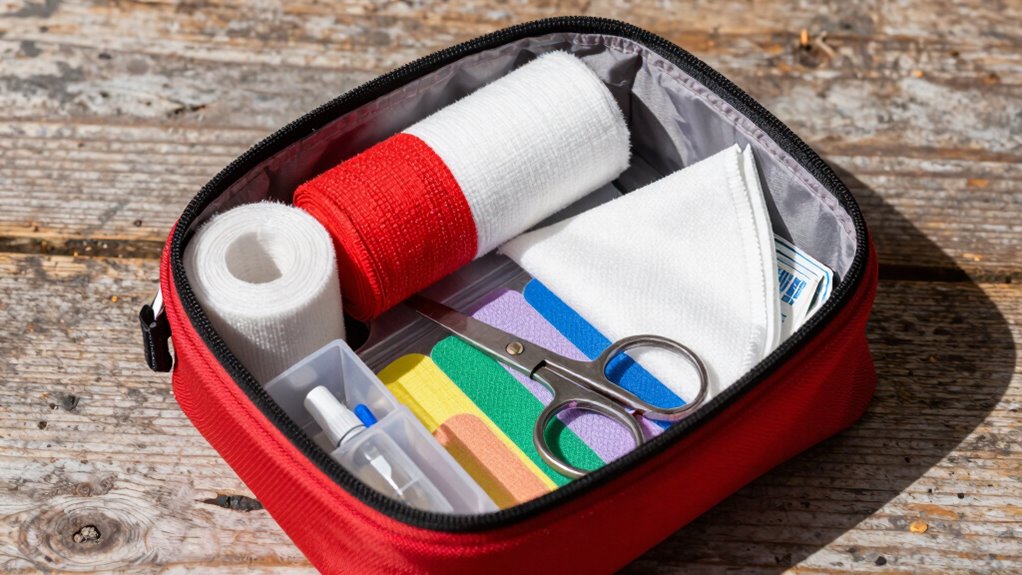
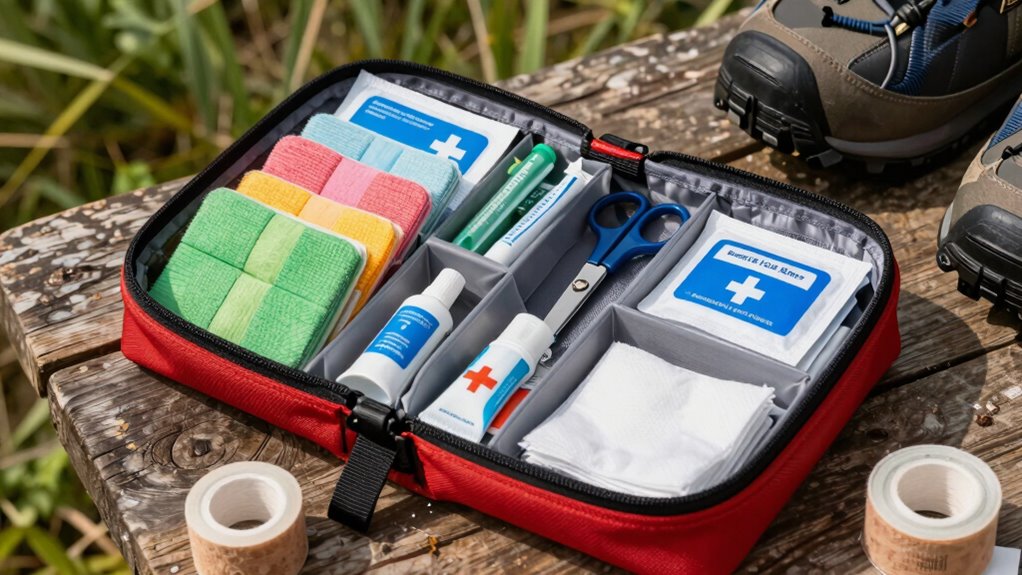
Trauma supplies are equally important. Your kit should include essentials like sterile gauze pads, adhesive bandages of various sizes, antiseptic wipes, and medical tape. These allow you to treat cuts, scrapes, or more serious wounds. A pair of tweezers can help remove splinters or debris, while scissors make it easier to cut tape or clothing if needed. Include an instant cold pack to reduce swelling and pain, and consider adding a CPR mask if you’re trained to use one. Remember, the goal is to have enough supplies to manage injuries until professional help arrives, so don’t skimp on these basics.
When setting up your pouch, think about accessibility. Place the most frequently used items at the top or in easy-to-reach pockets. For example, bandages and antiseptic wipes should be quick grab, while less-used items like extra gloves or trauma dressings can be stored deeper inside. Consider a waterproof container or sealable bag to protect your supplies from moisture, especially if you’re headed into wet environments. Keep a small, printed list of contents in your first aid kit—this helps you quickly identify missing items or check for expired supplies before your trip.
Finally, tailor your first aid pouch to your specific activities and destinations. If you’re hiking in remote areas, add more trauma supplies and possibly a survival whistle. If you’re traveling with children, include child-safe medications and extra bandages. Regularly review and update your kit, replacing expired items and adding new supplies as needed. With a well-organized and complete first aid pouch, you’ll feel more confident, knowing you’re prepared for whatever emergencies might come your way.
waterproof first aid kit for trips
As an affiliate, we earn on qualifying purchases.
As an affiliate, we earn on qualifying purchases.
Frequently Asked Questions
What Size Should My First Aid Pouch Be for Different Trips?
For day trips, a small pouch about 1-2 liters works well—you’ll need essentials like bandages, antiseptic wipes, and pain relievers. For longer adventures or wilderness trips, opt for a larger, more thorough kit around 3-5 liters, including medical training supplies, emergency contacts, and extra medications. Always tailor your pouch size to your activity, ensuring you can access crucial items quickly while remaining portable.
How Often Should I Update My First Aid Supplies?
You should update your first aid supplies at least once a year or after any trip where you used or exhausted items. Regular updates are essential for travel safety and emergency preparedness, ensuring medications aren’t expired and supplies are complete. Check for damaged packaging or outdated items, especially if you plan frequent trips. Keeping your first aid kit current helps you stay ready for unexpected emergencies and maintains peace of mind during your adventures.
Are There Specific First Aid Items for Children?
Yes, there are specific first aid items for children. You should include pediatric supplies like child-safe bandages, gentle antiseptic wipes, and fever reducers suitable for their age. Child safety is vital, so make certain your kit contains items that address common childhood injuries, such as splints for sprains or child-specific pain relief. Always check expiration dates and tailor your supplies to your child’s age and health needs for effective care.
What Are the Best Waterproof Containers for First Aid Kits?
You should choose waterproof containers like hard case zippered boxes or durable silicone pouches for your first aid kit. These containers protect your supplies from water, dirt, and moisture, enhancing your emergency preparedness. Opt for customizable options, so you can tailor the kit to your trip’s specific needs. Look for airtight seals and rugged materials to guarantee your first aid supplies stay dry and ready, no matter the conditions.
How Can I Organize My Pouch for Quick Access?
You can organize your pouch for quick access by dividing it into clearly labeled sections for different emergencies, like bleeding, burns, or allergies. Keep frequently used items at the top or in easy-to-reach pockets. Regularly review and customize your kit based on your trip’s specific needs, enhancing your emergency preparedness. Using small containers or pouches within the main kit helps keep supplies sorted and ready when seconds count.
compact first aid supplies organizer
As an affiliate, we earn on qualifying purchases.
As an affiliate, we earn on qualifying purchases.
Conclusion
With your first aid pouch packed thoughtfully, you’re ready to face any stumble or scrape that comes your way. Think of it as a trusty anchor in your adventure’s storm, a small but mighty shield guarding your journey. As you zip it closed, know you’re equipping yourself with more than supplies—you’re arming yourself with confidence and care. So step out boldly, knowing your kit’s ready to turn mishaps into mere ripples on your travel’s smooth sailing.
medication storage containers for travel
As an affiliate, we earn on qualifying purchases.
As an affiliate, we earn on qualifying purchases.
As an affiliate, we earn on qualifying purchases.
Halloween Picks
halloween
As an affiliate, we earn on qualifying purchases.