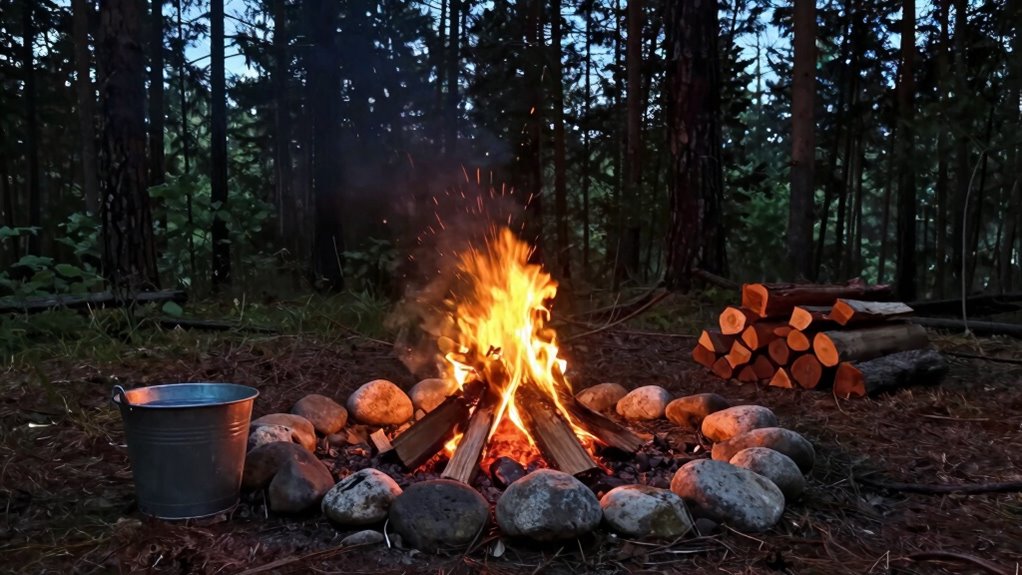

When it comes to campfire safety, choose a spot at least 15 feet away from tents and trees. Use seasoned wood and avoid flammable liquids to build your fire. Always keep water nearby for emergencies and control the fire to prevent it from getting out of hand. Make sure to extinguish it properly by dousing with water and stirring the ashes. Stick around to discover more key tips for a safe and enjoyable campfire experience.

Get the little things that make your day delivered free — and shop member deals
- Fast, free delivery on millions of items
- Access to Prime Big Deal Days deals on October 6–7
- Prime Video, Amazon Music and more included
Key Takeaways
- Set up your campfire at least 15 feet away from tents, trees, and flammable materials to reduce fire hazards.
- Use seasoned, dry wood for burning, avoiding flammable liquids to prevent dangerous flare-ups.
- Keep a bucket of water or sand nearby to quickly extinguish unexpected flames or embers.
- Never leave your campfire unattended and ensure it’s completely extinguished before leaving.
- Create a fire ring with stones to contain flames and maintain a manageable fire size.
As an affiliate, we earn on qualifying purchases.
Choosing the Right Location for Campfire Safety
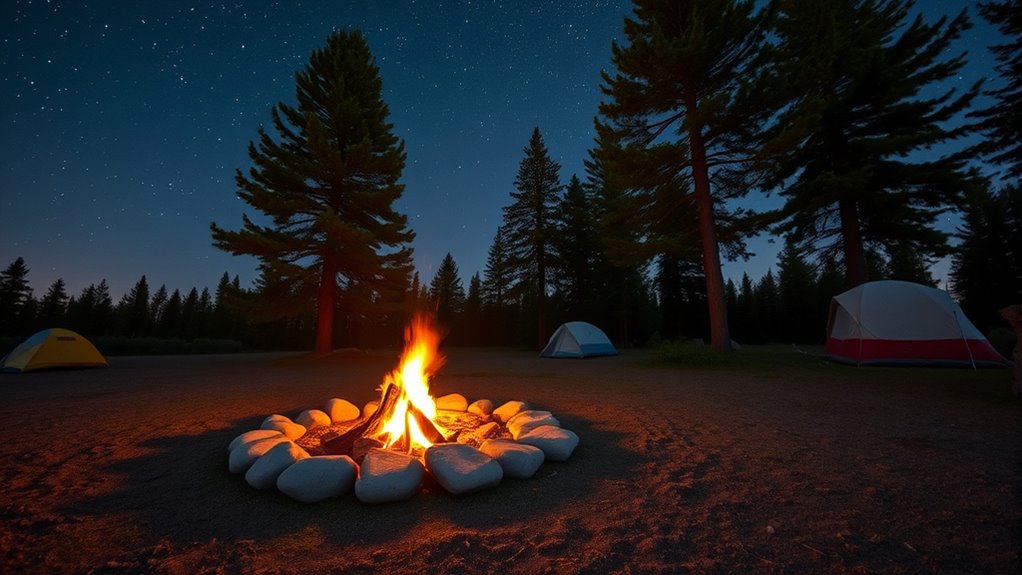
When it comes to campfire safety, picking the right location is essential. First, you’ll want to follow campfire proximity guidelines, ensuring your fire’s at least 15 feet away from tents, trees, and any other flammable materials. This distance minimizes risk and allows for safe air circulation. Next, consider the terrain. Look for flat, stable ground that’s free of dry grass, leaves, or overhanging branches. Avoid windy areas, as they can easily spread sparks. If you’re near water, that’s a plus, but still maintain safe distances from the water’s edge to prevent accidents. By being mindful of these factors, you’ll create a safer environment for your campfire and enjoy your outdoor experience with peace of mind.
As an affiliate, we earn on qualifying purchases.
Building a Safe Campfire
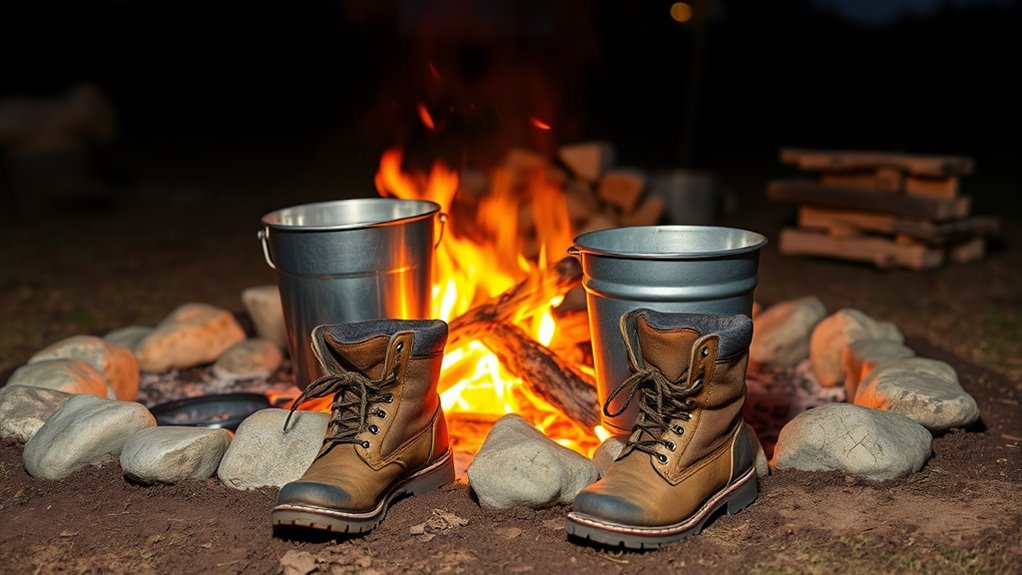
Once you’ve found the perfect spot for your campfire, it’s time to focus on building it safely. Start by gathering the right campfire materials. Choose dry, seasoned firewood for your firewood types, as they ignite easily and burn efficiently.
Once you’ve selected the ideal location for your campfire, prioritize safety by gathering dry, seasoned firewood and other essential materials.
- Use kindling like twigs or pine needles to get the fire started.
- Avoid using flammable liquids, as they can cause dangerous flare-ups.
- Build a fire ring with stones to contain the flames and prevent spread.
- Ensure your campfire area is well-ventilated to reduce the risk of smoke inhalation and to promote safe combustion, similar to how water-cooled mattress pads help regulate temperature and humidity for safe sleeping conditions.
Make certain your fire isn’t too large; a small, manageable fire is both safer and easier to control. Always keep water or dirt nearby to extinguish the fire when you’re done. Following these steps will help guarantee a safe and enjoyable campfire experience.
As an affiliate, we earn on qualifying purchases.
Must-Have Gear for Safe Campfire Cooking and Safety
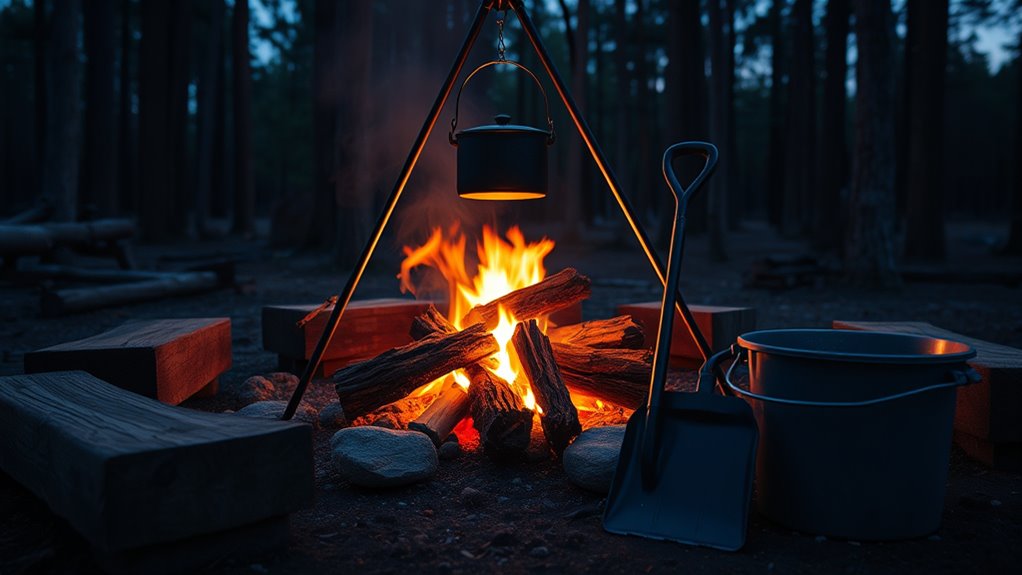
When you’re cooking over a campfire, having the right gear is vital for both safety and enjoyment. You’ll need essential cooking utensils, effective fire extinguishing tools, and protective gear to keep everyone safe. Let’s explore what you should pack for a worry-free campfire cooking experience.
Essential Cooking Utensils
To guarantee a successful and safe campfire cooking experience, you’ll need the right essential cooking utensils. Having the appropriate cooking tools not only makes meal preparation easier but also enhances safety around the fire. Here are three must-have items for your campfire cooking kit:
- Long-handled tongs: Perfect for flipping food without getting too close to the flames.
- Cast iron skillet: Durable and versatile, it distributes heat evenly for perfect cooking.
- Fire starters: Essential for igniting your campfire quickly and safely, ensuring you spend less time struggling with kindling.
Equipping yourself with these items will help you enjoy delicious meals while keeping safety a top priority. Happy cooking!
Fire Extinguishing Tools
Having the right fire extinguishing tools is essential for ensuring safety while enjoying your campfire cooking experience. Familiarize yourself with various fire extinguisher types, like ABC extinguishers, which can handle wood, paper, and grease fires. These are a must-have for any campsite. Additionally, always keep portable water containers nearby; they can quickly douse flames in case of an emergency. Fill these containers with water before you start cooking, so you’re prepared if things get out of hand. Remember, maintaining a safe distance from the fire while cooking is key, but being ready to act is just as important. Equip yourself with the proper tools, and you’ll enjoy your campfire safely and responsibly. Knowing fire safety etiquette can further help prevent accidents and ensure everyone’s safety.
Protective Gear Essentials
While you might be focused on the delicious meals you can cook over the campfire, wearing the right protective gear is just as important for your safety. Having the right equipment not only keeps you safe from burns but also enhances your cooking experience. Here are some must-have items to take into account:
- Protective clothing: Opt for long sleeves and pants made of natural fibers to shield your skin from heat and sparks.
- Safety goggles: Protect your eyes from smoke and flying embers, ensuring you can see clearly while cooking.
- Heat-resistant gloves: These are essential for handling hot cookware and ensuring you don’t accidentally burn yourself.
- Fire safety knowledge: Understanding basic fire safety techniques can help prevent accidents and ensure quick response if needed.
As an affiliate, we earn on qualifying purchases.
Essential Campfire Safety Rules to Follow
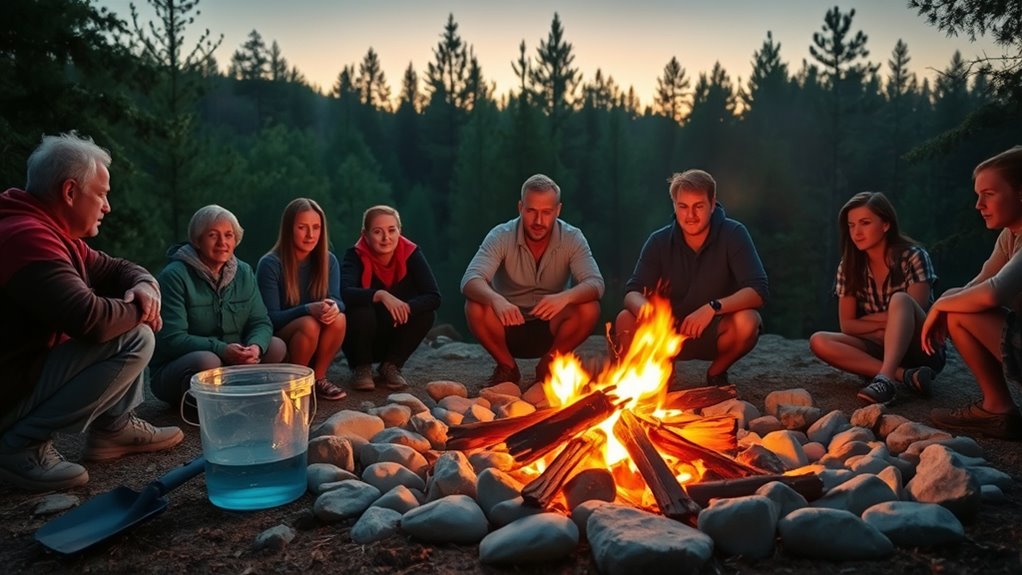
As you gather around the crackling flames of a campfire, it’s vital to remember some essential safety rules to guarantee a fun and safe experience. First, always set up your campfire in a designated area, away from overhanging branches and dry grass. Follow proper campfire etiquette by keeping the fire manageable; a size that allows for easy supervision. When it comes to firewood selection, choose seasoned wood that’s dry and free of chemicals. Never use flammable liquids to start your fire, as they can cause dangerous flare-ups. Make sure everyone knows the boundaries of the fire area to prevent accidents. Finally, keep a bucket of water or sand nearby to address any unexpected flare-ups. Enjoy your time, but stay safe!
How to Extinguish Your Campfire Safely
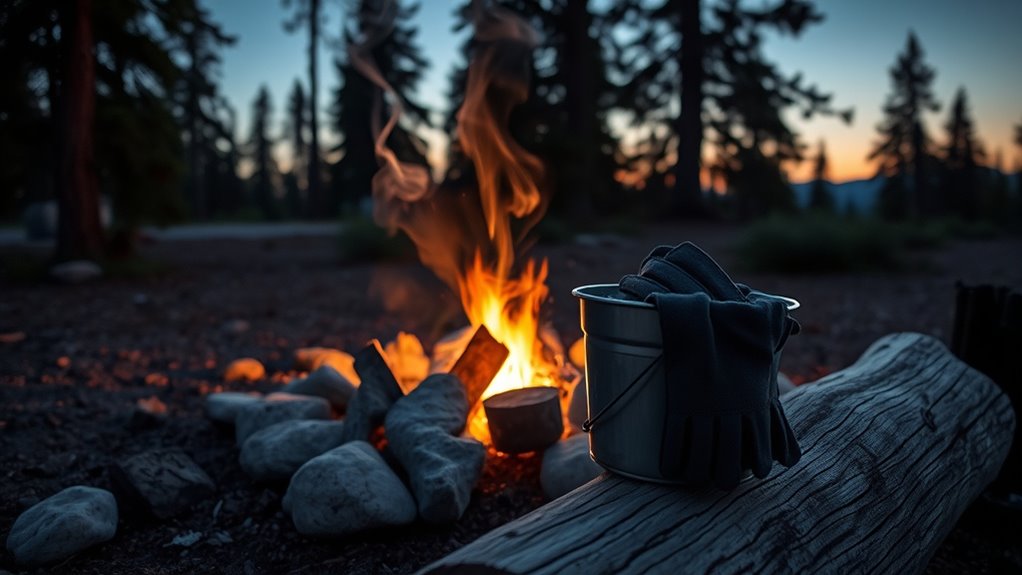
Once you’ve finished enjoying your campfire, it’s crucial to extinguish it properly to prevent any potential hazards. Start by using effective fire suppression techniques. Pour water over the fire, guaranteeing you drench the embers thoroughly. Stir the ashes with a stick to mix in the water and help cool everything down. When the fire’s out, there shouldn’t be any smoke or heat.
- Check for any hot spots by feeling the ground with your hand.
- Dispose of the cool campfire ashes responsibly by scattering them away from your campsite.
- Never leave the site until you’re sure the fire is completely extinguished.
Following these steps guarantees that your campfire is safely put out, protecting both nature and fellow campers.
What to Do in Case of a Campfire Emergency?

In the event of a campfire emergency, staying calm is essential so you can effectively assess the situation. Quickly determine if you need to implement an emergency response, like extinguishing flames or evacuating the area. If someone is injured, focus on administering first aid while keeping the fire controlled. Here’s a quick reference table to help you during an emergency:
| Situation | Action Needed | First Aid Tips |
|---|---|---|
| Fire Out of Control | Call for help | Keep a safe distance |
| Burn Injury | Cool with water | Cover with sterile cloth |
| Smoke Inhalation | Move to fresh air | Seek medical attention |
| Wildfire Approaching | Evacuate immediately | Stay low to avoid smoke |
| Equipment Malfunction | Turn off and assess safely | Use fire extinguisher if safe |
Stay alert and prioritize safety!
Frequently Asked Questions
Can I Have a Campfire During a Burn Ban?
No, you can’t have a campfire during a burn ban. Burn ban implications mean that lighting fires is prohibited to prevent wildfires and guarantee public safety. You should always follow local safety guidelines, which usually include restrictions on open flames. Instead, consider alternatives like portable stoves for cooking. Staying informed about fire regulations helps protect the environment and everyone around you, so always check the latest updates before planning your outdoor activities.
What Types of Wood Are Best for Campfires?
For a perfect campfire, you’ll want to grab some hardwood, like oak or hickory. These dense woods burn longer and produce a steady heat, just like the warm glow of an old fireplace. Softwoods, like pine, ignite quickly but come with drawbacks—they burn fast and may create more smoke. So, stick with hardwood for a cozy evening under the stars, and enjoy the warmth without the hassle of constant tending.
How Do I Know if My Campfire Is Out Completely?
To know if your campfire’s out completely, use proper campfire extinguishing techniques. Start by dousing the fire with water, guaranteeing all flames are extinguished. Then, carefully check the embers safely with a stick or a shovel. If they’re still warm or glowing, add more water until everything feels cool to the touch. Remember, it’s essential to leave no trace and make sure all embers are completely out before you leave the area.
Are There Age Restrictions for Building a Campfire?
When it comes to building a campfire, you can’t just throw caution to the wind. Most places have campfire regulations that include age restrictions. Typically, kids under a certain age need adult supervision to safely manage a fire. Each location might vary, so it’s best to check local rules before striking a match. Always prioritize safety, ensuring everyone’s on the same page when enjoying the warmth of a crackling fire together.
Can I Cook Food Over a Campfire in a National Park?
Yes, you can cook food over a campfire in a national park, but you’ll need to follow specific national park regulations. Always check the park’s rules before you start campfire cooking, as some areas may have restrictions or require permits. Make certain your fire’s in a designated spot and keep it manageable to guarantee safety. Enjoying a meal cooked over the fire can be an unforgettable experience when done responsibly!
Conclusion
As you gather around the flickering flames, remember that safety is the spark that fuels your campfire experience. By respecting the rules and taking precautions, you’re not just protecting your surroundings; you’re nurturing the bonds forged over shared stories and laughter. Like the embers that glow long after the fire dies, these memories will warm your heart. So, embrace these campfire safety basics, and let your adventures burn brightly while keeping the wild at bay.
Halloween Picks
halloween
As an affiliate, we earn on qualifying purchases.