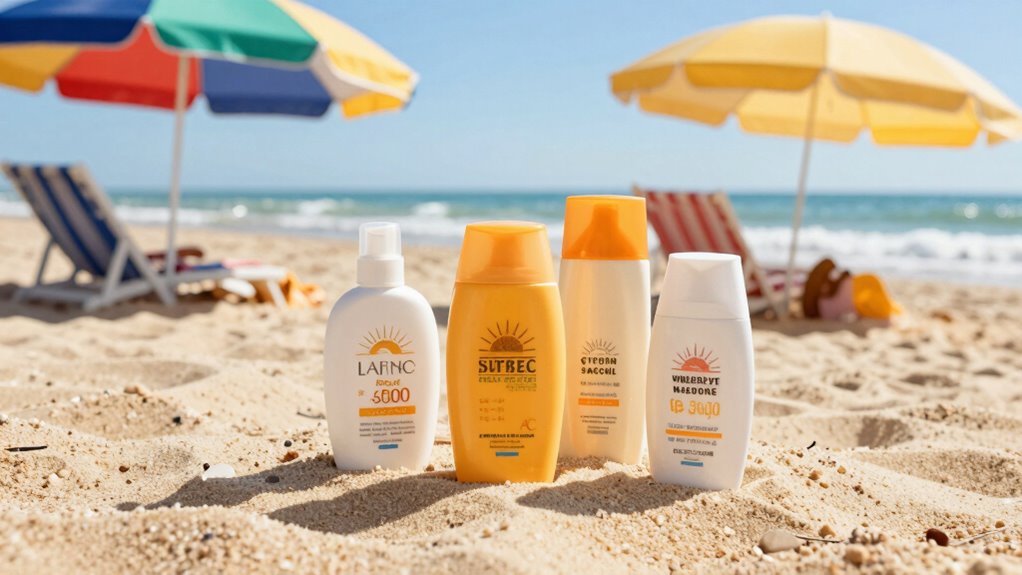

Understanding sun protection is essential for healthy skin. UV rays come in two types: UVA, which causes aging, and UVB, primarily responsible for sunburn and skin cancer risks. SPF indicates how long you can stay in the sun without burning but doesn’t guarantee complete protection. Always choose broad-spectrum sunscreen to guard against both types. Regular application and protective clothing are key to staying safe. Explore more effective habits and tips to enhance your sun safety.
Key Takeaways
- UV rays are categorized into UVA, which ages skin, and UVB, which causes sunburn and contributes to skin cancer risk.
- SPF measures UVB protection; at least SPF 30 is recommended, but higher SPF does not ensure longer protection without reapplication.
- Broad-spectrum sunscreen protects against both UVA and UVB rays; daily application is essential for effective sun safety.
- Sunscreen must be reapplied every two hours, especially after sweating or swimming, to maintain adequate protection.
- Protective clothing, shade-seeking, and UV-blocking sunglasses enhance sun safety and reduce skin damage risks.

Neutrogena Ultra Sheer Dry-Touch Sunscreen Lotion SPF 70, Broad Spectrum, Water Resistant 80 Min, Oil-Free, Oxybenzone-Free, Non-Comedogenic, Matte Finish, Body Sunscreen, Travel Size 3 Fl Oz
SPF 70 broad spectrum sunscreen lotion delivers high UVA/UVB protection for daily use; water resistant for up to…
As an affiliate, we earn on qualifying purchases.
As an affiliate, we earn on qualifying purchases.
Understanding the Different Types of UV Radiation

Have you ever wondered why some days you feel the sun’s heat more intensely than others? It’s all about the types of UV rays hitting your skin. UVA rays penetrate deeply, contributing to skin damage and aging. They’re often emitted by tanning beds, increasing your risk for long-term harm. On the other hand, UVB rays primarily cause sunburn and play a significant role in developing skin cancer. Reflective surfaces, like water and sand, can amplify these rays, making protective clothing essential. To shield yourself effectively, look for sunscreen ingredients that offer broad-spectrum protection against both UVA and UVB rays. Remember, understanding these differences helps you minimize sunburn risk while enjoying the outdoors safely.
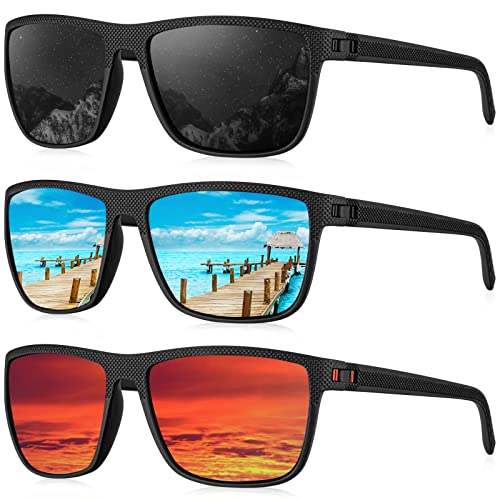
KALIYADI Polarized Sunglasses Men, Lightweight Mens Sunglasses Polarized UV Protection Driving Fishing Golf (Black/Ice Blue/Red)
HD Polarized Lens: To prevent your eyes from the harmful UV rays, all of KALIYADI mens sunglasses polarized…
As an affiliate, we earn on qualifying purchases.
As an affiliate, we earn on qualifying purchases.
How UV Rays Affect Your Skin Health
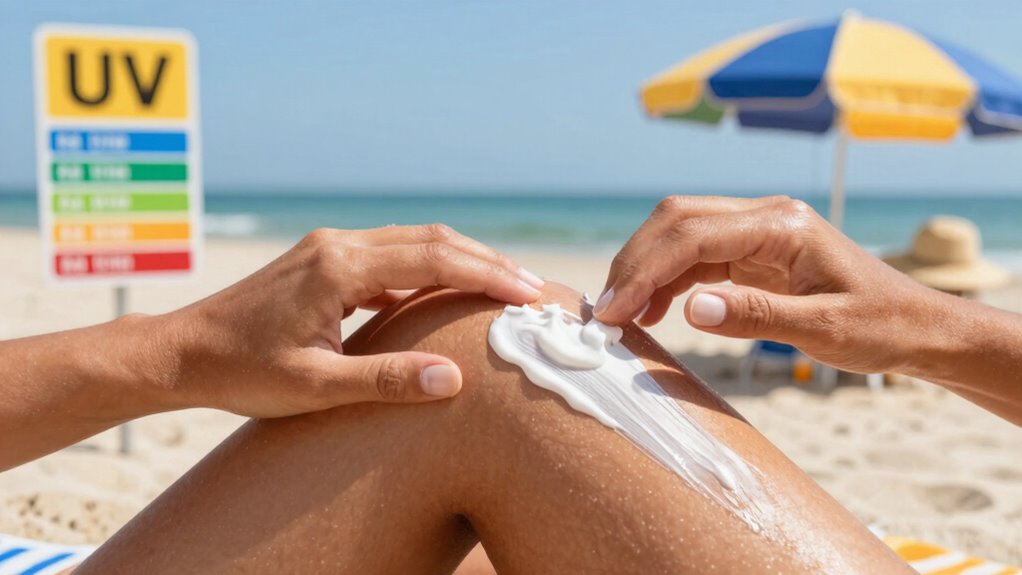
UV rays can wreak havoc on your skin health if you’re not careful. Prolonged sun exposure leads to UV damage, accelerating skin aging and increasing the risk of skin cancer. Whether you have fair or darker skin types, the tanning effects can still be harmful. You might notice wrinkles, dark spots, or a rough texture as a result. Protecting your skin with sunscreen, wearing protective clothing, and seeking shade are essential protective measures. If you’ve already experienced UV damage, consider repair strategies like antioxidants and moisturizing treatments to rejuvenate your skin. Remember, the health risks associated with UV exposure are serious, so it’s vital to be proactive in safeguarding your skin’s health. Don’t wait—start protecting your skin today!

baleaf Women's SPF Jacket Sun Shirt UV Protection Hoodie Zip Up Long Sleeve Hooded Summer Clothing Running Hiking Kentucky Blue L
【UPF 50+ Sun Protection】 This summer jackets for women provides maximum UV protection. The thumbholes and hood design…
As an affiliate, we earn on qualifying purchases.
As an affiliate, we earn on qualifying purchases.
What Does SPF Really Mean for Your Skin?
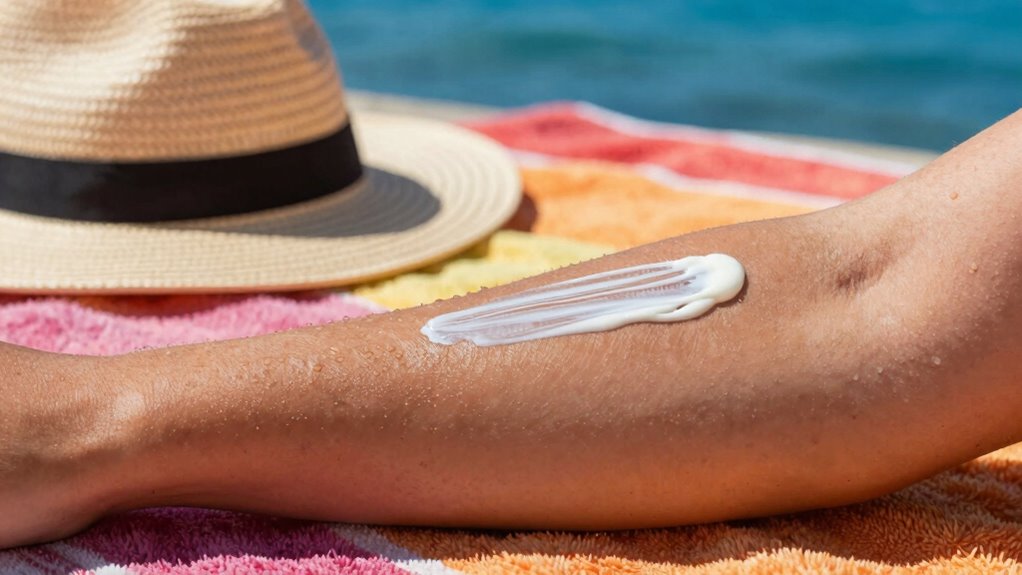
Understanding SPF is essential for effective sun protection, especially since it directly impacts how well your skin can defend itself against harmful rays. Many people fall victim to SPF misconceptions, like thinking a higher SPF means all-day protection. In reality, SPF indicates how long you can stay in the sun without burning.
| SPF Level | Protection Time (minutes) | Sunscreen Ingredients |
|---|---|---|
| 15 | 150 | Zinc oxide, Titanium dioxide |
| 30 | 300 | Avobenzone, Octisalate |
| 50 | 500 | Homosalate, Octocrylene |
| 100 | 1000 | Oxybenzone, Octinoxate |
To maximize protection, reapply sunscreen every two hours, regardless of SPF. Pay attention to sunscreen ingredients to choose products that suit your skin type.

Banana Boat Sport Ultra SPF 30 Sunscreen Spray | Banana Boat Sunscreen Spray SPF 30, Water Resistant, Oxybenzone Free, 6oz each Twin Pack
SUPERIOR ENDURANCE VS. SWEAT & WATER — From family fun to hardcore competition, Banana Boat Sport Sunscreen provides…
As an affiliate, we earn on qualifying purchases.
As an affiliate, we earn on qualifying purchases.
Why You Should Always Use Broad-Spectrum Sunscreen
When choosing sunscreen, it’s essential to pick a broad-spectrum option that protects against both UVA and UVB rays. This protection is important for preventing skin cancer and keeping your skin healthy. Remember, using sunscreen daily can greatly reduce your risk, no matter the weather.
UVA vs. UVB Protection
Sunscreens come in various formulations, but not all of them provide the same level of protection. When you’re choosing a sunscreen, it’s essential to look for broad-spectrum options that offer both UVA protection and UVB protection. UVA rays penetrate deeply into the skin and contribute to aging and long-term damage, while UVB rays primarily cause sunburn and play a significant role in skin cancer. By selecting a broad-spectrum sunscreen, you’re ensuring that you’re protected from the harmful effects of both types of ultraviolet rays. Remember, just because a sunscreen has a high SPF doesn’t mean it provides adequate UVA protection. So, always check the label and choose wisely to safeguard your skin effectively. Your skin deserves that extra layer of defense!
Skin Cancer Prevention
Because skin cancer is a serious risk, using broad-spectrum sunscreen every day is crucial for everyone. You should also stay informed about risk factors like family history and sun exposure. Incorporating prevention strategies, such as regular skin checks and using protective clothing, can greatly reduce your chances. Awareness campaigns play an essential role in educating you about the importance of early detection. Additionally, consider lifestyle changes and dietary influences that may enhance skin health. Eating antioxidant-rich foods and staying hydrated can support your skin’s resilience. By adopting these practices, you empower yourself to take charge of your skin health and reduce the risk of skin cancer. Remember, proactive measures can make all the difference!
Daily Use Importance
Understanding the importance of skin cancer prevention naturally leads to the daily necessity of using broad-spectrum sunscreen. Making sunscreen a part of your daily habits isn’t just smart; it’s essential. UV rays can damage your skin even on cloudy days or when you’re indoors. A consistent sunscreen routine helps protect against premature aging and skin cancer.
- It reduces the risk of skin cancer.
- It prevents sunburn and skin irritation.
- It helps maintain an even skin tone.
- It supports overall skin health.
Debunking Common Myths About Sun Protection

You might believe that a high SPF means you’re fully protected from the sun’s harmful rays, but that’s not the case. Tanning may seem like a sign of healthy skin, yet it’s actually a response to damage. Let’s clear up these misconceptions and help you protect your skin better.
SPF Equals Complete Protection
While SPF is often touted as the ultimate shield against sun damage, it’s crucial to recognize that it doesn’t guarantee complete protection. Many people fall for SPF misconceptions, believing that a higher SPF means total safety. However, this isn’t true. Here’s what you need to know:
- SPF measures UVB protection, not UVA.
- No sunscreen is waterproof; reapplication is key.
- Sunscreen should be just one part of your sun protection strategy.
- Factors like skin type and sun exposure duration affect your risk.
Tanning Indicates Skin Health
Many people mistakenly believe that a tan indicates healthy skin, but this is far from the truth. Tanning misconceptions can lead you to think that a bronzed glow is a sign of well-being. In reality, tanning is a response to skin damage caused by UV exposure. Your skin darkens as a protective mechanism, not because it’s healthy. Healthy tanning simply doesn’t exist; any change in skin color indicates harm. The more you tan, the greater your risk for skin issues, including premature aging and skin cancer. To truly care for your skin, focus on sun protection and maintaining its natural tone. Embrace your natural complexion, and remember that healthy skin is protected skin. Understanding UV damage can help you make informed choices about sun exposure and skin health.
Choosing the Right Sunscreen
How do you choose the right sunscreen amidst the countless options available? Start by considering your skin type and any specific concerns. Look for effective sunscreen ingredients like zinc oxide or avobenzone for broad-spectrum protection. Here are some tips to help you make the right choice:
- Check the SPF level; aim for at least 30.
- Choose water-resistant formulas if you’ll be swimming or sweating.
- Opt for mineral-based sunscreens if you have sensitive skin.
- Don’t forget to pay attention to application techniques; apply generously and reapply every two hours.
With these guidelines, you’ll find a sunscreen that suits your needs and helps protect your skin from harmful UV rays. Remember, the right sunscreen is essential for maintaining healthy skin!
How to Apply Sunscreen for Maximum Protection
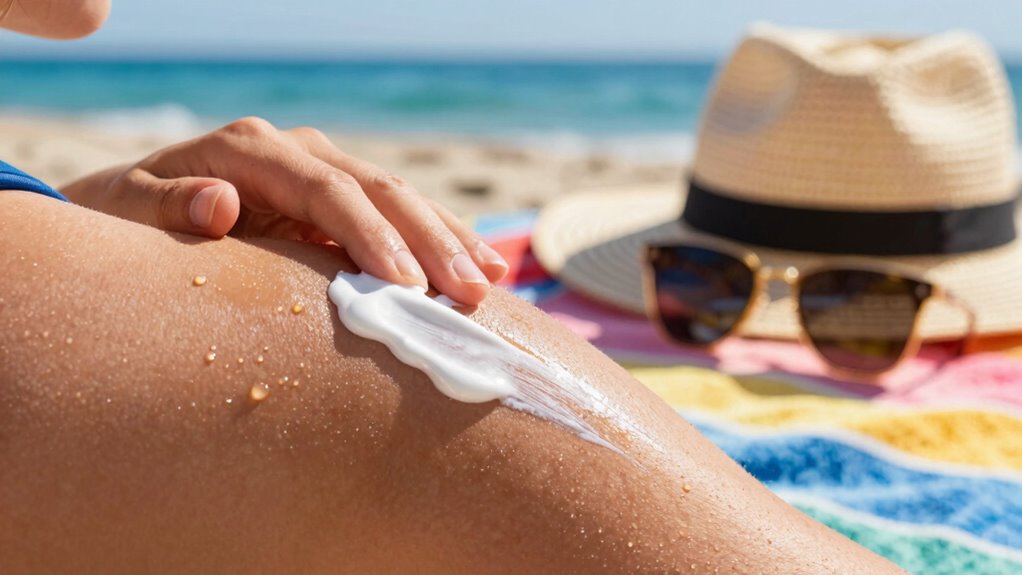
To achieve maximum protection from the sun’s harmful rays, you need to apply sunscreen correctly. Start by using a generous amount—about an ounce for your entire body. Apply it at least 15 minutes before sun exposure, allowing it to penetrate your skin. Use effective sunscreen application techniques, like rubbing it in evenly and covering all areas, including often-missed spots like ears and feet. Don’t forget to apply to your face, using a separate facial sunscreen if needed. Reapply every two hours, or more frequently if you’re sweating or swimming. If you’re out for a long day, set reminders to keep track of your reapplication frequency. This guarantees you maintain ideal protection throughout your time in the sun.
Additional Tips for Safe Sun Exposure
When enjoying the outdoors, staying safe from the sun’s rays goes beyond just applying sunscreen. You should also adopt sun safe habits to protect your skin effectively. Here are some tips to enhance your sun protection:
- Wear protective clothing like long sleeves and wide-brimmed hats to shield your skin.
- Seek shade during peak sun hours, typically between 10 AM and 4 PM.
- Use UV-blocking sunglasses to protect your eyes from harmful rays.
- Reapply sunscreen every two hours, or more often if you’re swimming or sweating.
Frequently Asked Questions
Can Sunscreen Expire, and How Can I Tell?
Yes, sunscreen can expire, and you should always check the expiration date on the bottle. Most sunscreens last for about three years, but if you notice any changes in texture, color, or smell, it’s best to toss it. Sunscreen ingredients can break down over time, losing their effectiveness. To stay protected, regularly inspect your sunscreen and replace it if it’s expired or showing signs of deterioration. Your skin deserves the best care!
Is It Necessary to Wear Sunscreen on Cloudy Days?
Yes, it’s necessary to wear sunscreen on cloudy days. Did you know that up to 80% of UV rays can penetrate clouds? That means even when the sky looks gray, you’re still at risk for UV exposure. Cloud cover doesn’t block harmful rays effectively, so applying sunscreen helps protect your skin. Make it a habit to apply it daily, regardless of the weather, to keep your skin safe and healthy.
Do Makeup Products With SPF Provide Adequate Sun Protection?
Makeup products with SPF can provide some sun protection, but they often don’t offer adequate coverage on their own. The effectiveness depends on the SPF ratings and how much product you apply. Most people don’t use enough makeup to achieve the labeled SPF, so it’s best to treat it as a supplement rather than a replacement for sunscreen. To stay safe, you should layer a broad-spectrum sunscreen underneath your makeup.
Can I Use Sunscreen on Children and Infants?
Absolutely, you can use sunscreen on children and infants, but tread carefully! Their delicate skin is like a flower petal, needing gentle care. Look for broad-spectrum sunscreens with mineral ingredients like zinc oxide or titanium dioxide, as these are safer for tender, infant skin. Always patch-test first to guarantee there’s no irritation. Remember, it’s essential to protect those little ones from harmful rays, so lather them up before heading out!
How Often Should I Reapply Sunscreen During Outdoor Activities?
You should reapply sunscreen every two hours during outdoor activities, or more often if you’re sweating or swimming. Following outdoor activity guidelines, apply it generously about 15 minutes before heading outside. If you’re enjoying water sports, consider a water-resistant sunscreen and reapply every 40 to 80 minutes, depending on the product. Staying consistent with your sunscreen application timing helps keep your skin protected and healthy while you enjoy the sun.
Conclusion
In summary, protecting your skin from harmful UV rays is essential for maintaining your health. Did you know that just one severe sunburn can double your risk of skin cancer later in life? By understanding SPF, choosing broad-spectrum sunscreen, and applying it correctly, you’re taking important steps to safeguard your skin. Don’t let myths mislead you—stay informed and enjoy the sun safely. Remember, a little prevention today can make a world of difference tomorrow!