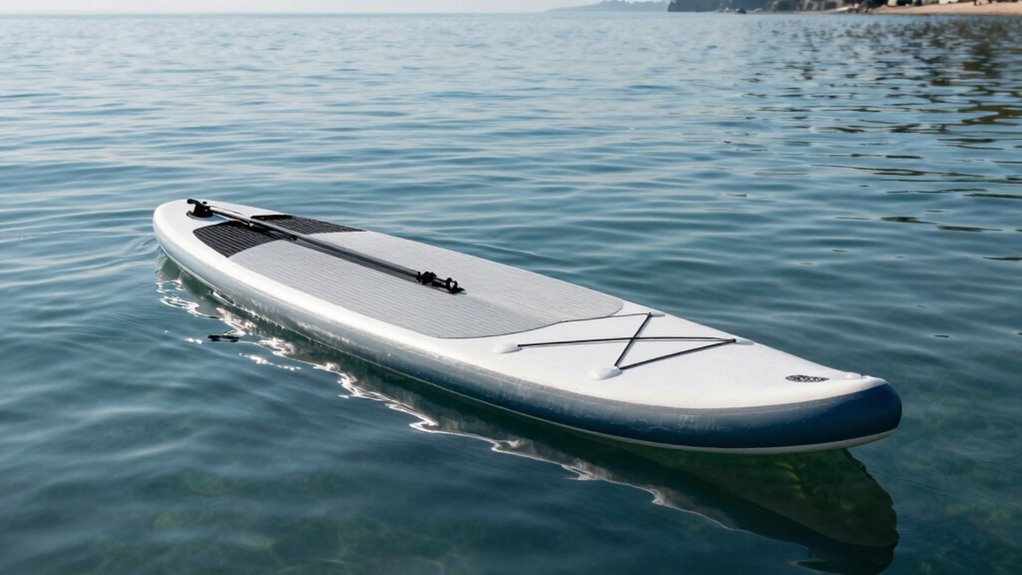

When choosing a touring paddle board, consider a length of 12 to 14 feet for better tracking and glide over long distances, while wider boards (28-30 inches) provide more stability but may be slightly slower. Longer, narrower boards improve speed and water cutting, making them ideal for extended trips, but can be harder to maneuver in tight spots. Understanding how length, width, and shape influence performance can help you find the right fit—keep exploring to learn how to optimize your paddle experience.

Get the little things that make your day delivered free with Prime
- Fast, free delivery on millions of items
- Prime Video, Amazon Music and more included
- Member-only deals all year
Key Takeaways
- Longer boards (12-14 ft) improve tracking and glide, ideal for long-distance touring.
- Width (28-30 inches) offers stability, important for extended paddling and carrying gear.
- Longer, streamlined shapes enhance water-cutting ability and overall tracking performance.
- Narrower boards are faster but may sacrifice stability; wider boards boost confidence for beginners.
- Proper hull design and shape optimize tracking, reducing paddling effort over long trips.
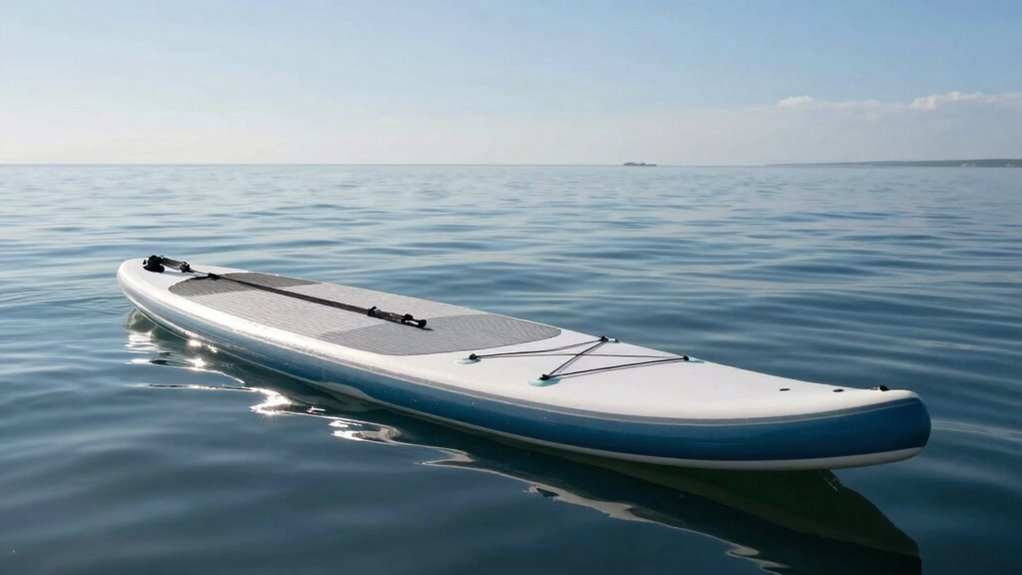
If you’re looking to explore longer distances on the water, a touring paddle board is your best companion. The length, width, and tracking of your board are essential factors that influence your overall experience. When it comes to paddleboard stability, these elements become even more significant, especially if you’re aiming for efficiency and comfort over extended trips. A touring paddle board design typically emphasizes a longer and narrower shape, which helps improve tracking and glide, making it easier to maintain a straight course over long distances.
The length of your touring paddle board usually ranges from 12 to 14 feet. Longer boards are advantageous because they tend to have better tracking, meaning they stay straight with less effort from you. This is especially helpful if you’re covering long stretches on the water, as it reduces fatigue and allows you to focus on your paddling technique. However, keep in mind that longer boards can be a bit more challenging to maneuver in tight spots or choppy water, so choose a length that balances stability with your skill level and typical water conditions. Additionally, the overall design of the board influences how manageable it feels in various conditions. A well-designed touring board considers these factors to optimize performance and ease of use.
Width also plays a significant role in paddleboard stability. Most touring boards are between 28 and 30 inches wide. A wider board offers more stability, which is essential when you’re paddling for long hours or carrying gear. It helps you stay balanced and confident, especially if you’re new to touring paddle boarding. That said, wider boards can be slightly slower because they create more resistance in the water, so if speed is your priority, a narrower design might serve you better. Ideally, you want a balance between width and length, with the touring paddle board design leaning towards a narrower, elongated shape to optimize glide and tracking without sacrificing too much stability. The shape of the board also plays a crucial role in maintaining stability and maneuverability during your paddles. Furthermore, the materials used in construction can influence the board’s weight and durability, impacting your overall experience in different water conditions.
Tracking—the ability of the board to go straight—is influenced heavily by both length and shape. A longer, pointed nose helps the board cut through the water efficiently, reducing the need for constant correction. This streamlined design enhances your overall paddling experience, making long-distance travel more effortless. When selecting a touring paddle board, look for one with a well-designed hull that emphasizes smooth, predictable tracking. This will conserve your energy, especially over multi-hour paddles, and make your journey more enjoyable. Additionally, a well-balanced design that considers board stability can significantly improve your confidence and comfort during extended paddles.
As an affiliate, we earn on qualifying purchases.
Frequently Asked Questions
How Do Paddle Board Dimensions Affect Stability?
Your paddle board’s dimensions directly influence stability; wider boards offer better balance considerations, making them ideal for beginners or those seeking extra stability. Longer boards tend to track straighter, helping you maintain control on the water. Material impacts also matter: lightweight, durable materials enhance stability and ease of handling. Overall, choosing the right size and quality material helps you stay balanced, confident, and safe during your paddleboarding adventures.
What Is the Ideal Paddle Board Length for Beginners?
You’ll find that a 10 to 11-foot paddle board is ideal for beginners, offering a great balance of stability and maneuverability. When choosing your board, consider material choices like lightweight epoxy for durability and ease of handling. Color options also matter—they can boost confidence and visibility on the water. Starting with these dimensions and features helps you build confidence and enjoy your paddling adventures from the very first stroke.
How Does Width Influence Paddle Board Speed?
A wider paddle board tends to be slower because it creates more resistance against the water, affecting speed. You should consider material durability to guarantee your board withstands rough conditions, and bright color visibility to stay safe and easily spotted on the water. While width impacts speed, balancing it with stability and durability makes for a better overall paddleboarding experience, especially if you’re planning longer tours or rougher waters.
Can a Longer Board Handle Rougher Water?
A longer paddle board generally handles rougher water better, offering increased stability and smoother wave navigation. Did you know that some touring boards can be over 12 feet long? While they excel in choppier conditions, portability becomes a concern, as longer boards are harder to carry and store. So, if you’re tackling rough waters frequently, a longer board is advantageous, but consider your ability to transport it easily.
What Factors Impact Paddle Board Tracking Performance?
Your paddle board’s tracking performance is influenced mainly by paddle board material and paddle design. A stiffer, durable material like epoxy enhances stability, helping the board stay on course. Additionally, a well-designed paddle, with appropriate blade shape and length, improves propulsion and direction control. Selecting a board with a streamlined shape and matching paddle design guarantees better tracking, especially in choppy water, giving you a smoother, more controlled paddle experience.
wide stability paddle board 28 inch
As an affiliate, we earn on qualifying purchases.
As an affiliate, we earn on qualifying purchases.
Conclusion
So, choosing the right touring paddle board isn’t just about specs—it’s about finding a good fit that feels like an extension of yourself on the water. With a bit of patience and a keen eye, you’ll discover the perfect balance of length, width, and tracking that makes every paddle stroke smoother and more enjoyable. Embrace the journey, and soon enough, your paddle board will become your favorite escape, gently guiding you through tranquil waters and scenic adventures.
long water tracking paddle board
As an affiliate, we earn on qualifying purchases.
As an affiliate, we earn on qualifying purchases.
lightweight touring paddle board
As an affiliate, we earn on qualifying purchases.
As an affiliate, we earn on qualifying purchases.
Evergreen bestsellers Picks
bestsellers
As an affiliate, we earn on qualifying purchases.