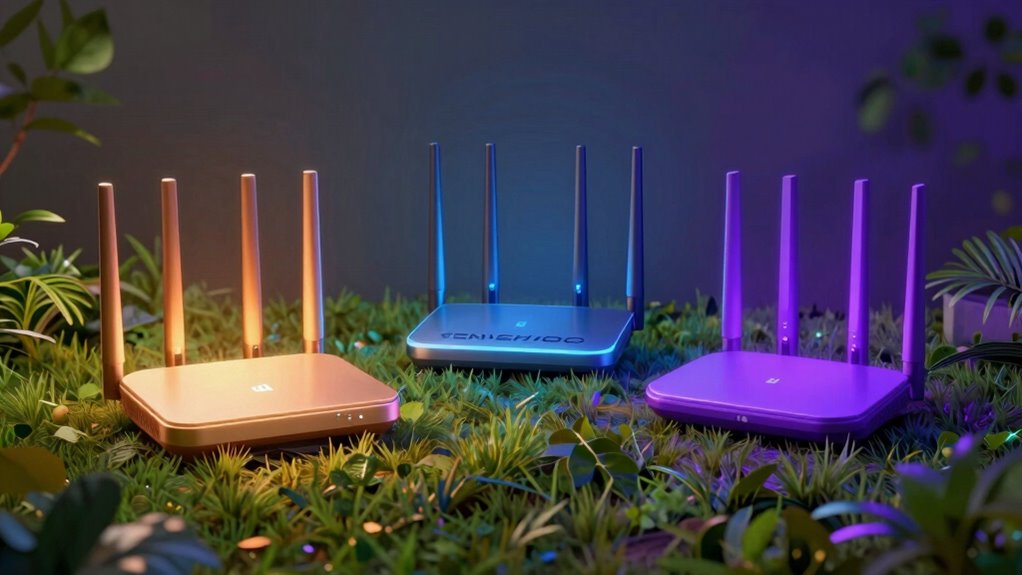

When comparing 4 GHz, 5 GHz, and 6 GHz Wi-Fi, you should consider your needs. The 4 GHz band offers wider coverage, great for larger spaces. The 5 GHz band delivers faster speeds with less interference, ideal for streaming and gaming in crowded areas. The 6 GHz band is the latest, providing more channels for high-speed tasks. Understanding these differences helps you choose the right frequency, and there’s so much more to explore on optimizing your Wi-Fi experience.
Key Takeaways
- The 4 GHz band offers wider coverage and better wall penetration, ideal for larger spaces with obstacles.
- The 5 GHz band provides faster speeds, perfect for high-density environments and activities like streaming and gaming.
- The 6 GHz band allows for more channels and future-proof performance, particularly suited for advanced applications and high-speed tasks.
- Range and speed trade-offs exist: 2.4 GHz covers more distance but at lower speeds, while 5 GHz delivers higher speeds over shorter ranges.
- Regular hardware upgrades and firmware updates are essential for compatibility and optimal performance with newer Wi-Fi technologies.

TP-Link AXE5400 Tri-Band WiFi 6E Router (Archer AXE75), 2025 PCMag Editors' Choice, Gigabit Internet for Gaming & Streaming, New 6GHz Band, 160MHz, OneMesh, Quad-Core CPU, VPN & WPA3 Security
Tri-Band WiFi 6E Router – Up to 5400 Mbps WiFi for faster browsing, streaming, gaming and downloading, all…
As an affiliate, we earn on qualifying purchases.
As an affiliate, we earn on qualifying purchases.
Understanding Wi-Fi Frequency Bands: 4 GHz, 5 GHz, and 6 GHz
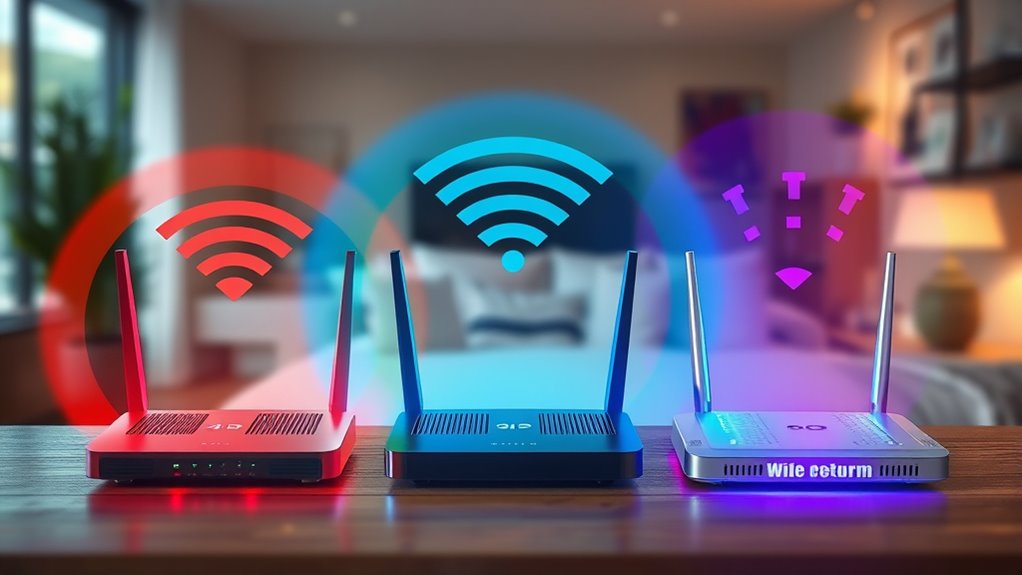
When it comes to Wi-Fi, understanding the frequency bands—4 GHz, 5 GHz, and 6 GHz—can greatly impact your internet experience. Each band has its own characteristics and is governed by various Wi-Fi standards. The 4 GHz band offers wider coverage and better penetration through walls, making it ideal for general browsing. However, it has lower speeds due to congestion from devices. The 5 GHz band provides faster speeds and less interference, perfect for streaming and gaming, but it has a shorter range. The newer 6 GHz band, part of Wi-Fi 6E, enhances frequency utilization, allowing for more channels and reduced congestion. Knowing these differences helps you choose the right band for your needs.

TP-Link AC1200 WiFi Extender, 2023 Engadget Best Budget Pick, 1.2Gbps Signal Booster for Home, Dual Band 5GHz/2.4GHz, Covers Up to 1500 Sq.ft and 30 Devices,Support Onemesh, One Ethernet Port (RE315)
𝐒𝐭𝐫𝐨𝐧𝐠𝐞𝐫 𝐖𝐢-𝐅𝐢 𝐢𝐧 𝐄𝐯𝐞𝐫𝐲 𝐂𝐨𝐫𝐧𝐞𝐫 – Enjoy extended coverage with strong performance powered by Adaptive Path Selection and…
As an affiliate, we earn on qualifying purchases.
As an affiliate, we earn on qualifying purchases.
Choosing the Right Frequency for Your Setup
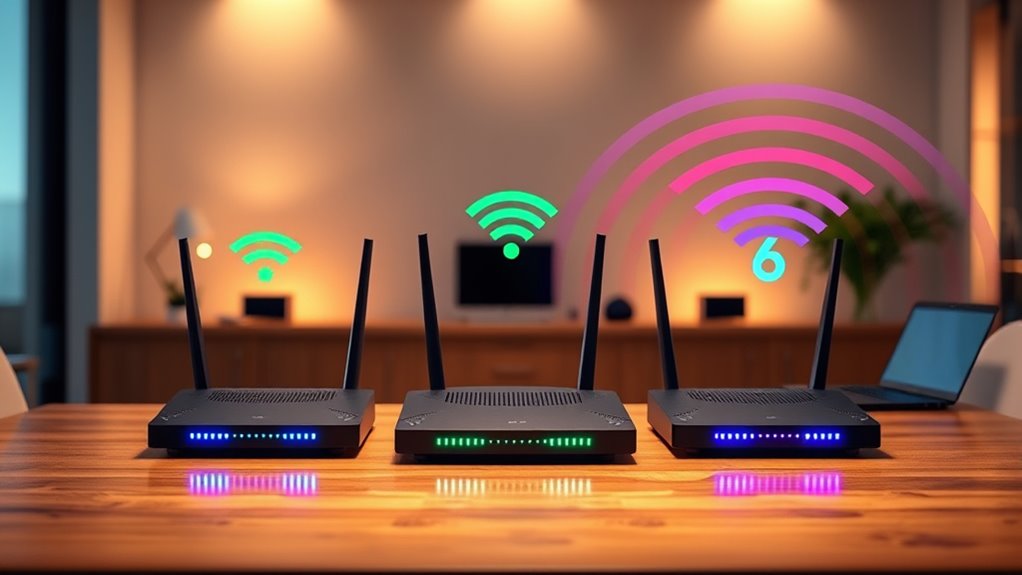
Selecting the right Wi-Fi frequency for your setup can greatly enhance your internet experience. To make an informed choice, consider your frequency selection strategies. If you’re in a crowded area or have multiple devices, the 5 GHz band may be more suitable due to its ability to handle higher speeds with less interference. However, if you need better range for devices farther from the router, the 4 GHz band could be your best bet. For cutting-edge performance, 6 GHz provides the fastest speeds but may not yet support all devices. Keep in mind your ideal setup considerations, such as the layout of your space and the types of activities you’ll be doing online. Balancing these factors will lead you to the ideal frequency.

TP-Link AC600 USB WiFi Adapter for PC (Archer T2U Plus)- Wireless Network Adapter for Desktop with 2.4GHz, 5GHz High Gain Dual Band 5dBi Antenna, Supports Win11/10/8.1/8/7/XP, Mac OS 10.9-10.14, Black
𝐋𝐨𝐧𝐠 𝐑𝐚𝐧𝐠𝐞 𝐀𝐝𝐚𝐩𝐭𝐞𝐫 – This compact USB Wi-Fi adapter provides long-range and lag-free connections wherever you are. Upgrade…
As an affiliate, we earn on qualifying purchases.
As an affiliate, we earn on qualifying purchases.
Key Differences: Comparing Range, Speed, and Interference
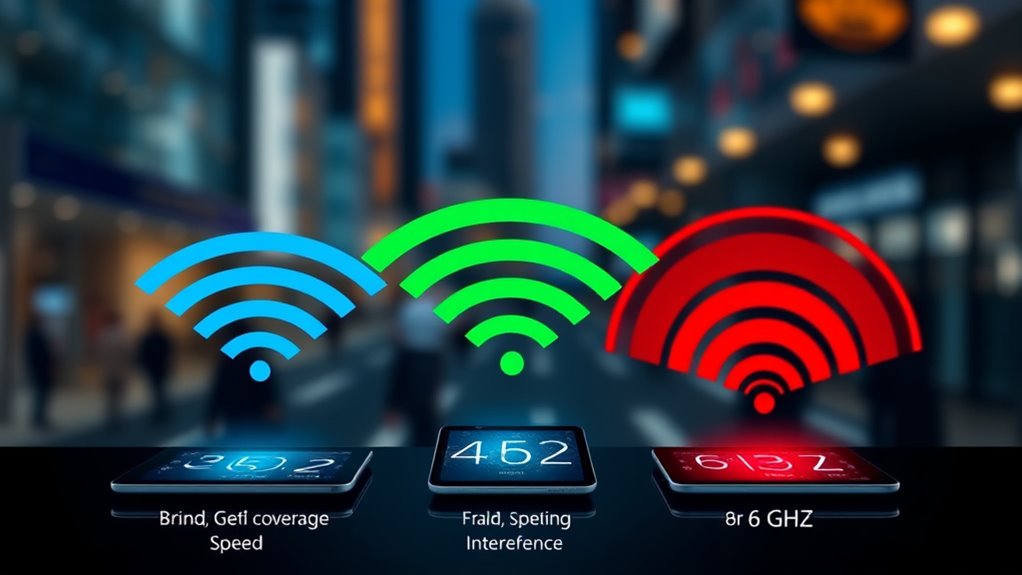
When choosing between Wi-Fi frequencies, understanding range and speed is essential. You’ll notice that lower frequencies often provide better range, while higher frequencies can deliver faster speeds. However, interference can impact both, so it’s important to weigh these factors based on your needs.
Range Comparison
While you might prioritize speed in your Wi-Fi connection, understanding the range differences between the 2.4 GHz and 5 GHz bands is equally important. The 2.4 GHz band offers broader coverage areas, allowing your devices to maintain a connection over greater distances and through obstacles like walls. However, this comes at the cost of signal strength, which can be weaker in crowded environments due to interference from other devices. On the other hand, the 5 GHz band provides a more robust signal strength with faster speeds, but its coverage areas are typically smaller. Consequently, if you need reliable connectivity throughout your home, the 2.4 GHz band may be your best bet, especially in larger spaces.
Speed Analysis
Understanding the speed differences between the 2.4 GHz and 5 GHz bands is essential for optimizing your Wi-Fi experience. The 5 GHz band generally offers higher speed benchmarks, delivering faster data throughput compared to the 2.4 GHz band. While 2.4 GHz can provide speeds up to 600 Mbps, the 5 GHz band can reach up to 1300 Mbps or more, depending on your router and devices. This speed advantage makes 5 GHz ideal for activities like online gaming and streaming high-definition videos. However, remember that the 2.4 GHz band, with its longer range, is better for covering larger areas. Balancing your device usage between these bands can greatly enhance your overall connectivity and performance.

TP-Link AX1800 WiFi 6 Router (Archer AX21) – Dual Band Wireless Internet, Gigabit, Easy Mesh, Works with Alexa – A Certified for Humans Device, Free Expert Support
DUAL-BAND WIFI 6 ROUTER: Wi-Fi 6(802.11ax) technology achieves faster speeds, greater capacity and reduced network congestion compared to…
As an affiliate, we earn on qualifying purchases.
As an affiliate, we earn on qualifying purchases.
Wi-Fi Frequency: Benefits of 4 GHz
If you’re looking for a reliable Wi-Fi connection, the 4 GHz frequency band offers several advantages that can enhance your online experience. One of the key benefits is its impressive 4 GHz coverage, allowing you to enjoy a stable connection even in larger spaces. Here are some notable 4 GHz advantages:
- Better penetration: It can easily pass through walls and obstacles.
- Wider range: Ideal for larger homes or offices, ensuring connectivity in distant areas.
- Less sensitivity to interference: It’s more resistant to physical barriers and electronic devices.
- Compatibility: Most devices support the 4 GHz band, making it accessible for everyone.
With these benefits, the 4 GHz frequency can be a solid choice for your networking needs.
Wi-Fi Frequency: Why Choose 5 GHz?

If you’re looking for faster internet speeds and less interference, 5 GHz Wi-Fi might be the right choice for you. This frequency band offers higher speed benefits, making it ideal for activities like streaming and gaming. Plus, with reduced interference issues, you’ll enjoy a smoother online experience.
Higher Speed Benefits
While many users still rely on the 2.4 GHz frequency for their Wi-Fi needs, choosing the 5 GHz band can greatly enhance your online experience. With its higher bandwidth, you’ll enjoy faster speeds that support demanding applications. Plus, you’ll benefit from low latency, which is essential for online gaming and video conferencing.
Here are some key advantages of using 5 GHz:
- Faster data transfer rates for streaming and downloads
- Improved performance with multiple devices connected
- Better support for high-definition content
- Enhanced gaming experience with reduced lag
Switching to 5 GHz isn’t just about speed; it’s about optimizing your entire Wi-Fi experience. You’ll notice the difference immediately!
Reduced Interference Issues
One of the standout benefits of choosing the 5 GHz frequency is its ability to reduce interference issues. Unlike 2.4 GHz, which suffers from signal congestion due to numerous devices, 5 GHz offers a cleaner spectrum. This means you’ll experience better performance and reliability, especially in crowded areas.
| Benefit | 5 GHz Frequency |
|---|---|
| Signal Congestion | Minimizes interference |
| Noise Reduction | Clearer communication |
| Device Compatibility | Supports modern gadgets |
What’s New With the 6 GHZ Band?
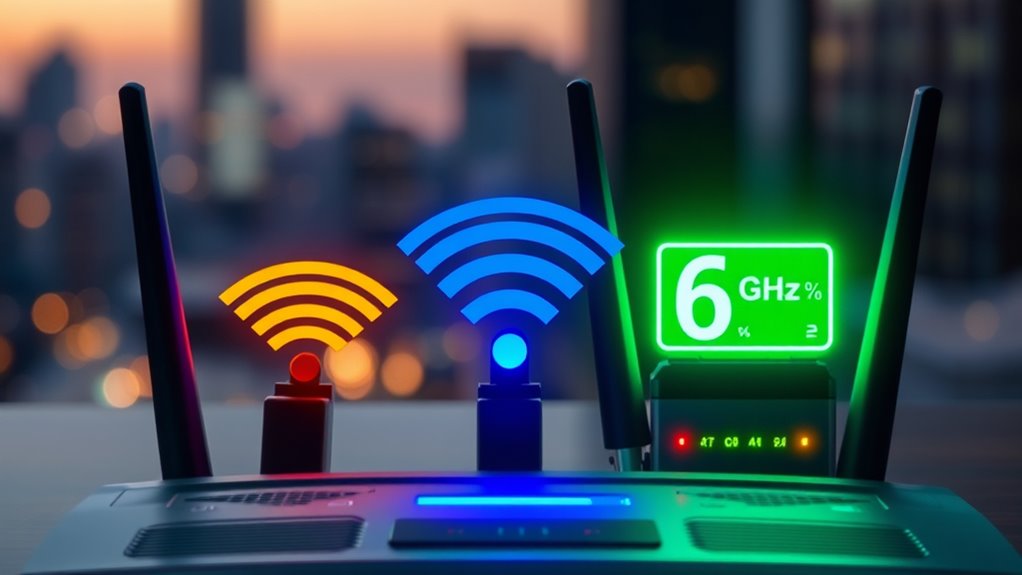
As the demand for faster and more reliable internet connections grows, the introduction of the 6 GHz band is a game changer for Wi-Fi technology. This new frequency offers significant advantages, but it also comes with limitations you should consider.
The 6 GHz band revolutionizes Wi-Fi with faster speeds and less congestion, but it also has its limitations.
- Higher speeds: Enjoy faster data transfer rates for streaming and gaming.
- Less congestion: Experience reduced interference from neighboring networks.
- Expanded channels: Access more non-overlapping channels for better performance.
- Future-proofing: Prepare for the increasing number of connected devices.
- The 6 GHz band can also help reduce interference from microplastics in dust, which can sometimes impact electronic device performance and signal quality.
Despite its impressive 6 GHz advantages, keep in mind the 6 GHz limitations, such as shorter range and reduced wall penetration. As you weigh your options, understanding these factors will help you make informed decisions about your Wi-Fi setup.
Best Use Cases for 4 GHz, 5 GHz, and 6 GHz
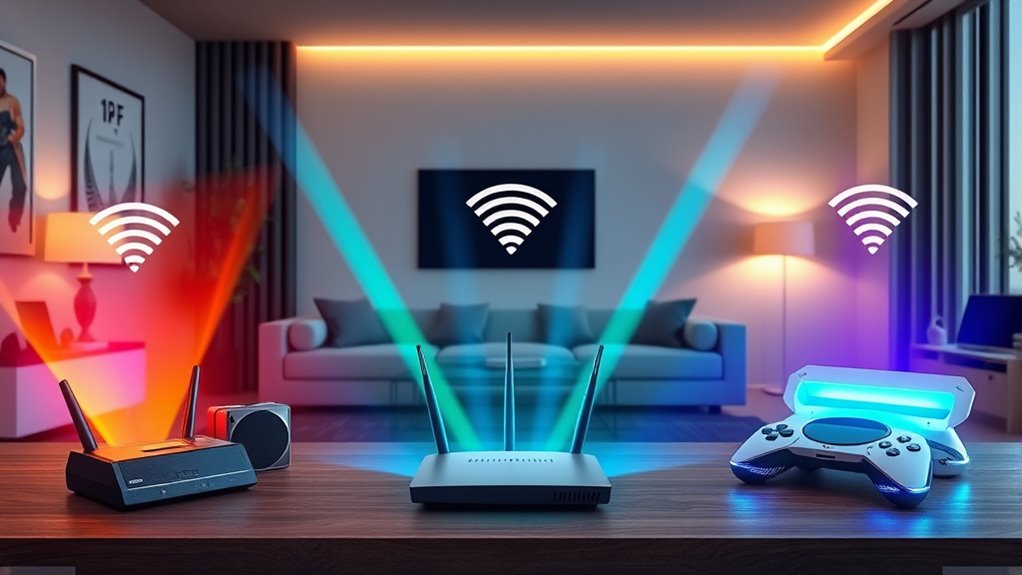
Choosing the right Wi-Fi frequency band—4 GHz, 5 GHz, or 6 GHz—depends on your specific needs and environment. Here’s a quick guide to help you decide:
| Frequency Band | Best Use Cases |
|---|---|
| 4 GHz | Larger areas, devices with low bandwidth needs, like smart home gadgets. |
| 5 GHz | High-speed tasks, online gaming, streaming in medium-sized spaces with fewer obstacles. |
| 6 GHz | Cutting-edge devices, high-bandwidth applications, and ideal environments with minimal interference. |
For the best devices, consider your usage. In crowded settings, the 5 GHz band excels, while 4 GHz works well for wider coverage. If you’re future-proofing, invest in 6 GHz for next-gen performance.
Tips for Troubleshooting Connection Issues
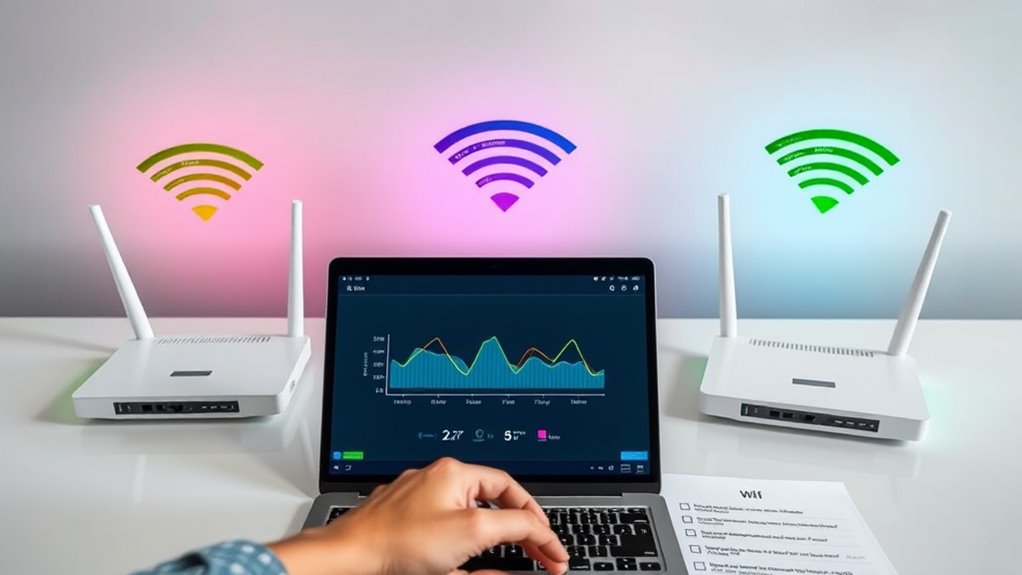
When your Wi-Fi connection falters, it can be frustrating, especially if you rely on it for work or entertainment. Here are some tips to help you troubleshoot:
Wi-Fi issues can be frustrating, especially when you depend on it for work or entertainment.
- Check signal strength: Verify you’re within range of your router. Weak signals can cause drops.
- Assess device compatibility: Confirm your devices support the frequency you’re using; not all devices work well on 5 GHz or 6 GHz.
- Monitor network congestion: Too many devices can slow down your connection. Disconnect unused devices to free up bandwidth.
- Optimize router placement: Position your router in a central location, away from walls or obstructions, to enhance coverage.
- Stay informed about Wi-Fi standards to ensure your network is utilizing the latest technology for optimal performance. For improved connectivity, consider upgrading your hardware to support newer frequencies and faster speeds. Additionally, keeping your firmware up to date can help improve network stability and security.
Future Trends: What’s Next for Wi-Fi Technology
With the rapid evolution of technology, the future of Wi-Fi promises exciting advancements that could reshape how you connect to the internet. Wi-Fi innovations are on the horizon, including faster speeds, improved reliability, and enhanced security features. As the demand for seamless connectivity grows, expect to see the rise of Wi-Fi 6E and future iterations that utilize the 6 GHz band, offering less congestion and higher throughput. These developments will facilitate smarter homes and IoT devices, allowing you to enjoy smoother streaming, gaming, and remote work experiences. Future connectivity is all about creating a more efficient and user-friendly online environment, ensuring you stay connected no matter where you are. Embrace the changes—your internet experience is about to get a whole lot better!
Frequently Asked Questions
Can I Use Multiple Frequency Bands Simultaneously?
Yes, you can use multiple frequency bands simultaneously to enhance your network. By utilizing band selection, your devices can automatically switch between bands for peak performance. This approach helps improve speed and reduce congestion, making your internet experience smoother. For network optimization, verify your router supports dual-band or tri-band technology. This way, you’ll get the best of all frequency bands, allowing for better connectivity and performance across your devices.
Does My Device Need to Support All Frequency Bands?
No, your device doesn’t need to support all frequency bands. However, having device compatibility with multiple bands can give you significant frequency band advantages. For instance, if your device supports both 5 GHz and 6 GHz, you’ll likely enjoy faster speeds and less interference. If it only supports one band, you might miss out on these benefits, so consider upgrading if you want to take full advantage of your network’s potential.
How Does Wi-Fi Frequency Affect Battery Life on Devices?
Wi-Fi frequency can considerably impact your device’s battery consumption. If you think using higher frequencies won’t affect battery life, think again. Devices operating on 5 GHz and 6 GHz tend to drain batteries faster due to the increased processing power needed to maintain a stable connection. Lower frequencies like 2.4 GHz may conserve battery life, making them a better choice for longer usage. Remember, your device needs to balance performance with battery efficiency.
Are There Health Concerns Associated With Different Wi-Fi Frequencies?
There aren’t significant health concerns associated with different Wi-Fi frequencies. Most health studies indicate that Wi-Fi radiation is well below safety guidelines set by organizations like the WHO. Frequency exposure from devices is generally considered safe for everyday use. While some people worry about potential effects, current research hasn’t established a direct link between Wi-Fi frequencies and adverse health outcomes. You can confidently use Wi-Fi without feeling overly concerned about your health.
How Do Walls and Obstacles Impact Wi-Fi Frequency Performance?
Walls and obstacles are like barriers in a marathon, slowing down your Wi-Fi signal. As you navigate around these barriers, you’ll notice significant signal degradation, especially with higher frequency ranges. Lower frequencies can penetrate walls better, while higher frequencies struggle, leading to weaker signals. So, if you’ve got thick walls or lots of furniture, your connection might stutter like a runner out of breath—frustrating when you just want to surf smoothly!
Conclusion
In traversing the Wi-Fi landscape, choosing between 4 GHz, 5 GHz, and 6 GHz is like picking the perfect lane on a busy highway. Each band has its strengths, whether you crave extensive coverage or lightning-fast speeds. As technology evolves, imagine a future where seamless connectivity wraps around you like a cozy blanket, enhancing your online experiences. So, weigh your needs, explore each frequency, and embrace the possibilities that await in the ever-expanding world of Wi-Fi.