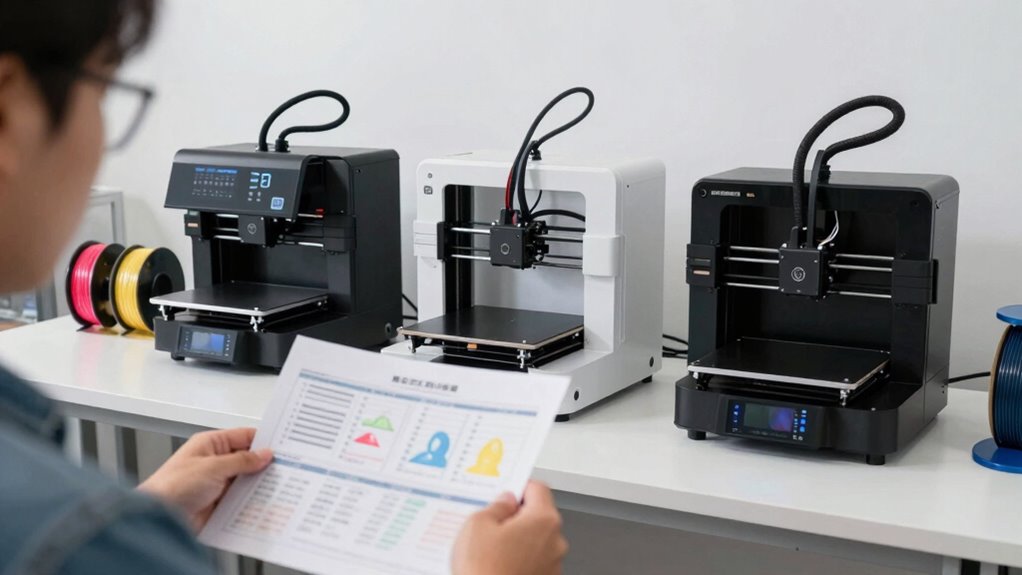

To choose a 3D printer, start by identifying your specific project goals, such as whether you need prototypes or intricate designs. Next, explore available printer types like FDM, SLA, and SLS, each with different features. Consider the materials you’ll use, set a realistic budget, and assess the printer’s usability. Don’t forget to check user reviews for insights on performance and support. Keep going, and you’ll discover more essential tips for making the right choice!
Key Takeaways
- Define your 3D printing goals by identifying project types, complexity, and required print quality for optimal printer selection.
- Evaluate different printer types (FDM, SLA, SLS) based on your specific needs, considering their strengths and weaknesses.
- Choose materials that align with your project requirements, focusing on properties like strength, flexibility, and finish.
- Assess the usability and setup of the printer, ensuring compatibility with design software and ease of assembly.
- Review user feedback and maintenance tips to understand long-term performance and necessary upkeep for your selected printer.

FLASHFORGE Adventurer 5M 3D Printer with Fully Auto Leveling, Max 600mm/s High Speed Printing, 280°C Direct Extruder with 3S Detachable Nozzle, CoreXY All Metal Structure, Print Size 220x220x220mm
One-Click Automatic Printing: Experience hassle-free 3D printing with the Adventurer 5M Series. Enjoy automatic bed leveling for flawless…
As an affiliate, we earn on qualifying purchases.
As an affiliate, we earn on qualifying purchases.
Identify Your 3D Printing Goals and Requirements

Before diving into the world of 3D printing, it’s essential to pinpoint your specific goals and requirements. Think about the type of projects you want to undertake. Are you creating simple prototypes or intricate designs? Understanding project complexity will guide your printer selection. High print quality is vital if you need detailed models, while a more basic printer may suffice for less demanding tasks. Consider the materials you’ll use and how they impact the print quality. Additionally, think about your budget and how much you’re willing to invest. By clarifying these factors, you’ll set a solid foundation for choosing a printer that meets your needs, ensuring your 3D printing journey is successful and satisfying.

Siraya Tech Cast 3D Printer Resin Easier to Burn and Print Clean Burnout Great Smooth Surface High Resolution Castable 405nm UV-Curing Resin for Thicker Designs and Metal Parts (True Blue, 500g)
EASIER TO BURN AND CLEAN- Siraya Tech castable resin material contains some wax, so this cast resin is…
As an affiliate, we earn on qualifying purchases.
As an affiliate, we earn on qualifying purchases.
What Types of 3D Printers Are Available?
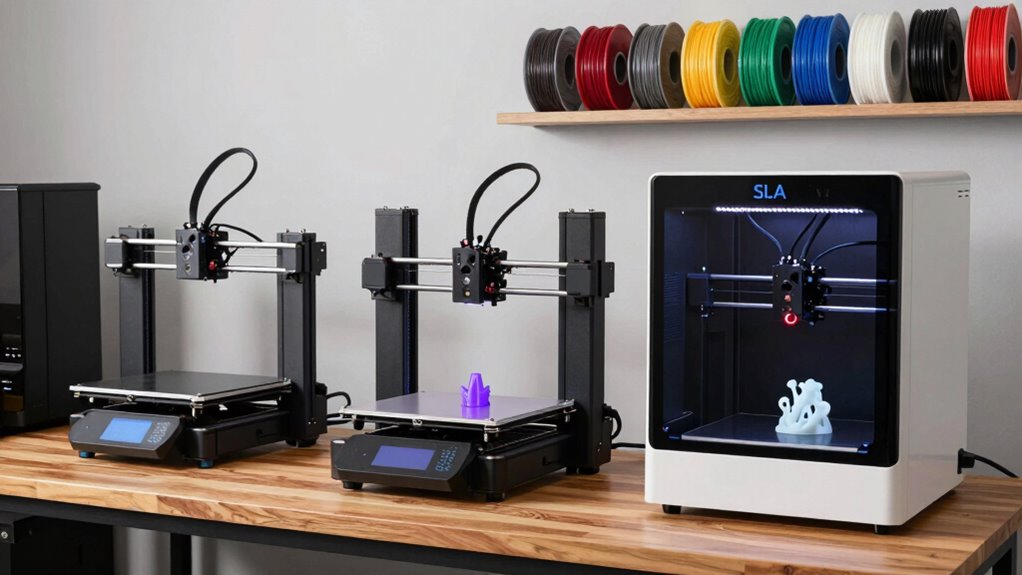
Once you’ve identified your 3D printing goals, it’s time to explore the various types of 3D printers available on the market. You’ll find options tailored for different needs, whether you’re a hobbyist or an industrial user.
Explore the diverse 3D printer options available to find the perfect match for your unique printing goals.
- FDM Printers: Great for basic projects and multi-material printing, commonly used by desktop enthusiasts.
- SLA Printers: Utilize resin to produce high-resolution models, perfect for detailed work.
- SLS Printers: Employ powdered materials for strong, functional parts, often used in industrial settings.
Each printer type has its strengths and weaknesses, so consider your specific requirements before making a choice. Whether you’re looking for a desktop printer or an industrial solution, there’s a perfect fit out there for you.

RJOKMT 300L 3D Printer Filament Storage Cabinet with Dehumidifier | Industrial Sealed Dehumidifying Cabinet Holds 160 Rolls -Compatible with PLA/ABS/TPU (300L Black)
【Smart Dehumidification & Humidity Control】Built-in high-efficiency dehumidifying module maintains humidity, protecting filaments (PLA/ABS/PETG) from moisture and oxidation for…
As an affiliate, we earn on qualifying purchases.
As an affiliate, we earn on qualifying purchases.
Compare FDM, SLA, and SLS Technologies
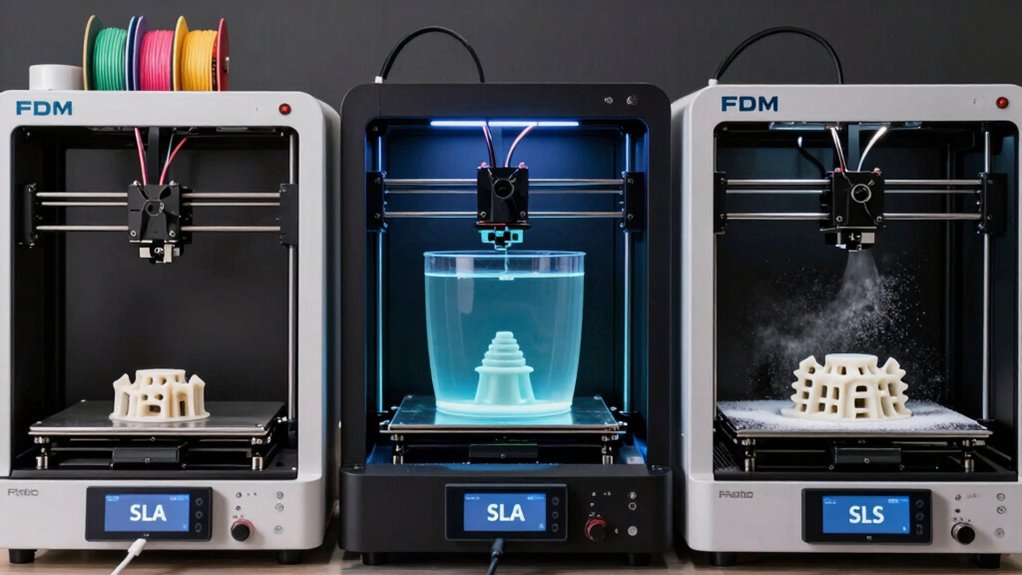
When you compare FDM, SLA, and SLS technologies, you’ll notice distinct differences that cater to various printing needs. FDM offers advantages like affordability and ease of use, making it popular for beginners. However, SLA has disadvantages, such as longer print times and the need for post-processing. It excels in detail but may not be suitable for larger projects. SLS, on the other hand, is ideal for functional prototypes and complex geometries, providing robust applications in industries like aerospace and medical. Additionally, understanding contrast ratio can help in selecting the right projector for detailed visualization of your prints.

Creality 3D Printer Tool Kit, 74Pcs 3D Printing Tool Wrap Kit Assembly/Removal/Filament Cutting Set 3D Printer Accessories for All FDM Printers Cleaning Finishing Printing
【Professional Versatility & Wide Application】Disassemble, assemble, connect, grind, cut, cleaning, scrape, shovel.This 3D Printer Tool Wrap Kit Pro…
As an affiliate, we earn on qualifying purchases.
As an affiliate, we earn on qualifying purchases.
Choose the Right Materials for Your 3D Printing Projects
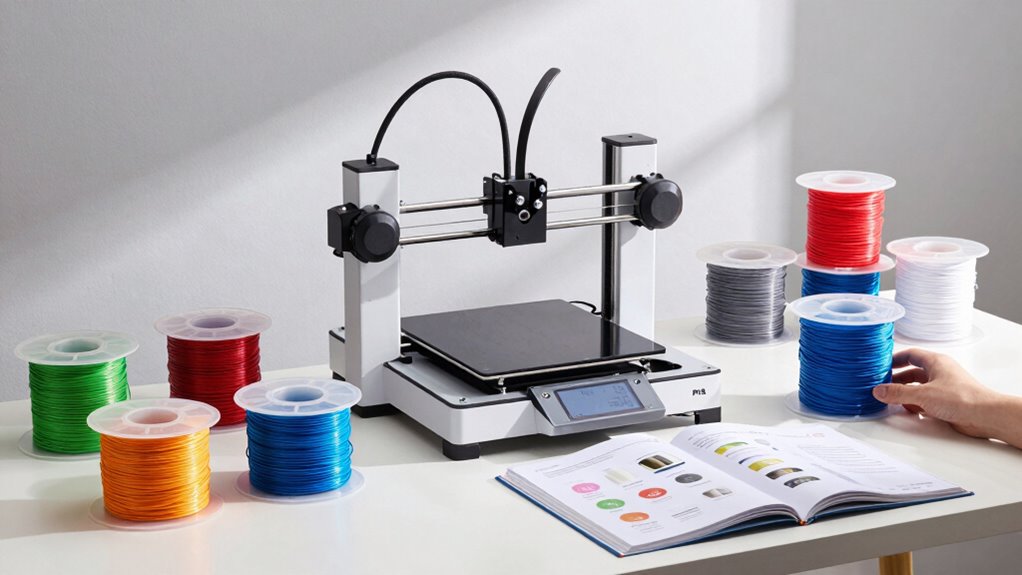
How do you know which materials are best for your 3D printing projects? It’s essential to take into account the material properties and how they align with your printing techniques. Different materials can yield varied results regarding strength, flexibility, and finish. Here are some factors to think about:
- Strength and Durability: Some projects require robust materials like ABS or Nylon.
- Flexibility: If you’re creating items that need to bend, consider TPU or other flexible filaments.
- Ease of Use: PLA is great for beginners due to its low warping and easy adhesion.
Set a Realistic Budget for Your 3D Printer
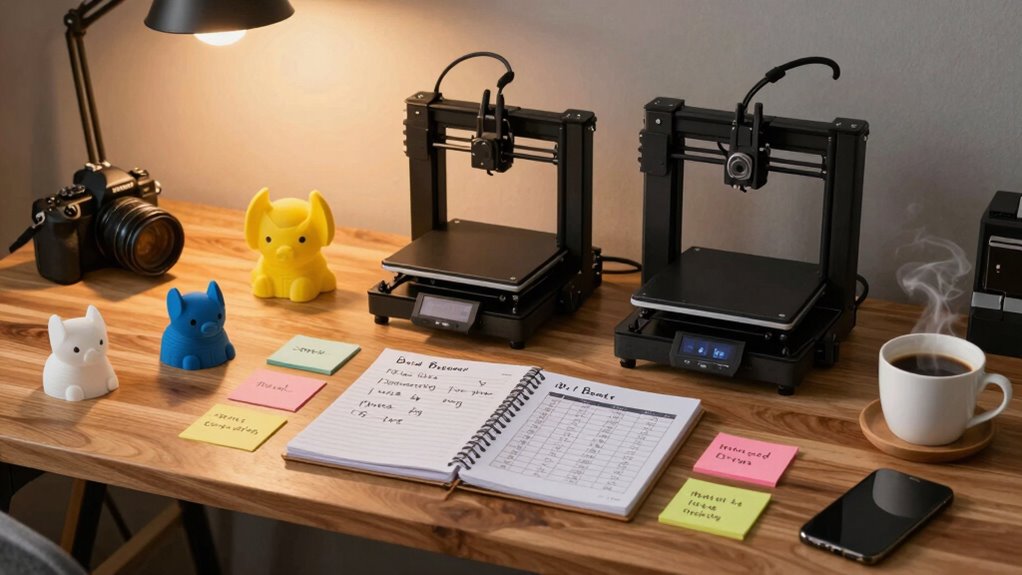
When setting a budget for your 3D printer, start by identifying the essential features you need for your projects. Consider exploring financing options that can help make your purchase more manageable. Balancing your desired capabilities with your budget will set you up for success.
Determine Essential Features
As you plunge into the world of 3D printing, it is crucial to set a realistic budget that aligns with your needs and expectations. Consider the essential features that will impact your experience, including:
- Print quality: Higher quality usually requires a larger investment, so decide how detailed your prints need to be.
- Build volume: Assess whether you’ll be printing small prototypes or larger models, as this affects the size of your printer and budget.
- Material compatibility: Different printers work with various types of filaments, which can influence ongoing costs.
Explore Financing Options
Considering your budget is essential for choosing the right 3D printer. Start by determining how much you’re willing to spend, keeping in mind that prices can vary widely based on features and capabilities. Don’t forget to explore financing options that suit your needs. Lease options can be a smart way to access high-quality machines without the upfront cost, allowing you to upgrade as technology evolves. Alternatively, look into loan alternatives if you prefer ownership. These can often offer lower monthly payments and flexible terms. By setting a realistic budget and considering these financing methods, you’ll find a 3D printer that fits both your needs and your wallet.
Assess Printer Usability and Setup
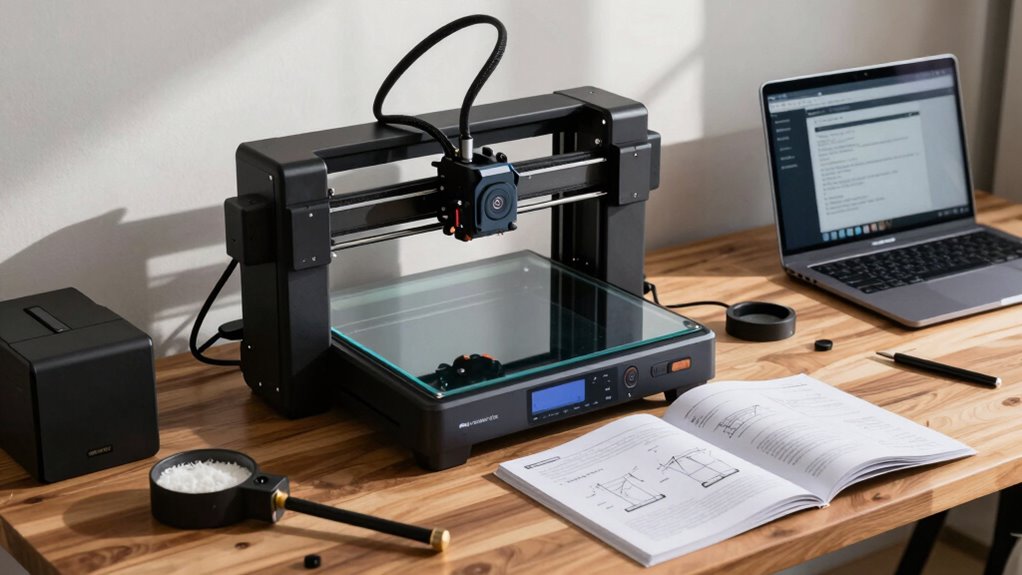
When choosing a 3D printer, think about how easy it is to set up and use right out of the box. You’ll want to evaluate the assembly complexity and whether the printer’s software is compatible with your existing tools. A user-friendly setup can make all the difference in your printing experience.
Assembly Complexity
Though many 3D printers promise easy assembly, the truth is that complexity varies greatly among models. When choosing a printer, consider the assembly ease and assembly time, as these factors can greatly affect your experience. Some printers come partially assembled, while others require complete assembly from scratch.
Here are a few things to keep in mind:
- Assembly Kit: Check if the printer includes all necessary tools and parts.
- Instructions: Look for clear, detailed assembly instructions or video tutorials.
- Community Support: A strong online community can provide invaluable help during the setup process.
Software Compatibility
After you’ve tackled assembly, the next step is ensuring the printer works seamlessly with your preferred software. Check the printer’s compatibility with design software you plan to use. Most printers support popular programs, but it’s essential to verify. Look for any necessary software updates that may enhance performance or compatibility.
Also, explore the printer’s user interface. A well-designed interface can make your experience smoother, especially if you’re new to 3D printing. Some machines offer proprietary software that simplifies the design-to-print process. Be sure to download any required drivers and familiarize yourself with the setup. This way, you’ll avoid frustration down the line and enjoy a more efficient workflow as you bring your designs to life.
Investigate Reliable 3D Printer Brands and Support
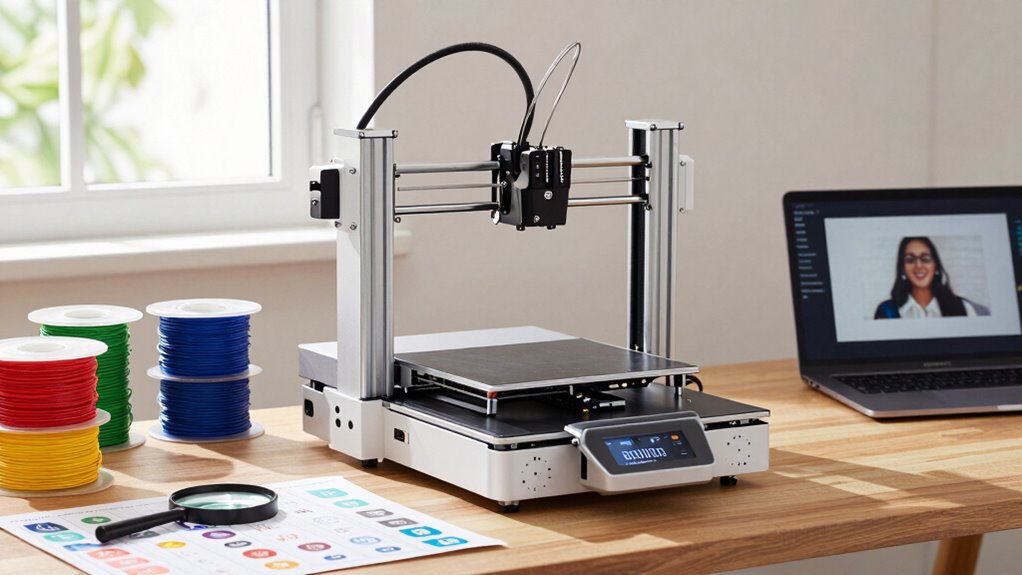
How can you guarantee that the 3D printer you choose meets your needs? Start by investigating reliable brands known for their strong reputation and excellent customer support. A good brand not only guarantees quality but also provides peace of mind through responsive service. Here are a few key points to contemplate:
- Brand Reputation: Look for brands with a proven track record in the industry.
- Customer Support: Check if they offer extensive support options, including online resources and responsive help desks.
- Warranty and Return Policies: Reliable brands provide warranties and flexible return policies to safeguard your investment.
Read User Reviews for Real-World Insights
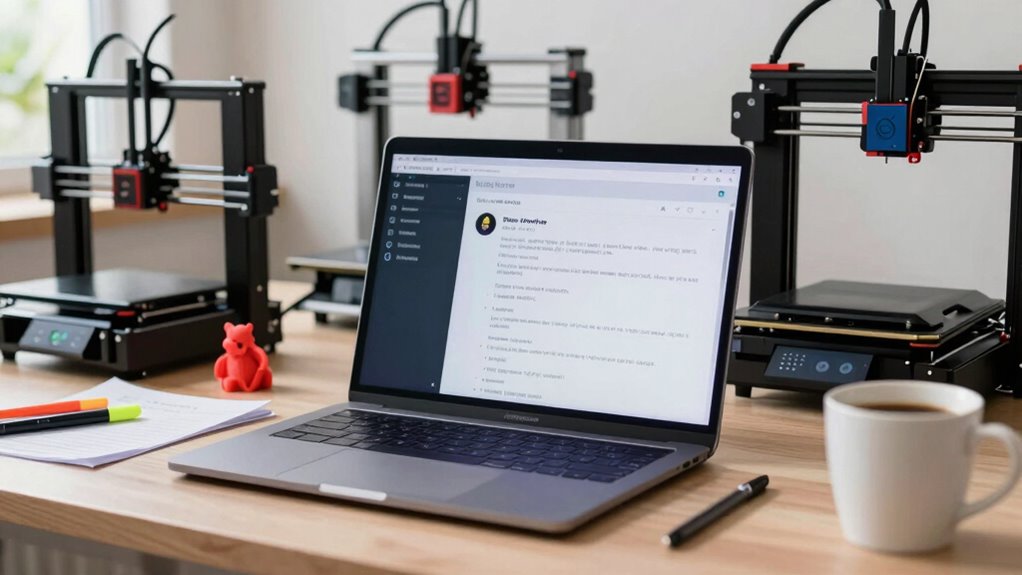
While selecting a reputable brand lays a solid foundation for your 3D printing journey, reading user reviews can provide invaluable real-world insights. User experiences and user feedback can help you identify potential issues and advantages that specs alone might not reveal. Look for patterns in reviews to gauge reliability and performance, as well as customer service responsiveness.
Here’s a quick overview of what to look for in user reviews:
| Aspect | Positive Feedback | Negative Feedback |
|---|---|---|
| Print Quality | Excellent details | Inconsistent results |
| Ease of Use | User-friendly interface | Complicated setup |
| Customer Support | Quick response times | Slow resolution of issues |
This approach helps guarantee you make an informed decision.
How to Maintain and Upgrade Your 3D Printer?
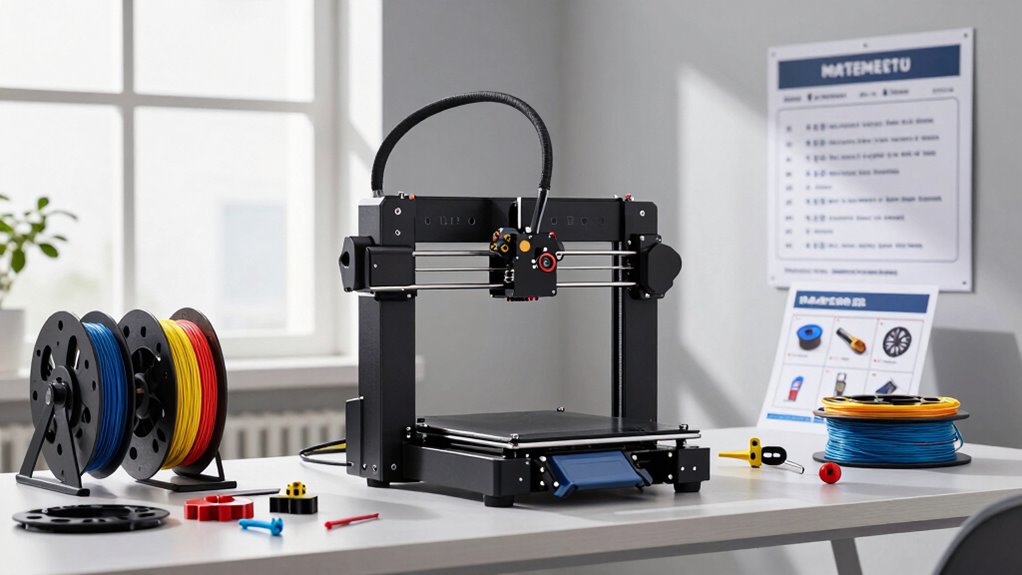
Maintaining and upgrading your 3D printer is essential for guaranteeing peak performance and longevity. Regular upkeep not only improves print quality but also extends the life of your machine. Here are some maintenance tips to contemplate:
- Clean the printer regularly: Dust and debris can affect print quality, so keep components clean.
- Check and calibrate settings: Frequent calibration guarantees accurate prints and reduces errors.
- Upgrade options: Explore better nozzles, hotends, or extruders to enhance your printer’s capabilities.
Frequently Asked Questions
How Long Does It Take to Print an Average 3D Object?
It typically takes anywhere from a few minutes to several hours to print an average 3D object. Your print speed and the object’s complexity heavily influence this time. Simpler designs can print quickly, often in under an hour, while intricate models might take several hours or even days. Always check your printer’s specifications and settings to optimize the time it takes to bring your creations to life.
Can I Use My 3D Printer for Commercial Purposes?
Yes, you can use your 3D printer for commercial purposes! In fact, the 3D printing market is projected to reach over $34 billion by 2024, showcasing its growing commercial applications. However, you must consider legal aspects, like intellectual property rights and local regulations. Make sure that you’re not infringing on patents and that you’re compliant with any licensing requirements. By staying informed, you can successfully turn your 3D printing hobby into a thriving business!
What Safety Precautions Should I Consider When 3D Printing?
When 3D printing, you should prioritize safety by ensuring proper ventilation. Fumes from certain filaments can be hazardous, so using a well-ventilated area or an exhaust system is essential. Always check filament safety data sheets for specific guidelines, and wear gloves and goggles when handling materials. Keep your workspace tidy to avoid hazards, and never leave your printer unattended while it’s in operation. Taking these precautions will help create a safer printing environment.
Are There Specific Software Recommendations for 3D Printing?
When you plunge into the world of 3D printing, it’s like stepping into a digital workshop full of endless possibilities. For slicing software, you can’t go wrong with Cura or PrusaSlicer, both user-friendly and efficient. As for design software, Tinkercad and Fusion 360 offer great options for creating your models. With these tools, you’ll transform your ideas into tangible creations, bringing your imagination to life layer by layer!
How Can I Troubleshoot Common 3D Printing Issues?
To troubleshoot common 3D printing issues, start by checking your filament types. Make sure you’re using the right temperature settings for the material. If prints aren’t sticking, focus on bed adhesion; try cleaning the bed, adjusting the nozzle height, or using adhesion aids like glue sticks or painter’s tape. If you notice warping, consider adding a brim or raft. Regularly calibrating your printer can also help avoid many issues.
Conclusion
In the world of 3D printing, picking the right printer is essential to your success. By clearly defining your goals, understanding the available technologies, and setting a budget, you can guarantee you’re not just chasing your tail. Keep in mind the importance of usability and brand support, and don’t forget to read those user reviews. With the right preparation, you’ll be well on your way to bringing your creative visions to life. Happy printing!