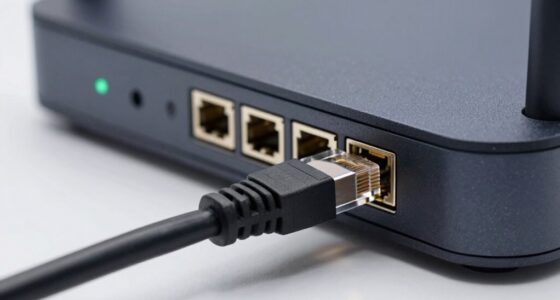
Transcoding on a NAS means your device automatically converts media files into compatible formats during playback. It guarantees your videos or music stream smoothly to any device, even if the original format isn’t supported. This feature helps you avoid manual conversions and keeps your media library accessible across different platforms. With transcoding, every device can enjoy high-quality content without interruptions. Keep exploring to discover how transcoding can optimize your media experience even further.

Get the little things that make your day delivered free with Prime
- Fast, free delivery on millions of items
- Prime Video, Amazon Music and more included
- Member-only deals all year
Key Takeaways
- Transcoding converts media files into compatible formats during playback to ensure smooth device performance.
- It enables real-time adaptation of media content, eliminating manual file conversions.
- Transcoding helps support high-definition content on devices with format restrictions.
- It maintains media quality while adjusting formats on-the-fly for diverse devices.
- Transcoding enhances media accessibility by allowing seamless streaming across various platforms and devices.
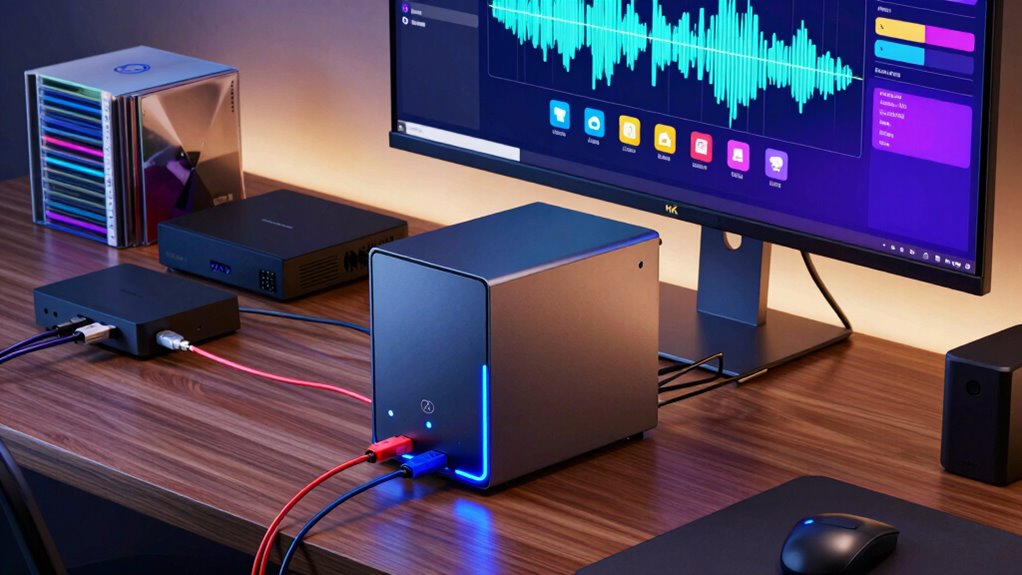
Are you looking for a reliable way to organize and access your growing media collection? A Network-Attached Storage (NAS) device can be an excellent solution, especially when it comes to managing large media libraries. One of the key features that makes NAS so powerful for media enthusiasts is transcoding, which allows you to enjoy your content seamlessly across different devices and formats. When you use a NAS for media, you can leverage cloud streaming and file synchronization capabilities to access your library anytime, anywhere. Transcoding plays an essential role here by converting media files on-the-fly to match the device’s capabilities, guaranteeing smooth playback without the need for multiple copies of the same file in different formats. transcoding is especially useful for media formats that are incompatible with certain devices, ensuring universal accessibility. Imagine you want to watch a high-definition movie on your tablet, but the original file is in a format your device doesn’t support. Your NAS, with transcoding enabled, can automatically convert the file into a compatible format during playback. This process happens in real-time, so you don’t have to manually convert files or worry about incompatible formats. Instead, your media library becomes universally accessible, whether you’re streaming directly from the NAS or using cloud streaming services linked to your device. This flexibility makes managing a large media collection much simpler because you don’t need to duplicate files in various formats or worry about device limitations. Additionally, media formats can vary widely, and transcoding ensures consistent playback regardless of format differences. The ability to streaming technology and adapt content on-the-fly helps bridge the gap between different media standards and device capabilities, making your media experience more seamless. Moreover, understanding the importance of content compatibility can help you choose the right NAS with suitable transcoding features for your needs.
NAS media server with transcoding
As an affiliate, we earn on qualifying purchases.
As an affiliate, we earn on qualifying purchases.
Frequently Asked Questions
How Does Transcoding Impact NAS Storage Capacity?
Transcoding impacts your NAS storage capacity because it involves media compression and decompression, which temporarily uses additional storage space during processing. As a result, transcoding can reduce storage efficiency, requiring more space for working files and buffers. This process may limit your media library’s size over time unless you optimize storage with effective media compression and management strategies. Proper planning guarantees transcoding doesn’t hinder your NAS’s overall storage capacity.
Can NAS Devices Transcode Multiple Streams Simultaneously?
Think of your NAS as a busy traffic controller, managing multiple streams at once. Yes, many NAS devices can transcode several streams simultaneously, especially with hardware acceleration. This allows you to enjoy remote streaming on various devices without lag or buffering. However, the number of streams depends on your NAS’s processing power. With robust hardware, you can handle multiple remote streams smoothly, ensuring everyone gets their content without delays.
What Are the Best NAS Models for Media Transcoding?
You should consider NAS models like Synology DS920+ or QNAP TS-453D for media transcoding, as they offer robust transcoding hardware acceleration. These models support a wide range of media format compatibility, making streaming smooth across various devices. Their powerful processors handle multiple streams simultaneously, ensuring seamless playback without buffering. Investing in such NAS devices helps you enjoy high-quality media experiences with reliable transcoding capabilities.
How Does Transcoding Affect Network Bandwidth Requirements?
Transcoding increases network load because your NAS converts media into compatible formats for your devices, which requires extra bandwidth. This process can lead to buffering or reduced streaming quality if your network isn’t capable of handling the additional data flow. To maintain smooth playback and ideal streaming quality, make certain your network has sufficient bandwidth, especially when multiple devices access high-resolution content simultaneously.
Is Transcoding Necessary for All Media File Formats?
Transcoding isn’t necessary for every media file format—think of it as a superhero cape that only certain formats need to wear! If your media player supports the original file type, transcoding isn’t required. It all boils down to media format compatibility and transcoding efficiency; when formats align perfectly, your NAS runs smoothly without extra processing. But when they don’t, transcoding becomes your trusty sidekick, ensuring seamless playback.
As an affiliate, we earn on qualifying purchases.
Conclusion
In conclusion, understanding transcoding is key to optimizing your media library on a NAS. It allows you to enjoy seamless playback across devices by converting files on the fly. Did you know that over 70% of home network users stream media regularly? By leveraging transcoding, you guarantee smooth, high-quality viewing experiences without hassle. So, invest in a NAS with good transcoding capabilities, and your media library will become more versatile and user-friendly.
As an affiliate, we earn on qualifying purchases.
NAS device with real-time transcoding
As an affiliate, we earn on qualifying purchases.
As an affiliate, we earn on qualifying purchases.
NFL season / tailgating Picks
team gear
As an affiliate, we earn on qualifying purchases.