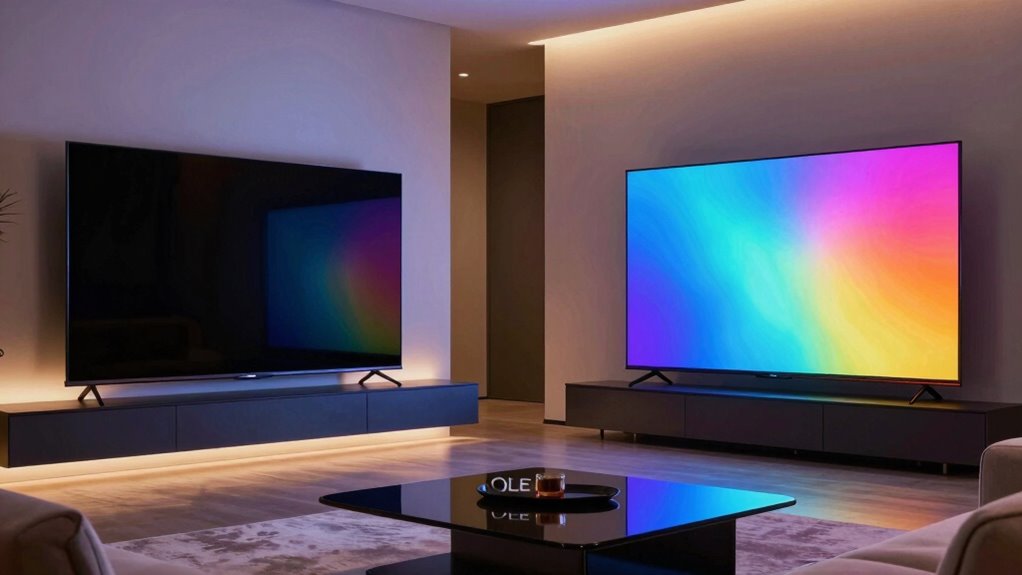

When deciding between OLED and QLED, it’s essential to take into account your viewing habits. OLED delivers stunning contrast and deep blacks, making it perfect for dark rooms. QLED shines in brightness, ideal for well-lit spaces. If durability and longevity are priorities, QLED tends to last longer without the risk of burn-in. Ultimately, your choice hinges on your environment and visual preferences. Stick around to explore more about how these technologies can enhance your viewing experience.
Key Takeaways
- OLED provides superior contrast and deeper blacks, enhancing immersion for dark room viewing.
- QLED shines in brightness, making it ideal for well-lit environments with direct sunlight.
- OLED features self-emissive pixels, allowing for thinner screens and unmatched visual quality.
- QLED utilizes quantum dots for vibrant color accuracy but may lack in color fidelity compared to OLED.
- Consider longevity: QLED lasts longer and is more durable, while OLED risks burn-in with content retention.
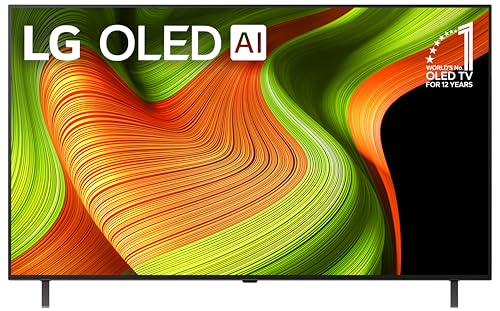
LG 55-Inch Class OLED AI 4K B5 Series Smart TV w/Dolby Atmos, Dolby Vision, HDR10, AI Super Upscaling 4K, Filmmaker Mode, Wow Orchestra, Alexa Built-in (OLED55B5PUA.AUSZ, 2025)
ALPHA 8 AI PROCESSOR GEN2: Enjoy outstanding picture, which uses AI to detect what you're watching and automatically…
As an affiliate, we earn on qualifying purchases.
As an affiliate, we earn on qualifying purchases.
OLED Vs QLED: Which Technology Is Right for You?
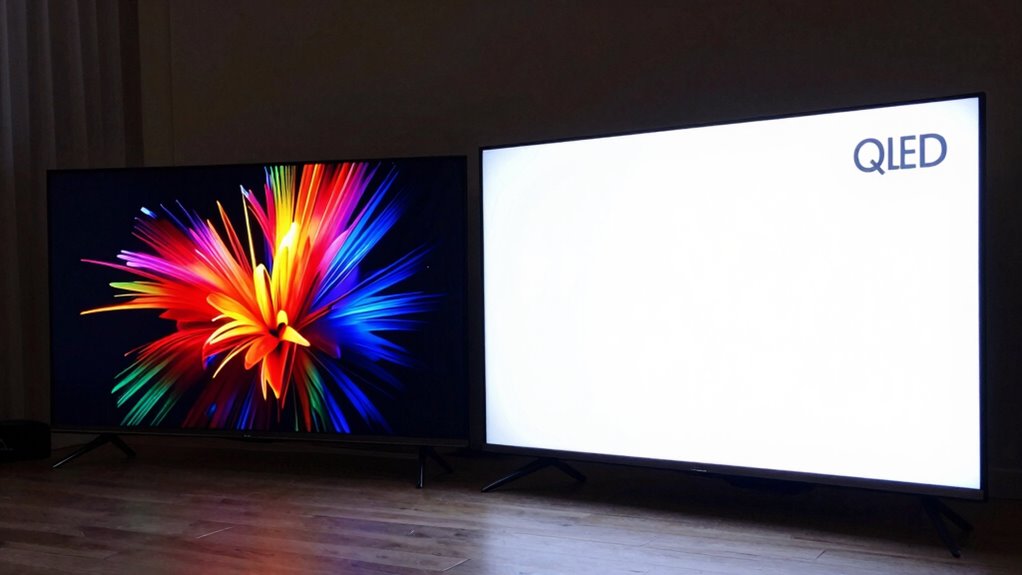
When choosing between OLED and QLED, how do you know which technology suits your needs best? If you love vibrant colors and deep blacks, OLED benefits might catch your eye. OLED screens offer superior contrast and viewing angles, making them ideal for movie nights in dark rooms. On the other hand, if you’re after brightness and durability, QLED advantages come into play. QLED TVs excel in well-lit environments, providing vivid images without sacrificing quality. They’re also less prone to burn-in, which is a concern with OLED. Ultimately, it depends on your viewing habits and environment. Consider what’s more important to you: the stunning visuals of OLED or the reliability and brightness of QLED.

Hisense 65" E6 Cinema Series Hi-QLED 4K UHD Smart Fire TV (65E6QF, 2025 Model) -AI Light Sensor, Dolby Vision · Atmos, Voice Remote with Alexa, Motion Rate 120, HDR 10+ Adaptive, Game Mode Plus
Hi-QLED Color: Experience a visual treat with Hi-QLED Color. Every frame is rich, vibrant, and true-to-life, ensuring that…
As an affiliate, we earn on qualifying purchases.
As an affiliate, we earn on qualifying purchases.
What Is OLED Technology and How Does It Work?
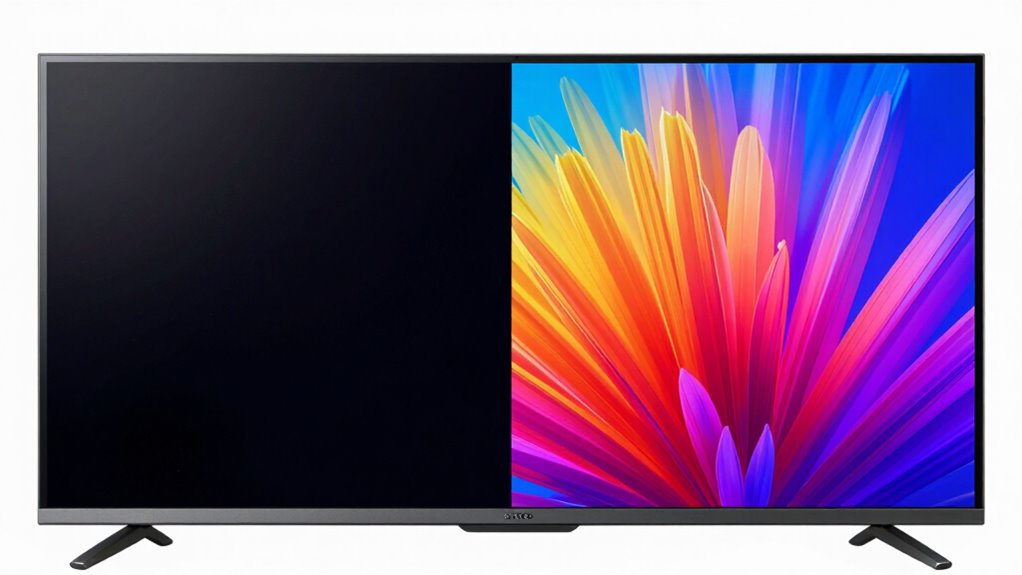
OLED technology, short for Organic Light Emitting Diode, revolutionizes how you experience visuals on a screen. Unlike traditional LCDs, OLED panels use organic compounds that emit light when an electric current passes through them. This means each pixel generates its own light, allowing for deeper blacks and vibrant colors. You’ll notice that when a pixel is turned off, it produces true black, enhancing contrast and overall picture quality. This self-emissive nature also allows for thinner screens, making it easier to fit into modern designs. As a result, you get a more immersive viewing experience, whether you’re watching movies or playing games. With OLED technology, your visuals come to life in a way that’s simply unmatched.

Hisense 65" U7 Mini-LED ULED 4K UHD Best Premium Gaming Google Smart TV (65U75QG, 2025 Model) – QLED, Native 165Hz, VRR 288, Up to 3000 Nits, HDR10+, Dolby Vision IQ · Atmos, IMAX Enhanced, 2.1.2 Ch
MINI-LED PRO WITH UP TO 3000 LOCAL DIMMING ZONES AND UP TO 3000 NITS PEAK BRIGHTNESS: See the…
As an affiliate, we earn on qualifying purchases.
As an affiliate, we earn on qualifying purchases.
What Makes QLED Technology Shine?
QLED technology, or Quantum Dot Light Emitting Diode, stands out in the world of display technologies for its vibrant color accuracy and impressive brightness levels. What makes QLED shine is its innovative use of backlight technology, which enhances the overall viewing experience. By utilizing quantum dots—tiny semiconductor particles—QLED TVs can produce a broader color volume compared to traditional displays. This means you’ll see richer reds, greens, and blues, providing stunning visuals whether you’re watching movies or playing games. Additionally, the brightness levels achieved through QLED’s backlight technology allow for excellent performance in well-lit environments, ensuring you won’t miss any details, even in bright sunlight. With QLED, you’re truly experiencing the best in color and brightness. Understanding display performance can help you appreciate how these advantages translate to real-world viewing. A deeper understanding of backlight technology reveals how it contributes to these remarkable visual qualities, including light modulation techniques that improve contrast and detail.

Samsung 65-Inch Class QLED Q7F Series Samsung Vision AI Smart TV (2025 Model, 65Q7F) Quantum HDR, Object Tracking Sound Lite, Q4 AI Gen1 Processor, 4K upscaling, Gaming Hub, Alexa Built-in
POWERS DRAMATICALLY CLEAR COLOR AND SOUND: Enjoy your movies and shows in stunning 4K, regardless of the source…
As an affiliate, we earn on qualifying purchases.
As an affiliate, we earn on qualifying purchases.
Brightness and Color: Key Picture Quality Differences
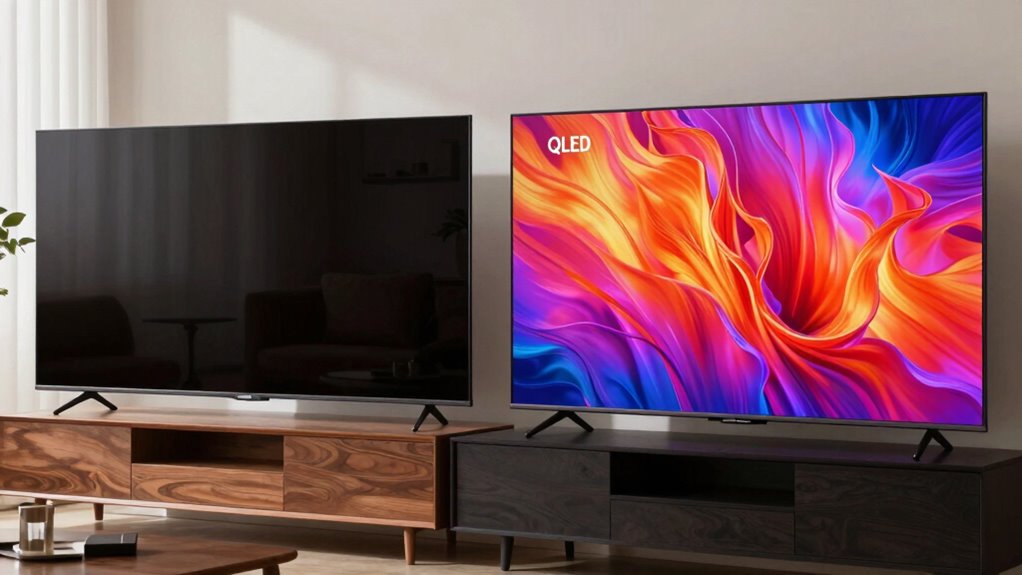
While both OLED and QLED technologies offer impressive visuals, their approaches to brightness and color reproduction differ considerably. OLED displays excel in color accuracy, providing deep blacks and vibrant colors by emitting light from individual pixels. This results in stunning visuals, especially in dark scenes. However, they can sometimes struggle with peak brightness levels, making them less effective in very bright rooms.
On the other hand, QLED screens shine in brightness levels, often reaching higher peaks than OLEDs. This advantage allows QLEDs to maintain vivid colors even in well-lit environments. However, their color accuracy can sometimes fall short compared to OLEDs. Ultimately, your choice may depend on your viewing environment and preferences for brightness and color fidelity.
How Viewing Angles and Contrast Impact Your Experience

Picture quality isn’t just about brightness and color; viewing angles and contrast also play a significant role in your overall experience. The right combination enhances your viewing comfort and immerses you in the content. Here’s how:
- Viewing Angles: Wider angles mean you can enjoy the picture quality from different positions in the room.
- Contrast Depth: Deep contrasts reveal more detail in dark scenes, making them richer and more engaging.
- Color Accuracy: Proper contrast guarantees colors stay true, whether you’re sitting straight on or off to the side.
- Reduced Glare: Good contrast minimizes reflections, guaranteeing a clearer image in various lighting conditions.
These factors can dramatically elevate your viewing experience, making it truly enjoyable.
Longevity of OLED vs QLED: Which Lasts Longer?
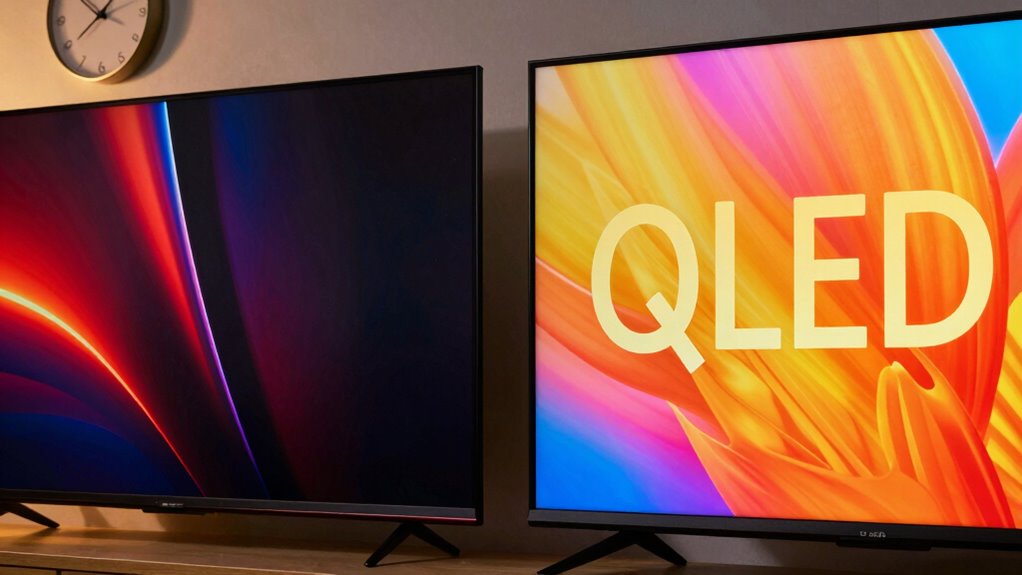
When considering longevity, it’s essential to understand the burn-in risk factors associated with OLED screens compared to the durability of QLED. You’ll want to explore how their lifespans stack up and what maintenance tips can help maximize your investment. Let’s break down these aspects to see which technology truly lasts longer.
Burn-In Risk Factors
Although OLED displays offer stunning visuals and deep blacks, they come with a notable concern: burn-in. This issue can lead to image retention, where static images leave a permanent mark on the screen. To minimize burn-in risk, consider these prevention strategies:
- Vary Your Content: Don’t stick to the same channel or app for too long.
- Use Screen Savers: Activate features that help prevent static images from lingering.
- Adjust Brightness: Lowering brightness can reduce stress on pixels.
- Limit Static Elements: Move or hide logos and menus that remain on-screen.
Lifespan Comparison Analysis
While both OLED and QLED technologies offer impressive picture quality, their longevity varies considerably. OLED screens typically face challenges like burn-in, which can shorten their lifespan. On average, you might expect an OLED panel to last around 5-7 years, depending on usage and settings. In contrast, QLED displays boast a longer lifespan due to their reliance on LED backlighting, often lasting 8-10 years or more with proper care. This durability comparison highlights significant lifespan factors, like the materials used in each technology. If you’re planning to invest in a new display, weighing these longevity aspects can help you make an informed decision based on your viewing habits and preferences.
Maintenance and Care Tips
To guarantee your OLED or QLED display lasts as long as possible, proper maintenance is key. Here are some essential tips to keep in mind:
- Screen Cleaning: Use a microfiber cloth to gently wipe your screen, avoiding harsh chemicals that can damage the display.
- Temperature Control: Keep your TV in a cool, ventilated area to prevent overheating, which can shorten its lifespan.
- Avoid Static Images: Turn off your display or use a screensaver to prevent burn-in, especially with OLEDs.
- Regular Updates: Keep your TV’s software up to date to enhance performance and longevity.
Frequently Asked Questions
Are OLED Screens Better for Gaming Than QLED Screens?
Yes, OLED screens are generally better for gaming than QLED screens. They have lower input lag, which means you’ll experience faster response times during gameplay. Additionally, OLED displays offer superior color accuracy, delivering vibrant visuals that enhance your gaming experience. While QLEDs have their strengths, especially in brightness, the combination of lower input lag and exceptional color reproduction makes OLED a top choice for serious gamers like you.
How Do OLED and QLED Compare in Energy Consumption?
When it comes to energy consumption, OLED screens generally have better energy efficiency than QLED screens. Since OLED pixels emit their own light, they can turn off completely when displaying black, saving power. In contrast, QLED relies on a backlight, which means it consumes more power, especially in bright scenes. So, if you’re conscious about power consumption, you might prefer an OLED for its ability to save energy during darker content.
Which Technology Is More Suitable for Bright Rooms?
If you’re looking for a TV that thrives in bright rooms, QLED’s your best bet. Its high brightness levels outperform OLED, making it ideal for environments with a lot of ambient light. While OLED offers stunning contrast, the glare in sunlit spaces can wash out those deep blacks. So, if you want vibrant colors and clarity during the day, you’ll appreciate the brightness and durability that QLED brings to the table.
Can I Use OLED or QLED for Outdoor Viewing?
You can use QLED for outdoor viewing since it offers better outdoor visibility and handles sunlight reflection more effectively than OLED. QLED’s brightness levels help combat glare, making it easier to see in direct sunlight. On the other hand, OLED screens might struggle in bright conditions, as they can reflect light and may not be as vibrant outdoors. So, if you’re planning to watch outside, QLED is your best bet.
What Are the Price Differences Between OLED and QLED TVS?
When you plunge into the world of TVs, the price differences between OLED and QLED can feel like a rollercoaster ride! Generally, OLEDs tend to be pricier, often reflecting their stunning picture quality and deep blacks. QLEDs usually fit better into tighter budgets, offering great visuals at a lower cost. So, when you’re doing your price comparison, consider your budget considerations carefully to guarantee you get the best bang for your buck!
Conclusion
In the battle of OLED vs. QLED, choosing the right tech for your viewing experience is like picking the perfect pair of shoes for a long hike. OLED offers deep blacks and stunning contrast, akin to a well-cushioned boot that molds to your foot, while QLED shines bright like a sturdy sneaker on a sunny day. Ultimately, it’s about your personal journey—consider your space, preferences, and how you love to watch, and let that guide your choice.