
When deciding between a projector and a TV, consider your space and viewing habits. Projectors excel in larger areas and portability, while TVs shine in brightness and image quality. Think about image resolution, desired screen size, and audio options; surround sound can elevate the experience. Budget matters too—projectors may incur extra costs for lamp replacements. Each choice has its perks, and you’ll want to know more about what really influences your decision.

Get the little things that make your day delivered free with Prime
- Fast, free delivery on millions of items
- Prime Video, Amazon Music and more included
- Member-only deals all year
Key Takeaways
- Assess your space: larger areas suit projectors, while TVs are better for smaller rooms with more ambient light.
- Consider image quality: TVs generally offer superior resolution, brightness, and color accuracy compared to projectors.
- Determine viewing distance: maintain a distance of 1.5 to 2.5 times the screen size for optimal comfort and clarity.
- Evaluate audio options: enhance the experience with a home theater system, as built-in speakers often lack depth.
- Factor in long-term costs: projectors may have higher maintenance costs and shorter lifespans than TVs, affecting total ownership expenses.
Products Worth Considering

TCL 85-Inch QM6K Series QLED Mini LED 4K HDR Smart Google TV

Samsung 85-Inch M70H Series Mini LED 4K Smart TV (2026)

Samsung 85 M80H Series Mini LED 4K Smart TV (2026)
As an affiliate, we earn on qualifying purchases.
Choosing Between a Projector and TV: Key Considerations
When deciding between a projector and a TV, it’s crucial to take into account your space and viewing habits. If you have a large area and enjoy movie nights, projector features like a bigger screen size and portability might appeal to you. However, if your space is limited or you prefer a quick setup, the TV advantages, such as better brightness and consistent image quality, can’t be overlooked. Think about your typical viewing scenarios—do you often watch in daylight or dark? Also, consider how often you’ll use it; projectors might require more maintenance than TVs. Additionally, the contrast ratio of a projector plays a vital role in image quality, especially in darker rooms. Understanding connectivity standards is also important for ensuring your device integrates seamlessly with your other home entertainment equipment. For optimal viewing, consider the ambient light conditions of your space, as this can significantly impact the performance of both projectors and TVs. Moreover, paying attention to the image resolution can greatly enhance your viewing experience by providing sharper, clearer images. Incorporating eco-friendly HVAC guidance can also help create a comfortable environment that minimizes energy consumption and enhances your overall home entertainment experience. Ultimately, weigh these factors to make an informed choice that suits your lifestyle and environment best.
What You Need to Know About Image Quality
When it comes to image quality, you’ll want to contemplate resolution, color accuracy, and brightness levels. Each of these factors considerably impacts your viewing experience, whether you choose a projector or a TV. Understanding these elements will help you make an informed decision that suits your needs.
Resolution Comparison
Understanding the differences in resolution between projectors and TVs is essential for choosing the right display for your space. Projectors often have lower pixel density compared to TVs, especially with Full HD and 4K resolution options. This can affect image sharpness and clarity. TVs typically maintain a consistent native resolution, while projectors might experience scaling effects depending on the source content. Additionally, resolution consistency plays a vital role in overall picture quality and viewing experience.
Color Accuracy Factors
While you might focus on resolution when choosing between a projector and a TV, color accuracy plays an essential role in overall image quality. You’ll want to take into account the color calibration techniques used by each device. A well-calibrated projector can deliver vibrant colors, but some models may struggle to match the accuracy of high-quality TVs. In a color gamut comparison, a TV often outperforms a projector, showcasing a broader range of colors. This means that if you’re after true-to-life images, you should prioritize devices with excellent color reproduction. Don’t overlook this aspect when making your decision, as the difference in color accuracy can greatly impact your viewing experience. Additionally, kitchen ventilation tips can help maintain optimal conditions for your viewing area, especially if you’re setting up a dedicated home theater space. Proper air quality ensures that your environment remains comfortable and free from dust or pollutants that could affect your equipment or health.
Brightness Levels Explained
Brightness levels greatly influence image quality, especially in different viewing environments. When choosing between a projector and a TV, understanding brightness measurement is essential. Projectors often struggle in well-lit rooms due to ambient light, which can wash out colors and details. If you plan to watch in a bright space, look for projectors with higher lumens to combat this effect. Conversely, TVs usually perform better in any lighting, thanks to their inherent brightness. For home theaters, you might prioritize deeper blacks and contrast, but make sure the brightness can handle your specific environment. Ultimately, consider where you’ll be viewing most often and choose a device that meets those brightness requirements for the best experience.
How Screen Size Affects Your Viewing Experience
When choosing your screen size, think about how it impacts your overall viewing experience. The ideal screen size varies based on your viewing distance, which can greatly enhance or detract from your enjoyment. Getting this balance right can make all the difference in how immersive your movie nights feel.
Ideal Screen Size
Choosing the right screen size can greatly enhance your viewing experience, as it influences both immersion and comfort. You want to aim for ideal dimensions that match your space and the content you enjoy. Typically, larger screens provide a more cinematic feel, but you need to evaluate your room’s layout. Screen ratios also play a significant role; a 16:9 ratio is standard for most movies and shows, while a 4:3 ratio might suit classic content better. When selecting your projector or TV, visualize how the screen size will fit into your environment. This way, you can create an engaging atmosphere that makes every movie night or gaming session truly enjoyable. Additionally, understanding the acoustic environment can help you choose gear that complements your visual setup for an optimal viewing experience.
Viewing Distance Importance
While selecting the right screen size is essential, understanding the ideal viewing distance can greatly enhance your overall experience. You’ll want to find that sweet spot where your screen size feels immersive without straining your eyes. For instance, sitting too close can diminish viewing comfort, while being too far away may make details hard to see.
Distance optimization is key; a general rule is to sit about 1.5 to 2.5 times the diagonal screen size away. If you’re using a projector, keep in mind the size of your image and the space available. By paying attention to these factors, you’ll guarantee that your viewing experience is not only enjoyable but also comfortable, allowing you to fully immerse yourself in whatever you’re watching.
Choosing Audio: Built-in Speakers vs. Home Theater Systems
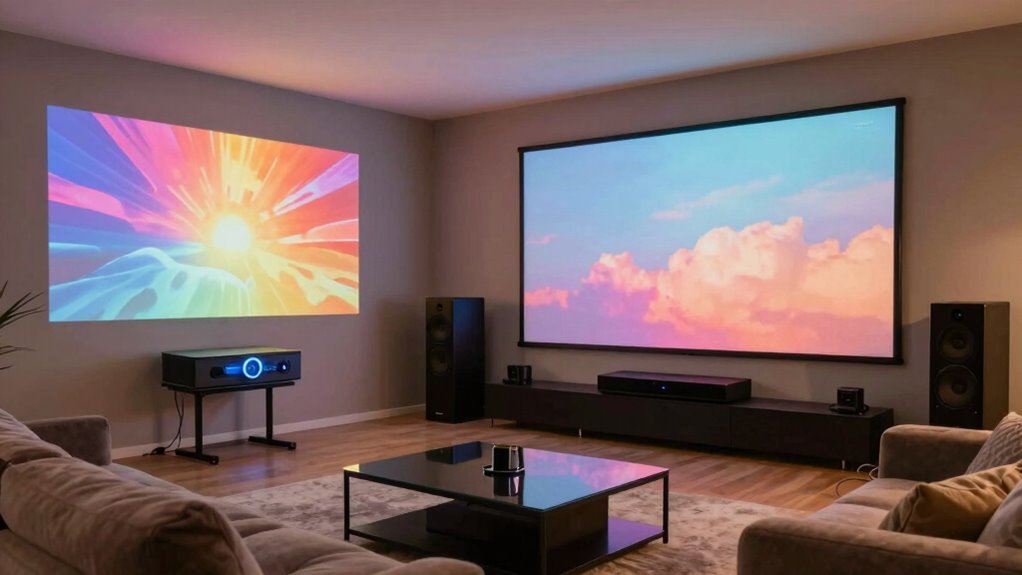
Although built-in speakers may seem convenient, they often fall short of delivering the immersive sound experience you might crave. When considering audio options, you’ll quickly realize that a home theater system can vastly improve sound quality. Built-in speakers typically lack the depth and power necessary for an engaging viewing experience, especially during action-packed scenes or dramatic moments. A dedicated system, with its surround sound capabilities, pulls you into the action, making every movie night feel like a cinematic event. Plus, you’ll have more flexibility in speaker placement, allowing you to customize your setup for ideal acoustics. Proper audio setup is essential for optimizing your listening experience, ensuring clear dialogue and rich sound effects. Additionally, advanced sound quality features in dedicated systems can further enhance your overall entertainment environment. Understanding the importance of speaker placement can make a significant difference in your sound experience, as proper positioning ensures balanced and immersive audio. Being mindful of room acoustics and sound dampening techniques can also help improve overall audio clarity. So, if you value rich, dynamic audio, investing in a home theater system is well worth it.
Portability and Setup: Where Will You Use It?
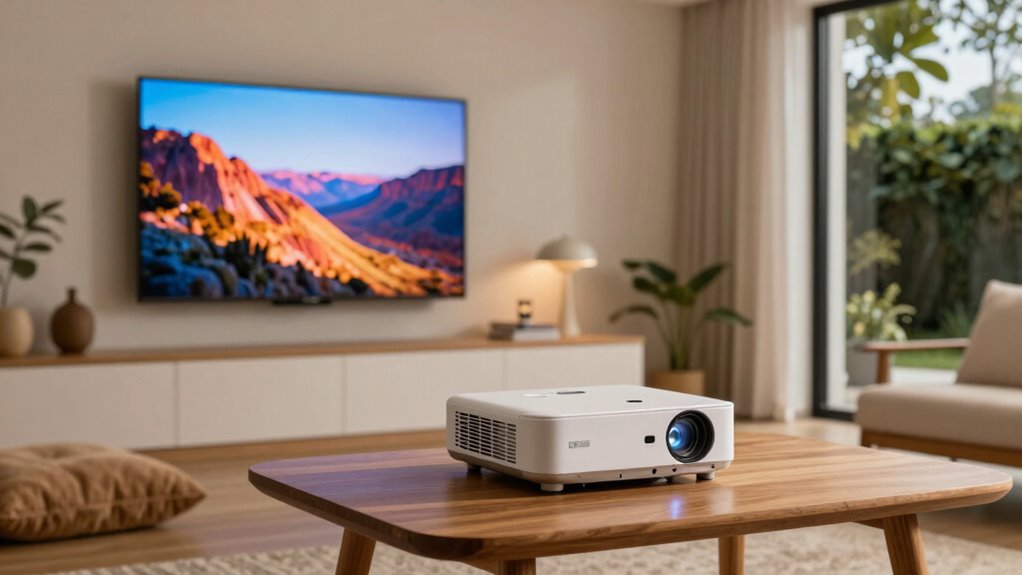
Where will you use your projector or TV? If you’re considering portability, think about how it fits into your lifestyle. Projectors offer flexible, portable setups that make outdoor viewing a breeze. You can easily take your projector to friends’ houses or enjoy movie nights under the stars. Additionally, projectors are ideal for creating outdoor entertainment spaces that can be easily adapted for different settings.
Consider where you’ll use your projector or TV—projectors offer unmatched portability and flexibility for any viewing experience.
- Imagine setting up a backyard cinema for friends.
- Picture spontaneous road trips with entertainment on the go.
- Envision cozy family movie nights in different rooms.
- Dream of creating immersive presentations anywhere you need!
Choosing the right option depends on where you plan to use it. If you value versatility and convenience, a projector could be your best bet.
Budgeting for Projectors and TVs: Cost Analysis
When budgeting for a projector or TV, it’s essential to contemplate not just the initial purchase price but also the long-term costs associated with each option. Projectors often have lower initial costs but can incur higher long-term expenses due to lamp replacements and maintenance. TVs, while generally pricier upfront, usually offer lower ongoing costs. Here’s a quick cost analysis:
| Item | Projector | TV |
|---|---|---|
| Initial Cost | $300 – $2,000 | $400 – $3,000 |
| Lamp Replacement | $100 – $300 (every 1-3 years) | N/A |
| Energy Costs | Higher | Lower |
| Lifespan | 2,000 – 20,000 hours | 40,000 – 100,000 hours |
| Warranty | 1 – 3 years | 1 – 5 years |
Evaluate these budget ranges to make an informed decision! Considering lamp durability and maintenance requirements can help you better understand the total cost of ownership over time.
How Your Viewing Habits Influence Your Choice
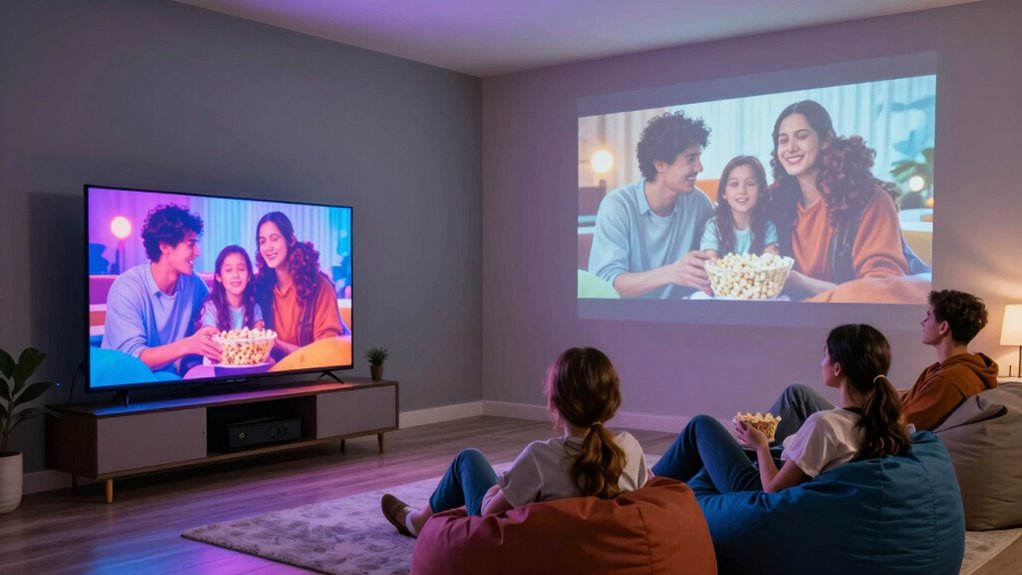
Understanding your viewing habits is key to making the right choice between a projector and a TV. Think about how often you watch content and what type of content you enjoy. Your viewing frequency and content type play a significant role in this decision.
- If you binge-watch movies and series, a projector might feel more cinematic.
- For gaming, a TV offers faster response times and vibrant colors.
- If you host friends for sports nights, a large screen projector could create an exciting atmosphere.
- If you prefer cozy solo evenings, a TV provides ease and comfort.
Frequently Asked Questions
Can Projectors Work in Bright Rooms Effectively?
Yes, projectors can work in bright rooms, but it depends on the brightness levels of both the projector and the room. You’ll want a high-lumen projector to guarantee the image remains clear and vivid despite ambient light. Additionally, consider your screen size; larger screens may require more brightness to perform effectively in bright conditions. If you choose the right setup, you can enjoy a great viewing experience even in well-lit spaces.
Do TVS Have Better Longevity Than Projectors?
Oh sure, a TV’s gonna last longer than your average projector, which can sometimes feel like a drama queen needing constant maintenance. With a TV, you get screen durability that keeps on giving, while projectors might require more upkeep and higher maintenance costs over time. So if you’re after the reliable friend in your entertainment setup, a TV’s your go-to. After all, who wants to deal with a high-maintenance diva?
What Is the Average Lifespan of a Projector Bulb?
The average lifespan of a projector bulb is around 2,000 to 5,000 hours, depending on the type and usage. To maximize that lifespan, proper projector maintenance is key. Regularly cleaning the filters and ensuring good ventilation can help prevent overheating. When the bulb starts to dim, it’s time for a bulb replacement. Keeping track of usage hours will help you know when to make that change and keep your projector running smoothly.
Are There Any Health Risks Associated With Projectors or TVS?
Yes, there are some health risks associated with projectors and TVs. You might experience eye strain from prolonged viewing, especially if you’re too close or the screen’s too bright. Screen glare can exacerbate this issue, making it harder for your eyes to focus. To minimize these risks, make sure you maintain a comfortable distance, adjust brightness levels, and take regular breaks to give your eyes a rest. Your eye health matters!
Can I Connect Gaming Consoles to Both Projectors and TVS?
You can connect gaming consoles to both projectors and TVs, but the experience differs. With a TV, you often get superior gaming performance due to lower input lag and better refresh rates. On the other hand, projectors offer larger screens, enhancing immersion. Both options have various connectivity options, like HDMI ports, so you can enjoy gaming on your terms. Weigh your priorities between size and performance to find what suits you best.
Conclusion
In the battle of projectors versus TVs, remember, “you get what you pay for.” Your choice ultimately hinges on your viewing habits, space, and budget. If you crave a cinematic experience and have the room, a projector might be your best bet. But if consistency and convenience are key, a TV could be the way to go. Weigh the factors that matter most to you, and you’ll find the perfect fit for your entertainment needs.