Refresh rates, measured in Hertz (Hz), determine how often your display updates the image. A 60Hz monitor is fine for casual tasks like web browsing, but if you’re gaming, you’ll notice a big difference with 120Hz or 144Hz. These higher rates make motion smoother, reduce lag, and enhance your overall experience, especially in fast-paced games. Want to know more about how to pick the right refresh rate for your needs? Keep exploring the details!
Key Takeaways
- 60Hz is suitable for casual tasks like web browsing and video watching, providing a basic viewing experience.
- 120Hz is preferred by competitive gamers, ensuring smoother gameplay and reduced input lag for fast-paced games.
- 144Hz offers optimal performance for hardcore gamers, enhancing visual fluidity and minimizing motion blur in e-sports and FPS games.
- Higher refresh rates reduce motion blur and improve frame rate synchronization, enhancing gameplay fluidity and overall performance.
- Choosing the right refresh rate depends on usage scenarios and hardware compatibility, with higher rates often requiring better graphics capabilities.

Sceptre New 22-Inch Gaming Monitor, FHD 1080p, Up to 144Hz, HDMI, DisplayPort, Built-in Speakers, Machine Black (E225W-FW144 Series, 2026)
【INTEGRATED SPEAKERS】Whether you're at work or in the midst of an intense gaming session, our built-in speakers provide…
As an affiliate, we earn on qualifying purchases.
As an affiliate, we earn on qualifying purchases.
Understanding Refresh Rate: What It Is and Why It Matters

Refresh rate is an essential factor that impacts your viewing experience, whether you’re gaming, watching movies, or browsing content. It refers to how many times your display technology updates the image per second, measured in hertz (Hz). A higher refresh rate means smoother motion and less blurring, which is vital for fast-paced action sequences or competitive gaming. If you’re using a low refresh rate, you might notice choppiness or lag, detracting from your overall viewer experience. Understanding refresh rates helps you choose the right display for your needs, ensuring you get the most out of your favorite activities. So, when upgrading your setup, pay close attention to refresh rates to enhance your enjoyment and satisfaction.

SANSUI 24 Inch Gaming Monitor 180Hz, DP 1.4 & HDMI 2.0 Ports High Refresh Rate Computer Monitor, Racing FPS RTS Modes, 1ms Response Time 110% sRGB (ES-G24F4, HDMI Cable Included)
ES-G24F4: 24 Inch Full HD (1920*1080) 180Hz Gaming Monitor for Home, Entertainment and Office
As an affiliate, we earn on qualifying purchases.
As an affiliate, we earn on qualifying purchases.
60Hz vs. 120Hz vs. 144Hz: A Comparison

When choosing between 60Hz, 120Hz, and 144Hz displays, it’s important to understand how each refresh rate affects your experience. Generally, a higher refresh rate means smoother visuals, especially in fast-paced gaming scenarios. For most casual users, 60Hz is adequate, but gamers often prefer 120Hz or 144Hz gaming monitors for enhanced performance.
| Refresh Rate | Best For | Typical Use |
|---|---|---|
| 60Hz | Casual users | Web browsing, videos |
| 120Hz | Competitive gaming | Fast-paced games |
| 144Hz | Hardcore gamers | E-sports, FPS games |
Using advanced display technologies can also improve your overall experience, making it vital to select the right refresh rate for your needs.
Sceptre New 22-Inch Gaming Monitor, FHD 1080p, Up to 144Hz, HDMI, DisplayPort, Built-in Speakers, Machine Black (E225W-FW144 Series, 2026)
【INTEGRATED SPEAKERS】Whether you're at work or in the midst of an intense gaming session, our built-in speakers provide…
As an affiliate, we earn on qualifying purchases.
As an affiliate, we earn on qualifying purchases.
How Refresh Rates Affect Gaming Performance and Experience

When you’re gaming, refresh rates play an essential role in how smooth and responsive your experience is. Higher refresh rates can reduce motion blur and improve frame rate synchronization, making your gameplay feel more fluid. Plus, they can greatly lower input lag, enhancing your control over the game.
Frame Rate Synchronization
While higher refresh rates can enhance your gaming experience, frame rate synchronization plays an essential role in how smooth and responsive gameplay feels. When your monitor’s refresh rate and your game’s frame rate align, you get a seamless experience, reducing issues like screen tearing and stuttering. To achieve this, you can use synchronization techniques like V-Sync, which caps the frame rate to match the refresh rate, or G-Sync and FreeSync, which dynamically adjust the refresh rate to match the frame rate. These methods guarantee that your graphics card and monitor work in harmony, providing you with a fluid experience during intense gaming sessions. Prioritizing frame rate synchronization can dramatically elevate your gameplay enjoyment.
Motion Blur Reduction
Although many gamers focus on frame rates and resolution, motion blur reduction is equally crucial for enhancing your overall gaming experience. Higher refresh rates, like 120Hz and 144Hz, greatly improve motion clarity by rendering frames more frequently, which helps reduce blurriness during fast-paced action. When you’re in the heat of a gaming session, every detail counts, and lower motion blur can mean the difference between winning and losing. This is particularly important in competitive gaming, where quick reactions are essential. By minimizing blur reduction, your visuals will appear sharper, allowing you to spot enemies and navigate environments with greater ease. Investing in a monitor with a high refresh rate can elevate your gaming performance and enjoyment. Additionally, understanding connection standards and ensuring your hardware supports higher refresh rates can maximize your gaming setup’s effectiveness. Proper display calibration also plays a vital role in optimizing motion clarity and overall visual quality.
Input Lag Impact
Reducing motion blur is just one part of the equation; input lag plays a significant role in your gaming performance and experience. High refresh rates can minimize input lag, allowing you to react faster to on-screen events. This is essential, especially in competitive gaming, where every millisecond counts. Here’s a comparison of input lag across different refresh rates:
| Refresh Rate | Input Lag (ms) | Performance Impact |
|---|---|---|
| 60Hz | 16.67 | Moderate |
| 120Hz | 8.33 | High |
| 144Hz | 6.94 | Very High |
The right display technology combined with a higher refresh rate can transform your gaming experience, giving you the edge you need to win. Improving your understanding of refresh rate fundamentals can help you make more informed choices for an optimal gaming setup. Additionally, understanding input lag can help you select the best equipment for your needs.

Gawfolk 28 Inch 4K Monitor IPS 60Hz, UHD (3840x2560p) PC Screen Built-in Speakers, Ultra HD Computer Display for Home & Office, 3:2, HDMI, DP, Support Wall Mount Compatible
28.2 Inch 3:2 IPS UHD 4K+ PC Monitor: Experience ultra-clear detail with a 3840*2560 UHD resolution on a…
As an affiliate, we earn on qualifying purchases.
As an affiliate, we earn on qualifying purchases.
Does Refresh Rate Matter for Video Editing?

When you’re editing videos, refresh rate can greatly impact your visual clarity and overall experience. Higher refresh rates can provide smoother playback and help you catch frame rate discrepancies more easily. So, does the refresh rate of your monitor really matter when it comes to video editing?
Visual Clarity Importance
While you might think refresh rates mainly impact gaming, they also play an important role in video editing. A higher refresh rate enhances your visual perception, making it easier to spot subtle details in your footage. When you’re working on color grading or effects, the clarity benefits of a 120Hz or 144Hz display can greatly improve your editing experience. You’ll notice smoother playback and less motion blur, allowing you to focus on precision work. This clarity can be vital when refining cuts or aligning audio with visuals. Ultimately, investing in a monitor with a higher refresh rate can elevate your editing workflow, helping you achieve a more polished final product.
Frame Rate Considerations
Although refresh rate and frame rate are often confused, they serve different purposes in video editing. The frame rate directly affects how smooth and fluid your video appears, while the refresh rate determines how often your monitor updates the displayed image. For effective frame rate enhancement, aim for a consistent frame rate that matches your project’s intended output. This minimizes frame rate variability, which can lead to choppy playback and editing difficulties. If you’re editing high-motion footage, a higher frame rate can be beneficial, allowing for clearer slow-motion effects. Remember, your refresh rate should support your frame rate for an ideal editing experience, but the key focus should always remain on achieving the right frame rate for your content.
How to Choose the Best Refresh Rate for Your Usage
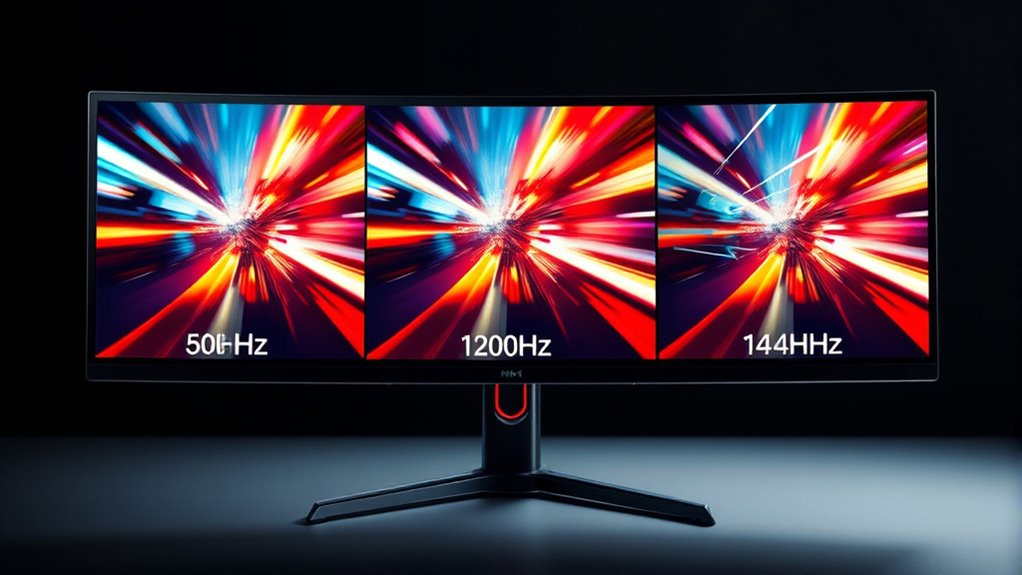
How do you determine the right refresh rate for your needs? Start by considering your usage scenarios. If you primarily watch movies or browse the web, a 60Hz display might suffice. However, if you’re into gaming or fast-paced applications, you’ll want to look at 120Hz or even 144Hz options for smoother visuals.
Next, verify your display compatibility with your graphics card and other devices. High refresh rates may require better hardware to fully utilize their potential. Think about how you’ll be using your display—competitive gamers benefit from higher refresh rates, while casual users may not notice the difference. Ultimately, choose a refresh rate that aligns with your activities and hardware capabilities for the best experience.
Upgrading Your Display: Is Higher Refresh Rate Worth It?

Is upgrading to a higher refresh rate display really worth it? If you’re into gaming, the answer often leans toward yes. Gaming monitors with higher refresh rates, like 120Hz or 144Hz, can dramatically enhance your gaming experience. You’ll notice a significant performance improvement in visual performance, especially in fast-paced games. Additionally, off-road gear like specialized pants fit and air leak sealing can improve comfort during long gaming sessions. Moreover, a higher refresh rate can reduce motion blur, making fast-moving scenes clearer and more enjoyable. Another aspect to consider is the refresh rate’s impact on productivity, as smoother visuals can also benefit tasks beyond gaming, such as video editing or multitasking. However, budget considerations are essential; these displays can be pricier. Think about your user preferences and how often you play demanding games. Investing in higher refresh rate displays can also serve as future-proofing investments, keeping your setup relevant as display technology evolves. Ultimately, if you prioritize smooth graphics and responsiveness, a higher refresh rate is definitely worth considering.
Frequently Asked Questions
Can Refresh Rates Affect Battery Life on Portable Devices?
Yes, refresh rates can affect battery life on portable devices. Higher refresh rates, like 120Hz or 144Hz, increase battery consumption because the display technology demands more power to update frames faster. If you’re gaming or watching high-speed content, you’ll appreciate the smoothness, but your battery will drain quicker. Lower refresh rates, like 60Hz, conserve energy, extending your device’s usage time, especially during everyday tasks. Balance performance and battery life based on your needs!
Does Cable Type Influence the Refresh Rate Performance?
Absolutely, cable type does influence refresh rate performance. Think of it like a highway; the broader the road, the faster the traffic flows. If you’re using a cable that’s not fully compatible, it can limit signal quality, causing your display to underperform. For peak refresh rates, make sure your cables are designed for the resolution and refresh rate you want. Investing in high-quality cables pays off in better visuals and smoother gameplay.
Are Higher Refresh Rates Beneficial for Watching Movies?
Higher refresh rates can enhance your movie-watching experience, especially if you enjoy smoother motion. With a higher frame rate, you’ll notice improved clarity during fast action scenes. Motion smoothing, often available on TVs, can further reduce blur and make visuals appear more fluid. However, some viewers feel it can create an unnatural look, so it’s worth experimenting to find what suits your preferences best. Ultimately, it’s about what you enjoy!
How Does Refresh Rate Relate to Screen Resolution?
Refresh rate and screen resolution intertwine closely. When you boost your resolution, like switching to 4K, your gaming performance might take a hit unless your refresh rate can keep up. You’ll notice resolution scaling affects how smooth your gameplay feels. If your screen’s refresh rate is low, you might miss out on the crisp visuals high resolution offers. So, always aim for a balance between refresh rate and resolution for the best experience.
Can Refresh Rates Cause Eye Strain or Fatigue?
Yes, refresh rates can cause eye strain or fatigue, especially if the rate is too low for your display technology. Higher refresh rates generally improve eye comfort by providing smoother visuals, reducing flicker, and making it easier for your eyes to follow fast-moving images. If you’re experiencing discomfort, consider adjusting your settings or upgrading to a display with a higher refresh rate. Your eyes will thank you for it!
Conclusion
In summary, choosing the right refresh rate can greatly impact your experience, whether you’re gaming or working on video editing. For instance, if you’re a competitive gamer, opting for a 144Hz display can give you an essential edge, allowing you to react faster than your opponents. On the other hand, if you mostly watch movies or do casual browsing, a 60Hz monitor might suffice. Ultimately, consider your needs and preferences before making your upgrade decision!