
When deciding between wired and wireless security cameras, think about your needs. Wired cameras offer superior image quality and reliability since they provide a constant power source. However, installation can be complex. On the other hand, wireless cameras are easier to install and more flexible, but they require regular battery maintenance. Each option has its pros and cons, and knowing what matters most to you will help you make the right choice. Continue on to explore more details!

Get the little things that make your day delivered free with Prime
- Fast, free delivery on millions of items
- Prime Video, Amazon Music and more included
- Member-only deals all year
Key Takeaways
- Wired cameras offer superior image quality and reliability, making them ideal for permanent installations requiring high resolution.
- Wireless cameras provide installation flexibility and ease, allowing for varied placements without complex wiring.
- Consider power source reliability: wired cameras maintain continuous power, while wireless cameras depend on battery life.
- Installation complexity differs; wired systems require professional help, whereas wireless setups can be managed with minimal tools.
- Long-term costs may favor wired cameras due to durability, while wireless options incur ongoing battery replacement expenses.
As an affiliate, we earn on qualifying purchases.
Wired vs. Wireless Security Cameras: Which Is Right for You?
When considering security options, how do you decide between wired and wireless cameras? Start by evaluating the camera features you need. Wired cameras usually offer consistent video quality and are less susceptible to interference, while wireless models provide flexibility and easier placements. Think about your installation tips, too. Wired cameras require running cables, which can be labor-intensive, while wireless options need a good Wi-Fi signal for ideal performance. Assess your property layout, potential obstacles, and whether you prefer a permanent setup or a more mobile solution. Additionally, consider home automation integration to ensure your security system complements other smart devices in your home. Ultimately, your choice should align with your security needs, budget, and comfort level with technology. Make sure to consider security zone info when making your decision, as it highlights the importance of reliability and scalability in choosing the right system.
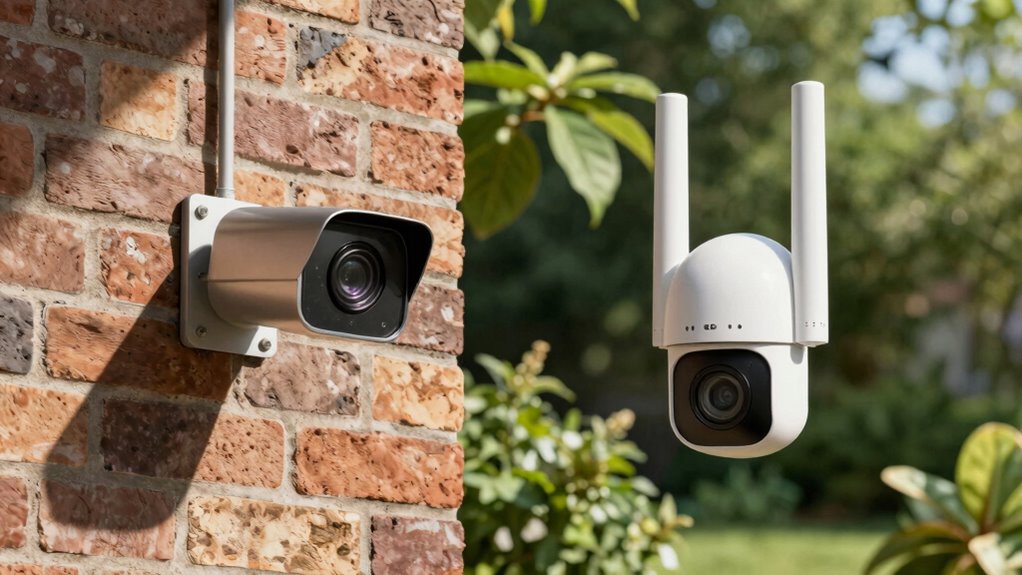
wireless outdoor security camera with night vision
As an affiliate, we earn on qualifying purchases.
As an affiliate, we earn on qualifying purchases.
Understanding Wired Security Cameras: Benefits and Drawbacks
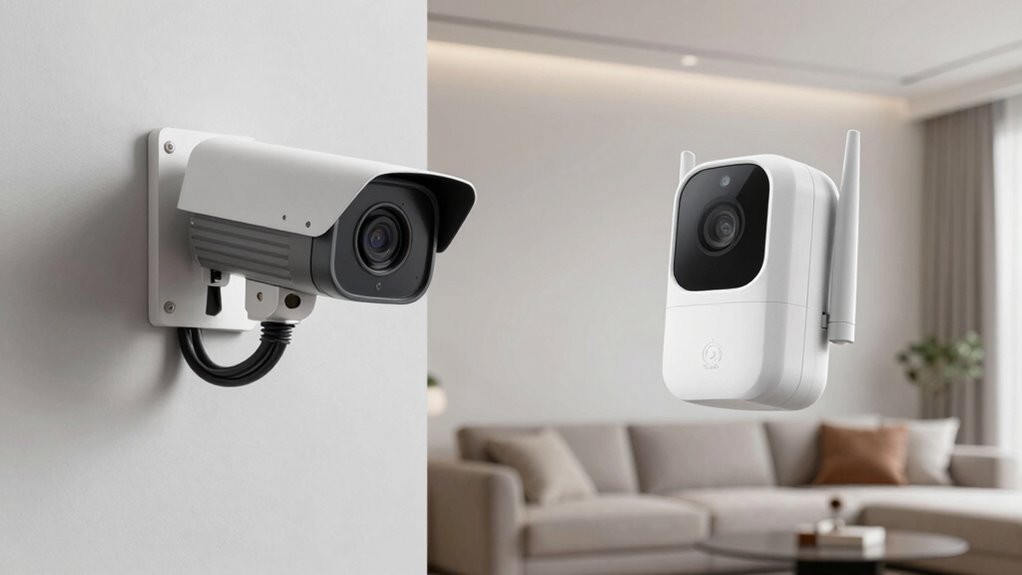
While you weigh your options for security cameras, understanding the benefits and drawbacks of wired models can help you make an informed choice. Wired security cameras typically offer superior image quality and reliability, as they’re less prone to interference compared to other camera types. You’ll also find that their constant power supply means you won’t have to worry about battery life.
However, installation can be more complex and time-consuming; running cables may require you to drill holes or hire a professional. Make sure to evaluate your property layout and utilize installation tips to manage cables effectively. Ultimately, while wired cameras can provide excellent performance, you’ll need to weigh installation challenges against your security needs.
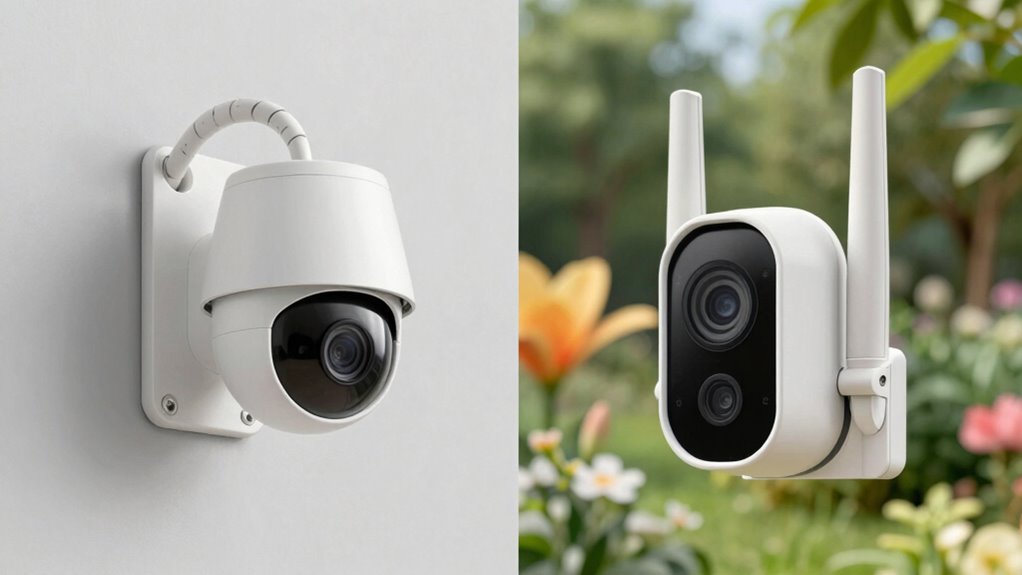
home security camera system with remote access
As an affiliate, we earn on qualifying purchases.
As an affiliate, we earn on qualifying purchases.
Why Choose Wireless Security Cameras? Pros and Cons
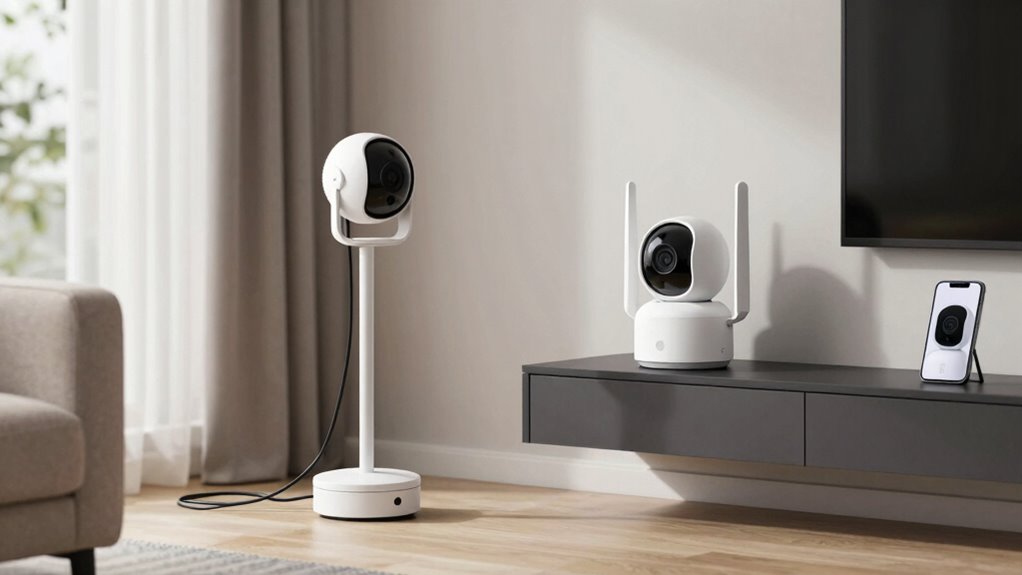
If wired security cameras seem intimidating due to installation hassles, wireless models might be the solution you need. They offer significant installation flexibility, allowing you to place them almost anywhere, even outdoors. You won’t have to deal with cumbersome wiring, making setup a breeze. With features like motion detection, you can enhance your home’s security, while remote access lets you monitor feeds from anywhere. However, be mindful of battery life; regular charging is vital to guarantee peak performance. Network security is essential, as vulnerabilities can expose your footage. Consider how you’ll handle video storage, whether through cloud services or local devices. Additionally, understanding home security technology can help you choose the best system for your situation. Incorporating AI-driven security features can further improve your home’s safety by enabling smarter threat detection and response. Also, staying informed about battery maintenance can prolong the lifespan of your wireless cameras. To maximize your security setup, keep informed about wireless network protection strategies to prevent unauthorized access. Being aware of security protocol updates can help you stay ahead of potential threats and ensure your system remains secure. Ultimately, your user experience will depend on balancing these pros and cons to fit your needs.
battery operated wireless security camera
As an affiliate, we earn on qualifying purchases.
As an affiliate, we earn on qualifying purchases.
How to Install Wired vs. Wireless Cameras: Key Differences
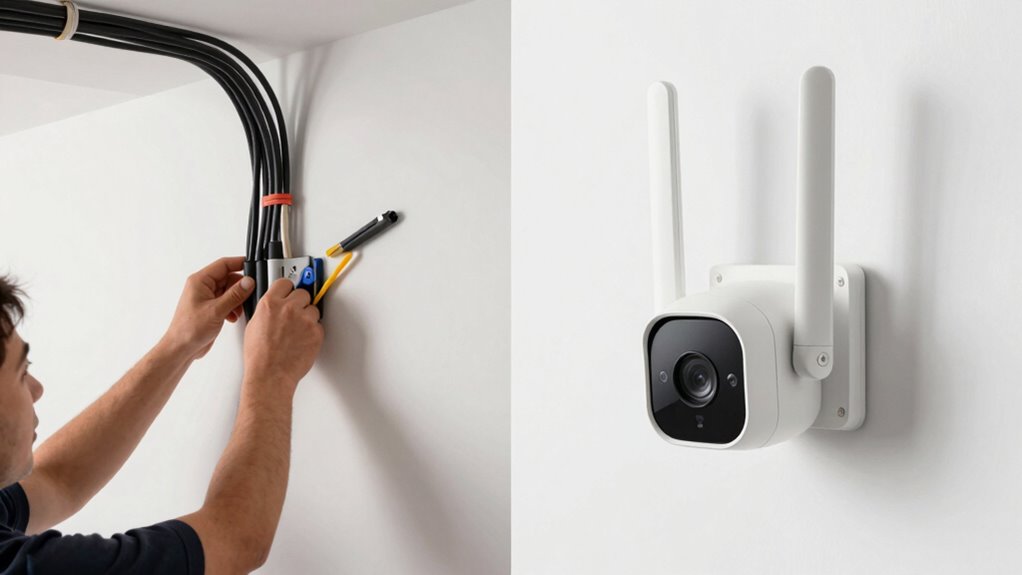
When you’re installing security cameras, you’ll notice key differences between wired and wireless options. Wired cameras often require more complex installation due to cable management, while wireless models can be simpler but may still need careful planning for power sources. Understanding these factors will help you choose the best approach for your setup.
Installation Process Complexity
Installing security cameras can be a straightforward task, but the complexity varies greatly between wired and wireless systems. With wired cameras, you’ll need to manage wiring requirements, including running cables through walls or ceilings. This often requires specific installation tools like drills, cable clips, and possibly even a ladder. It can be time-consuming and may necessitate professional help if you aren’t comfortable with electrical work. Additionally, proper maintenance routines are essential to ensure consistent performance over time. On the other hand, wireless systems simplify the installation process considerably. You generally just need to mount the camera and connect it to your Wi-Fi, requiring minimal tools. However, make certain you have a reliable power source for each camera. Ultimately, your choice should align with your comfort level and installation preferences.
Cable Management Considerations
Wired systems require careful cable management to guarantee a clean and functional installation. Proper cable organization not only enhances installation aesthetics but also minimizes disruptions. Here are some key considerations for managing your cables effectively:
- Plan Your Layout: Before installation, sketch out where each camera will go and how cables will run.
- Use Cable Clips: Secure cables along walls or ceilings with clips to keep them tidy and out of the way.
- Label Your Cables: Clearly label each cable to simplify troubleshooting and future adjustments.
- Conceal Cables: Use conduits or raceways to hide cables, maintaining a polished look for your installation.
Which Offers Better Reliability: Wired or Wireless Cameras?
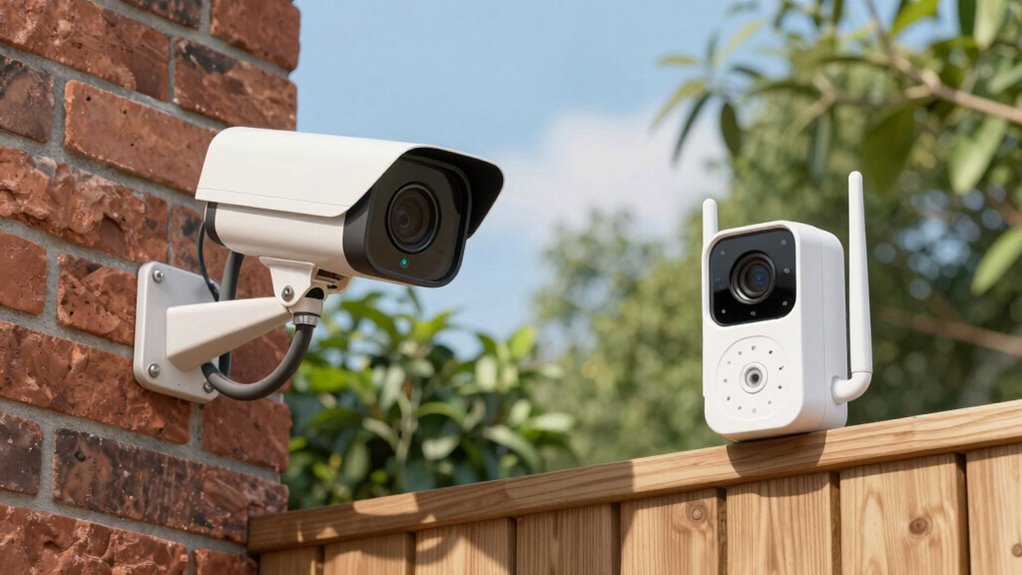
When it comes to reliability, wired cameras often have the edge due to their stable signal and minimal interference. You won’t have to worry about Wi-Fi drops or battery failures, which can be a concern with wireless options. Let’s explore how installation ease and power sources also play a role in overall reliability.
Signal Stability and Interference
While both wired and wireless security cameras have their advantages, signal stability and interference often determine which option is more reliable for your needs. Wired cameras typically provide consistent data transmission, free from signal interference that can plague wireless systems. However, if you’re considering wireless options, keep these factors in mind:
- Distance: The further the camera is from the receiver, the more likely you’ll face signal interference.
- Obstacles: Walls, furniture, and other barriers can weaken the signal.
- Frequency: Wireless cameras often operate on crowded frequencies, leading to potential interference from other devices.
- Environmental Factors: Weather and electromagnetic interference can disrupt wireless signals.
Understanding these elements helps you choose the best security solution for your situation.
Installation and Maintenance Ease
Choosing between wired and wireless security cameras often hinges on installation and maintenance ease, as these factors can greatly impact your overall experience. Wired cameras typically require professional installation due to cable accessibility issues, making them less DIY-friendly. You’ll need to evaluate the placement of cables and potential obstacles, which can complicate the setup process. On the other hand, wireless cameras offer straightforward installation; you just need a power source and a stable Wi-Fi connection. This ease of setup also extends to maintenance, as you can often manage these cameras through apps for remote monitoring. To summarize, if you prioritize simplicity and flexibility in installation and upkeep, wireless cameras may be the better choice for you.
Power Source Dependability
Although both wired and wireless security cameras have their advantages, the power source reliability often sets them apart. Wired cameras typically offer superior power reliability since they’re constantly connected to a power source. Wireless cameras, however, depend on battery life and can be susceptible to interruptions. Here are some considerations for each type:
- Wired Cameras: Continuous power supply guarantees they’re always operational.
- Wireless Cameras: Require periodic battery checks and replacements, risking downtime.
- Backup Options: Many wired systems can integrate with UPS for uninterrupted power.
- Wireless Solutions: Some models offer solar panels or battery packs to extend life.
How Does Image Quality Differ Between Wired and Wireless Security Cameras?
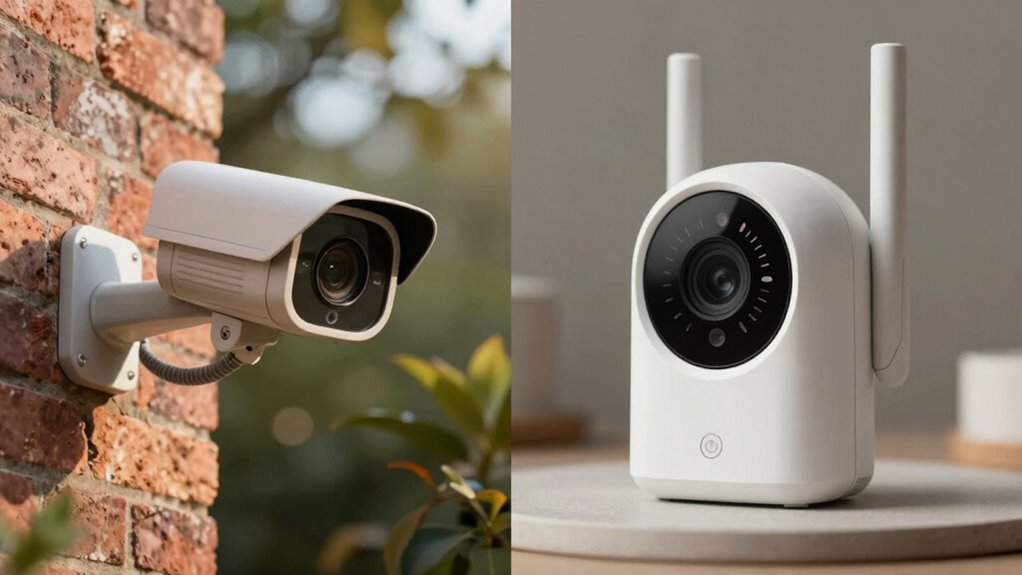
How does the image quality of wired security cameras compare to their wireless counterparts? Generally, wired cameras offer superior image resolution and video clarity. This advantage stems from a direct connection to your network, minimizing data loss during transmission. Wireless cameras, while convenient, can experience interference and signal degradation, which may impact image quality.
| Feature | Wired Cameras | Wireless Cameras |
|---|---|---|
| Image Resolution | High (up to 4K) | Moderate (up to 1080p) |
| Video Clarity | Excellent | Variable |
| Signal Stability | Consistent | Potentially unstable |
Ultimately, if image quality is your top priority, wired security cameras are the better choice.
Cost Comparison: Wired vs. Wireless Cameras
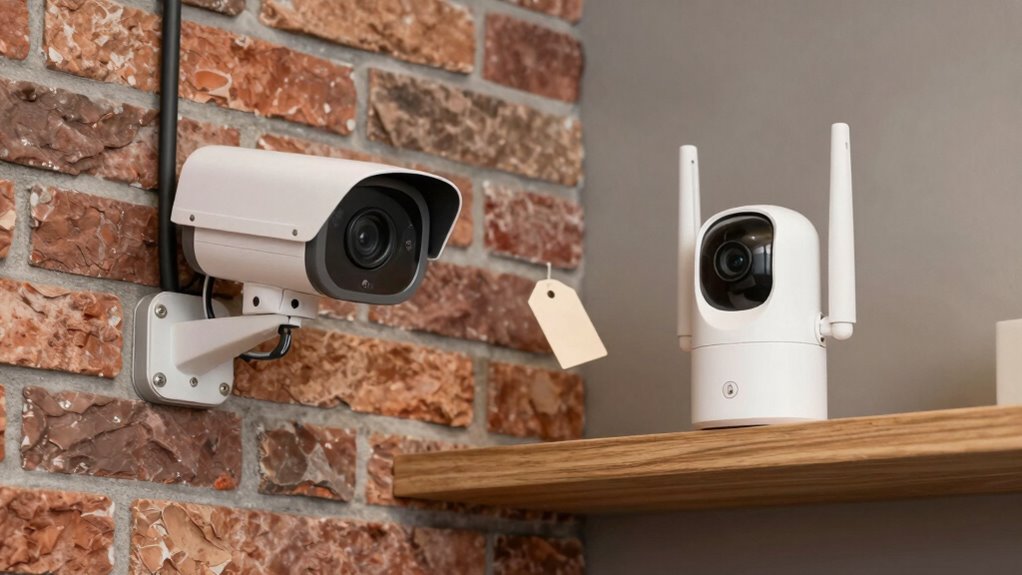
When evaluating security cameras, cost often plays a significant role in the decision-making process. You’ll want to weigh both upfront expenses and long-term savings. Here’s a quick breakdown:
- Initial Costs: Wired cameras typically have higher installation costs due to cabling, while wireless options usually require less installation effort.
- Maintenance: Wired systems may need occasional checks to verify cables are intact, while wireless cameras might require battery replacements.
- Equipment: Consider whether you need additional devices for wireless connectivity, which can impact your budget.
- Longevity: Wired cameras often last longer, providing better long-term savings.
Ultimately, your budget considerations should factor in both the initial outlay and potential future expenses.
When to Choose Wired vs. Wireless Security Cameras?
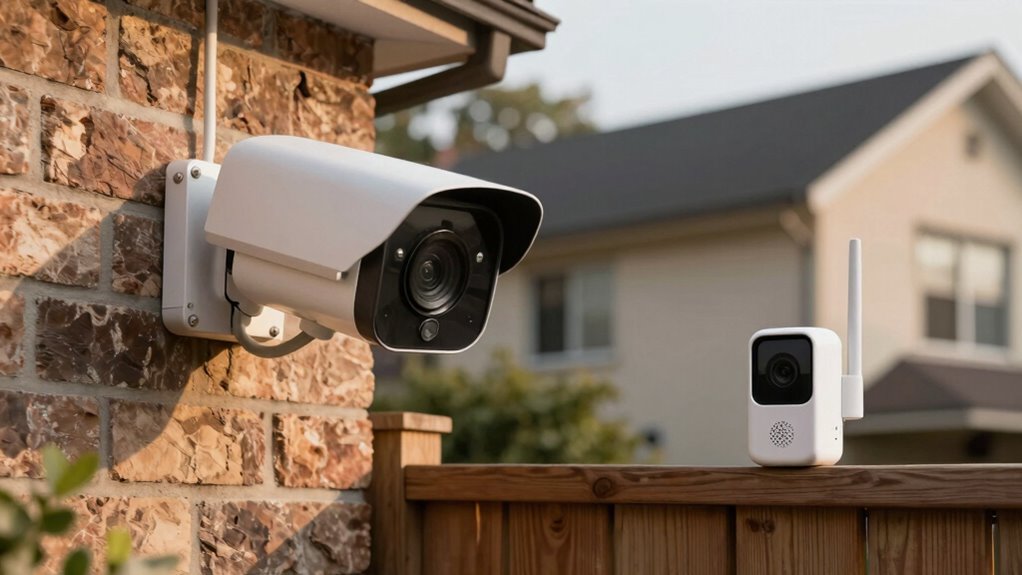
Wondering which type of security camera suits your needs best? If you’re planning to install cameras in a fixed location, like near entrances or driveways, wired cameras might be your best bet. They offer reliable connections and consistent video quality, making them ideal for permanent camera placements. On the other hand, if you need flexibility, wireless cameras can adapt easily to different monitoring options. They’re perfect for covering areas where wiring isn’t feasible or for locations that require relocation. Consider your layout and how often you’ll need to adjust your setup. Ultimately, your choice should align with your specific security needs and the environment where you’ll be installing the cameras.
Frequently Asked Questions
Can Wired Cameras Be Hacked Like Wireless Ones?
Yes, wired cameras can be hacked, though it’s less common than with wireless ones. They still have wired security vulnerabilities that can be exploited if you don’t take hacking prevention measures seriously. To protect your system, make certain that your network is secure, use strong passwords, and regularly update your firmware. By staying proactive, you can greatly reduce the risk of unauthorized access to your wired security system.
How Do Weather Conditions Affect Wireless Camera Performance?
Weather conditions can greatly affect your wireless camera’s performance. Extreme temperatures, rain, or snow can impact connectivity and image quality. A camera’s weather resilience determines how well it withstands these environmental impacts. If you live in a region with harsh weather, choose a camera designed for outdoor use, ensuring it has proper sealing and durability to maintain functionality. This way, you’ll get reliable surveillance, regardless of the weather.
Are There Any Subscription Fees for Wireless Camera Systems?
Yes, many wireless camera systems come with subscription fees. These subscription models often provide cloud storage, advanced features, or enhanced customer support. When you’re looking at cost comparisons, consider both the initial purchase price and the ongoing fees. Some brands offer free storage options, while others charge monthly or yearly. Make sure to evaluate what features you need versus what you’re willing to pay to find the best fit for your security needs.
Can I Integrate Both Wired and Wireless Cameras Into One System?
Yes, you can integrate both wired and wireless cameras into one system using hybrid systems. Just make sure to check for camera compatibility before setting everything up. Most modern security systems allow you to mix and match, providing you with the flexibility to place cameras where you need them most. This setup can enhance your security coverage, combining the reliability of wired cameras with the convenience of wireless options.
What Are the Best Brands for Wired and Wireless Security Cameras?
When you’re choosing security cameras, consider brands like Arlo and Ring for wireless options, and Lorex or Amcrest for wired. Each brand excels in camera features comparison, offering high-resolution video and smart alerts. Conduct a brand reputation analysis to guarantee reliability and customer satisfaction. You’ll find that investing in trusted brands can enhance your security experience, whether you go wired or wireless. Choose wisely to protect your home effectively!
Conclusion
In the grand showdown of wired versus wireless security cameras, the choice is yours—just like picking between a cozy sweater and a trendy, but possibly unreliable, poncho. Sure, wired cameras promise steadfast reliability, while wireless ones flaunt convenience like a flashy magician. But remember, if you can’t decide, you could always go for both. After all, nothing says “I value my security” quite like a tangled mess of cables and a Wi-Fi connection that drops more often than your favorite sitcom!
NFL season / tailgating Picks
team gear
As an affiliate, we earn on qualifying purchases.