
When it comes to coffee, the grind size plays a vital role in flavor. Burr grinders provide consistent particle sizes, resulting in balanced extraction and richer taste. In contrast, blade grinders produce uneven grinds, causing over-extraction and muddled flavors. The method you choose also affects taste, with each one benefiting from specific grind sizes. If you’re keen on enhancing your coffee experience, there’s much more to explore about how grinding techniques and brewing methods can elevate your cup.

Get the little things that make your day delivered free with Prime
- Fast, free delivery on millions of items
- Prime Video, Amazon Music and more included
- Member-only deals all year
Key Takeaways
- Burr grinders produce uniform grind sizes, ensuring balanced flavor extraction and preventing over-extraction or under-extraction issues.
- Blade grinders create a mix of fine and coarse particles, leading to inconsistent flavors and muddled taste profiles.
- The heat generated by blade grinders can alter coffee oils, diminishing nuanced flavors and overall quality of the brew.
- Different brewing methods benefit from specific grind sizes; burr grinders accommodate this versatility better than blade grinders.
- Investing in a burr grinder significantly enhances the overall coffee experience, especially for serious enthusiasts seeking rich flavors.
Products Worth Considering

Shark Navigator Robot Vacuum with Self-Empty Base, Dark Grey (RV2120AE)

Philips Hue Bridge Pro Smart Lighting Hub

Samsung 85 M80H Series Mini LED 4K Smart TV (2026)
As an affiliate, we earn on qualifying purchases.
Why Grind Size Matters for Your Coffee Flavor
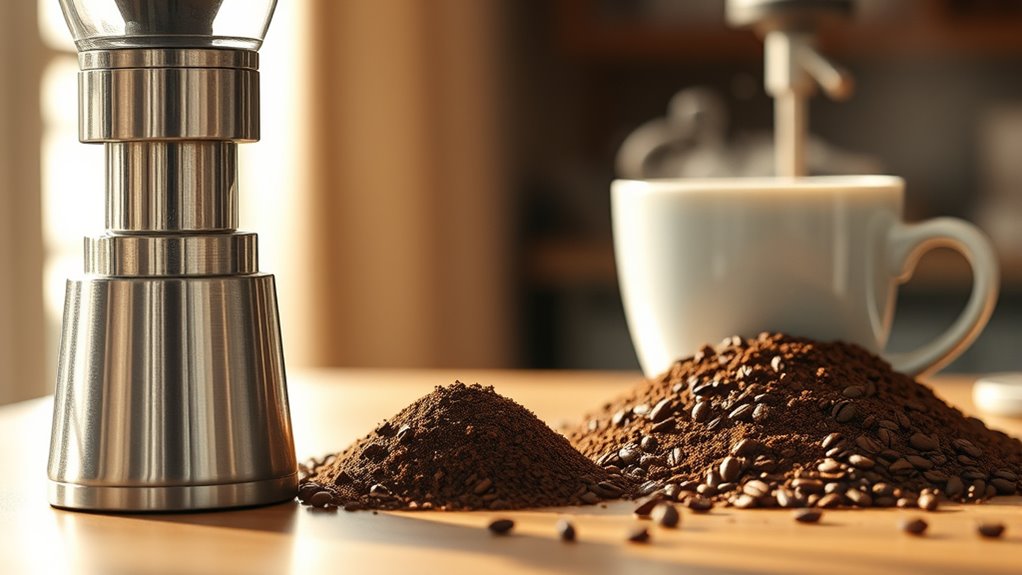
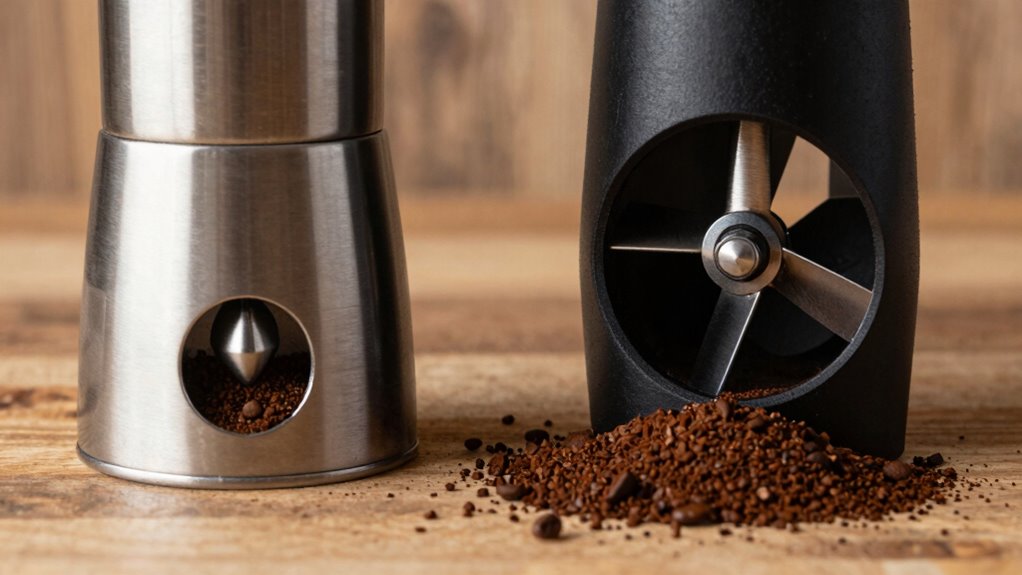
While you might not think about it often, grind size plays an essential role in the flavor of your coffee. The consistency of your grind directly affects flavor extraction. When you use a burr grinder, you achieve uniform particle sizes, allowing for even extraction during brewing. This means each coffee ground contributes to the overall flavor profile, enhancing your drinking experience. On the other hand, a blade grinder often produces uneven grinds, leading to some particles over-extracting and others under-extracting. This inconsistency can result in a muddled taste, lacking the depth and richness you desire. So, if you’re aiming for that perfect cup, investing in a quality grinder can make a significant difference in your coffee’s flavor.
How Brewing Methods Impact Flavor
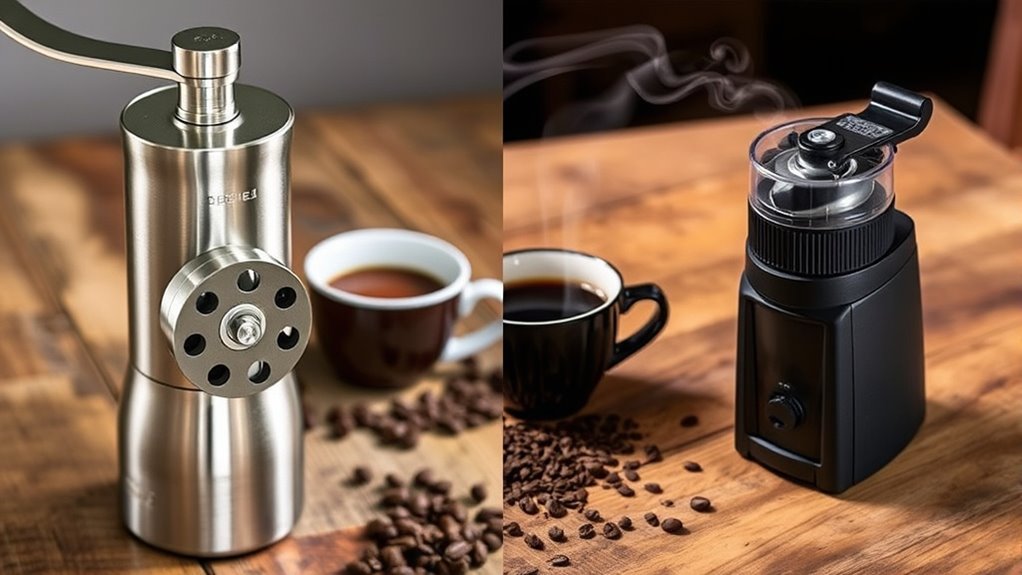
The way you brew your coffee greatly influences its flavor, just as grind size does. Different brewing methods require specific brewing temperatures and extraction times, which can drastically change the taste of your cup. For instance, using a French press typically involves higher brewing temperatures and longer extraction times, resulting in a rich, full-bodied flavor. In contrast, a pour-over often uses lower temperatures and shorter extraction times, yielding a cleaner, more nuanced taste. If you’re using a cold brew method, the extended extraction time at room temperature creates a smooth, less acidic profile. By adjusting your brewing method, you can enhance or alter the flavors of your coffee, making it an essential factor in your overall coffee experience.
Why Burr Grinders Make Your Coffee Better
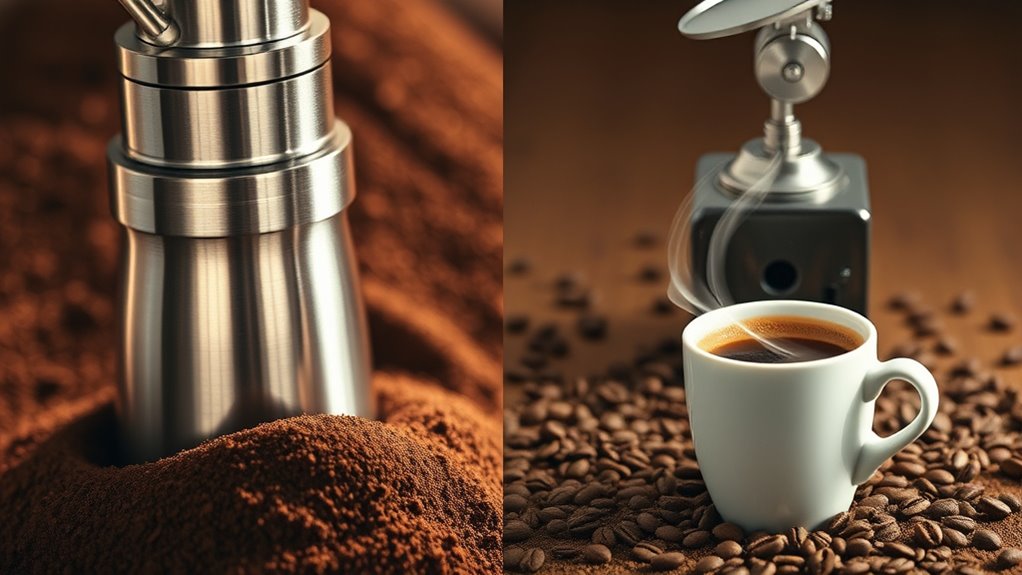
When you want to elevate your coffee experience, choosing a burr grinder can make all the difference. Unlike blade grinders, burr grinders provide superior grind consistency, ensuring that each coffee particle is the same size. This uniformity plays an essential role in flavor extraction during the brewing process. With even-sized grounds, you’ll enjoy a balanced cup, free from the bitterness caused by over-extraction or the sourness from under-extraction. Plus, burr grinders allow you to customize your grind size, whether you’re brewing espresso or a French press. By investing in a burr grinder, you’re not just grinding coffee; you’re revealing the full potential of your beans, resulting in a richer, more flavorful cup that you’ll savor with every sip.
What Are the Downsides of Blade Grinders?
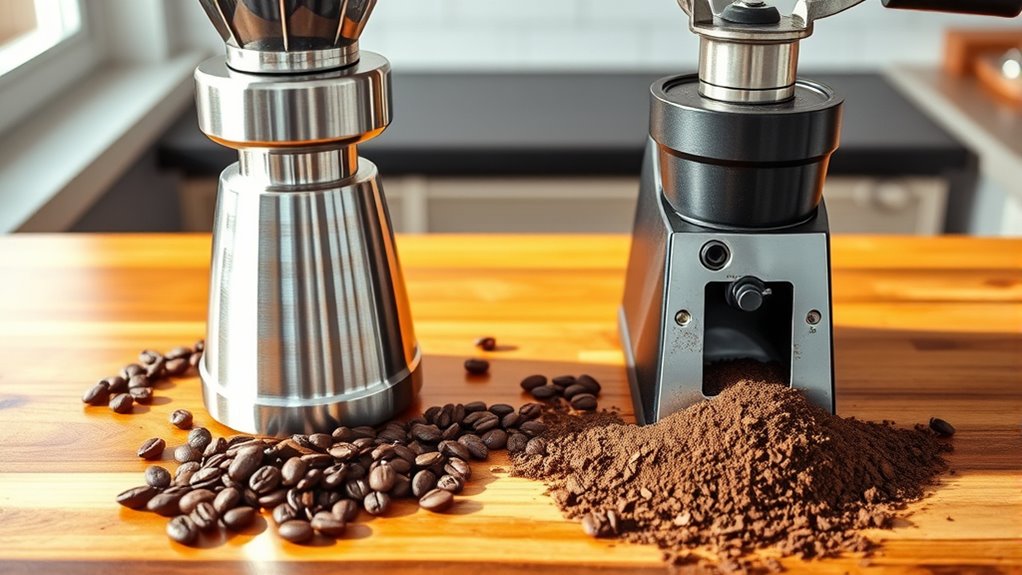
Burr grinders stand out for their ability to produce consistent coffee grounds, but blade grinders come with their own set of drawbacks. One major downside is their inconsistent texture. When you use a blade grinder, the blades chop the beans unevenly, leading to a mix of fine and coarse particles. This inconsistency can affect extraction, resulting in a less balanced flavor in your coffee.
Additionally, blade grinders generate heat during the grinding process. This heat can alter the coffee’s oils and flavor compounds, diminishing the overall taste. As the beans heat up, you risk losing some of the nuanced flavors that make your coffee special. If you’re serious about your brew, these drawbacks might make you reconsider using a blade grinder.
How to Choose the Right Grinder Based on Your Brewing Method
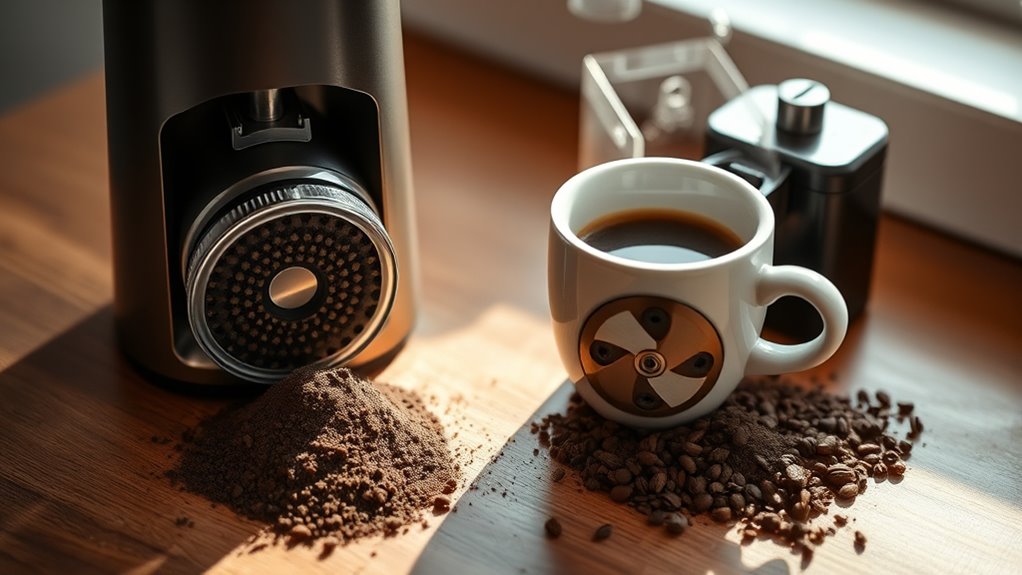
How do you choose the right grinder for your preferred brewing method? First, consider the grinder types available: burr grinders and blade grinders. For methods like espresso or pour-over, a burr grinder is ideal since it offers consistent particle size, enhancing flavor extraction. If you’re using a French press or cold brew, a coarser grind from a burr grinder works best. On the other hand, if you’re in a pinch and need a quick option, a blade grinder can suffice, but be mindful of uneven grinds affecting taste. Match your grinding techniques with your brewing method to get the most out of your coffee. Choosing the right grinder can greatly elevate your brewing experience and coffee flavor. Understanding grinder fundamentals helps you make the best choice for your coffee setup.
Frequently Asked Questions
Are Burr Grinders More Expensive Than Blade Grinders?
Yes, burr grinders are generally more expensive than blade grinders. When you consider the cost comparison, burr grinders often offer better durability and consistency in grind size. While the initial investment might be higher, they tend to last longer and provide superior performance, making them a worthwhile choice for coffee enthusiasts. If you’re serious about your brew, investing in a burr grinder can enhance your overall coffee experience considerably.
Can I Use a Blade Grinder for Espresso?
You can use a blade grinder for espresso, but it’s not ideal. Blade grinders create uneven coffee grind sizes, which can lead to inconsistent espresso extraction. For the best results, you’ll want a fine, uniform grind that a burr grinder provides. If you stick with the blade grinder, be mindful of your technique; pulse it and shake it to get a more even grind, but it still won’t match the precision of a burr grinder.
How Often Should I Clean My Coffee Grinder?
You should clean your coffee grinder every few weeks for peak performance. Regular cleaning helps maintain the grinder and guarantees that stale coffee oils don’t affect your brew’s flavor. If you use your grinder daily, a cleaning frequency of once a month is a good rule of thumb. Just follow the manufacturer’s instructions for proper grinder maintenance, and you’ll enjoy fresher coffee without any unwanted tastes from old grounds or oils.
Do Burr Grinders Produce Less Noise Than Blade Grinders?
“Silence is golden,” especially when it comes to coffee grinding. Burr grinders generally produce less noise than blade grinders. While you’re grinding, the grinder noise from a burr model is often more subdued due to its uniform grinding consistency. This quieter operation means you can enjoy your morning routine without the jarring sounds of a blade grinder. So, if noise is a concern, a burr grinder might be your best bet.
What Materials Are Burr Grinders Typically Made From?
Burr grinders are typically made from materials like stainless steel or ceramic. Stainless steel offers excellent durability, ensuring your grinder lasts for years, while ceramic can provide a sharper edge and resist heat buildup. When you choose a burr grinder, you’re investing in grinder durability as well as quality. The materials used not only impact the lifespan but also the consistency of your grind, so pick wisely for the best results.
Conclusion
To summarize, choosing the right grinder can greatly enhance your coffee experience. Imagine you’re brewing a French press; using a burr grinder guarantees a consistent coarse grind that extracts rich flavors, while a blade grinder might leave you with uneven particles, resulting in a muddled taste. By investing in a burr grinder, you’ll elevate your morning brew, bringing out the best in every cup. So, consider your brewing method and take your coffee game to the next level!