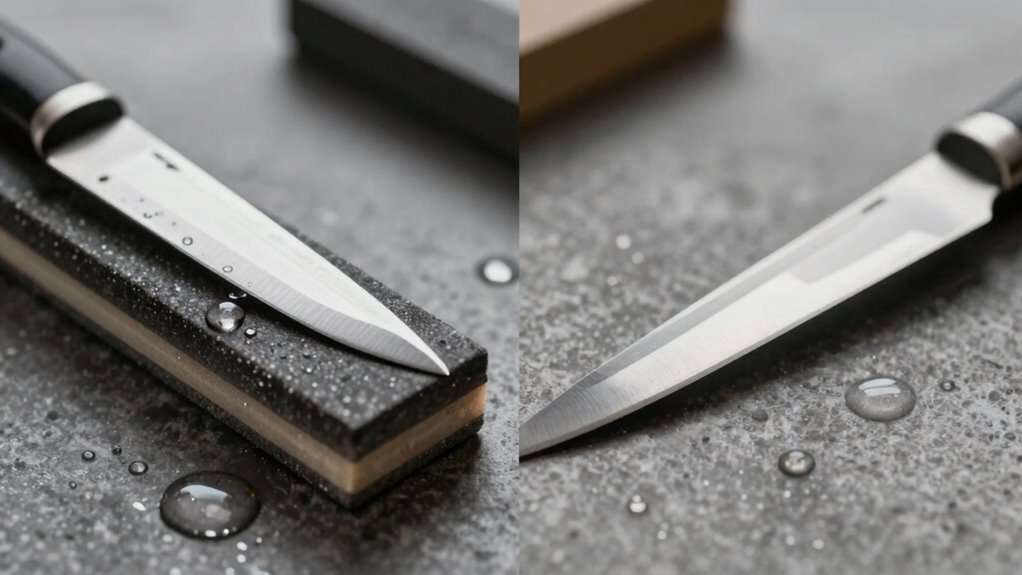

Knife honing and sharpening aren’t the same, and it’s essential to know the difference. Honing realigns the knife edge, improving performance without changing the blade’s material. Sharpening, on the other hand, actually removes metal to restore a dull edge. You should hone regularly to keep your knives efficient, while sharpening is needed less often, depending on usage. Understanding these steps can enhance your cooking experience, and there’s more to learn about proper maintenance techniques.

Get the little things that make your day delivered free with Prime
- Fast, free delivery on millions of items
- Prime Video, Amazon Music and more included
- Member-only deals all year
Key Takeaways
- Honing maintains a knife’s edge alignment, while sharpening restores its sharpness by removing material.
- Regular honing is recommended for optimal performance, whereas sharpening is necessary when blades become dull.
- Honing should be done weekly; sharpening frequency varies based on knife usage habits.
- Using the correct angle (15-20 degrees) and pressure during both honing and sharpening is crucial for effective maintenance.
- Over-sharpening can shorten a knife’s lifespan; sharpen only when necessary to preserve the blade.
As an affiliate, we earn on qualifying purchases.
What Is Knife Honing and Why Is It Important?
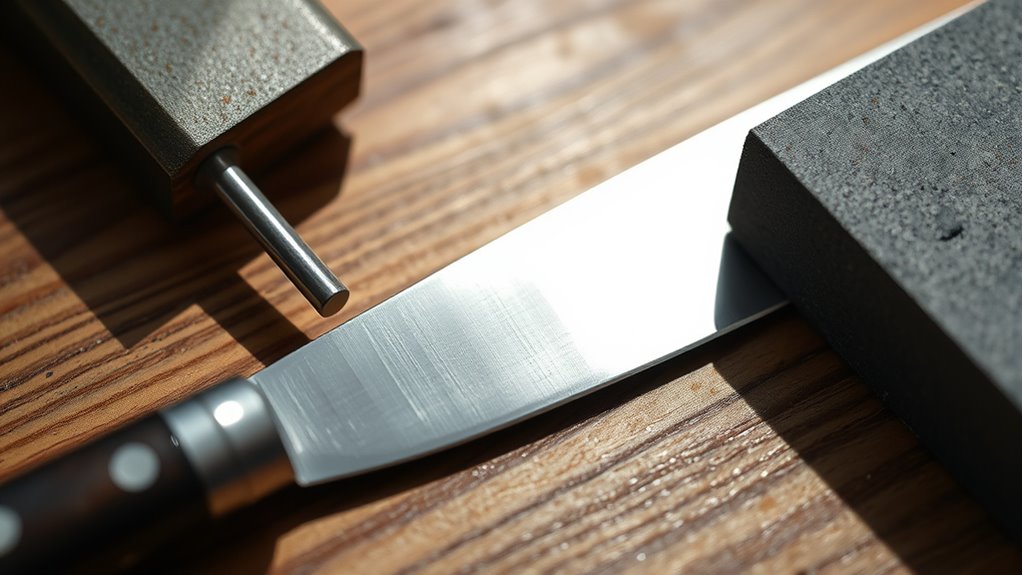
Knife honing is an essential maintenance technique that keeps your blades performing at their best. By using honing techniques, you realign the microscopic teeth on your knife’s edge, ensuring it cuts efficiently. You might not realize it, but honing helps maintain your knife’s sharpness between sharpenings, extending its lifespan. The honing process is quick and easy, requiring just a honing rod or steel. Proper knife maintenance through regular honing can significantly prolong the life of your blades and improve safety in the kitchen. The honing benefits are significant; it can enhance your cutting precision, reduce the effort needed while slicing, and improve your overall cooking experience. Regularly honing your knives allows you to achieve consistent results, making meal prep enjoyable rather than frustrating. So, don’t overlook this vital step in knife care—your kitchen creations will thank you!
As an affiliate, we earn on qualifying purchases.
How Does Knife Sharpening Differ From Honing?
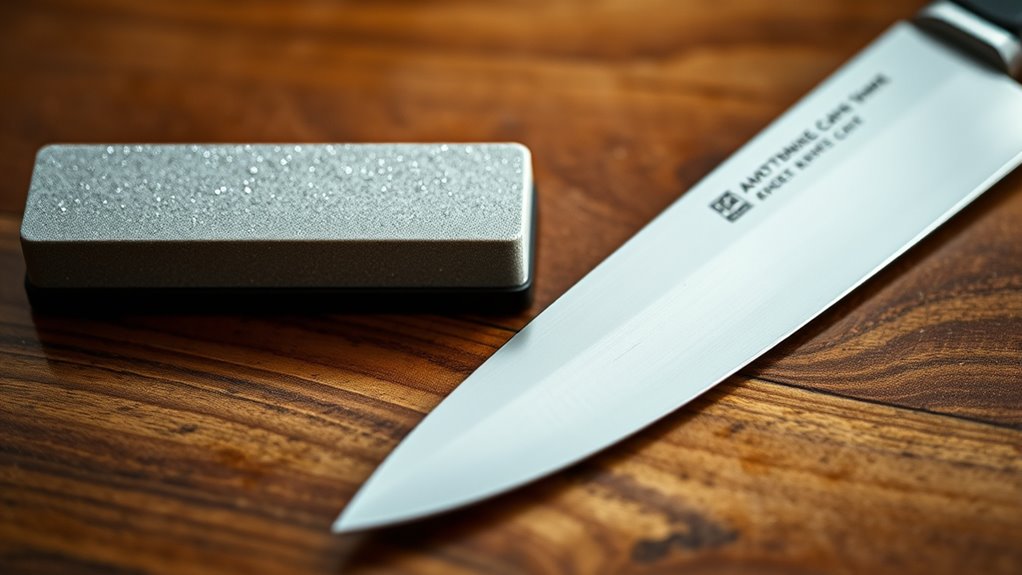
While honing maintains your knife’s edge by realigning its microscopic teeth, sharpening actually removes material from the blade to create a new edge. This fundamental difference affects your blade maintenance routine and how effectively your knife performs during cutting tasks. Honing should be done regularly to keep your knife sharp, while sharpening is reserved for when the blade becomes noticeably dull. When you hone, you’re enhancing the knife’s cutting performance without altering its structure considerably. On the other hand, sharpening reshapes the blade, which can lead to a shorter lifespan if done excessively. Understanding this distinction will help you choose the right technique for maintaining your knives and ensuring peak performance in the kitchen.
As an affiliate, we earn on qualifying purchases.
When and How to Hone Your Knives?
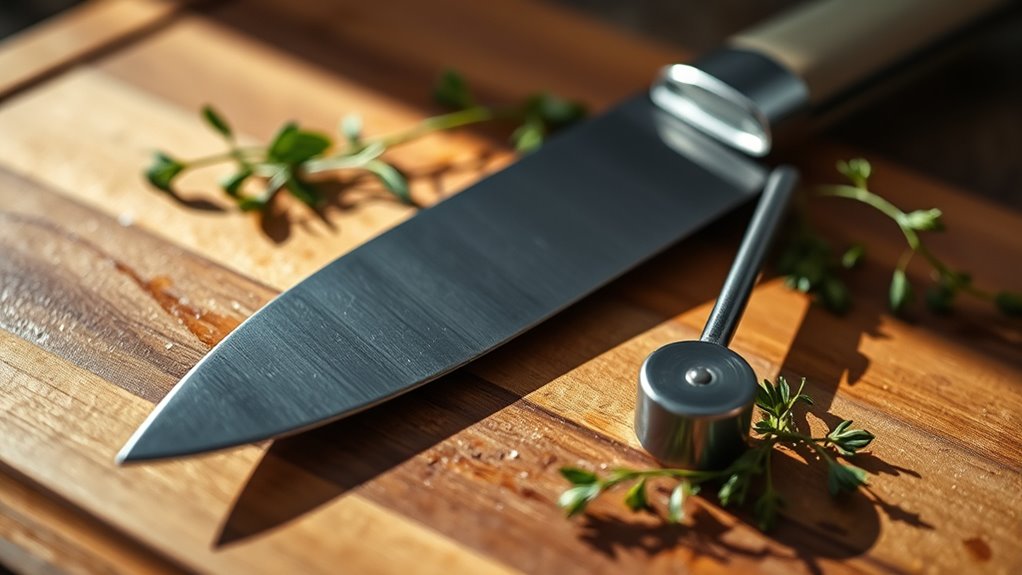
Knowing when to hone your knives can keep them performing at their best. It’s usually a good idea to hone before or after heavy use, ensuring that edge remains sharp. Using the right technique will make the process effective and easy, so let’s break that down.
Ideal Timing For Honing
Regularly honing your knives is essential for maintaining their sharpness and performance. To get the most out of your honing frequency, consider these ideal times for honing:
- Before Each Use: A quick hone guarantees your knife is ready for precision cutting.
- After Heavy Use: If you’ve chopped through tough materials, a honing session can restore the edge.
- Weekly Maintenance: Incorporate honing into your weekly kitchen routine to keep knives in top shape. Using the right tools, like a honing steel or ceramic rod, can make a significant difference. Proper honing technique not only preserves your knife’s longevity but also ensures safety during use. Additionally, understanding microplastic contamination in kitchen dust can help you maintain a cleaner, safer environment. Being aware of filtration efficiency in your cleaning tools can further reduce household dust and allergens.
- Before Special Occasions: Confirm your knives perform at their best during holiday cooking or gatherings.
- When You Notice a Dull Edge: Regular honing can help prevent the need for more aggressive sharpening by maintaining the blade’s edge alignment.
Using the right tools, like a honing steel or ceramic rod, can make a significant difference. By honing regularly, you’ll extend the life of your knives and improve your cooking experience.
Proper Honing Technique
Honing your knives effectively can considerably enhance their performance and longevity. To start, choose a honing rod that suits your knife’s material—ceramic or steel works best. Hold the rod vertically, and position the knife at a consistent honing angle, typically around 15 to 20 degrees.
With a firm grip on the knife handle, glide the blade down the rod, maintaining that angle. Alternate sides with each stroke, using about five to ten passes per side. This technique realigns the edge without removing material, ensuring your knife stays sharp longer.
You should hone your knives regularly, ideally every few uses. By mastering these honing angles and using honing rods properly, you’ll keep your knives in peak condition for all your culinary adventures. Remember that proper honing technique can significantly extend the lifespan of your blades, especially when combined with proper blade maintenance practices.
As an affiliate, we earn on qualifying purchases.
How Often Should You Sharpen Your Knives?
How often you sharpen your knives really depends on how frequently you use them and the type of knife you own. If you’re a daily cook using a chef’s knife, you might need to sharpen it more often than a specialty knife that sees less action. Keeping an eye on your blades will help you determine the right sharpening schedule for your needs.
Frequency of Use
Typically, you should sharpen your knives every few months, depending on how often you use them. Your frequency of use plays a vital role in determining your maintenance schedule. Here are some guidelines to help you decide:
- Daily Use: If you’re using your knives daily, sharpen them every month.
- Weekly Use: For weekly cooks, aim for sharpening every 2-3 months.
- Occasional Use: If you only pull out your knives occasionally, sharpening every 6 months should suffice.
- Specialty Knives: Rarely used specialty knives can go up to a year without sharpening.
Regularly evaluating your knife’s performance and adjusting your sharpening schedule will guarantee they stay effective and safe in the kitchen.
Type of Knife
The type of knife you use considerably influences how often it needs sharpening. A chef’s knife and santoku knife, used frequently, should be sharpened every few months. In contrast, a paring knife or utility knife might only need sharpening once or twice a year, depending on usage. Serrated knives usually don’t require sharpening as often since they maintain their edge longer, but you should still check them regularly. Boning knives and fillet knives, used for delicate work, should be sharpened every few months to guarantee precision. Finally, a cleaver knife, used for heavy-duty tasks, may require sharpening after several uses. Ultimately, consider your knife’s purpose and blade maintenance frequency to determine a suitable sharpening schedule.
Essential Tools for Honing and Sharpening
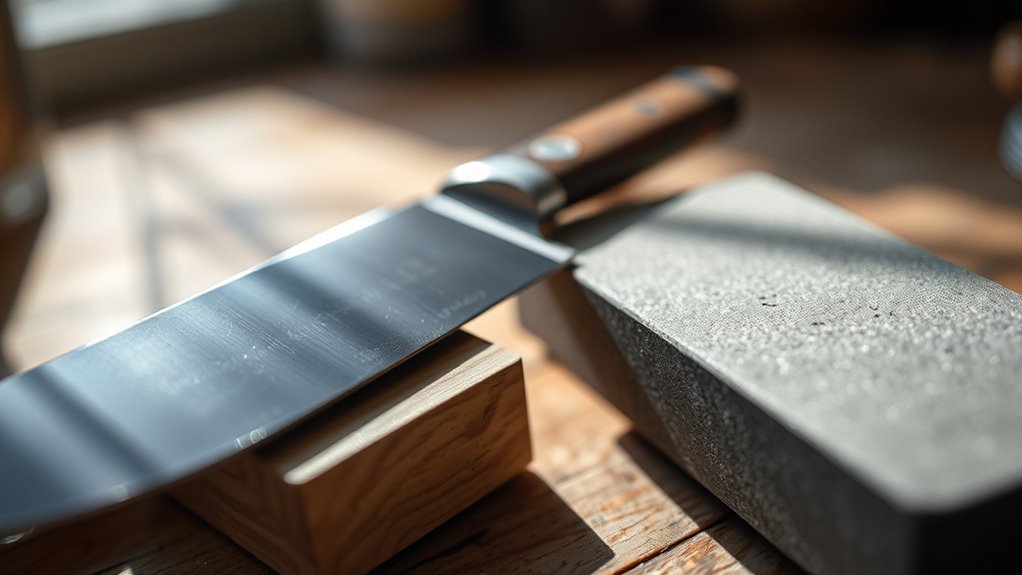
While honing and sharpening might seem similar, they require different tools to achieve ideal results. Using the right equipment is essential for maintaining your knives effectively. Here’s a list of important tools you’ll need:
- Honing Rod: This is a key honing tool that realigns the edge of your knife, making it feel sharp without removing material.
- Whetstone: A popular sharpening tool, it allows you to grind and shape the blade for a sharper edge.
- Electric Knife Sharpener: This tool offers convenience and speed, perfect for those who want a quick solution.
- Ceramic Rod: Another honing tool, it provides a fine touch-up for your knife’s edge.
With these tools, you’ll keep your knives in top condition.
Common Knife Care Mistakes: Honing and Sharpening
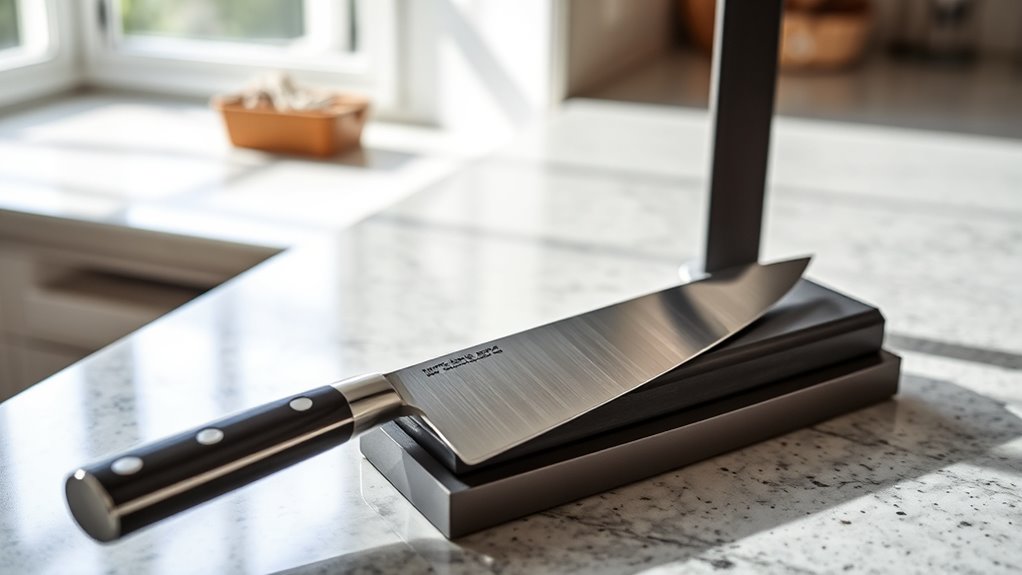
Using the right tools is just the first step in maintaining your knives. Many people fall for common misconceptions about knife care, leading to mistakes that can damage your blades. Here’s a quick reference to help you avoid these pitfalls:
| Mistake | Correct Approach |
|---|---|
| Using a dull sharpening stone | Regularly hone your knife instead |
| Not cleaning knives after use | Always wash and dry immediately |
| Using the wrong angle | Stick to a consistent angle |
| Ignoring blade rust | Store knives in a dry place |
| Over-sharpening | Sharpen only when necessary |
How to Hone Your Knife: A Step-by-Step Guide
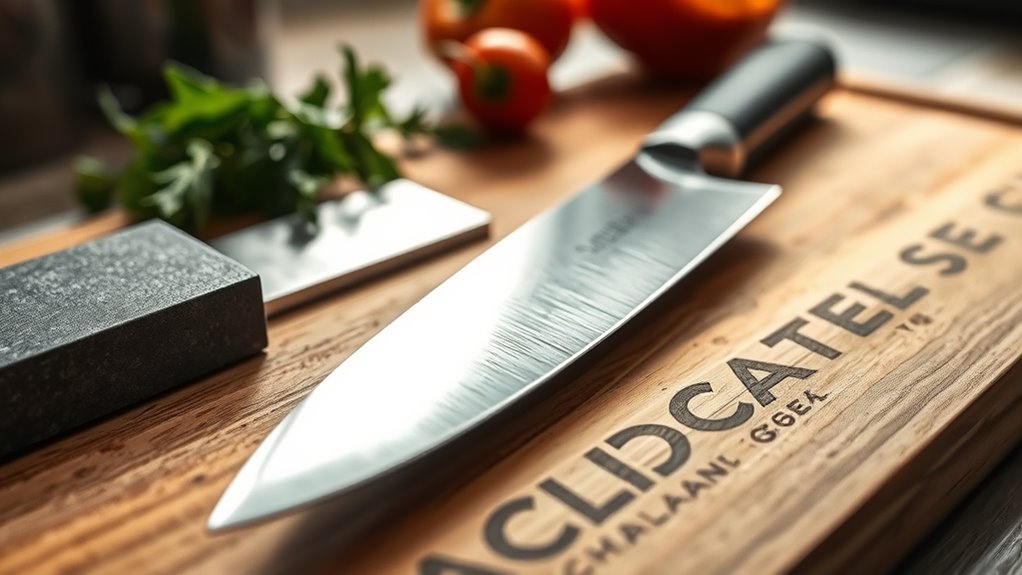
Honing your knife is a straightforward process that can greatly enhance its performance. Regular honing is an essential part of knife care, ensuring your knife stays sharp without the need for frequent sharpening. Follow these steps to hone your knife effectively:
- Choose the Right Honing Tool: Use a honing rod or a ceramic honing tool for best results.
- Position the Knife: Hold the knife at a 15-20 degree angle against the honing tool.
- Hone the Blade: Gently swipe the blade down the honing tool, alternating sides with each stroke.
- Test the Sharpness: After honing, test the knife’s edge on a piece of paper or a tomato.
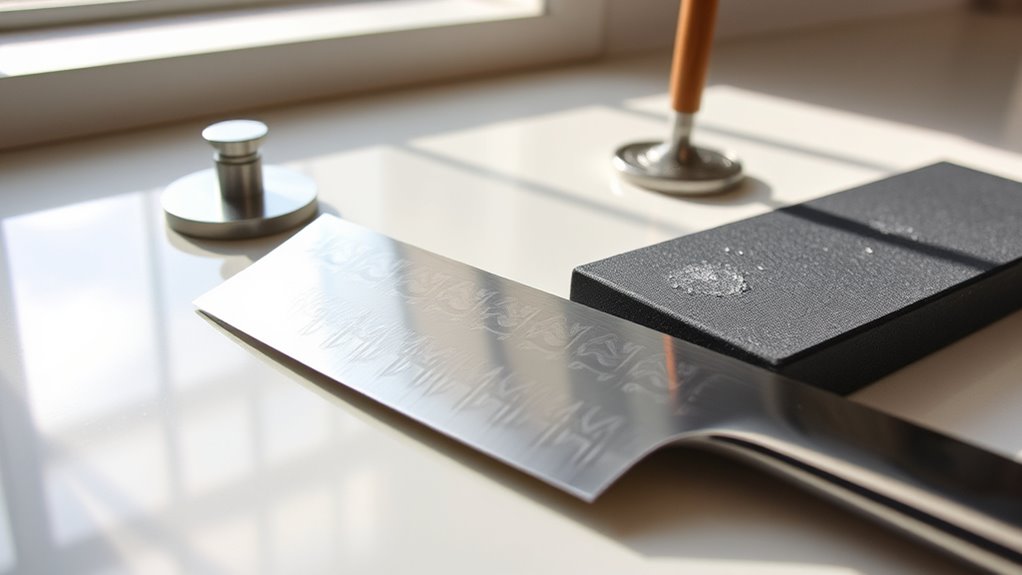
When your knife starts to lose its edge despite regular honing, it’s time to contemplate sharpening. Start by choosing the right sharpening tool based on your knife materials—ceramic, steel, or Damascus. Each requires a specific approach. For instance, use a whetstone for a precise edge or a pull-through sharpener for convenience.
Always maintain the correct angle, usually around 15-20 degrees, to guarantee effective sharpening. As you sharpen, focus on consistent pressure and smooth, even strokes. Additionally, considering the performance ratings of your sharpening tools can help ensure you select the most effective option. Properly maintaining your tools and equipment can also extend their lifespan and ensure better results.
Incorporate various cutting techniques during practice, like slicing and chopping, to test the knife’s sharpness. Finally, wipe the blade clean to remove metal shavings. With these tips, you’ll restore your knife’s edge and enhance your culinary skills!
Why Regular Knife Maintenance Matters
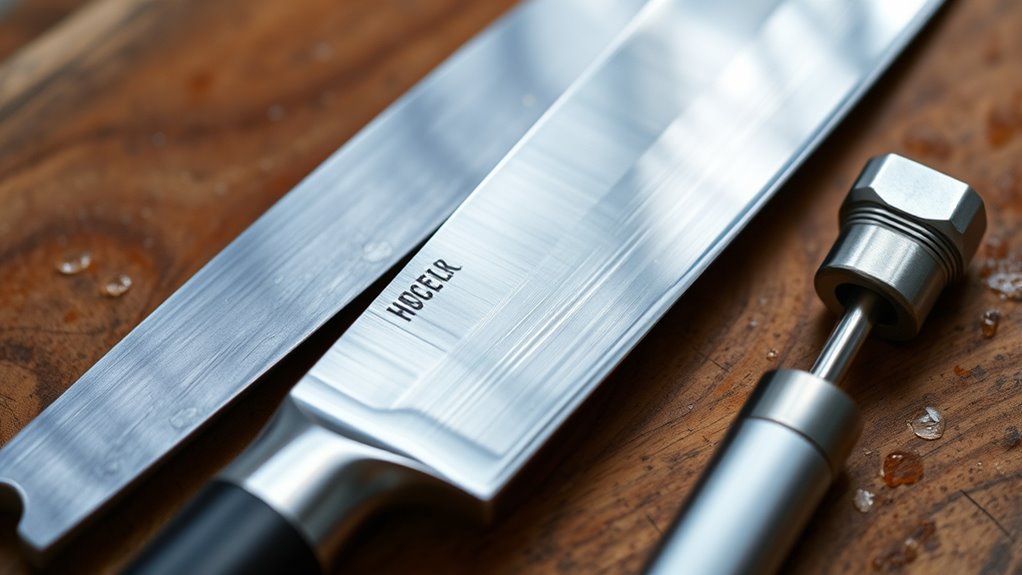
While it might seem like a minor task, regular knife maintenance is essential for ensuring safety and efficiency in the kitchen. Neglecting your knives can lead to dull blades, which not only make cooking more difficult but can also result in accidents. Here are four reasons why you should prioritize knife maintenance:
- Safety: A sharp knife is safer than a dull one; you’re less likely to apply excessive force.
- Efficiency: Well-maintained knives cut through food with ease, saving you time and energy.
- Quality: Consistent maintenance enhances the taste of your meals by allowing precise cuts.
- Blade Longevity: Proper care extends the life of your knives, saving you money in the long run.
Invest in your knife maintenance for a better cooking experience!
Frequently Asked Questions
Can You Hone a Knife Without a Honing Rod?
Yes, you can hone a knife without a honing rod. You can use alternative tools like a ceramic mug or the edge of a countertop. Simply hold the knife at a 15-20 degree angle and gently slide the blade along the surface, maintaining that angle. This honing technique helps realign the blade’s edge, making it sharper for your next meal prep. Just be cautious to avoid damaging your knife or the surface!
Does Honing Damage the Knife Blade?
Honing doesn’t damage the knife blade if done correctly. In fact, effective honing techniques can actually protect the blade by maintaining its sharpness and alignment. You’re realigning the edge rather than removing material, which helps extend the knife’s lifespan. Just make sure to use a proper honing rod or tool, and apply gentle pressure to avoid any potential harm. Always prioritize blade protection while honing to keep your knives in top shape.
Are Electric Sharpeners Better Than Manual Ones?
When it comes to sharpening your knives, think of electric sharpeners as a turbo boost for your blades. They offer electric sharpener advantages like speed and consistency, making it easy to get a precise edge quickly. On the flip side, manual sharpeners can have drawbacks, such as requiring more skill and effort. If you’re looking for convenience and efficiency, you’ll likely prefer the electric option for your kitchen needs.
What Materials Can Be Used for Honing?
You can use several materials for honing, including ceramic rods, steel honing rods, and leather strops. Each of these honing tools has unique benefits. For instance, ceramic rods effectively align the blade’s edge, while steel rods are great for routine maintenance. When applying honing techniques, verify you maintain the correct angle to achieve ideal results. Using the right material will keep your knives in top shape, enhancing their performance during your culinary tasks.
Can Honing Restore a Severely Dull Knife?
No, honing can’t restore a severely dull knife. It’s primarily a technique for maintaining an already sharp edge. If your knife’s blade is really dull, you’ll need to use sharpening methods instead. Regular honing helps keep your knife in good shape, but for effective knife maintenance, make certain to sharpen it when necessary. This way, you’ll guarantee your knife stays efficient and ready for any culinary tasks you tackle.
Conclusion
In the battle for kitchen supremacy, honing and sharpening are your secret weapons. By understanding the differences and mastering both techniques, you’ll guarantee your knives slice through ingredients like they’re made of butter. Regular maintenance isn’t just a chore; it’s the key to culinary greatness! So, grab your honing rod and sharpening stone, and give your knives the care they deserve. With the right approach, you’ll be wielding razor-sharp tools that make every meal a masterpiece!
NFL season / tailgating Picks
team gear
As an affiliate, we earn on qualifying purchases.