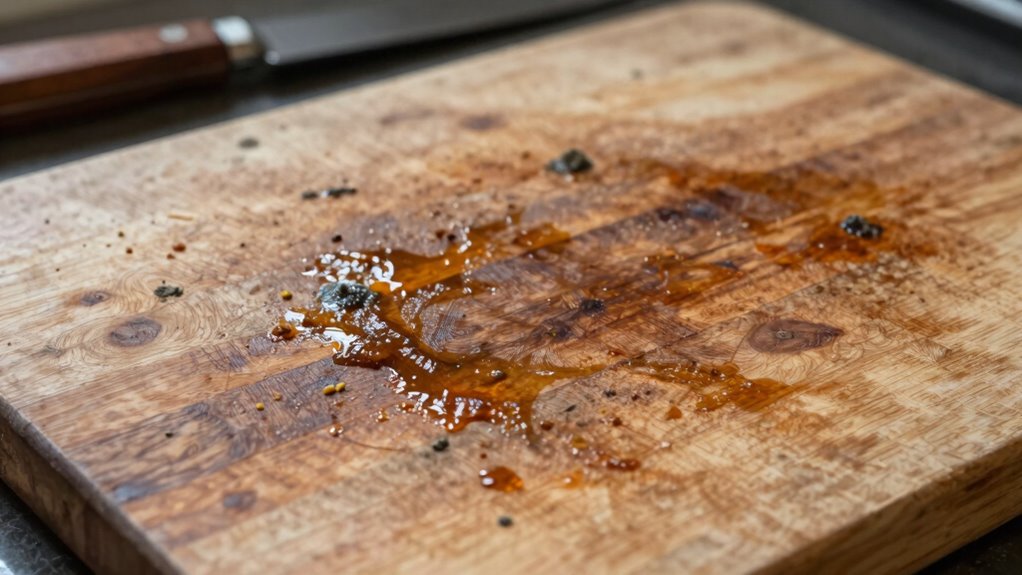

Your cutting boards start smelling fast because bacteria and food particles hide in tiny pores and cracks, creating a perfect environment for bacteria to grow. Moisture and debris get trapped, especially in porous materials like wood, causing odors and contamination. If you don’t scrub thoroughly and sanitize regularly, these bacteria multiply and produce unpleasant smells. To keep your boards fresh longer, understanding how material type and cleaning habits impact odor development is key—more tips lie ahead.

Get the little things that make your day delivered free with Prime
- Fast, free delivery on millions of items
- Prime Video, Amazon Music and more included
- Member-only deals all year
Key Takeaways
- Bacteria and food particles hide in tiny pores and scratches, causing odors to develop quickly.
- Porous materials like wood absorb moisture and debris, promoting bacterial growth and smell buildup.
- Inadequate cleaning or sanitizing allows bacteria to multiply, accelerating odor formation.
- Scratches and cuts in plastic boards trap bacteria if not properly sanitized or replaced regularly.
- Moisture retention in microscopic imperfections creates an environment for bacteria and unpleasant odors.

If your cutting boards start smelling quickly, it’s often because bacteria and food particles are hiding in the tiny pores and cracks. These tiny crevices trap moisture and debris, creating an environment where odor-causing bacteria thrive. To keep your kitchen safe and your cutting boards smelling fresh, understanding the role of food safety and material differences is essential.
Food safety hinges on how well you clean and maintain your cutting boards. When you don’t scrub thoroughly or neglect to sanitize regularly, bacteria can multiply, especially in the microscopic imperfections of the surface. That bacteria produces unpleasant odors and poses a risk of cross-contamination. Proper cleaning techniques—using hot soapy water, disinfectants, or even vinegar—are key to eliminating food residues and bacteria. However, cleaning alone isn’t enough if the material itself encourages bacteria buildup. Material porosity significantly influences how quickly odors develop, as porous surfaces can trap moisture and debris more easily.
Thorough cleaning and proper maintenance are essential to prevent bacteria and odors on your cutting boards.
Material differences play a considerably role in how quickly your cutting board develops odors. Wooden boards, for instance, are porous, meaning they absorb moisture and food particles deep within their fibers. This absorption makes them more susceptible to developing persistent smells if not properly maintained. Conversely, plastic cutting boards tend to be less porous, making them easier to clean thoroughly. Still, scratches and cuts in plastic can harbor bacteria and odors if not replaced or sanitized regularly. Bamboo boards fall somewhere in between—less porous than wood but still capable of harboring bacteria if not cleaned properly. Additionally, certain material treatments can help reduce porosity and bacterial retention, extending the life of your board and keeping odors at bay.
Choosing the right material depends on your priorities. If you want a surface less prone to trapping smells, non-porous options like certain plastics or composite boards may be better. But even then, you need to be diligent with cleaning and replacing worn boards to prevent odors from developing. Wooden boards, while durable and gentle on knives, require more careful maintenance—regular oiling, thorough cleaning, and occasional sanitizing—to prevent odors from setting in.
Ultimately, food safety depends on how well you understand and respect these material differences. Proper cleaning routines, timely replacement of worn boards, and selecting the right material for your needs can notably reduce odors and keep your kitchen hygienic. Regularly replacing worn cutting boards is a crucial step in preventing bacterial buildup. Remember, a clean cutting board isn’t just about avoiding bad smells—it’s about preventing bacteria from contaminating your food and protecting your health.
antibacterial cutting board cleaner
As an affiliate, we earn on qualifying purchases.
As an affiliate, we earn on qualifying purchases.
Frequently Asked Questions
Can Certain Types of Wood Resist Odors Better?
Certain types of wood, like bamboo and teak, resist odors better because of their dense wood grain and natural oils. The tight grain prevents bacteria from settling, while natural oils act as a barrier against smells. When you choose a cutting board with these characteristics, you help reduce lingering odors. Regular cleaning and oiling also maintain the wood’s resistance, keeping your board fresh and odor-free longer.
How Often Should I Replace My Cutting Board?
You should replace your cutting board every 1-3 years, depending on use and condition. Imagine a well-maintained kitchen—both clean and safe—versus one with a worn, smelly board. Regularly inspecting for deep cuts, stains, or odors helps maintain food safety and kitchen hygiene. Proper kitchen maintenance involves timely replacements to prevent bacteria buildup, ensuring your food remains safe and your culinary space stays fresh and inviting.
Do Different Foods Cause Varying Smells?
Yes, different foods cause varying smells on your cutting board. Foods like garlic, onions, and fish have strong odor absorption, making your board smell quickly. Food pairing can influence this, especially when you cut different items on the same surface. To prevent lingering odors, clean your board thoroughly after preparing pungent foods, and consider using separate boards for different food groups. This simple step keeps odors at bay and maintains freshness.
Is It Safe to Use Bleach on My Cutting Board?
Using bleach on your cutting board isn’t the best idea, as it can be harsh and damage the surface. Instead, rely on cleaning techniques like thorough scrubbing with hot water and soap, or using a mixture of vinegar and baking soda to combat odor absorption. These natural methods effectively refresh your board without risking safety or durability, helping you maintain a clean, odor-free surface for all your culinary adventures.
Can Sealing the Wood Prevent Odors?
Sealing your wood cutting board can help prevent odors from developing by creating a barrier against moisture and bacteria. When you incorporate effective cleaning techniques, like washing with soap and water and drying thoroughly, sealing enhances odor control. Store your cutting board properly in kitchen storage to keep it dry and fresh. Regular maintenance, including resealing when needed, guarantees your board stays odor-free and hygienic for longer.
non-porous plastic cutting board
As an affiliate, we earn on qualifying purchases.
As an affiliate, we earn on qualifying purchases.
Conclusion
To keep your cutting boards smelling fresh, think of them as your kitchen’s silent guardians—requiring regular care to stay stalwart against odors. With simple steps like thorough cleaning, sanitizing, and proper drying, you can prevent smells from taking root. Treat your boards like a trusted friend, giving them the attention they deserve, and they’ll serve you well without turning into a fragrant battleground. Keep them clean, and your kitchen will thank you!
wood cutting board oil treatment
As an affiliate, we earn on qualifying purchases.
As an affiliate, we earn on qualifying purchases.
As an affiliate, we earn on qualifying purchases.
NFL season / tailgating Picks
team gear
As an affiliate, we earn on qualifying purchases.