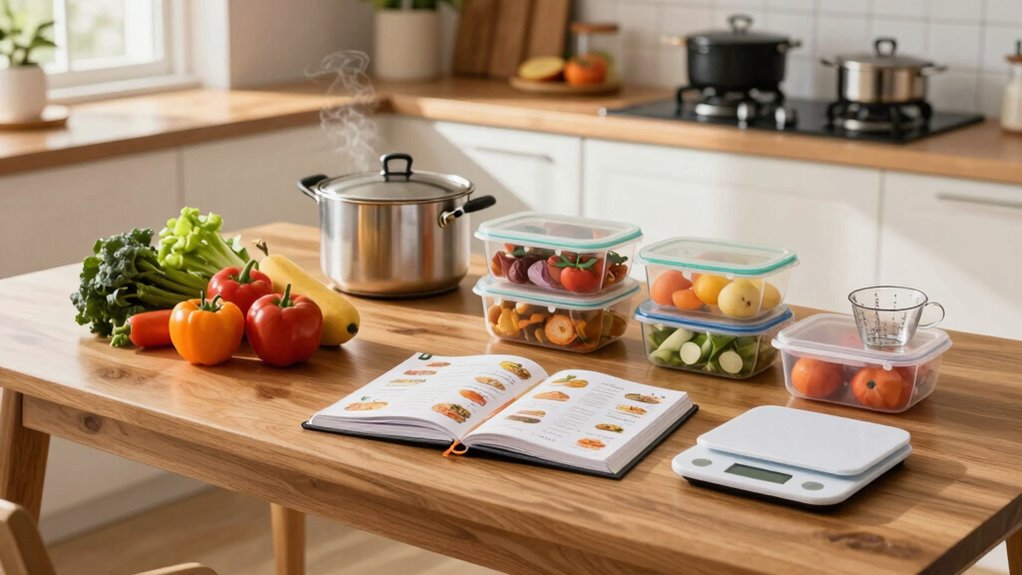
Meal planning is a simple yet effective strategy that saves you hours in the kitchen while promoting a healthier lifestyle. By organizing meals in advance, you can reduce food waste, control portion sizes, and guarantee a balanced diet. Start small by choosing recipes and creating a shopping list each week. Invest in essential tools and establish efficient prep habits to boost your cooking efficiency. There’s so much more to explore about making meal planning work for you.
Key Takeaways
- Organize meals weekly by selecting recipes and creating a shopping list to streamline grocery shopping and cooking.
- Utilize batch cooking and meal prepping techniques to save time during the week and ensure nutritious meals.
- Invest in essential kitchen tools like sharp knives and storage containers for efficient food preparation and preservation.
- Focus on balanced meals by incorporating a variety of proteins, whole grains, and vegetables to enhance nutrition and flavor.
- Develop a consistent meal planning routine to reduce stress, prevent food waste, and maintain a healthy lifestyle.

Dealusy 50 Pack (100-Piece) 24 oz Meal Prep Containers Reusable with Lids
- Durable and Reusable Material: Made of premium thick plastic
- Leakproof and Stackable Design: Tight sealed lids for leak prevention
- Microwave and Freezer Safe: BPA-free, withstands -4℉ to 248℉
As an affiliate, we earn on qualifying purchases.
As an affiliate, we earn on qualifying purchases.
What Is Meal Planning and Why Is It Important?

Meal planning is the process of organizing your meals ahead of time, and it’s essential for maintaining a healthy lifestyle. By planning your meals, you can enjoy numerous meal planning benefits, such as saving time, reducing food waste, and making healthier choices. It allows you to control portion sizes and guarantees you’re eating a balanced diet. However, meal planning challenges can arise, like finding the time to plan or sticking to your plan when life gets hectic. To overcome these obstacles, you can start small, gradually incorporating meal planning into your routine. With practice, you’ll find it becomes easier, making healthy eating more achievable and efficient, ultimately leading to a more balanced life.

Astercook Knife Set for Kitchen with Block and Sharpener 15pcs German
- Complete 15-Piece Knife Set: Includes various knives and kitchen shears
- Durable Black Non-Stick Coating: Resists rust and oxidation for longevity
- Built-in Knife Sharpener: Convenient sharpening with one hand
As an affiliate, we earn on qualifying purchases.
As an affiliate, we earn on qualifying purchases.
Quick Start Guide to Meal Planning
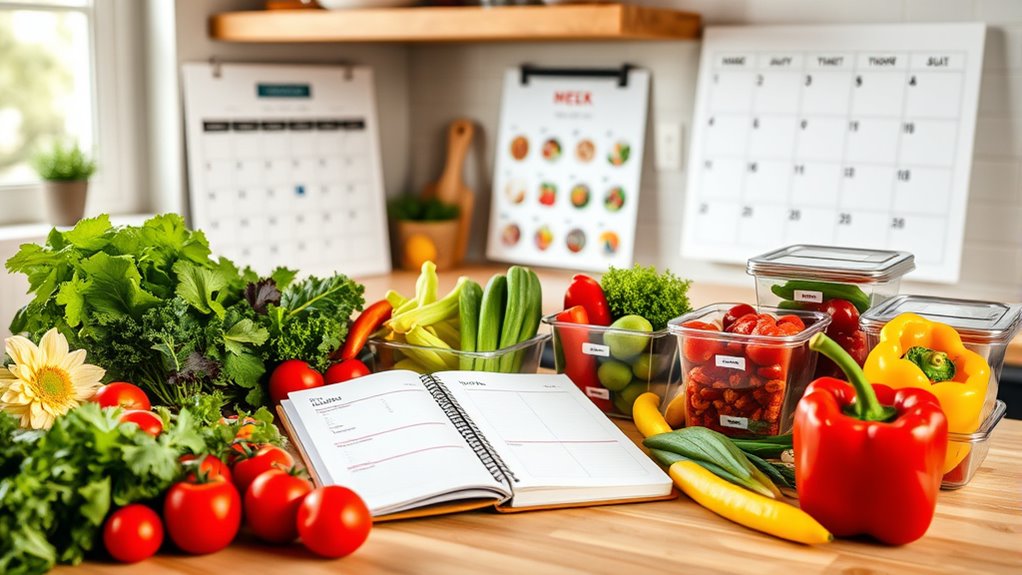
Starting your meal planning journey doesn’t have to be overwhelming. Begin by gathering your family for a brainstorming session. Discuss quick meal ideas that everyone enjoys and can help prepare. This not only makes planning fun but also encourages family involvement, making mealtime a more engaging experience. Incorporate safety checklists to ensure your kitchen is prepared for efficient and secure meal prep. Additionally, review your kitchen tool organization to streamline cooking processes and reduce clutter. Optimizing your kitchen layout can significantly improve your air quality by reducing dust and mold buildup that can occur in cluttered spaces. To further enhance your kitchen environment, consider implementing proper ventilation practices that can help maintain a healthier space. Being mindful of kitchen hygiene is also essential to prevent foodborne illnesses and keep your cooking area safe. Next, choose a few recipes for the week and create a shopping list based on those meals. Stick to simple, nutritious ingredients that won’t break the bank. Aim for at least one night of leftovers to save time. Finally, set aside a specific day each week to plan and prep meals. By following these steps, you’ll establish a routine that saves you hours while keeping your family satisfied with delicious meals.

Decorably 52 Sheets Pastel Rainbow Undated Magnetic Weekly Meal Planner
- Child-Safe Certified: LEAD-FREE and phthalate-free materials
- Strong Magnetic Backing: Includes 4 durable magnets for fridge mounting
- Easy Tear-Off Pages: Perforated for simple removal and shopping
As an affiliate, we earn on qualifying purchases.
As an affiliate, we earn on qualifying purchases.
Choosing the Right Meal Planning Method for You
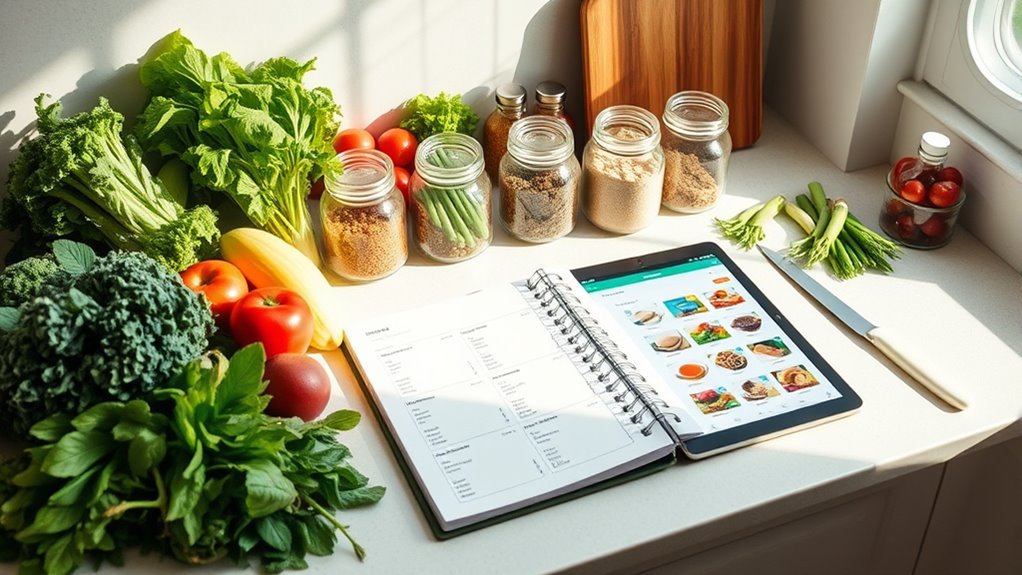
Choosing the right meal planning method can make all the difference in your kitchen, especially if you’re looking to streamline your cooking routine. Start by exploring different meal planning styles, such as batch cooking, prepping individual ingredients, or planning meals by the week. Think about your personal preferences—do you prefer cooking daily or are you more inclined to prepare multiple meals at once? Consider your schedule, dietary needs, and how much time you can dedicate to meal prep each week. Experiment with various approaches to see what feels most manageable and enjoyable for you. Ultimately, the best method is the one that fits seamlessly into your lifestyle, making meal preparation a stress-free experience.

The Ultimate Meal Planning for One Cookbook: 100+ Easy, Affordable, and Low-Waste (High-Taste!) Recipes Made Just for You (Ultimate for One Cookbooks Series)
As an affiliate, we earn on qualifying purchases.
As an affiliate, we earn on qualifying purchases.
Must-Have Tools for Effective Meal Planning
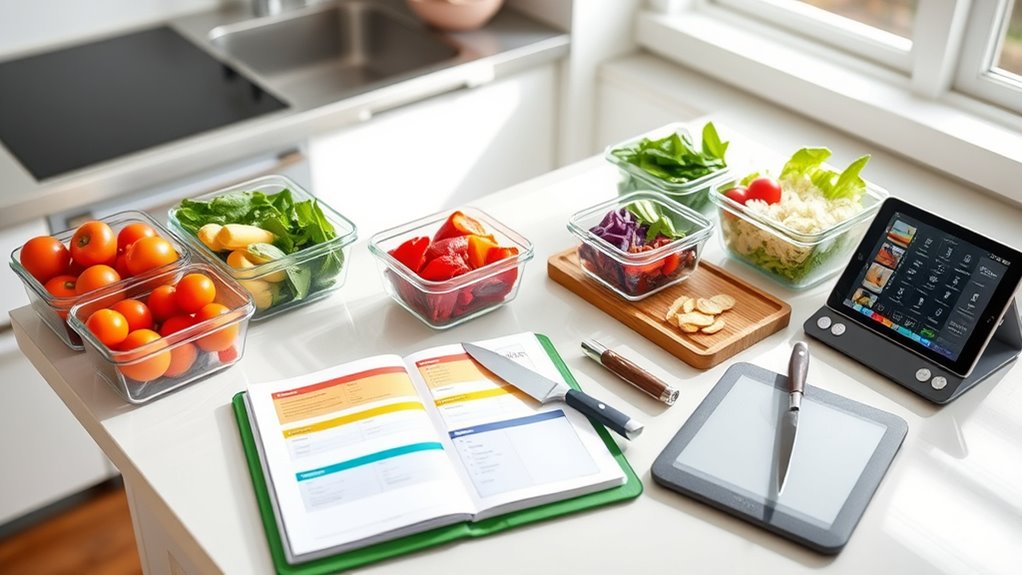
To make meal planning a breeze, you’ll want the right tools at your fingertips. Essential kitchen gadgets, handy meal planning apps, and smart storage solutions can streamline your process. Let’s explore what you need to set yourself up for success!
Essential Kitchen Tools
When it comes to effective meal planning, having the right kitchen tools can make all the difference. Start by investing in essential kitchen gadgets like a sharp chef’s knife and a sturdy cutting board. These will speed up your meal prep and guarantee uniform ingredients. A reliable set of measuring cups and spoons is vital for accurate portioning, while high-quality storage containers keep your meals fresh and organized. A slow cooker or instant pot can save you time during busy days, allowing for hands-off cooking. Don’t forget a good set of mixing bowls and a food processor to streamline chopping and blending. Additionally, understanding knife skills can help you use your tools more safely and efficiently. Proper kitchen safety practices, including proper tool storage and handling, are also crucial for a smooth cooking experience. Developing good food prep habits can further enhance your efficiency and reduce waste. Employing tool maintenance routines ensures your equipment stays in optimal condition and lasts longer. Using appropriate ventilation techniques helps maintain a clean and safe cooking environment, especially when preparing meals that generate smoke or strong odors. With these tools, you’ll find meal planning becomes quicker and more enjoyable.
Meal Planning Apps
Meal planning apps can transform your culinary routine, making it easier than ever to stay organized and inspired. With the right app features, you can streamline your meal prep and save valuable time. Here are three must-have features to look for in meal planning apps:
- Recipe Organization: Easily store and categorize your favorite recipes, making meal selection a breeze.
- Grocery List Integration: Automatically generate grocery lists based on your planned meals, ensuring you never forget an ingredient.
- Nutritional Tracking: Keep tabs on your daily intake and make healthier choices by tracking calories and nutrients. Incorporating nutritional information can also help you make more informed dietary decisions.
Storage Solutions Needed
Having a well-organized kitchen can make a world of difference in your meal planning efforts. To streamline your process, invest in quality food storage solutions. Start with glass or BPA-free plastic containers, as they’re durable and versatile. Choose various container types like stackable bins for pantry items, airtight jars for grains, and portion-sized containers for leftovers. Label everything clearly to avoid mix-ups and save time when you’re in a rush. Don’t forget about freezer bags for bulk items or prepped meals; they’re great for saving space. Using these storage solutions effectively will help you keep your ingredients fresh, simplify your cooking, and make meal prep a breeze. Proper appliance maintenance and regular cleaning can extend their lifespan and prevent food contamination. Additionally, understanding the importance of food safety practices can prevent contamination and spoilage, making your meal planning even more efficient. Incorporating smart controls into your kitchen can further optimize your food storage and energy use, ensuring your ingredients stay fresh longer and reducing waste. Being mindful of indoor air quality and proper storage can also help maintain a healthier kitchen environment, reducing odors and allergens. Regularly checking your appliances and storage areas for warp issues and potential damage is essential for safe food storage and preventing waste. With the right tools, you can enjoy stress-free meal planning!
Meal Planning Tips for Creating Balanced Meals
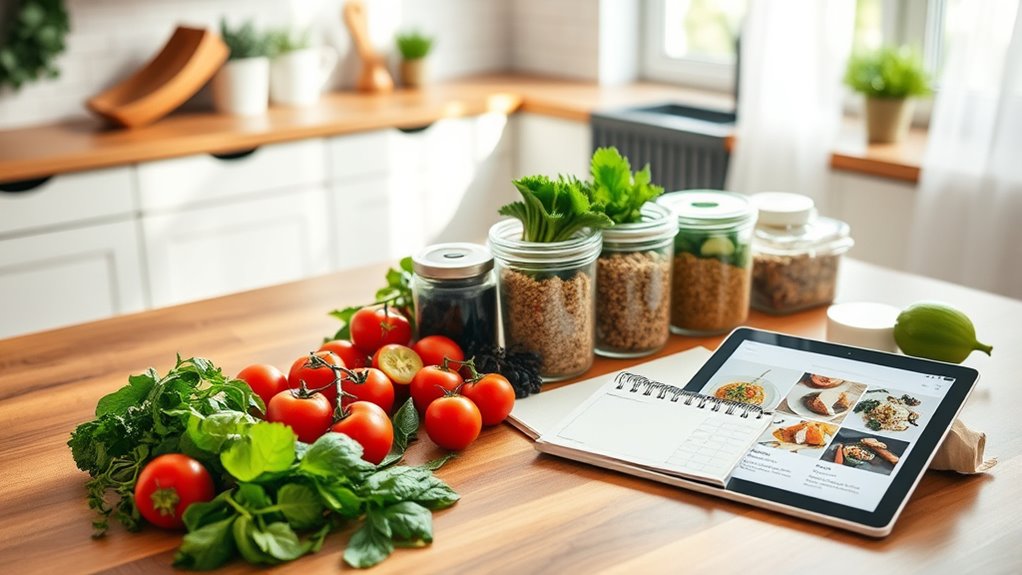
Creating balanced meals can feel overwhelming, but with a few simple tips, you can streamline the process. Focus on these key strategies:
- Protein sources: Incorporate a variety of protein options like beans, chicken, and tofu to enhance nutrient density.
- Portion control: Use your plate as a guide—fill half with veggies, a quarter with protein, and a quarter with whole grains to guarantee flavor balance and meal diversity.
- Seasonal ingredients: Choose fresh, seasonal ingredients that not only taste better but also honor cultural cuisines, making food pairing easier and more exciting.
- Meal planning routines: Establishing a consistent meal planning routine can help reduce stress and save time during busy weeks.
Organizing Your Grocery List Efficiently
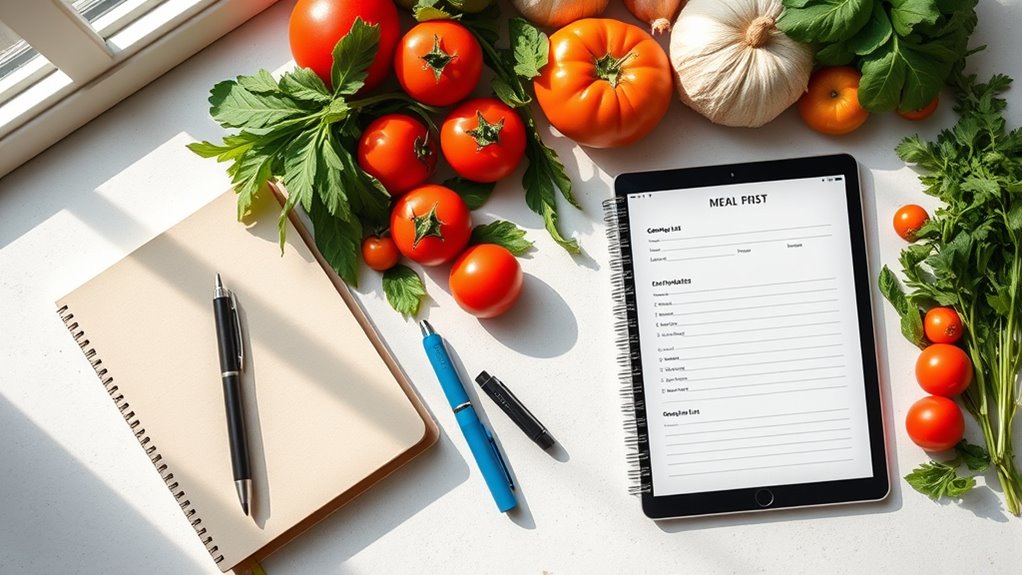
When you’re ready to tackle your grocery shopping, organizing your list can make the process smoother and quicker. Start by grouping items into grocery categories like produce, dairy, and grains. This way, you won’t waste time wandering the aisles. Next, consider adding seasonal ingredients to your list; they’re often fresher and more affordable. Check your pantry and fridge first to avoid duplicate purchases. As you compile your list, jot down quantities to guarantee you have enough of each item. You might even want to organize your list based on the layout of your store. By following these steps, you’ll streamline your shopping experience and make meal prep much easier down the line. Happy shopping!
Time-Saving Meal Prep Tips
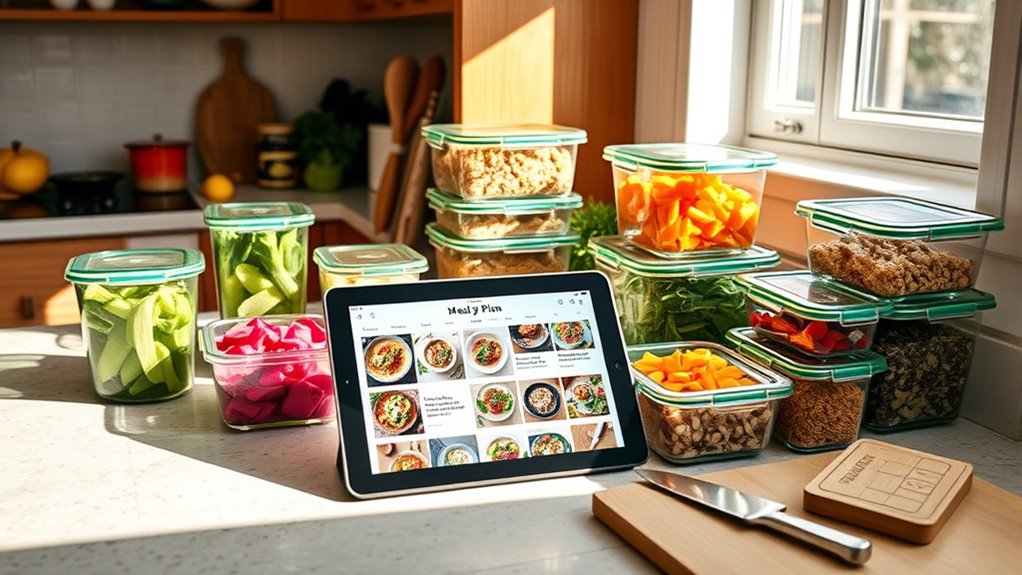
To make meal prep more efficient, focus on batch cooking and planning your meals in advance. This approach not only saves time but also guarantees you have nutritious meals ready to go. Here are three time-saving tips to enhance your prep routine:
- Utilize a Slow Cooker: Prepare a large batch of soups or stews that can simmer all day while you handle other tasks.
- Chop and Store: Spend a few minutes chopping vegetables and proteins for the week and store them in airtight containers.
- Cook Grains in Bulk: Make a big batch of rice, quinoa, or pasta, and portion it out for quick meal assembly.
- Establish simple routines: Creating organized routines for your meal prep can help maintain consistency and reduce daily decision fatigue.
How to Incorporate Flexibility Into Your Meal Plan?

Incorporating flexibility into your meal plan can make the process more enjoyable and sustainable. Start by including a few flexible recipes that can adapt to whatever ingredients you have on hand. For example, stir-fries or grain bowls let you mix and match vegetables, proteins, and sauces based on what’s in your fridge. Designate a night for spontaneous meals, allowing you to experiment without pressure. Keep a well-stocked pantry with versatile staples like pasta, beans, and canned tomatoes, making it easy to whip up something delicious. Finally, be open to swapping planned meals for unexpected gatherings or cravings, ensuring your meal plan feels less like a chore and more like an exciting culinary adventure.
Common Meal Planning Mistakes to Avoid
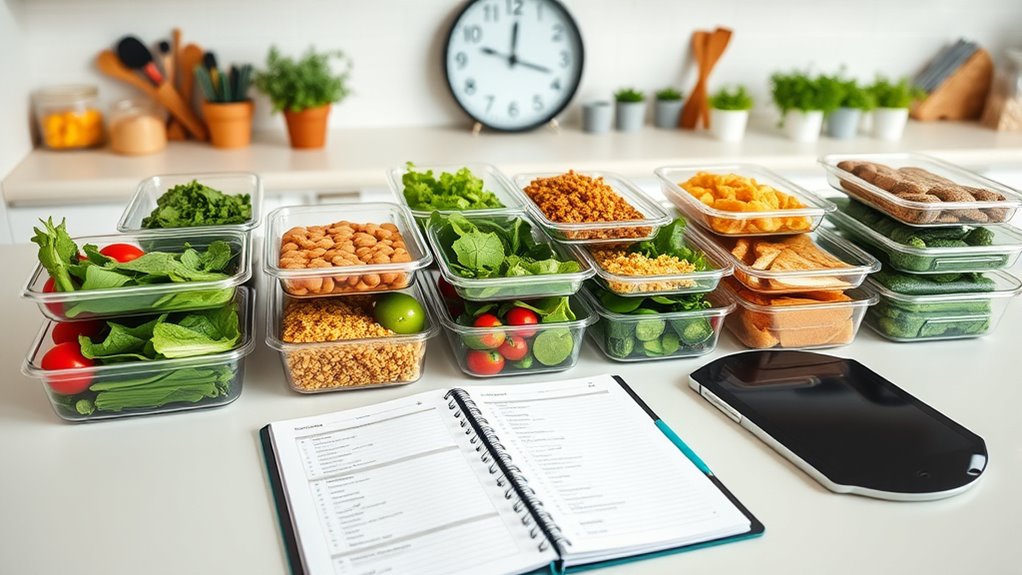
Even with flexibility in your meal plan, common mistakes can derail your efforts and make planning feel overwhelming. To avoid these meal prep pitfalls, keep these in mind:
- Planning Procrastination: Don’t wait until the last minute to decide what to cook. Set aside time each week to plan meals and shop for ingredients. Incorporating organized systems can help streamline this process and reduce last-minute stress. Additionally, establishing a consistent routine for meal prep can further enhance efficiency. Using meal prep tools can also help maintain your schedule and keep you on track. Developing a systematic approach to meal planning can ensure consistency and ease over time.
- Overcomplicating Recipes: Stick to simple, quick recipes that fit your skill level and lifestyle. Complicated meals can lead to frustration and burnout.
- Ignoring Leftovers: Don’t underestimate the power of leftovers. Plan meals that can be repurposed, saving time and reducing food waste.
- Lack of Organized Systems: Implementing a workflow for meal planning and shopping can make the process smoother and more sustainable.
Frequently Asked Questions
How Can Meal Planning Accommodate Dietary Restrictions or Allergies?
Meal planning can easily accommodate dietary restrictions or allergies by focusing on your specific needs. Start by identifying allergy substitutions for common ingredients, like using almond milk instead of dairy. Then, incorporate your dietary choices into the plan, ensuring that meals are both safe and enjoyable. By customizing recipes and being mindful of ingredients, you’ll create a meal plan that not only meets your requirements but also keeps your meals delicious and varied.
What Are Some Budget-Friendly Meal Planning Strategies?
To save money while meal planning, focus on grocery budgeting and use seasonal ingredients. Start by creating a weekly menu based on what’s on sale and in season. Buy in bulk for staples like grains and beans, and don’t hesitate to incorporate leftovers into new meals. Planning around sales and using coupons can also help you stay within your budget. Remember, cooking at home is often cheaper than dining out!
How Do I Deal With Food Waste While Meal Planning?
To tackle food waste, think of your kitchen as a treasure chest waiting to be filled. Start with portion control—measure out what you need, so nothing goes uneaten. Embrace food preservation techniques like freezing leftovers or pickling excess veggies. Create a meal plan that uses ingredients in multiple dishes, ensuring nothing lingers too long. With these strategies, you’ll turn potential waste into delicious meals, making your kitchen a thriving hub of creativity!
Can Meal Planning Help With Weight Loss Goals?
Yes, meal planning can definitely help with your weight loss goals. By organizing your meals in advance, you can better control portion sizes, ensuring you stay within your caloric balance. Planning meals allows you to make healthier choices, avoiding impulse snacks or takeout. You’ll also find it easier to track your calorie intake, helping you stay accountable and focused on your weight loss journey. It’s a powerful tool for reaching your goals effectively!
How Often Should I Revise My Meal Plan?
You should revise your meal plan weekly, adjusting for seasonal ingredients and your changing preferences. Each week, assess what worked, what didn’t, and what you enjoyed. Incorporate fresh produce to keep meals vibrant and exciting. If you find new recipes or cravings, tweak your plan accordingly. Staying flexible allows you to make weekly adjustments that align with your goals and keep your meals satisfying. Embrace the process and enjoy the journey!
Conclusion
Incorporating meal planning into your routine is like planting seeds for a garden of culinary delight. By nurturing your meals with intention, you’ll not only save time but also cultivate healthier habits. Embrace the joy of creativity in your kitchen, and watch your week transform from chaotic to harmonious. So grab those tools, whip up a plan, and let each dish be a step toward a more organized, delicious, and fulfilling life. Happy planning!