
HDR, or High Dynamic Range, makes your TV look different by greatly enhancing brightness, contrast, and color depth. It allows deeper blacks and brighter whites, making images feel more vibrant and lifelike. Improved color accuracy and a wider range of shades give scenes an emotional impact that standard displays can’t achieve. If you want to understand how HDR technology enhances your viewing experience further, there’s much more to discover about its benefits and formats.

Get the little things that make your day delivered free — and shop member deals
- Fast, free delivery on millions of items
- Access to Prime Big Deal Days deals on October 6–7
- Prime Video, Amazon Music and more included
Key Takeaways
- HDR technology enhances brightness, contrast, and color accuracy, resulting in a more immersive viewing experience on your TV.
- Deeper blacks and brighter whites contribute to a wider dynamic range, making scenes appear more vivid and lifelike.
- Different HDR formats, like HDR10 and Dolby Vision, affect how content is displayed, impacting overall image quality.
- Not all content benefits from HDR; source material must be HDR mastered for optimal results.
- Proper calibration and lighting conditions are essential for maximizing the visibility and impact of HDR content on your TV.
As an affiliate, we earn on qualifying purchases.
Understanding HDR: Why Your TV Looks Amazing

When you sit down to watch your favorite show, the vibrant colors and striking contrasts on your TV might make you feel like you’re right in the middle of the action. This immersive experience is largely thanks to High Dynamic Range (HDR) technology. HDR benefits your viewing by enhancing brightness, contrast, and color accuracy. You’ll notice deeper blacks and brighter whites, making scenes pop like never before. However, there are some HDR misconceptions you should be aware of. Not every HDR format delivers the same quality, and some may require specific equipment to fully experience its advantages. Understanding these aspects can help you make the most of your HDR-capable TV, elevating your home entertainment experience to new heights.
As an affiliate, we earn on qualifying purchases.
How Does HDR Improve Color and Contrast?
HDR boosts your viewing experience by enhancing color accuracy, making every hue more vivid and true to life. It also expands the contrast range, allowing you to see deeper blacks and brighter whites, which adds depth to every scene. This combination transforms how you perceive images on your screen.
Enhanced Color Accuracy
Many viewers find that enhanced color accuracy dramatically transforms their viewing experience. With HDR, you get a wider color gamut, meaning your TV can display more hues and shades than before. This improvement in color grading allows filmmakers to express their vision more vividly, resulting in lifelike images. You’ll notice subtle details in skin tones, landscapes, and shadows that were previously washed out or muted. This boost in visual fidelity helps bring scenes to life, making them more immersive and engaging. When you watch HDR content, you’re not just seeing colors; you’re experiencing them as intended, which elevates your overall enjoyment. So, when setting up your TV, verify it supports HDR to fully appreciate this enhanced color accuracy.
Greater Contrast Range
The enhanced color accuracy of HDR naturally leads to a greater contrast range, elevating your viewing experience even further. HDR technology markedly improves dynamic range, allowing you to see deeper blacks and brighter whites on your screen. This expanded dynamic range means that you’ll notice subtler details in shadows and highlights, making images feel more lifelike. With improved contrast ratios, colors pop more vividly, and the overall picture quality becomes richer and more immersive. You’ll find that scenes with both bright and dark elements are easier to distinguish, enhancing the emotional impact of what you’re watching. So, whether it’s a dark thriller or a bright nature documentary, HDR guarantees you never miss a detail.
As an affiliate, we earn on qualifying purchases.
The Science Behind HDR Technology
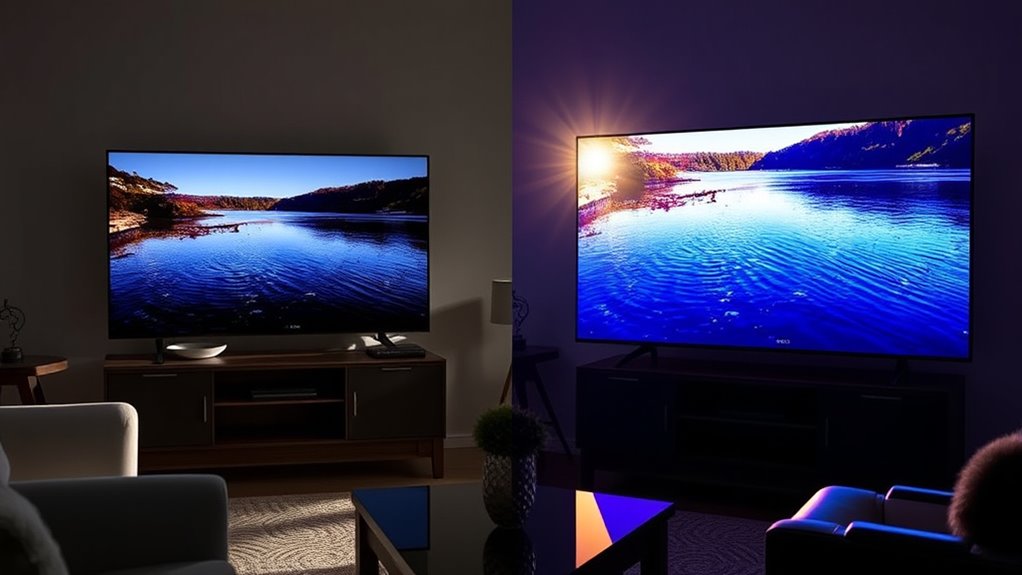
To truly appreciate HDR technology, you need to understand its key components: brightness, contrast levels, and color accuracy. These factors work together to create a more immersive viewing experience, bringing images to life with stunning detail. Let’s break down how each element contributes to the overall effect of HDR.
Brightness and Contrast Levels
While traditional displays struggle with limited brightness and contrast, HDR technology revolutionizes your viewing experience by delivering a wider dynamic range. With HDR, you’ll notice deeper blacks and brighter whites, enhancing every scene. This improvement stems from advanced brightness calibration, which guarantees your TV can produce stunning highlights without losing detail in shadows. You’ll also benefit from enhanced contrast adjustments, making images appear more lifelike and immersive. Whether you’re watching a film or playing a video game, HDR brings out the nuances in each frame that standard displays can’t match. By optimizing brightness and contrast, HDR technology effectively transforms how you perceive content, resulting in an engaging viewing experience that captivates your senses.
Color Accuracy and Range
One of the standout features of HDR technology is its ability to deliver exceptional color accuracy and an expanded color range. With HDR, you experience a broader color gamut, meaning there are more shades and hues than ever before. This enhancement allows for more precise color grading in films and shows, giving you a realistic viewing experience.
Here’s a quick look at how HDR compares to standard dynamic range (SDR):
| Feature | HDR | SDR |
|---|---|---|
| Color Gamut | Wider | Limited |
| Color Accuracy | High | Moderate |
| Brightness Levels | Higher | Lower |
| Detail in Shadows | Enhanced | Diminished |
| Overall Experience | Immersive | Standard |
With HDR, you’ll enjoy vibrant colors that pop off the screen!
As an affiliate, we earn on qualifying purchases.
Types of HDR Formats
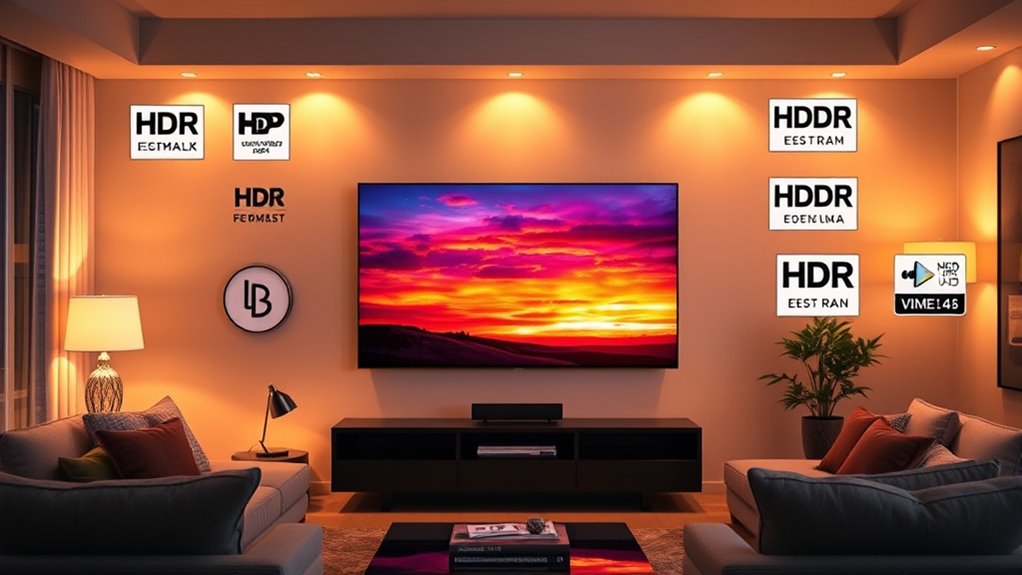
High Dynamic Range (HDR) formats enhance your viewing experience by offering a wider range of colors and brightness levels. The most popular HDR formats include HDR10, Dolby Vision, and HLG. Each has its own HDR standards, impacting how content is displayed on your TV. For instance, Dolby Vision supports dynamic metadata, adjusting brightness on a scene-by-scene basis, while HDR10 is static. When choosing a TV, consider format compatibility to guarantee it supports the HDR formats you plan to use. This is vital for peak HDR performance, as not all TVs handle HDR content equally. By understanding these different HDR formats, you can make an informed choice to elevate your home viewing.
How HDR Enhances Movies and TV Shows

When you watch movies and TV shows in HDR, you’re immersing yourself in a visual experience that greatly elevates the storytelling. HDR enhances colors and contrasts, bringing scenes to life with vivid details that standard formats simply can’t match. You’ll notice deeper blacks and brighter highlights, which create an incredible sense of depth. This makes every frame feel more dynamic, drawing you into the narrative like never before. The improved clarity allows you to see textures and subtleties in the visuals, enriching the plot and character development. Additionally, contrast ratio plays a crucial role in how striking and realistic the images appear, especially in dark scenes. With HDR storytelling, filmmakers can convey emotions more effectively, making the viewing experience not just about watching, but feeling. You’ll find yourself captivated by the immersive visuals that HDR brings to your screen.
Choosing the Right HDR-Compatible Devices for Your Setup
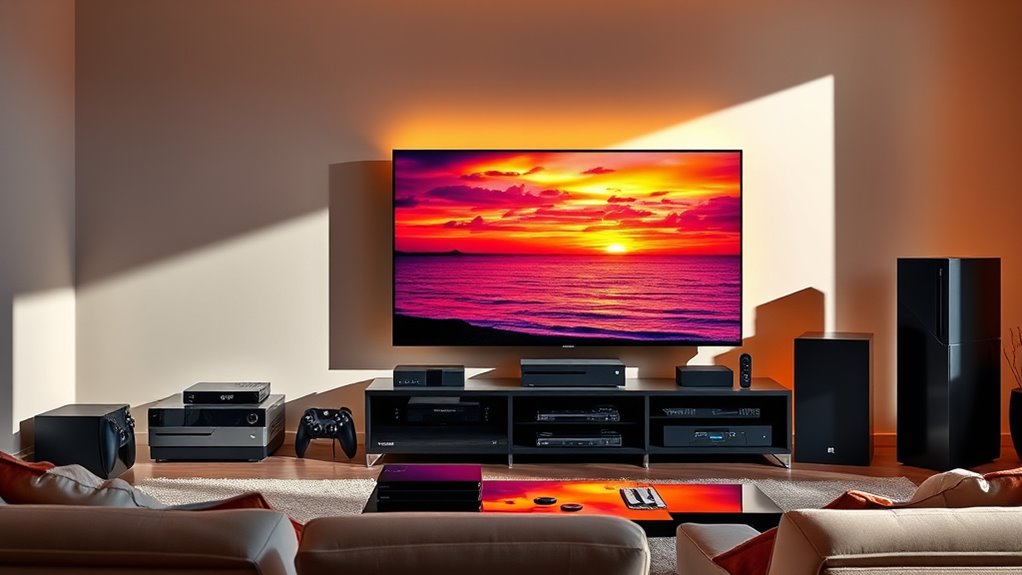
How do you choose the right HDR-compatible devices for your setup? Start by ensuring that all your components work seamlessly together. Here are four key steps to guide you:
- Select HDR devices: Choose a TV, streaming device, or console that supports HDR formats like HDR10, Dolby Vision, or HLG. Confirming device compatibility with these formats ensures optimal picture quality and avoids issues like washed-out colors or dim images.
- Use compatible cables: HDMI 2.0 or higher is essential to transmit HDR content without issues.
- Adjust display settings: Once your devices are connected, tweak the picture settings on your TV to optimize HDR performance.
- Perform device calibration: Regularly calibrate your devices to maintain color accuracy and brightness levels for the best viewing experience. Incorporating smart automation can help streamline this process and ensure consistent picture quality across devices. Proper calibration also helps in achieving the full potential of your display’s HDR capabilities.
What People Get Wrong About HDR
Many people mistakenly believe that HDR is simply about brighter screens; however, it’s much more than just increased brightness. One common error is thinking that all HDR formats are created equal. Different HDR standards, like HDR10 and Dolby Vision, can greatly impact your viewing experience. Another misconception is assuming that HDR will automatically enhance all content. If the source material isn’t mastered in HDR, you won’t see those stunning contrasts and vivid colors. Additionally, some users overlook the importance of their TV’s capabilities—just having HDR support doesn’t guarantee ideal performance. By understanding these HDR misconceptions, you can make informed decisions and truly appreciate the benefits of high dynamic range technology in your viewing experience.
Tips for Optimizing Your HDR Viewing Experience
To get the most out of your HDR viewing experience, start by verifying your TV settings are properly adjusted. Here are some tips to help you achieve the best results: 1. Calibrate your settings: Adjust brightness, contrast, and color settings to enhance HDR performance. 2. Optimize lighting: Keep your viewing area dim, as bright lights can wash out HDR content. 3. Use high-quality HDMI cables: Confirm they support the bandwidth needed for HDR to function correctly. 4. Select HDR content: Look for movies and shows specifically labeled with HDR to fully enjoy the enhanced visuals. Additionally, understanding the science behind display technology can help you make more informed choices about your viewing setup, especially regarding kitchen ventilation tips that ensure optimal viewing conditions. Remember that proper display calibration can significantly improve your HDR experience by ensuring your TV displays content as intended. To further enhance your setup, consider reviewing ergonomics tips to reduce eye strain and achieve a more comfortable viewing posture during extended sessions.
Future Trends in HDR Technology
What innovations lie ahead for HDR technology? As HDR continues to evolve, you can expect more immersive experiences through future applications like dynamic HDR, which adjusts scenes in real-time for ideal brightness and color. Manufacturers are also working on evolving standards, enabling greater compatibility across devices and platforms. This will facilitate a more seamless user experience when accessing HDR content across different mediums. In addition, advancements in display technology, like MicroLED and OLED, will enhance HDR performance, offering richer colors and deeper blacks. Moreover, improvements in HDR standards will support higher bit depths and wider color gamuts, further elevating image quality. As content creators adopt these technologies, you’ll see more films and shows produced with HDR in mind, elevating your viewing experience to new heights. Additionally, ongoing research into image processing algorithms promises to improve HDR rendering even further, making visuals more realistic and vibrant. Stay tuned for these exciting developments that’ll redefine how you experience entertainment!
Frequently Asked Questions
Can HDR Content Be Viewed on Non-Hdr TVS?
Yes, you can view HDR content on non-HDR TVs, but you’ll face some limitations. The TV will adapt the HDR signal to fit its capabilities, resulting in a less vibrant picture. You won’t get the full range of colors and brightness that HDR offers, but the content should still be watchable. Just keep in mind that non-HDR adaptations may not deliver the same visual experience you’d get on an HDR-compatible display.
Does HDR Affect Video Game Performance on Consoles?
Yes, HDR can affect video game performance on consoles. When you enable HDR gaming, you might notice an increase in graphical fidelity, as games render more vibrant colors and details. However, depending on your console’s capabilities, this can sometimes lead to a slight performance impact, such as reduced frame rates or longer loading times. It’s essential to weigh the visual benefits against any potential dips in performance when playing HDR-enabled games.
Are All HDR Formats Compatible With Every Device?
Not all HDR formats are compatible with every device, just like not every key fits every lock. Different devices support various HDR formats such as HDR10, Dolby Vision, and HLG. You’ll need to check your device’s specifications to verify it can handle the specific HDR format you want to use. Otherwise, you might miss out on the stunning visuals HDR can provide, limiting your viewing or gaming experience’s potential.
How Do I Know if My TV Supports HDR?
To know if your TV supports HDR, start with an HDR compatibility check. Look for the HDR label on the box or in the user manual. Next, navigate to your TV’s display settings; you should find options for HDR if it’s supported. You can also check the manufacturer’s website for specific model details. If your streaming device or console supports HDR, it might confirm your TV’s capabilities too.
Is HDR Worth It for Sports Broadcasts?
Absolutely, HDR is a game-changer for sports viewing! Imagine vibrant colors and stunning contrasts that bring every moment to life, like a painter’s masterpiece. With HDR benefits, you’ll see every detail, from the glint of a player’s sweat to the lushness of the field. Fast-paced action becomes smoother and more immersive, making you feel like you’re right there in the stadium. If you’re a sports fan, HDR is definitely worth it!
Conclusion
In summary, HDR technology transforms your viewing experience, making colors pop and contrasts more striking. As you immerse yourself in movies and shows, keep in mind that not all devices are created equal. By choosing the right HDR-compatible gear and fine-tuning your settings, you can truly elevate your home theater game. So, don’t just settle for ordinary—embrace the brilliance of HDR and watch your favorite content leap off the screen like never before!
Halloween Picks
halloween
As an affiliate, we earn on qualifying purchases.